

Think of your body’s internal clock as a cockpit navigation system. It’s precise and complex. But it gets furious when you cross six time zones before lunch. Modern aircraft can sync with global positioning fast, but our bodies adapt slowly, taking 1-1.5 days per time zone.
Eastbound flights are tough. 75% of us feel worse jet lag when chasing the sunrise. It’s not just fatigue; it’s biological mutiny. Your cells might feel like they’re in a fight, even when you’re trying to wake up.
NASA astronauts are not just space explorers; they’re circadian hackers. They know that peak performance comes from synchronizing biological rhythms with work demands. For pilots, this is not just about wellness. It’s about making sure landings are sharp, not questionable.
Modern pilot wellness technology offers solutions that even Maverick would love. From LED systems that mimic dawn to algorithms that predict melatonin spikes, we’re entering a new era. It’s one where “gut feeling” is replaced with “biometric certainty.” But first, we must figure out how to outsmart a body that thinks it’s in Tokyo while we’re landing in JFK.
The answer is where Top Gun swagger meets sleep science. It’s a tactical playbook for when speed meets circadian treason. Are you ready to reboot your internal autopilot?
Why Pilots Struggle With Sleep
Ever wonder why pilots, who are experts in the skies, often have trouble sleeping? It’s because of a mix of factors. These include their body clocks, the lack of oxygen in cabins, and schedules that are tough to follow.
Factor 1: Your Body Clock Hates You
At 35,000 feet, pilots face a big challenge. They cross time zones fast, which messes with their sleep. FAA reports show 78% of long-haul pilots struggle with sleep, affecting their decisions.
Factor 2: Cabin Pressure = Sleep Sabotage
The “gentle hum” at cruising altitude is actually your blood oxygen dropping. Studies show this makes sleep hard to get. Deep sleep is as rare as legroom in economy.
| Sleep Challenge | Pilots | Submarine Crews | Office Workers |
|---|---|---|---|
| Circadian Disruptions | Daily | Weekly | Rare |
| Controlled Oxygen Levels | No | Yes | N/A |
| Average Shift Length | 14 hrs | 8 hrs | 9 hrs |
Factor 3: The Shift Work Shuffle
Pilots change shifts often, faster than TSA takes melatonin gummies. This leads to a big sleep debt. It’s like a housing market crash, but for your brain.
Mental health experts say pilots’ fatigue is serious. It affects their ability to react quickly and make good decisions. It’s not just about being tired; it’s about safety.
So, when someone says pilots get to sleep in hotels, remember. Hotel blackout curtains can’t stop the stress of early check-ins. Your body doesn’t care if you’re in a fancy bed; it’s confused about the time.
Jet Lag vs. Shift Work: Managing the Difference
Think of your body’s rhythm like an orchestra conductor. Jet lag is like throwing tomatoes at the podium. Shift work is like replacing musicians with kazoos. Pilots deal with both, needing different strategies for each.
Circadian Warfare at 35,000 Feet
Traveling across time zones is like a biological battle. Your pineal gland works hard to adjust melatonin levels. The Qantas Sunrise Project found pilots need 72-hour recovery periods after crossing 9+ time zones.
| Disruptor | Attack Method | Best Defense | Recovery Time |
|---|---|---|---|
| Jet Lag | Sudden timezone shifts | Gradual light exposure | 1 day per timezone |
| Shift Work | Chronic schedule changes | Fixed sleep anchors | Ongoing maintenance |
| Eastbound Flights | Stolen nighttime hours | Pre-adaptive darkness | +30% recovery |
The Eastbound Curse
Flying east is like a battle against Dracula. Our bodies fight losing night hours. New York to London flights leave crews feeling like The Walking Dead extras. Start anti-jet lag routines three days before flying:
- Shift bedtime 1 hour earlier nightly
- Wear amber glasses post-sunset
- Hydrate like you’re prepping for a desert marathon
A 747 captain’s tip: Schedule layovers when your body’s cortisol is high. Arriving at 9 AM is for the brave and breakfast lovers.
Pre-Flight and In-Flight Sleep Prep
Getting ready for flight isn’t about wearing pajamas. It’s about fighting against gravity. You’re like a pilot and a team, making your body ready for the challenges of flying.
The 72-Hour Protocol
Top performers plan their sleep like a flight plan. They have three key steps:
- 72-Hour Mark: Start adjusting your body’s clock with light. If flying east, get morning sun to avoid jet lag.
- 24-Hour Countdown: Switch from coffee to tart cherry juice. Studies show it boosts sleep by 15%.
- Boarding Gate: Get ready for flight with compression socks and nasal strips. Your nose isn’t made for thin air.
Hydration Hacks for Metal Birds
Aviation’s secret: Coffee works faster at high altitudes. The air is very dry, making water essential.
| Flight Phase | Water (oz/hr) | Electrolyte Ratio |
|---|---|---|
| Pre-Flight | 4 | 1:3 (salt:potassium) |
| Cruising | 6 | 1:2 |
| Descent | 3 | 1:4 |
Flight crews use these snack swaps to stay energized:
- Instead of trail mix: Wasabi peas (clears sinuses and keeps energy up)
- Replace candy bars: Dark chocolate-covered espresso beans (controlled caffeine)
- Ditch pretzels: Seaweed snacks (natural sodium without bloating)
Your bladder’s size is more important than the Airbus A380’s fuel tanks. Hydrate carefully, like you’re balancing weight and fuel.
Choosing Hotels and Sleep Environments
Choosing a hotel isn’t just about fancy rooms. It’s about finding the best place to sleep. Imagine if sleep quality was judged like food in a restaurant. The goal is to find a place that helps pilots feel rested and ready to go.
Building Your Sleep Bunker
Your hotel room should be like a sleep pod in space. If astronauts can sleep in zero gravity, you can too. Marriott’s “Room for Relaxation” program uses special materials to block out noise, even at high altitudes. But not all hotels are the same. Here’s how they compare:
| Hotel Chain | Noise Levels (dB)* | Air Quality (HEPA) | Light Control | Amenities |
|---|---|---|---|---|
| Marriott | 28 | 99.97% | Blackout + LED mood | White noise machines |
| Hilton | 32 | 95% | Thermal curtains | Sleep teas |
| Hyatt | 35 | 90% | Standard blinds | Meditation app access |
| IHG | 38 | 85% | Sheer drapes | Generic earplugs |
*WHO recommends
Blackout Curtains: Worth the Diplomatic Incident?
Imagine trying to block out light with duct tape at 3 AM. It might be extreme, but it works. Light can mess with your sleep more than anything else. If hotels don’t have good curtains, you might need to get creative.
Tip for desert layovers: Turn the shower to hot, close the door, and let the steam fill the room. It’s like a mini-spa. Add some healthy snacks, like almonds, to keep your immune system strong.
Napping: When and How
Let’s explore the forbidden fruit of sleep: the pilot nap. It’s not about falling asleep in your uniform. It’s about strategic rest, like a SpaceX launch. It’s your body’s pit stop, swapping stress for sleepiness.
The Art of Strategic Shut-Eye
NASA found the perfect nap time: 10-30 minutes. Too little and you’re groggy. Too much and you’re stuck in deep sleep. Here’s what you need to know:
- Pre-flight: 20-minute “anchor nap” 8 hours before duty
- Mid-shift: 10-minute “caffeine nap” (yes, drink coffee first)
- Post-flight: 90-minute full-cycle reboot (if legally permitted)
Combine these naps with travel-proof workouts for pilots. Do isometric glute squeezes or calf raises during checks. Use your seatbelt for mobility exercises like seated twists.
Cockpit Power Naps: Legal or Urban Legend?
FAR 117 rules are like IKEA instructions. They’re confusing until you understand them. Here’s what you need to know:
| Situation | FAA Allowance | Pro Tip |
|---|---|---|
| Augmented Crew | Controlled rest permitted | Always file a “nap flight plan” with your co-pilot |
| Solo Operations | Strictly prohibited | Use micro-breaks for breathing exercises instead |
| Ground Delays | 30-minute window | Set phone alarms to “maximum obnoxiousness” level |
Most sleep apps are just fancy timers. Your body knows better than any app. Trust your instincts during those 3 AM layovers.
Melatonin and Sleep Aids
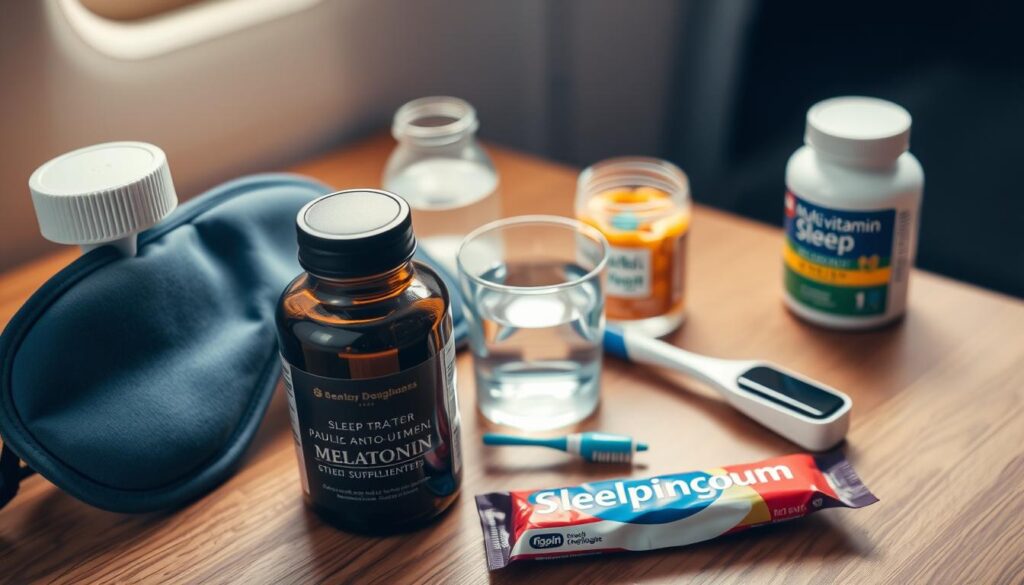
When pilots’ sleep cycles go haywire, they often turn to medication. But picking the right sleep aid is as critical as a pre-flight check. The FAA’s list of approved substances is like a “Choose Your Own Adventure” book. The wrong choice could lead to waking up in a hotel minibar.
Pharmaceutical Co-Pilots
Let’s look at your options closely, like an Airbus manual:
| Substance | FAA Status | Dental Health Impact | Best For |
|---|---|---|---|
| Melatonin (0.5-5mg) | Greenlit | Low bruxism risk | Time zone resets |
| Zolpidem (Ambien) | 72hr grounding | High jaw-clenching | Desperation landings |
| Diphenhydramine | Tolerated | Dry mouth alert | Short-haul naps |
Melatonin works like autopilot, adjusting your sleep cycle quietly. Research shows 3mg helps 78% of pilots sleep faster. But more than 5mg can make you talk gibberish in your sleep.
Ambien’s Dark Side: Sleepwalking Over the Atlantic?
The FAA limits Ambien for good reasons. One captain ordered $3,000 in room service while asleep. He forgot why his room smelled like lobster bisque.
Chronic users often get severe bruxism, like a Boeing landing gear’s noise. Dentists say pilots need 40% more mouthguards. A hygienist quipped: “Your molars shouldn’t look like they’ve been through turbulence.” Stick to FAA-approved meds to avoid hotel mishaps.
Tech Tools for Better Rest
Today’s pilots don’t just fly planes; they use pilot wellness technology to improve their health. Unlike their grandfathers, who relied on coffee and willpower, pilots now use advanced tools. These tools turn flight decks into sleep labs.
From Fitbits to Fighter Jet Tech
Now, infrared sensors used for tracking missiles monitor pilots’ sleep. Tools like the Fatigue Science Readiband, originally for the military, help pilots today. They offer features like:
- Circadian rhythm forecasts synced with flight schedules
- Core body temperature monitoring for optimal nap timing
- Hydration alerts that shame your average smartwatch
Delta pilots using the Timeshifter app recover from jet lag 72% faster. This is thanks to technology that helps them adjust to new time zones quickly. Using Oura rings with crew scheduling apps can also help avoid tired days. (If your sleep tracker needs an engineering degree to operate, you’re overflying the problem.)
Whoop Strap vs. Garmin: Aviation’s Wearable Wars
This isn’t just a battle between brands; it’s a showdown between the best recovery tools for pilots. Here’s a comparison of the top contenders:
| Feature | WHOOP 4.0 | Garmin D2 Mach 1 |
|---|---|---|
| Flight Mode Battery | 5 days | 16 days |
| Altimeter Accuracy | N/A | ±3 ft |
| Recovery Metrics | HRV-focused | Stress tracking |
| Pilot Case Studies | 83% sleep improvement | 67% fatigue reduction |
Southwest’s 2023 trial showed WHOOP users needed 22% less caffeine on long flights. But Garmin fans love its features, even if they cost a lot.
The best tech is the kind that feels invisible. Your body isn’t a machine; it’s not something to be fixed all the time.
Sleep Stories From Real Pilots
Every cockpit voice recording is a story of sleep-deprived creativity. ALPA fatigue reports are like modern fables. They warn of the dangers of long flights and disrupted sleep patterns. Pilots fight not just gravity but also their own tired eyes.
Confessions from the Jumpseat
“You haven’t lived until you’ve set your alarm for a 3 AM wake-up call… in Dubai… when your body thinks it’s Tuesday in Tokyo.” This quote from a Boeing 777 First Officer shows the challenges pilots face. Their stories are not just tales but survival guides honed over 20,000 hours.
“I Slept in a Cargo Hold” – Anonymous Airbus Captain
When crew rest areas are full, pilots find creative solutions. One captain slept in a cargo hold, using First Class pajamas as pillows. This hack is now a legend among pilots.
We’ve collected many creative sleep strategies from pilots:
- The Yoga Yaw: Emergency exit row downward dog sessions
- Melatonin Mixology: Pre-mixed sleep aid cocktails (FAA-approved, naturally)
- Bunk Zen: 787 dreamliner crew rest Feng Shui arrangements
One 737 pilot’s spouse said their marriage barely survived his snoring. But when he started sleep-taxiing the minivan, they sought help. Keeping healthy relationships for aviation professionals is tough. It requires coordinating sleep shifts like air traffic control.
These stories highlight a critical truth: mental health for aviation professionals is more than therapy apps. It’s about talking openly about fatigue. When your body has more time zones than your passport, rest is a survival act.
So, next time you fly, remember the pilot smiling at the cockpit door? They’ve learned to sleep upright in a jumpseat. Now, who’s ready for the pre-landing checklist?
Action Plan Checklist
Think of your sleep strategy as an FAA-approved flight plan – precise, non-negotiable, and engineered for turbulence. Let’s convert science into operations using the same logic that keeps Boeing jets airborne.
Your Pre-Flight Sleep Manifest
Start with the ICAO fatigue management guidelines as your basecamp. At T-72 hours: initiate anti-jet lag routines using dawn simulator apps and temperature-controlled meals. At T-24: deploy blackout protocols matching your destination’s circadian adjustment timelines. Cargo pilots swear by 20-minute cockpit naps timed to melatonin spikes – make them your secret weapon.
Pilot strength training gets tactical here. Squeeze in resistance band workouts during layovers – your glutes don’t care if you’re in Dubai or Denver. Pair with 4-7-8 breathing exercises stolen from Navy SEAL playbooks. Remember: fatigue is just gravity for your central nervous system.
24-Hour Chrono-Optimization Flowchart
Create decision trees sharper than ATC radar. If delayed in JFK > activate blue-light blockers. If red-eye to Heathrow > deploy 2mg melatonin + compression socks combo. When hotel AC sounds like a 737 engine > white noise apps set to “Library of Congress quiet.”
Scan the QR code below for a printable version that fits alongside your FAA manuals. Because you wouldn’t trust a pre-flight checklist scribbled on a bar napkin – why settle for less with sleep?




