Navy Aviation Mishaps deserve serious study because they show how flight safety depends on far more than stick-and-rudder skill. Recent Navy and Marine Corps events described in the research record include in-flight engine fires, carrier recovery failures, injured deck personnel, and aircraft losses. Confirmed: these events occurred in training and operational settings, which means the lessons apply to pilots who fly under pressure, maintainers who protect aircraft reliability, and leaders who set the tone for risk control.
Why Navy Aviation Mishaps Demand Crew-Level Review
Analysis: The first safety lesson is that mishap prevention is not owned by one shop, one cockpit, or one supervisor. On September 28, 2026, three Navy and Marine Corps aircraft experienced separate in-flight engine fires during routine training missions. All three aircraft made emergency landings safely, and no injuries were reported. The research record identifies these as Class A mishaps, meaning the damage threshold was greater than $2.5 million or involved aircraft loss. The fact that the flights were routine matters. Normal missions can still expose weak points in engine health, inspection habits, or maintenance trend tracking.
For working pilots, the training value is direct: treat routine departures as real risk events, not administrative movements. Emergency memory items, engine-fire flows, and diversion planning should not become simulator-only skills. A pilot lifestyle built around readiness includes chair-flying failures, keeping personal checklists current, and asking sharper questions during preflight and briefings. Readers interested in a broader view of professional lifestyle coverage might find useful insights from the same network at Noirwhale.
What Changed After Routine Missions Turned Serious
Confirmed: The September 28, 2026 engine-fire events ended without reported injuries because crews got the aircraft back on the ground. That is a strong outcome, but it should not soften the safety review. Engine fires create time pressure, cockpit workload, and coordination demands between pilots, controllers, maintainers, and rescue personnel. In training, the lesson is not simply that emergency landings worked. The lesson is that crews need repeated exposure to high-workload abnormal scenarios before a real warning light appears.
Opinion based on the research record: civilian and military pilots should view these cases as reminders to rehearse the first 60 seconds after a major malfunction. That window often determines whether a crew establishes control, confirms the right checklist, communicates clearly, and protects altitude, airspeed, and heading while planning the next move.
Maintenance Signals That Deserve Respect
Reviewed: Carrier aircraft operate in a demanding environment where small parts can carry outsized safety consequences. From December 2024 through May 2025, USS Harry S. Truman’s deployment in the Red Sea region included a friendly-fire shoot-down incident, a collision with a merchant vessel, a jet lost overboard during sharp maneuvering, and another aircraft loss tied to arresting cable failure. Investigations found that the erosion of standards began before the operational tempo intensified, according to a Washington Post investigation.
That point should land with every pilot who has ever debated whether a squawk is worth writing up. Standards do not usually fail all at once. They weaken through tolerated shortcuts, deferred attention, and a gradual acceptance of abnormal conditions as normal. In aviation, that drift is dangerous because the aircraft may appear serviceable until a high-stress phase of flight demands every system perform as designed.
Navy Aviation Mishaps And Inspection Discipline
Navy Aviation Mishaps are not only airborne stories. They often begin in inspection cycles, maintenance control decisions, parts availability, and the quality of communication between flight crews and technicians. The Truman-related investigation identified maintenance and inspection failures tied to worn arresting gear components and a malfunctioning or missing clevis pin. Analysis: that is the kind of detail that should reshape how pilots think about preflight questions. A pin, damper, fitting, or cable may look like a small item on paper, yet it can sit at the center of a major safety chain.
Practical advice: pilots should avoid vague write-ups. If a vibration, smell, warning, or control feel changes from the aircraft’s normal pattern, document it with enough detail for maintenance teams to reproduce or isolate the issue. A short, precise discrepancy report can prevent ambiguity during troubleshooting. For a deeper pilot-focused safety mindset, this site’s discussion of accident risk mitigation connects daily habits with wider mishap prevention.
Arresting Gear, Pins, And Deck Risk
Confirmed: On September 28–29, 2026, an EA-18G Growler assigned to VAQ-130 experienced an arresting gear failure during a carrier landing on USS Dwight D. Eisenhower off Virginia. The aircraft went overboard, two aviators ejected safely, and six deck crew members were injured. This event reinforces a hard truth of carrier aviation: the recovery phase leaves little room for system weakness. The pilot is landing on a moving ship, deck teams are exposed, and the aircraft depends on recovery equipment to absorb enormous energy in seconds.
Analysis: Even for pilots who never fly from a carrier, the lesson transfers cleanly. Landing gear, brakes, tires, arresting systems, spoilers, thrust reversers, and runway condition data are not background details. They define the stopping plan. A professional pilot should brief not just the approach, but the reject point, rollout strategy, missed approach triggers, and what changes if aircraft or runway performance margins narrow.
Fatigue, Tempo, And The Human Layer
Fatigue is often discussed as a personal endurance issue, but aviation safety treats it as a system risk. High tempo can reduce sleep, compress maintenance timelines, limit recovery time, and increase the temptation to normalize pressure. The research record states that fatigue has been cited in investigations connected with the Truman collision and aircraft losses, and that fatigue among pilots, ship operators, and maintainers contributes to mishaps. Even without adding extra numbers beyond the research record, the lesson is clear: tired professionals can still be skilled, disciplined, and vulnerable.
Opinion based on the available record: good crews do not treat fatigue as weakness. They brief it, plan around it, and make it visible before it affects performance. That mindset applies in naval aviation, airline operations, corporate flying, flight instruction, and backcountry personal flying.
What Ground Injury Data Adds
Reviewed: A study published in June 2026 compared injury rates from 2015–2019 with 2021–2025 and found that ground crew injury rates rose from 0.5 to 1.8 injuries per 100,000 maintenance hours. The same study reported that the Class A injury rate per 100,000 flight hours was higher in the Marines at 4.66 than in the Navy at 1.95, as summarized in the PubMed injury-rate study. These figures broaden the safety discussion beyond cockpit survival.
Analysis: A pilot’s aircraft is made safe by people working around moving surfaces, fuel, weapons, hydraulics, noise, weather, and time pressure. If ground crew injury risk rises, then the safety system is sending a warning. Strong pilot culture includes respect for ramp discipline, clear hand signals, sterile zones near operating aircraft, and the patience to stop movement when something feels wrong.
How Fatigue Changes Briefing Quality
Fatigue does not always announce itself through obvious mistakes. It can show up as a shorter brief, a missed assumption, slower checklist verification, or reduced willingness to challenge a plan. In two-pilot cockpits, fatigue can also weaken crew resource management because both aviators may accept a rushed decision rather than reset the tempo. On carrier decks and ramps, fatigue can reduce the margin between a near miss and an injury.
Practical advice: build fatigue checks into the brief in plain language. Ask who is tired, which phase of flight is most exposed, and what decision point will trigger a pause. That kind of conversation may feel simple, but it gives crews permission to speak early rather than after the safety margin is gone.
Training Habits Civilian Pilots Can Carry Forward
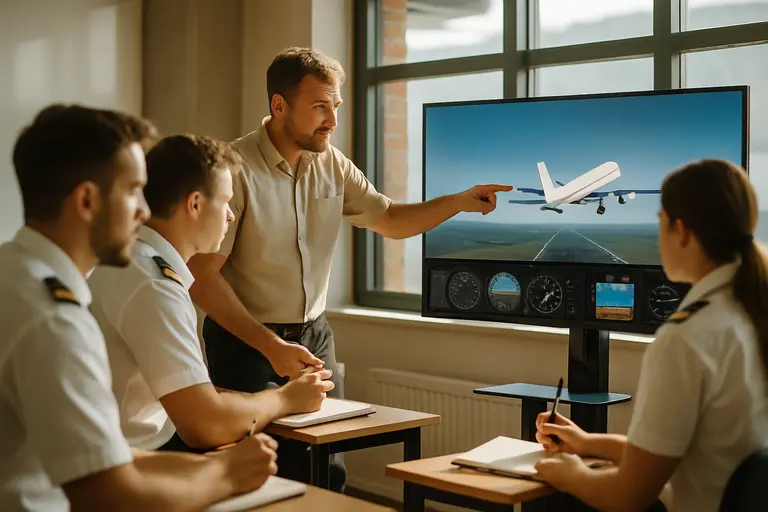
Market-analysis: Military mishap reviews often receive attention because the aircraft are expensive and the missions are demanding, but the training lessons are not limited to the military. Civilian pilots can apply the same patterns: study abnormal events, compare them with local procedures, and convert the lesson into a specific habit. A flight school, charter department, or owner-pilot group does not need carrier operations to benefit from better briefings, stronger maintenance reporting, and fatigue-aware scheduling.
The best training takeaway is to avoid generic lessons. Do not simply say, “maintenance matters” or “fatigue is bad.” Tie each hazard to a behavior that can be practiced before the next flight.
- Brief one abnormal scenario before each training flight or line flight.
- Write discrepancies with specific symptoms, timing, indications, and conditions.
- Ask what system, person, or procedure is carrying the most risk that day.
- Stop a rushed departure if the aircraft, crew, or environment has changed since the brief.
Use Emergency Landings As Chair-Flying Scenarios
Confirmed: The September 28, 2026 engine-fire cases ended with safe emergency landings and no reported injuries. Analysis: pilots should treat that as a training success worth studying, not as a lucky escape. Chair-flying should include the callouts, control priorities, checklist transition, radio work, and landing-site decision. For instructors, that means asking students to explain not only what they would do, but why they would do it in that order.
Protect The Write-Up Culture
Aviation culture improves when pilots stop treating maintenance paperwork as an inconvenience. A detailed write-up is a safety tool. It helps technicians isolate faults, helps future crews understand aircraft history, and gives supervisors data that may reveal repeat patterns. Opinion: the healthiest flight departments reward accurate reporting even when it delays a mission. The least healthy ones pressure crews to accept uncertainty without a clear technical basis.
Operational Safety Lessons From Recent Navy Aviation Mishaps
Recent Navy Aviation Mishaps point to a practical safety standard: respect small parts, protect ground crews, rehearse emergencies, and treat fatigue as a mission factor. The events in the research record did not all share one cause, but they did share one warning. Aviation risk grows when maintenance signals, workload signals, and culture signals are treated as background noise.
For pilots, the lifestyle lesson is steady professionalism. Show up prepared, brief honestly, document aircraft behavior, and give maintainers the information they need. For leaders, the lesson is to keep standards strong before tempo rises. For students and working aviators alike, these cases are a reminder that safety is built in ordinary moments long before an engine fire, arresting gear failure, or deck emergency tests the system.