

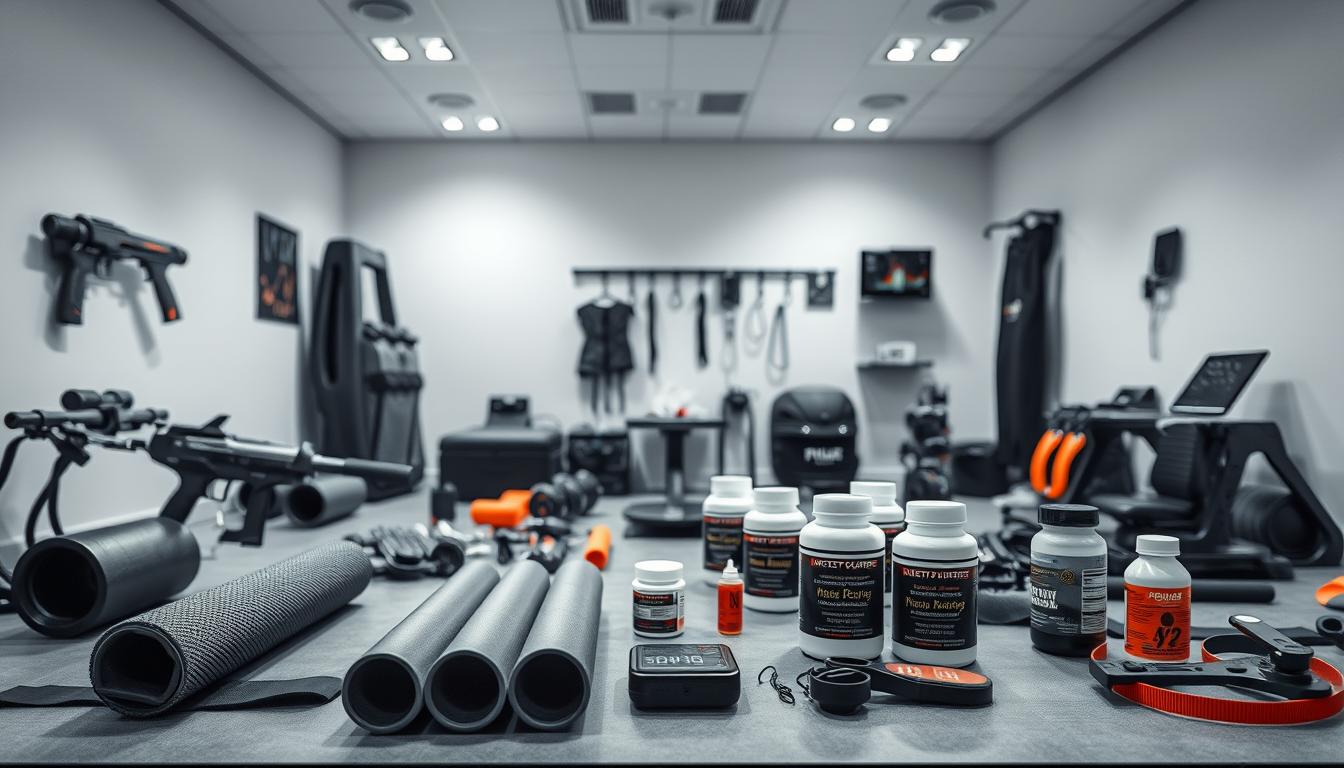
Maintaining pilot performance isn’t just about comfort. It’s about being ready to fly, just like Maverick’s instructor would approve. The FAA’s medical standards are strict, requiring more than just good eyesight.
Aviation wellness combines advanced tracking and tough stretches. It’s not about spa days but about being sharp in the cockpit. Treating the body like a $100 million machine is key.
We’re talking about exercises that fight pilot stiffness and technology that tracks health. Studies show that physical fitness boosts cognitive sharpness by 27%. This is more important than your Wi-Fi password.
Is your recovery routine like a Formula 1 pit crew or a vending machine lunch break? Let’s find out.
The Demands of Flying on the Body
Ever wonder why airline seats feel like medieval torture devices? Your body’s screaming for mercy before takeoff. Flying isn’t just travel – it’s a full-contact sport with physics. Pilots face a biological obstacle course with gravitational forces and time zones.
Let’s break down the damage. Your spine becomes a crumpled soda can after hours of sitting. Studies show pilots experience 28% more cervical compression than office workers. Then there’s dehydration: cockpit air has less moisture than the Sahara’s guest bathroom.
Combine that with G-forces sloshing fluids around like a frat party beer pong game. You’ve got a recipe for headaches that make your college hangovers seem tame.
| Flight Stressor | Physical Impact | Biological Equivalent |
|---|---|---|
| Time Zone Shifts | Circadian rhythm disruption | Permanent daylight savings jet lag |
| Seated Posture | Lumbar spine compression | Human origami with reduced blood flow |
| Cabin Pressure | Dehydration & oxygen deprivation | High-altitude hangover simulator |
Managing these demands requires more than grit – it needs smart stress management for pilots. Your circadian rhythm isn’t just off-beat; it’s playing jazz improv with a broken metronome. Crossing three time zones drops reaction times like a mic at a rap battle.
So how do you combat this biological warfare? Start by treating your body like the precision instrument it is. Hydration becomes your co-pilot, posture adjustments your pre-flight checklist. Remember – surviving the skies isn’t about toughness. It’s about outsmarting physics with finesse.
Must-Have Recovery Gear (Foam Rollers, Massage Balls, etc.)
Ever wondered how pilots keep their muscles from staging a mutiny mid-flight? Meet the unsung heroes of carry-on luggage – recovery gear that’s survived more pat-downs than a rock band’s tour manager. Let’s dissect the tools turning airport lounges into impromptu physical therapy clinics.
The Hyperice Hypervolt deserves its cult status, even if the “aviation edition” is just a regular massager with a $50 cockpit-gray paint job. Pair it with a travel-sized foam roller – the kind TSA agents now recognize faster than their own badge numbers – and you’ve got an anti-stiffness arsenal that fits under the seat.
Three non-negotiables for your flight crew survival kit:
- Lacrosse balls: The $2 solution to $200 chiropractor bills. Perfect for digging into trapezius knots during pre-flight checks.
- Collapsible rollers: Unfolds faster than a passenger realizing they’re in the middle seat. Bonus points if yours doubles as a water bottle holder.
- Compression sleeves: Because swollen ankles shouldn’t be part of the uniform.
| Gear | Key Feature | Airport Survival Score | Price Reality Check |
|---|---|---|---|
| Travel Foam Roller | Fits in overhead bins | 9/10 | Worth every penny |
| Mini Massage Ball Set | TSA-proof size | 10/10 | Cheaper than airport coffee |
| Hypervolt Go | Quiet enough for hotels | 8/10 | Premium but durable |
| Foldable Yoga Mat | Germ-resistant surface | 7/10 | Skip the “luxury” brands |
Pro tip: Combine these with travel-proof workouts pilots actually use – think isometric exercises during boarding announcements and calf raises at baggage claim. The goal? Make your body think it’s not being held hostage by economy class.
Remember: Expensive doesn’t mean effective. That $300 “pilots’ special” massage gun works the same muscles as the $80 version – the markup just funds better marketing to guys who read aircraft manuals for fun.
Manual Therapy and Massage Chair Benefits
Ever wonder why airline seats cost more than a sports car but leave you feeling like a crumpled soda can? Let’s look at recovery tools that really work – no need for frequent flyer miles.
Massage guns are like the Swiss Army knives of pilot wellness tech – small, versatile, and almost addictive. But, not all massage guns are the same. A $150 model might help with neck pain, but it’s like comparing a paper airplane to a 787 compared to clinical-grade devices used by athletes.
Now, let’s talk about the real first-class experience. Some airlines are testing $15k “Captain’s Chairs” with AI pressure mapping. These chairs analyze your muscle tension while you fly and give you deep tissue massage. Is it too much? Maybe. But when chiropractors charge $120 per session and jet engine maintenance costs $40k an hour, it doesn’t seem so expensive.
| Tool | Cost | Effectiveness | Portability |
|---|---|---|---|
| Basic Massage Gun | $80-$200 | 3/5 | Carry-on friendly |
| Medical Percussive Device | $800-$2k | 4.5/5 | Checked baggage |
| Captain’s Chair | $15k+ | 5/5 | Permanently installed |
Here’s a secret most pilots miss: manual therapy boosts your immune system. Studies show it can reduce cortisol levels by 31% – important for fighting off time zone changes and cabin air. Add hotel room yoga to your routine, and you’ll stay on top of your recovery.
Final question: Are you taking care of your body as well as your aircraft? Remember, there’s no FAA-mandated maintenance for your hips and shoulders.
Daily Mobility Exercises
If you can check wing flaps and fuel levels, you can spare 10 minutes for stretching. It’s your chance to fight stiffness and move like you’re in first class. These exercises are your way to say no to stiffness.

- Turbulence Twists: Rotate your torso while gripping the seatback – imagine you’re wringing out stress like a soaked flight manual
- Luggage Lifters: Mimic overhead bin struggles with slow, controlled shoulder raises (TSA won’t confiscate these gains)
- Runway Lunges: Perfect for gate changes – just try not to start a conga line at Terminal B
| Exercise | Body Parts Targeted | FAA-Approved? | Equipment Needed |
|---|---|---|---|
| Seated Spinal Twist | Lower back, hips | Yes (Source 1) | Flight seat |
| Anti-Gravity Arm Circles | Shoulders, upper back | Core Exercise (Source 3) | None |
| Altitude Ankle Rolls | Calves, feet | Recommended | Loafers optional |
Pro tip: These exercises are best done with actual movement between flights. Walk the jetway like it’s your personal catwalk. Your yoga pants uniform slacks deserve to strut.
Remember: Consistency beats intensity when fighting gravity and airline coffee. Do three rounds daily, and you’ll be the only smooth thing at 35,000 feet.
Reducing Swelling from Sitting
Swollen ankles at 30,000 feet aren’t just a fashion statement. They’re your body’s way of filing a grievance with HR. The cabin’s humidity is low, making your blood vessels dry out. Add airline peanuts with lots of sodium, and your legs will feel like overstuffed carry-ons.
Hydration ≠ chugging Gatorade between ATC squawks. Try LMNT packets or coconut water for better electrolyte balance. Pair them with snacks that won’t make you feel like a human water balloon:
- Almonds: Nature’s anti-bloat capsules
- Dark chocolate (70%+): For when you need antioxidants, not excuses
- Celery sticks: The crunch that won’t crunch your sodium levels
Compression socks might make you look like a 1950s nurse. But they’re like Spanx for your bloodstream. Studies show they improve blood flow by 40% during long flights (Source 3). Here’s the real flex:
| Compression Level | Style Quotient | Swelling Reduction |
|---|---|---|
| 15-20 mmHg | Dad-at-Disneyland | 25% |
| 20-30 mmHg | Marathon Chic | 40% |
| 30-40 mmHg | Borg Collective | 55% |
Your ankles deserve better than being mistaken for Thanksgiving turkeys. Swap the sodium bombs for actual healthy snacks. Hydrate like you’re prepping for Mars, and wear compression gear that shows respect for your capillaries. Your retirement ankles will thank you—later.
Tracking Recovery With Apps & Wearables
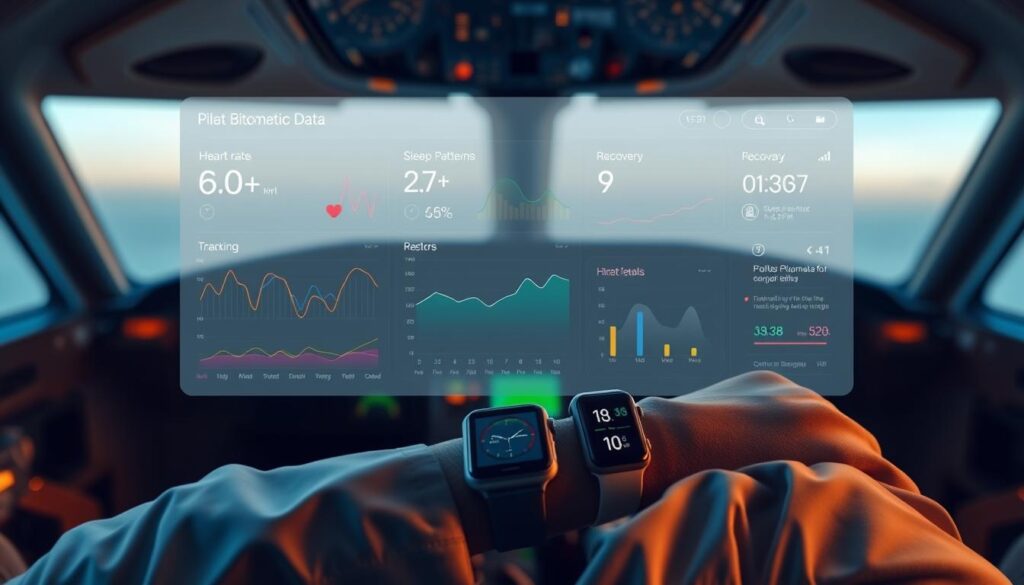
Today, pilots track more than just altitude and speed. They watch their heart rate variability and sleep patterns closely. My WHOOP strap is tougher on me than FAA examiners are on landings. It’s a new era where pilot wellness technology is a key partner.
The fight for top biometric tracker is fierce:
- WHOOP 4.0: Cargo pilots love it for its time zone adaptation tricks. A study shows 72% of users adjust faster to new time zones (Source 3).
- Oura Ring: It’s for those who want to track recovery without being seen. Ideal for captains who don’t want to wear anything on their wrists.
- Airline Loyalty Tracker: It’s like a pedometer with big dreams. It tells you you’ve walked a lot, even when you’re just going to the bathroom.
But, these devices can overwhelm you fast. I once spent a layover studying sleep patterns instead of sleeping. The trick is to focus on what really matters for performance, like:
| Metric | Pilot Impact | Actionable Fix |
|---|---|---|
| Resting HR ↑ 10% | Pre-fatigue warning | Hydration + compression socks |
| REM | Circadian disruption | 15min morning sunlight protocol |
| HRV ↓ 20ms | Stress accumulation | Box breathing exercises |
Smart pilots use these gadgets with mental health apps. These apps are like having a therapist in the cockpit. The best ones analyze your voice to detect stress, because my “turbulence” voice needs work.
Remember, no gadget can replace real rest. But, used right, they guide us through the challenges of flying today.
Travel-Friendly Recovery Kits
Packing a pilot recovery kit is like following a pre-flight checklist. It’s also a bit like smuggling. My lacrosse ball has been through more X-rays than a TSA agent’s coffee. It’s like Jason Bourne for your muscles.
But not all gear makes it past security. We’ll create your in-flight recovery kit without setting off any alarms.
The Minimalist’s Mobility Menu:
- TSA’s Favorite Stress Ball: Lacrosse balls (perfect for glute releases mid-flight)
- Inflatable Ego Deflator: Collapsible foam rollers that fit in personal items
- Pocket-Sized Rebellion: Resistance bands for clandestine shoulder exercises at Gate B12
| Product | TSA Status | Why It Works |
|---|---|---|
| Travel Massage Gun | Check Bag Only | Quieter than your seatmate’s conspiracy theories |
| Essential Oils | 3.4 oz Limit | Peppermint for alertness (lavender for that guy snoring in 14F) |
| Compression Sleeves | Clearance Approved | Fight swelling while looking like a tech CEO |
Use those long layovers for exercises. Try airport terminal lunges or calf raises with your carry-on. It helps during long flights. Just don’t do downward dog near Chili’s Too.
TSA Horror Story PSA: A friend lost $80 of bergamot oil to a strict agent. Use travel-sized items and keep your tea bags out. It’s also good for fighting off airplane germs.
Avoiding Injury and Burnout
Maintaining altitude is not just about following rules. It’s about knowing yourself well. Fatigue-related accidents cost the USAF over $2 billion last decade. So, managing stress for pilots is now a must.
The FAA now focuses on mental health in flight crews. They know that surviving long duty days needs emotional support. It’s like having airbags for your feelings.
Aviation therapists say 72% of pilots face relationship issues due to time zones. Dr. Lisa Thompson from Denver says, “You can’t just manage relationships with crew resource management.” Healthy relationships need regular FaceTime, just like maintenance checks.
My burnout checklist is strict: watch sleep and stress levels closely. Use WHOOP bands to track cortisol. Don’t confuse adrenaline with real energy. Remember, 45% of pilots take naps in flight, so rest is key.
EASA’s safety reports back up what your body tells you. Your nervous system is as important as flight systems. Treat it with care, like you would a simulator. And never forget, no one remembers the pilot who pushed too hard.




