

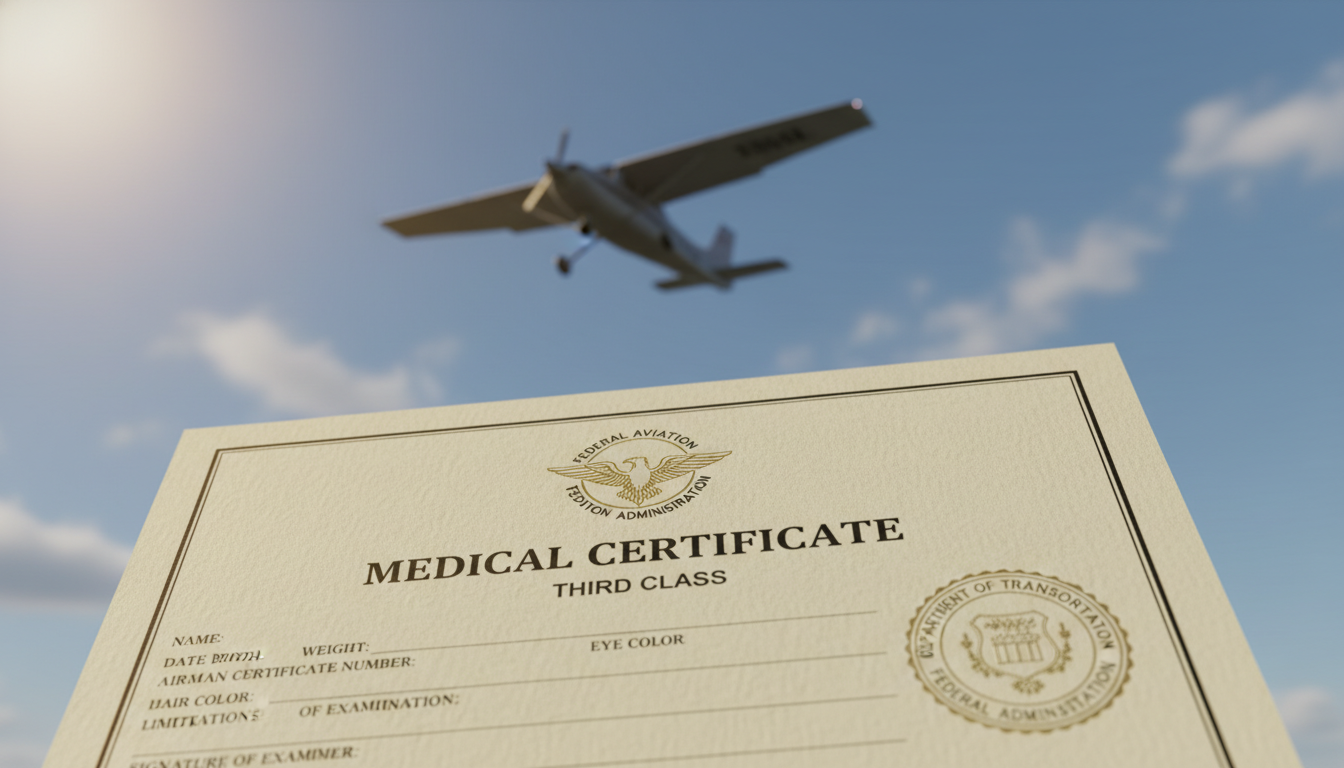
I used to think that “medical requirements” only meant showing up healthy. But aviation has other ideas. It turns health into a detailed process with lots of documentation and strict guidelines.
Before you start pricing lessons, there’s the medical certificate to think about. In the U.S., getting your FAA medical certificate early is key. It avoids the problem of spending a lot on learning, only to be stopped by paperwork. It’s a necessary step.
It’s not about making things complicated on purpose. In Canada, for example, Transport Canada clearly defines medical standards. They explain how doctors report results, and what being “fit to fly” means. These standards are based on international agreements, which ensures safety but shows that health rules are strict and not up for debate.
So, when discussing the cost of a private pilot license, I mention something people often forget: eligibility. Yes, training hours and fees are important. But the medical requirements set the scene. They determine if you can even start planning the rest of your journey.
Average Price Breakdown
Let’s face it: most official advice is packed with rules but skips the cost talk. People want to know not just the steps in an aviation medical exam. They’re really asking about the cost and effort involved.
The “cost” of the exam includes more than just the test. It might also cover follow-up tests, notes from specialists, or piles of paperwork. And let’s not forget your time spent on forms, sharing your medical history, and recalling past injuries.
For an FAA medical certificate, the process is pretty standard. You go through an appointment, answer questions, and give permission for someone to look into your medical past. Sometimes, you’ll need more documents. While the cost varies, the steps do not. You invest both money and time.
| Cost Bucket | What It Covers | Why It Changes | What You Control |
|---|---|---|---|
| Medical clearance | Baseline exam, history review, required forms | Prior conditions, needed follow-ups, documentation depth | Bring records, answer cleanly, schedule early |
| Training program fees | Enrollment, instruction, aircraft time, testing items | Hours flown, weather delays, training pace | Study ahead, fly consistently, pick a realistic schedule |
| Study materials | Books, supplies, basic kits | New editions, digital vs. print, school requirements | Buy once, avoid duplicates, confirm what’s included |
To put it in perspective, one school’s estimate comes to $22,190 before taxes. This includes essentials like ground school and flight test fees. Checking the private pilot license cost breakdown offers a clear view of expenses.
It’s important to remember the FAA medical and flight-training costs don’t come together. They arrive in stages. Additionally, medical expenses may increase if further tests are needed.
- Pay-first items: You pay for registration and ground school upfront.
- Meter-running items: More hours mean higher costs for dual and solo training.
- Surprise-prone items: An aviation medical exam may lead to more tests based on your history.
Cost Factors: Aircraft, Instructors, Ground School
The three main costs are simple on paper: airplane time, instructor time, and ground school. But your schedule is also a big factor that costs you time and money. If medical issues delay your training, those fixed costs can suddenly grow like a forgotten streaming subscription.
Renting an aircraft is a major expense. Logging more hours means you’ll use more fuel and cause more wear on the plane. This increases the hourly rate. If you’re dealing with pilot health issues and trying to fly regularly, unexpected gaps can lead to added costs for “warm-up” lessons.
Instructor fees are about more than just their hourly rate. Taking time off can break your learning momentum. Missing a week for medical reasons can mean you’re paying to learn the same things again.
Ground school seems less expensive at first. However, many students end up paying for it more than once. This happens if they take a long break or their access expires. Staying on top of medical requirements can help you avoid paying for the same lessons twice.
| Cost Driver | What You’re Paying For | How Medical Eligibility Can Nudge the Price | What to Watch |
|---|---|---|---|
| Aircraft rental | Hourly airplane time, fuel, maintenance reserves | Training delays can lead to extra refresher flights to regain proficiency under pilot health standards | Minimum billable times, busy weekend schedules, weather-driven cancellations |
| Instructor time | Pre-brief, flight, debrief, sometimes scheduling/admin time | Pauses tied to aviation medical exam requirements can stretch the training timeline and increase repeat lessons | Cancellation policies, instructor availability, peak-season rate changes |
| Ground school | Course access, test prep, knowledge review | When medications and flying questions require follow-ups, extended timelines can push you past access windows | Course expiration dates, retake fees, add-on tutoring costs |
| Extra evaluations | Additional exams, tests, and documentation | Some cases can trigger more testing to confirm fitness, affecting training continuity | Appointment lead times, paperwork loops, follow-up exam charges |
Here’s something not often mentioned: medical eligibility is more than just a step. Regulators might require extra checks to make sure you’re fit to fly. This isn’t about causing drama. It’s about managing risks properly.
These additional requirements can affect your training schedule. Even if the prices don’t change. The key is to plan for unexpected delays. Keep your documents in order. Remember, treating pilot health standards seriously adds to your costs.
Ways to Save on Training
In flight training, saving money doesn’t mean looking for discounts. It means avoiding unexpected costs. One quick way to lose money is to discover your paperwork or health isn’t in order midway through.
Getting your medical paperwork right pays off. Arrive at your exam ready, with all your health history and documents in hand. When information is missing, it can lead to delays or extra tests. These setbacks waste not only time but can also slow your progress.
Timing is crucial, more than many realize. Having your FAA medical certificate sorted means you can fit flying lessons into your busy life. You won’t have to worry about your plans if your medical approval is delayed. And you definitely don’t want your pre-paid lessons to go to waste.
Preparing for your aviation medical exam can save you money in the long run. Write down all your medicines and health issues, even those you wish to forget. If you’re on new medication or had a recent health change, find out if it could affect your flying. Remember, your health and meds don’t care about your flight test.

| Budget Leak | What It Looks Like | Lower-Cost Move | Why It Helps |
|---|---|---|---|
| Late-start medical | Training begins, then the medical process drags or pauses | Map your FAA medical certificate timeline before paying for big lesson bundles | Protects flight hours from getting wasted during delays |
| Incomplete health history | Missing dates, unclear outcomes, or “I think it was fine” answers | Do aviation medical exam prep with organized records and a clear medication list | Reduces follow-up requests and repeat appointments |
| Surprise grounding | Illness, injury, new treatment, or a drug that affects safety | Build private pilot medical planning into your weekly training routine | Keeps cancellations from stacking up at the worst time |
| Scheduling whiplash | Long gaps between flights, then rushed “catch-up” sessions | Fly consistently and align training blocks with your medical milestones | Fewer re-learns, less review time billed at instructor rates |
For real savings, see your calendar as a vital checklist. Schedule lessons regularly. Keep your health information current. Always update your private pilot medical plan with any health changes. It might not be flashy, but it sure beats paying for the same lesson twice.
Scholarship Opportunities
Getting scholarships for flight training is like finding a runway in fog—a bit tricky but doable. Before going after any funds, focus on something critical yet often overlooked: your FAA medical certificate. This document determines the training paths available to you, guiding most funding opportunities.
Pilot health standards are more than just formalities. They act as a filter for who can begin training, fly solo, and progress without unexpected stops. If there’s doubt about your medical status, the “free money” you got might just sit there, unused. And that’s the least enjoyable scenario.
Many overlook this detail while fantasizing about new pilot gear: how medical eligibility impacts your training timeline. Getting your medical clearance early streamlines planning for training schedules, coordinating with instructors, and booking exam dates. This way, you’re prepared when asked for your training milestones, logged hours, or evidence of progress in scholarship applications.
In the U.S., treat your medical exam as a strategic planning step instead of an unexpected event. In Canada, the process is even clearer: medical classifications dictate flying privileges, with stricter categories offering more freedoms. Regardless of the country, the principle remains: your medical status affects your training path, which in turn influences where you can get funding.
| Funding question I’d ask first | Why it matters for planning | Medical tie-in to watch | What to prep before applying |
|---|---|---|---|
| Does this support a student start, a PPL finish, or a longer track? | It changes the pace you need and the hours you must budget. | FAA medical certificate status can limit how fast you can progress if it’s delayed. | Training calendar, estimated hour range, written-test plan, and a realistic start date. |
| Do they require solo, a checkride date, or specific endorsements? | Those milestones are time-sensitive and instructor-dependent. | Pilot health standards can affect eligibility to solo or continue training without interruptions. | Instructor sign-off timeline, logbook totals, and a short milestone checklist. |
| Do they prioritize “need,” “merit,” or community involvement? | Each category asks for different proof and different writing. | Private pilot medical eligibility can impact how credible your completion plan looks. | Budget worksheet, concise personal statement, and documented aviation goals. |
| Are funds paid upfront, reimbursed, or sent to the school? | Cash-flow rules decide whether you can actually use the award. | Medical timing matters; delays can collide with reimbursement windows. | Payment schedule, school invoicing process, and a buffer for scheduling slips. |
If you want a less chaotic scholarship search, start simple. Match your medical condition with a feasible training plan. It’s not the glamorous side of things. Yet, it’s better than running out of funds because your planning was off.
-
Book the medical exam early. This way, your FAA medical certificate won’t slow you down.
-
Create a one-page plan. Connect costs, training hours, and scheduling with health standards.
-
Clearly state your aim. Make sure your medical eligibility helps you, not hinders you.
Budgeting for Training
I used to think flight training budgeting was simple. I’d list hours, books, and the checkride. Then I encountered the aviation medical exam. It reminded me that aviation adores paperwork as much as Hollywood loves making sequels.
Budgeting should cover the decision tree, not just a single visit. A question about medications might mean extra forms and calls. It could also mean taking more time off work.
Many overlook this part: medical evaluations can extend beyond the initial examiner. In Canada, an exam can first go to the Civil Aviation Medical Examiner. Then, higher officials like the Regional Aviation Medical Officer or Aviation Medical Officer might review it, as per Transport Canada 424.11(1).
If things get complicated, your file might be reviewed again, possibly by the Chief of Clinical Assessment (424.11(2)). And if there’s a disagreement, the senior review prevails (424.11(3)). That’s not just drama. It’s the system working.
In the U.S., budgeting feels similar, especially for FAA medical certificate renewal. I plan for unexpected needs: more tests, more documents, and surprise letters asking for clarification.
If deemed unfit in Canada, you might send more documents for a second look—CAME reports, specialist checks, labs—under 424.12(1). You can ask for a further review by the Chief of Clinical Assessment (424.12(1)). This is true even for U.S. training. Always prepare for extra costs and delays.
Yes, medications can secretly upend your budget. They might not automatically disqualify you. But they can lead to requests for extra notes, your dosage history, or proof of stability. They essentially need proof your health won’t surprise them.
| Budget Line | What It Covers | Why It Can Expand | What I Set Aside |
|---|---|---|---|
| Medical appointment costs | aviation medical exam fee and basic screening | Additional tests if something needs clarification | One extra exam’s worth of cash |
| Documentation time | Forms, records requests, and follow-up questions | More paperwork if medications or history need detail | Two half-days off work |
| Specialist consults | Cardiology, sleep, vision, or mental health evaluations | Escalation paths like Transport Canada reviews (424.11–424.12) show how quickly this can stack | One specialist visit plus lab fees |
| Training schedule padding | Extra lessons to stay current during delays | Medical review lag can stretch your timeline | 3–5 flight hours buffer |
| Renewal planning | FAA medical certificate renewal timing and prep | New questions can arise as records change year to year | Calendar reminders plus a small admin fund |
My rule is straightforward: if your budget can’t cover another round of paperwork, it’s just a wish, not a budget. Always have a financial cushion, keep every receipt, and organize your medical records. That way, you won’t be caught off guard by FAA medical certificate renewal.
Hidden & Ongoing Costs
When we plan for flying, we think of fuel, instructor fees, and the checkride. But we often forget about one thing: pilot health standards. It’s not just about money. It also involves time off work, more paperwork, and the stress of staying healthy.

The costs that catch us off guard are usually medical. For example, after your aviation medical exam, you might need more visits, reports from specialists, or renewal exams. Scheduling these visits can be tough and the waiting adds to the stress.
Rules sometimes offer “flexibility” but still have requirements. Let’s look at Transport Canada. They have rules for pilots with vision in one eye. They need reports from an eye doctor, have to pass tests, and meet other specific needs. At renewal time, they need another report from an eye specialist. If their vision gets worse, more tests might be needed.
If your vision isn’t stable, you might need yearly reports from an eye specialist. For those who can’t use their legs, there are many requirements. These include specialist reports and demonstrating the ability to fly without help. There may also be limits on the types of aircraft they can fly and certain equipment they must have.
There are lots of rules about medical certificates. If you don’t meet all the requirements, your certificate can have limits, change over time, or even be taken away. This is part of the “ongoing” costs of flying. It’s important to include medical exam follow-ups in your budget.
Medications also affect flying. A new prescription might ground you, require a note from your doctor, or a talk with an Aviation Medical Examiner. Even if you can fly, there might be extra checks to make sure you’re safe to fly, not just okay at your desk.
| Ongoing cost bucket | What can trigger it | What it can require over time | Why it matters to your budget |
|---|---|---|---|
| Medical renewals | Age, certificate class, condition history | Shorter validity windows, repeat exams, aviation medical exam follow-ups | Recurring appointments, lost time, and added planning |
| Vision-related monitoring | Monocular status or unstable vision in one eye | Specialist reports at renewal; possible additional practical tests if capability changes | Specialist fees and the “surprise” of re-testing |
| Mobility-related limitations | Paraplegia or other functional constraints | Demonstrations of normal/emergency maneuver competence; equipment requirements like a shoulder harness | Aircraft rental constraints and extra evaluation time |
| Medication review | New prescriptions, dose changes, side effects | Documentation, observation periods, restrictions tied to medications and flying | Training delays and extra clinician visits |
If you feel bogged down by bureaucracy, you’re not alone. The key is to see compliance as an ongoing expense, not just a one-off. When it comes to keeping your flying privileges, the real cost is often the time and effort needed.
Comparing Different Schools
I don’t just look at the shiny ads when I compare flight schools. I pay attention to the paperwork first. The medical check-up acts like a gatekeeper, and schools have to follow its rules.
Schools can’t give out FAA medical certificates. Still, they organize your training based on it. If the staff can’t tell how medical exams influence your solo flight schedule, that’s a problem. It’s not being cool; it’s being unorganized.
I search for a school that takes record-keeping seriously because it’s important. In Canada, this importance is clear: training follows specific rules, you get an outline from the start, and instructors prepare you for new lessons. Records are kept and given to you after. A well-run school saves you time and trouble, especially if medical issues arise.
Indeed, medical schedules can get complicated. If you’re ill, on some medications, or starting a new treatment, you might have to stop for a bit. Canada has rules for when illness or medication can affect your flying. A supportive school will adjust your learning plan without wasting your money.
- Ask what happens if your private pilot medical is delayed or deferred.
- Ask how they track progress when weather and life get in the way.
- Ask who owns the records and how quickly you can access them if you change schools.
| What to Compare | School That Keeps You Moving | School That Bleeds Your Budget |
|---|---|---|
| Medical timing awareness | Creates a training plan that considers FAA medical certificate timelines and practical starting points | Ignores medical procedures and urges you to start flying |
| Scheduling flexibility | Offers various instructors, flexible times, and plans for medical exam conflicts | Limits you to one instructor and fixed booking times |
| Training program clarity | Provides a detailed program outline early, including skill milestones and eligibility | Offers unclear progress plans that extend for too long |
| Briefings and ground instruction | Ensures short, regular preflight briefings and specific ground lessons | Skimps on briefings, using too much flight time to learn as you go |
| Recordkeeping discipline | Keeps thorough training logs, sharing them promptly upon request | Has messy logs and slow responses to paperwork requests |
| Pause-and-return policy | Allows you to take health breaks and return without extra costs | Forces you to redo flights with no clear plan, citing policy |
The best school acts like a supportive air traffic controller for your life. It respects the FAA medical certificate process. It plans ahead for scheduling conflicts, yet keeps training straightforward. This isn’t just appealing talk. It’s about efficient management and enjoying better experiences.
ROI on Your Private Pilot License
People often talk about ROI like it’s a hot stock tip at a barbecue. But flying is different. It’s more like a policy debate with benefits, limits, and unexpected changes that surprise you.
Many forget to factor in health. Pilot health standards are crucial. They determine how you use your license and how often you’ll need to certify your health.
In the U.S., getting a FAA medical certificate is key for pilots. It’s not just a formality. Choosing your medical path early can impact your career, costs, and stress in a big way.
Looking at Canada, it becomes clearer. To fly planes or helicopters, you need a specific medical certificate. Your category affects what flying licenses you can get. So, your health status can limit or expand your opportunities.
Then there’s the complex rules that seem to keep changing. In Canada, there are exceptions to the rules if it benefits the public and doesn’t risk safety. This means what’s required can change, making planning tricky.
So, when I think about ROI, I see it as multi-layered. How your health affects your flying can change the value of your license drastically. This can range from “total freedom” to “it’s complicated,” especially with renewal needs or extra health checks.
| ROI lever | How it shows up in real life | What it can do to your payoff |
|---|---|---|
| pilot health standards | Baseline fitness expectations that steer eligibility and follow-up | Can protect long-term flying access, or add recurring hoops if you’re borderline |
| FAA medical certificate | Medical class and renewal cadence that affect privileges and planning | Can expand usable privileges, or shrink scheduling flexibility if renewal becomes a project |
| private pilot medical limitations | Restrictions that may narrow operations or trigger extra reviews | Can reduce utility per flight hour, even if training costs stay the same |
If you want your license to really benefit you, include medical readiness in your budget. It’s not just a dramatic part of flying. It’s crucial and often determinative. In aviation, the less drama, the better.
Planning Ahead
I once saw medical checks as just a small bump. But then, they became more like a full inspection. It’s smart to arrange your aviation medical exam early. This is because the schedules of doctors fill quickly and paperwork only gets more complicated over time. When you’re aiming for a FAA medical certificate, both timing and the details in your logbook are key.
Begin by making a detailed list of your medicines, their amounts, and why you take them. It’s important to be precise. Don’t estimate. The private pilot medical part is all about managing risks with careful examination. Giving unclear answers is like making a bad radio call. If there’s been a recent change in your health, be ready for additional tests.
I also prepare for the unexpected during the exam. Examiners might ask more questions, want to see records, or need a second opinion. This isn’t about causing trouble; it’s just how the process works. If you get a decision you don’t like, you might have to provide more information which takes time. So, it’s better to plan for needing extra time, rather than hoping everything goes perfectly.
Here’s a hard truth: if an illness, injury, or medication can affect your flying, you can’t fly until you’re better. This rule applies even if your money and instructor are ready. See your aviation medical exam and FAA medical certificate as the first step, not just another task. You’ll thank yourself later.




