

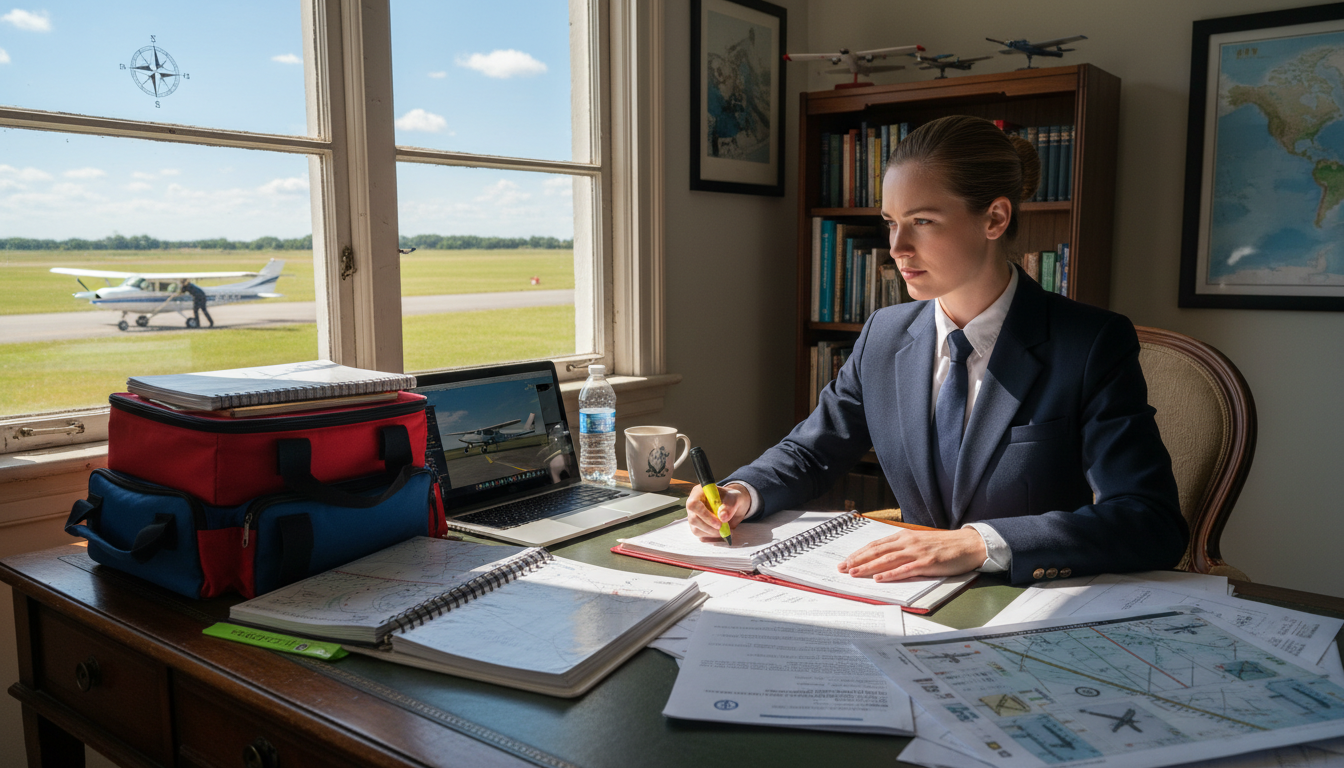
Aviation is full of acronyms. So, let’s make sense of them before they confuse us. PPL stands for Private Pilot License, a term used worldwide. In the U.S., the FAA refers to it as the Private Pilot Certificate. It marks your first major step in aviation, setting the stage for more advanced flying adventures.
So, what can you do with a private pilot license? You can fly during the day or at night when the weather’s clear. You’re allowed to take passengers, like friends, family, or co-workers. And you can share some flight costs with them. However, you cannot fly for payment or as a job. The FAA is essentially saying, “Enjoy flying, but don’t use it for extra income.”
If you’re starting out, don’t worry about being “behind.” You’re now part of a large community of pilots. There were 166,137 Private Pilots in 2024, according to the FAA. The total number of pilots was 848,770, with 345,495 being student pilots. These numbers should make you feel less alone.
Becoming a pilot follows a clear path: meeting requirements, attending ground school, undergoing flight training, and then taking the checkride. Under FAA Part 61, you need a minimum of 40 hours of flight time. Under FAA Part 141, it’s 35 hours. Yet, many need over 50 hours, and the average is around 75 hours. This is because unexpected challenges often arise, extending training time.
Cost and time are important. We’ll discuss specifics soon. Epic Flight Academy lists their private pilot license course at $28,822 for U.S. students, which includes books. The course is full-time and lasts about three months. This cost hints at the value of this license. It opens doors to future training, like instrument ratings. And for those aiming for an aviation career, it’s the start of a long journey.
What is the Checkride?
The private pilot license checkride is an FAA practical test you must pass to get your certificate. Imagine having to defend a thesis while also trying to parallel park. Except the parking spot moves, and you have to read the sky. It examines not just your flying skills, but also how you plan and make decisions in the air.
The checkride comes after you meet all the requirements, finish your ground school, and complete your flight training. Your instructor will then sign you off. They will help you schedule the practical test with an FAA examiner. There’s also a knowledge test, but the checkride is where your real-time decision-making is tested.
The checkride consists of two parts: an oral discussion and a flight test. The oral part is where you discuss your flight plan, how you manage risks, and your thought process. To understand what to expect, read checkride basics for a simple explanation.
In the flight part, you will plan a flight route, communicate via radio, and perform maneuvers. These maneuvers are ones you’ve practiced many times. The FAA examiner is looking to see how you handle both usual and unusual situations. They want to see your ability to fly safely and follow instructions under pressure.
The Airman Certification Standards (ACS) are the guidelines your training is based on. Schools like Epic Flight Academy prepare you according to the ACS, so nothing on the test should surprise you. Your task is to demonstrate that you can meet these standards confidently and calmly.
Passing your checkride comes with its perks. You’ll be able to fly passengers, day or night, under VFR. Though you can’t fly for pay, you can share the cost of operating the plane. This is because the FAA prioritizes safety and understands the importance of sharing expenses responsibly.
| Checkpoint | What you do | What the FAA examiner is really measuring | Where the Airman Certification Standards (ACS) fits |
|---|---|---|---|
| Before the date is set | Finish the main PPL license steps: ground school and flight training, then get the instructor endorsement | Readiness and consistency, not perfection on your best day | Sets the list of required tasks and the standard you’re training to |
| Oral discussion | Explain a flight plan, weather thinking, airspace rules, and risk decisions | Judgment, clarity, and whether you can brief like a pilot instead of reciting like a student | Risk management and knowledge elements guide what gets discussed |
| Flight portion | Operate the aircraft, talk to ATC as needed, fly maneuvers, and respond to scenario changes | Aircraft control, situational awareness, and calm compliance with instructions | Defines maneuvers, tolerances, and acceptable decision-making |
| After you pass | Exercise new privileges: carry passengers, fly VFR day/night, share expenses when allowed | Whether you understand limits and can keep your ego out of the logbook | Frames the expectations that support safe, legal operations |
Understanding the Oral Exam
The oral exam is a check to see if I learned anything in ground school. It’s not just answering questions. It’s showing how I think. Unlike trivia night, it’s more of a deep talk.
Most questions are things I learned for the private pilot test: how planes fly, the weather, finding my way, and rules of flying. If I can talk about these in simple words, I’m good. But if I sound like I’m just reciting, I won’t do well.
I break down the topics into four groups: Air Law, Navigation, Meteorology, and everything else in Aeronautics—General Knowledge. The last group is a mix of important stuff. It includes flight theory, how planes work, and why even smart people make mistakes under pressure.
The examiner might switch topics quickly. This shows how flying needs quick thinking. Every decision in flying is linked, and each one is important.
- Air Law: Knowing the rules, what I need to fly legally, and limits.
- Meteorology: Understanding weather reports, what different weather patterns mean, and knowing when it’s safe to fly.
- Navigation: How to use maps, follow a course, and use tools so I don’t get lost.
- General Knowledge: Knowing how planes fly, maintenance, and making safe choices.
Oral exams feel serious. I should bring a pencil and use a simple calculator. I can’t use devices that store notes. And for questions about finding my way, using navigational tools is smart.
It’s also important to play by the rules. The aviation world is strict about cheating. In Canada, cheating can mean failing and not being able to retake the test for a year. This rule is also respected in the U.S.
I’m preparing to explain, not show off. Knowing why planes act the way they do is crucial. It’s not just about numbers. It’s knowing how weather and course choices affect my flight.
| Oral Exam Focus | What the Examiner Wants to Hear | Practical Items or Habits That Help |
|---|---|---|
| FAA regulations and airspace | I can use rules in real situations, not just know them. | Organize the rules book, use it wisely, and explain my thoughts clearly. |
| Weather interpretation | I understand weather reports and forecasts and what they mean for my flight. | Practice explaining weather conditions simply. |
| Navigation planning | I can make a plan, check my position, and adjust if needed. | Use navigational tools and a simple calculator correctly. |
| Aerodynamics and performance | I get how different factors affect flying, from air conditions to how well the plane climbs. | Talk about recent flight experiences and relate them to the airplane’s manual. |
| Cross-country scenario review | I can blend weather, navigation, and safety into a solid flight plan. | Plan the flight realistically, as if I’m actually going to fly it. |
| Ground school carryover | I remember the key concepts and can explain them well. | Make one-page summaries and practice explaining concepts simply. |
Flight Maneuvers You’ll Be Tested On
The flying part turns your knowledge into action. On your private pilot checkride, you’ll show basic skills and more. These are the ones that prove if you’re ready to fly alone or if you’re just good in theory.
Control is key: you’ll do straight flying, climb, go down, and turn without getting lost. Next, you’ll tackle stalls, slow flying, steep turns, and moves close to the ground. There’s also a takeoff and landing that value careful flying over showing off.

Your skill in flying across the country matters too. You’ll plan and navigate, showing you can think ahead. While WAAS GPS can help, you must show you can lead the plane, not just follow a line on a screen.
There’s a funny thing about how long we train to fly. Some say you need 40 hours under Part 61, and 35 under Part 141. But most pilots need more than 50 hours. Cessna says the average is around 75 hours. That’s because the “minimum” is just a starting point.
For those trained on a Cessna 172, it’s about balance: managing power, adjusting the pitch, and always being alert. Even with advanced tools in a TAA cockpit, you still need to show smart energy use, stable approaches, and wise decisions.
| Skill Area | What You’ll Likely Do in Flight | What Gets Evaluated | Where Training Time Often Goes |
|---|---|---|---|
| Aircraft control | Slow flight, stalls, steep turns | Coordination, altitude and heading control, smooth inputs | Refining feel and sight picture after the “I can do it once” phase |
| Takeoffs and landings | Normal, short-field, soft-field takeoffs and landings | Stabilized approach, touchdown point control, directional control | Reps, wind correction, and fixing small bad habits before they grow up |
| Ground reference | Turns around a point, S-turns across a road | Wind drift correction and consistent bank control | Learning to read wind cues instead of guessing |
| Navigation | Day VFR cross-country procedures with checkpoints | Time, fuel planning, airspace awareness, cockpit organization | Blending pilotage and dead reckoning with WAAS GPS without overreliance |
The private pilot checkride maneuvers aren’t just for show. They test your core skills in real tasks you’ll do in every flight. This is how your flight hours turn from just numbers into true flying experience.
Checkride Day: What to Expect
Thinking about the private pilot license checkride day? It’s like prepping for a big debate. You’ll face close inspection and need to perform well. And there’s someone taking notes who won’t find your jokes funny. The atmosphere is serious, kind of like watching C-SPAN, but you have a headset on.
Before the checkride, your instructor will have prepared you thoroughly. After you’re ready, they’ll sign you off. This sign-off marks a big moment: your training is officially slated on the calendar.
First, you’ll tackle the paperwork. It’s a must-do. You need to check basic requirements: be at least 16 to solo fly, 17 to get the certificate, know English well, and have a third-class medical certificate. Missing any of these is like forgetting your ID when you need to vote.
The examiner briefing is when things start. It outlines the day’s plan, the standards to meet, and explains that a do-over isn’t a criticism. It feels like a tough Q&A session without the drama of a courtroom.
Flight planning is next. Here, your plan will be examined closely. You must consider route, weather, plane performance, risks, backup plans, and fuel. The aim? To demonstrate foresight, not just quick reactions.
During your flight, how you communicate with ATC is crucial. You need to be clear, correct, and keep a good pace. Success means handling the radio well, especially when it gets busy.
You’ll also perform specific flying maneuvers and adjust as requested. Be ready for new directions or simulated problems. It’s about showing you can adapt and judge situations wisely. Perfect flying isn’t the goal, showing good control and decision-making is.
| Moment on the schedule | What you’re doing | What gets judged | Common friction point |
|---|---|---|---|
| Arrival and document review | Confirm eligibility, logbook entries, medical, and endorsements | Accuracy, completeness, and readiness to start on time | Missing endorsement details or expired paperwork |
| Examiner briefing | Agree on flow, expectations, and safety habits | Professionalism, listening skills, and risk mindset | Talking too much and not answering the question |
| Flight planning review | Explain your route, weather call, performance numbers, and alternates | Decision-making and the logic behind each choice | Hand-wavy fuel math or weak weather interpretation |
| Taxi, departure, and enroute work | Operate safely while handling workload | Checklist discipline and situational awareness | Rushing flows and skipping verbal callouts |
| Radio work in the system | Use ATC communication to coordinate clearances and traffic flow | Clarity, correct readbacks, and cockpit organization | Stepping on transmissions or missing a key instruction |
| Maneuvers and scenarios | Demonstrate required tasks and respond to changes | Control, judgment, and staying within standards | Fixating on one detail and letting the airplane drift |
The pace of your training affects the checkride day. Training full-time might take 3 months, part-time can take 4-6 months. This puts a lot of pressure on scheduling. By the time your checkride day comes, you need to show more than just skills. You’re proving you can manage the entire process smoothly.
What Examiners Are Looking For
The examiner doesn’t want a thrilling movie plot. They check if you can conduct a routine flight perfectly. They look for stable decisions, clear communication, and cool handling of situations according to ACS standards.
The oral test feels like a tour of crucial areas every good evaluator checks. Understanding FAA rules is key because they come up quickly. Knowing them well means you won’t make up rules in the air.
Next, they test if you can really reach your destination. Navigation, radio aids, and dealing with weather are crucial. Examiners look for how well you link these aspects to make safe choices, especially when plans fall through.
General knowledge about flying tells a lot. It covers airframes, engines, flight theory, instruments, and normal flight operations. It’s about knowing your aircraft inside and out. Don’t forget, human factors are also tested. Things like fatigue affect decision-making no matter how sure you sound.
Having integrity is important, though it’s often overlooked. Be honest in your logbook and don’t cheat. Examiners watch how you handle tricky situations, which is essential for safety.
The conversation might also cover what a pilot can and can’t do. For instance, you can fly VFR day or night with passengers. But, you can’t fly for money. Understanding these details proves you know FAA rules well.
| What they probe | What it looks like in plain English | What signals strong performance |
|---|---|---|
| ACS standards | Stable procedures and repeatable habits, not “winging it” | Briefs the plan, flies the numbers, corrects early, stays within tolerances |
| FAA regulations knowledge | Knowing the rules that shape every go/no-go call | Explains privileges and limits, VFR basics, required documents, and cost-sharing boundaries |
| Navigation and radio aids | Getting from A to B without guessing or chasing the needle | Uses checkpoints, headings, time and fuel checks, and clear radio work with a backup plan |
| Meteorology | Reading weather like a story, not a fortune cookie | Connects ceilings, visibility, winds, and trends to alternates, fuel, and timing |
| Human factors | Managing the pilot, not just the airplane | Names risks like fatigue, stress, and task saturation, then uses simple tools to stay ahead |
| Safe decision-making | Choosing the safer option before the situation chooses for you | Uses risk checks, verbalizes tradeoffs, and is willing to delay, divert, or discontinue |
How to Prepare and Practice
Studying in an airplane is not for me. The stakes are high. The examiner won’t care about your “manifesting” playlist. I get ready with four clear steps for the PPL license: meet the requirements, finish ground school, do flight training, and pass the checkride.
First, check if you’re eligible. Paperwork remembers everything. You must be 16 to solo and 17 to get the certificate. You also need to understand English, have a third-class medical certificate, and be okay with math.

Next up, gain knowledge. An online ground school can teach you about aerodynamics, weather, navigation, and planning flights in four weeks. Treat it seriously. Start your pilot test prep early to make the FAA questions easier to understand.
While studying on the ground, try flight simulator training if possible. It’s an easy way to learn scanning, using radios, and procedures without the stress of being in an actual plane. It preps you for real lessons.
Then, it’s time for flight training. You need at least 40 hours for FAA Part 61 or 35 for Part 141. But many people need more than 50 hours to feel ready. The average with Cessna is 75 hours. This means you should expect to practice more than you think.
Being consistent helps a lot and doesn’t cheat. Fly 2–3 times weekly, come prepared, and review your lessons closely. Repeating lessons due to lack of study isn’t helpful; it’s just costly.
| Line Item | Typical Range | Why It Moves |
|---|---|---|
| Aircraft rental | $200–$250 per hour | Aircraft type, fuel prices, local demand |
| Instructor time | $70–$90 per hour | Instructor experience, briefing/debrief depth |
| Ground school | $350–$600 online or $400–$1,000 in-person | Format, included test bank, pace and support |
| Medical exam (third-class) | $150–$200 | Regional pricing, clinic policies |
| Supplies | $400–$900 total | Headset ($200–$500) plus charts/books ($100–$200) |
| Knowledge exam and checkride fees | ~$200 exam and ~$400 flight test | Testing center pricing and examiner rates |
| Program benchmark | $28,822 tuition over ~3 months | Epic’s published U.S. PPL tuition with books included |
Plan your budget for training. Costs can go up quickly with extra fees and unexpected delays. Cold weather can turn “two lessons a week” into “maybe next month.”
I focus on being efficient. I use flight simulators and keep up with test prep and ground school. When it’s time to fly, I’m ready. This way, I don’t waste time and money relearning things.
Success Stories
I’m not much into the whole “manifesting my pilot license” idea. Real success comes from things you can track: good habits, many hours of practice, and a timeline that aligns with the calendar.
Quick progress isn’t magic. It’s about repeating things so much that it might seem annoying.
In a full-time flight training schedule, it’s common to finish in around 3 months. This involves about 5 lessons per week. This schedule keeps your flying skills sharp and your knowledge fresh. It’s like watching an episode of your favorite show every week instead of forgetting the story after a marathon session.
Part-time training usually takes about 4–6 months. This is often due to life’s unexpected demands. Unexpected meetings, weather changes, and more. But, keeping a consistent study routine makes the aircraft feel familiar, not like meeting a stranger.
| Pattern that shows up in pass stories | What it looks like in the schedule | Why it helps on checkride day |
|---|---|---|
| full-time flight training cadence | About 3 months, up to 5 flights per week, ground study most days | Less skill fade, quicker corrections, tighter private pilot license timeline |
| part-time pilot training consistency | About 4–6 months, 2–3 flights per week, structured self-study between lessons | Better retention, fewer “re-learn” flights, calmer oral exam recall |
| Language and briefing discipline | Strong English proficiency, short debrief notes after every lesson | Clearer radio work, cleaner explanations, fewer checkride misunderstandings |
| Tool-assisted prep | Chair flying plus Epic’s Virtual Flight Academy ahead of lessons | More mental reps, sharper flows, less workload when tasks stack up |
| Modern training environment | TAA time with WAAS-capable GPS in Cessna 172s, practiced often | More confidence managing avionics, steadier situational awareness under stress |
Flying isn’t a solo journey, it’s backed by numbers. FAA stats for 2024 show 166,137 Private Pilots, 345,495 student pilots, and 848,770 total pilots. That means many have tackled difficult maneuvers and succeeded.
If your path to a pilot license seems slow, take a step back. No matter if it’s full-time or part-time training, the key is to keep at it. That means flying often, taking on the tough lessons, and studying even when no one’s watching.
What Happens if You Fail?
Failing a checkride doesn’t mean you’re bad. It’s like a traffic stop: a quick lesson with slow feelings, plus paperwork. Retaking a checkride is part of flying, even though it might hurt your pride.
What matters is the debrief. Examiners usually point out where you went wrong. See their advice as crucial information, not a critique of who you are.
In Canada, there’s a smart way to handle test failures. If you miss a test, the time you wait before trying again depends on how many times you’ve failed. This method is straightforward: wait, learn more, and try again. There’s no fuss, just a schedule and a game plan.
| Attempt outcome | Waiting period before rewrite (CAR 400.04(1)) | What the time is really for | Smart pilot move |
|---|---|---|---|
| First failure | 14 days | Fix one weak link before it spreads | Build a pilot preparation strategy around that single topic and drill it daily |
| Second failure | 30 days | Reset habits, not just facts | Ask for scenario practice and redo missed questions with new prompts |
| Third failure and beyond | 30 days + 30 days for each additional failure (up to 180 days max) | Force real remediation, not wishful thinking | Schedule structured ground plus mock tests, then re-check the basics under pressure |
There’s also key advice in results letters, pointing out what to fix. For example, being warned about conditions that create thunderstorms. This kind of specific feedback turns a setback into a clear task to tackle.
The cost of redoing exams often hides extra expenses. Plus, delays can make training longer and more pricey. If it takes longer to redo a checkride, you spend more to keep your skills sharp.
I believe in a simple approach: fly regularly. Be prepared for every lesson. A solid prep strategy helps avoid learning the same things twice, keeps extra flying hours down, and protects your budget from surprises.
Post-Checkride Steps
Getting your private certificate is like finishing the first book in a series. You’re ready for the next adventure. With a PPL, flying day and night in visual conditions, carrying passengers, and sharing operating expenses become possible.
However, some rules apply. You can’t fly for compensation or hire yet. It’s like being told not to quit your day job. The smart choice is picking the next pilot rating wisely, based on your real flying plans.
For real-world use, the IFR rating is key. Expect about 40 hours of instrument time, including simulator sessions, and a budget of $8,000–$12,000. It’s pricey, but it turns bad weather from a stop sign into a speed bump.
Then, choices in aviation training expand. Getting a multi-engine rating typically requires 7–10 hours of flight in a twin, costing $4,000–$6,000. An instructor rating will need 25+ hours of flying and ground training, with costs around $7,000–$10,000. For those eyeing an airline career, this is the crucial phase where building hours and getting ratings really counts.
The overarching lesson may seem dull, but that’s the nature of safe flying. Planning like a carefully plotted journey—considering backup plans, extra resources, and avoiding wishful thinking—is essential. After all, in aviation, hope comes with its own price tag.




