


Everyone is eager to know one major thing: how much does it cost to become a commercial pilot? By 2026, the cost to get a Commercial Pilot License (CPL) is expected to be between $80,000–$100,000. This estimate comes from Acron Aviation Academy’s latest figures. Clearly, becoming a pilot isn’t cheap. It makes you think twice about your spending habits.
For a detailed perspective, ATP Flight School has put out some numbers. Their Training and Career Education Series Team, approved by a top FAA instructor, says the journey costs $123,995 from scratch. But if you already have a private pilot certificate, it’s $90,995. Though that might sound better, don’t forget, flying isn’t about being comfortable.
The total cost to become a commercial pilot isn’t just about one expense. It includes several things like tuition, flight time, instructor fees, equipment, books, FAA tests, and checkrides. Your total cost varies based on many factors like where you train and the weather’s mood.
When discussing flight school costs in the US, it’s crucial to understand their billing methods. Some schools offer a one-price-covers-all deal, similar to ATP or Acron. Others charge by the hour, which can steadily add up, much like waiting in a taxi at the airport.
The Perks: Travel, Adventure, and Pay
To decide if it’s “worth it,” I look at the hard facts first, then the extra benefits. The cost of commercial training might seem like a big bill now. But the reward goes beyond just catching flights. You gain hours, ace tests, and build a resume that stands strong.
The travel part is definitely real. But it’s not like the holiday snaps you see online. One day you catch the sunrise at one airport, and the next, you’re having dinner somewhere far away, making that seem ordinary.
Talking specifics about pay makes it clearer. A pilot’s salary grows with experience, the type of aircraft you fly, and, though it’s not often talked about, seniority. In the flying world, getting started early means everything. It boosts your career and your earnings.
How quickly you move through training can also make a difference. For instance, ATP offers a fast track to becoming a pilot. It takes about 3 months to get a Private Pilot Certificate and around 9 months for a Commercial Pilot Certificate. There are also additional ratings and a course that costs $5,995 over 5 days. Keep in mind, this doesn’t cover some test fees, so the total cost is usually more.
The outlook for pilot salaries is usually best when airlines are hiring a lot and many pilots are retiring. That’s when your uniform signifies more than just a job. It represents opportunity, status, and a chance at a better financial future.
| Perk | What it looks like day to day | Why it can move the needle on pilot career earnings |
|---|---|---|
| Travel access | New cities between trips, hotel points, standby culture, and a lot of gate time | More flying chances mean quicker hour-building and better job opportunities over time. |
| Career acceleration | Programs like ATP emphasize a fast track: Private in about 3 months, Commercial track in about 9 months | Starting early can tick the seniority clock sooner, affecting upgrades and schedules. |
| Pay trajectory | Pay rises with aircraft type, seat, and company rules, often increasing with years. | A better pilot salary outlook can increase your total earnings, especially after reaching key career points. |
| Professional prestige | Wearing the uniform, taking on big responsibilities, and being trusted with costly machines. | A good reputation aids in hiring, switching between airlines, and getting prime routes. |
| Financial freedom potential | Smart plans for debt repayment, steady earnings, and perks that lower personal expenses. | Intelligent financing of training costs can lead to increasing earnings over time. |
The Cons: Training, Cost, and Schedule Demands
Training to fly a commercial plane starts with this fact: costs start the second you begin. The main expenses? The plane and your instructor. Both charge you dearly, much like a costly parking ticket.
When looking at daily expenses, two things affect flight hour costs: how much the plane costs per hour and the instructor’s fees. Schools often charge by the tenth of an hour, using Hobbs time—if the engine’s on, you’re paying; it stops, you stop paying. Sounds romantic, right? Wait till you see the bill.
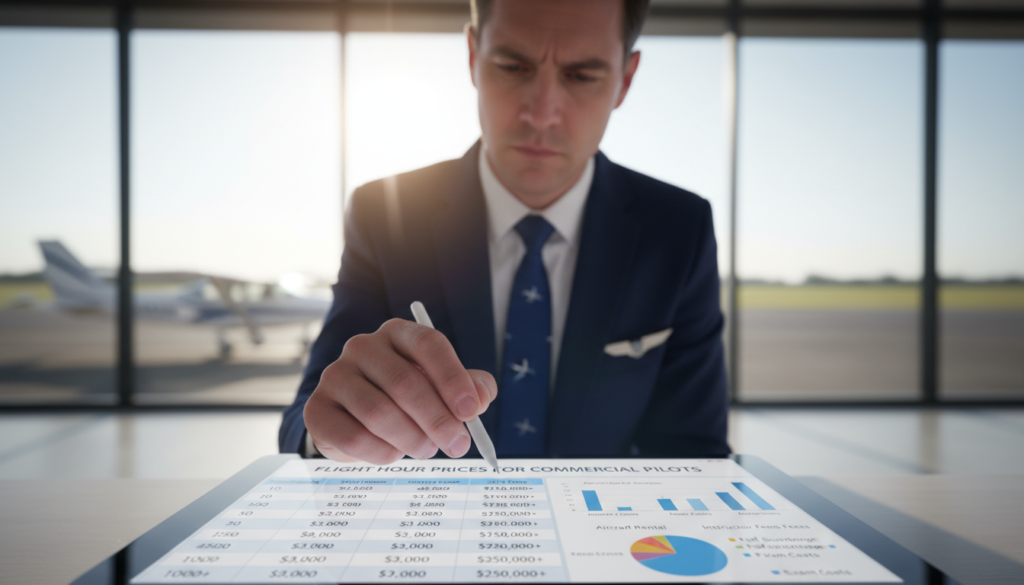
Then, there’s choosing between “wet” or “dry” rental. “Wet” includes fuel; “dry” doesn’t, like finding out fries cost extra. Either choice changes how much you spend on taxiing, run-up, and practice flights.
The type of plane also matters. Big, complex planes are pricier to fly because they cost more to keep up. This means flight hour prices go up quickly. Smaller planes might save some money but it still adds up as you aim for skill, not just checking a box.
The required training hours might trick you at first. The FAA says you need at least 35-40 hours. But most people need about 70 hours. This means you’ll see your instructor and rent the plane more than expected.
Unexpected costs are actually quite predictable. Every new rating requires things like books, maps, and test materials. Gear costs up front but lasts for years, if it survives being used a lot.
Big flight programs often add extra costs. ATP mentions fees not included in the base price—like FAA exams and gear, adding up to significant amounts. None of this reduces the hourly flight costs, but it does increase your total spend.
Scheduling adds to the challenge. Bad weather, plane fixes, and finding an available instructor can delay training. This means more repeat flights, rescheduled lessons, and more hours renting a plane. For a real comparison, check Canadian flight training program costs for insight, even if it’s from another country.
So, the pressure to maintain a schedule is real. You’re paying not just for skills but for regular practice. This way, tricky maneuvers become second nature, not a shock every time.
Pilot Lifestyle: On the Road and at Home
The commercial pilot lifestyle seems glamorous, but it’s tough. One week you might be home for dinner. The next week finds you eating airport sushi at 9 p.m., thinking this is your “work-life balance.” This unpredictable schedule begins way before you start flying.
Your training path influences your life deeply: your sleep, finances, relationships, and dealing with boredom. Whether you choose accelerated or paced training defines your future lifestyle. It’s like picking what kind of person you want to be.
Accelerated and paced training are worlds apart. Accelerated training means going all in, flying twice a day for weeks. It’s a wild and fast way to learn.
Paced training is more like everyday life, fitting in flights around your job and chores. It’s a slower approach and can take longer if you face delays.
| Training cadence | Weekly rhythm | What it does to your wallet | What it does to your head |
|---|---|---|---|
| Accelerated | Full-time blocks; up to two flights per day | Cash burns fast, but you may finish sooner and stop paying sooner | High focus, low flexibility; great for momentum, rough on downtime |
| Paced | 2–3 flights per week plus ground study | Spending feels smaller, but delays can add hours and extra lessons | More adaptable, but easier to lose sharpness between flights |
I like looking at how training feels day to day. Training moves from pre-solo to cross-country, then to test prep. The FAA checkride feels like a flying job interview with both questions and flying tests.
The lesson for pilots is clear: flying often saves time and money. Flying less means spending for refreshers, especially if there’s a long break in between.
Weather also plays a huge role. Reliable flying weather means fewer delays. This is why Florida is often mentioned, as good weather there means fewer cancellations.
The way a school runs is important too. ATP emphasizes standard teaching methods, making instructor changes easier. This smooth transition can save money by reducing repeat lessons.
Looking at pilot training in other countries, like Canada, can give us a clear idea of what’s required. It’s all about managing your training like a tight budget.
In the end, the pilot life involves more than just flying. Choosing between accelerated and paced training affects your daily life. It impacts your mornings, your finances, and how often you’re at home.
Career Stability and Growth
When we talk about “stability” in jobs, it’s like a hidden force. It seems dull until it’s suddenly crucial. In the world of flying, pilot job security changes with retirements, how much people are traveling, and airline training speeds. There’s a pattern here that’s interesting to keep an eye on.
Flight training is a bit like betting on your future. As you move up and get more skills, the initial costs seem less scary. The real challenge is making it through without being broke forever.
Schools often mention their connections with airlines, and it’s clear why. These partnerships can make your path after training more predictable. They help you see what’s next, including job opportunities and mentorship.
Something we don’t talk about enough is the challenge of time. To qualify for an airline job, most pilots need 1,500 flying hours. Many earn these hours while teaching flying, avoiding the huge costs of paying for each flying hour.
Managing expenses isn’t just about keeping a tight budget. It’s also about getting credit for the flying you’ve already done. Having previous flight hours can shorten your training. This means you can start earning sooner.
It’s important to know that airlines don’t cover the cost of pilot training. However, some offer help after you’re hired, like tuition paybacks and bonuses. But remember, this help isn’t guaranteed for everyone.
| Career lever | What it can change | What to double-check |
|---|---|---|
| airline partnerships | Clearer hiring pathway, smoother transition from training to interviews | Partner list, flow terms, minimum hours, and how often pilots actually get placed |
| pilot job security | More predictable scheduling over time, better bidding power with seniority | Base stability, fleet changes, contract rules, and how downturns hit junior pilots |
| tuition reimbursement programs | Lower out-of-pocket cost after employment, cash flow relief | Eligibility timing, repayment clauses, annual caps, and required service periods |
Growth in this career isn’t easy. You collect certifications, log hours, and take jobs that offer valuable experience before good pay. It resembles climbing a ladder or navigating through a jungle gym. Yes, it’s challenging, but it’s also how you move forward.
Personal Stories from Real Pilots
I trust people more than spreadsheets. Numbers show hourly pay but can’t capture the challenge of earning a new call sign. Acron’s pilot profiles transform the idea of becoming a pilot. They show it’s about facing tough weeks to find great results, not just pretty posters.
Erik Wyand’s story proves it’s never too late to change. His journey isn’t about cliches but real choices. He left comfort for skill, and chose discipline when things got tough. His story is about embracing change and finding success through hard work.
Sergey Kozyrev’s journey to becoming a Delta pilot is about proving oneself. It’s not just about glamour but hard work and facing the music during checkrides. His story shares the unseen efforts and standards aspiring pilots must meet, showing the reality of aviation’s demands.
The story of becoming a First Officer at Southwest focuses on readiness. It suggests success requires more than just timing; it calls for the right attitude. This tale emphasizes the importance of preparation and the relentless pace of pilot training.
Acron’s stories connect the dots between effort and financial support in a tangible way. The EXCEL Scholarship is about earning your keep through grades, flight tests, and feedback. It covers key pilot training additions, making dreams more attainable based on merit.
| What gets measured | How it’s judged | Why it matters in training | Where it can help financially |
|---|---|---|---|
| Ground School exam results | Scores that reflect knowledge and consistency | Strong fundamentals cut down on re-teaching and re-testing | EXCEL Scholarship consideration tied to performance |
| Checkride performance | Practical test execution under pressure | Shows you can perform, not just memorize | May offset costs through the CFI-I Add-On or Multi-Engine Add-On |
| Instructor feedback | Day-to-day professionalism, prep, and cockpit habits | Reveals whether you train like it’s already your job | Supports scholarship decisions beyond a single test day |
Combining all these stories reveals a pattern: successful pilot training mirrors real work. The tales of Delta and Southwest pilots aren’t fantasies. They highlight the real drive, pressure, and perseverance needed to move forward in both career and financial terms.
Is Commercial Training the Right Investment?
I see pilot training as an investment memo but without the suit or the pretend confidence. The price catches your eye first, but the details can surprise you. Two programs might look the same until you read the fine print.

ATP Flight School has an Airline Career Pilot Program costing $123,995 for beginners, or $90,995 for those with a private pilot certificate. This includes training up to a flight instructor certificate. However, ATP notes extra costs like test fees, which could add up to $12,000.
Acron Aviation Academy offers everything upfront. Their Accelerated Pilot Track costs $93,500, and their Pro Pilot Program is $95,000. They include all the essentials in their price, so there are no hidden surprises.
| Program | Listed price | What the price covers | Costs commonly treated as separate | Budget risk to watch |
|---|---|---|---|---|
| ATP Flight School Airline Career Pilot Program (Zero time) | $123,995 | Flight training and certifications through commercial plus flight instructor certificates | Examiner/knowledge test fees shown separately in examples (up to $12,000) | “Tuition” looks stable while testing and admin fees move around the edges |
| ATP Flight School Airline Career Pilot Program (With private pilot certificate) | $90,995 | Same path through commercial plus instructor certificates, with prior training credited | Examiner/knowledge test fees can still sit outside tuition in examples | Savings depend on how complete and recent your prior training really is |
| Acron Aviation Academy Accelerated Airline Pilot Track (AAPT) | $93,500 | Tuition, required flight hours, instructor training hours, FAA written/practical tests, and materials | Fewer line-item surprises by design, per their “no surprises” claim | Less nickel-and-diming, but you still need time and consistency to stay on track |
| Acron Aviation Academy Professional Pilot Program (PPP) | $95,000 | Tuition, required flight hours, instructor training hours, FAA written/practical tests, and materials | Packaged pricing aims to keep required items inside the program total | Small price jump can reflect pacing and program structure, not just “more stuff” |
Budgets fall apart not because of the price tag, but due to time and flight hours. Minimums are just the start, and bad weather doesn’t care about your budget. If training drags on, you lose skill, hours pile up, and the cost increases.
To save money, look for reliable methods. Acron suggests doing your homework on programs, applying for scholarships, keeping a steady schedule, and using simulators. These steps may seem simple, but they prevent costly gaps in your training.
- Consistency: fewer gaps means fewer repeat lessons and fewer extra hours.
- Reality-based planning: budget for typical hours, not the legal minimum.
- Smarter practice: simulators can build repetition without burning fuel.
- Receipts: track every fee category so “miscellaneous” doesn’t become a lifestyle.
Paying for flight school involves compromise; no one gets everything they want. Scholarships can lower your loans, but they won’t cover everything. Flight training loans fill in the rest, and that gap can be big.
Regarding loans, both programs give real choices. Acron partners with lenders like Sallie Mae and Stratus Financial, offering loans to those who qualify. ATP says they give students access to Sallie Mae’s best loans for ATP students, a unique offer among flight schools.
Even with financial aid and loans, the real cost includes tuition, tests, checkrides, training speed, and potential extra hours. The best savings tips help you manage what’s in your power before unexpected costs arise.
Deciding Your Path
I see choosing this path like picking out a car, but with extra homework. Start planning your commercial pilot training costs early, because leaving it for “later” is how budgets get out of hand.
First up, choose a pricing model. Would you prefer a set tuition fee like ATP’s method or Acron Aviation Academy’s all-in package? Maybe you’re okay with paying by the hour, where costs can add up without you noticing?
Then, look closely at what’s included in the price. ATP mentions some costs that aren’t part of tuition, like $10,500–$12,000 for tests and about $200 in apps, plus around $2,005 for gear. Acron tells you upfront that tests and materials are included, which might save you money.
The place you choose to learn matters a lot when comparing prices for a commercial pilot license. Acron’s based in Florida, where good weather means fewer cancelled lessons and more continuity.
Hard work is also part of the equation. According to Acron, students who prepare well can save time and money. ATP, on the other hand, believes that having consistent instructors and a standard approach can help avoid unnecessary expenses.
How the program is structured can also affect your budget. Acron points out the benefits of choosing a school with FAA Part 141 accreditation, since the requirements and schedule can influence how long and costly the training will be.
- Pick the billing style: fixed-cost tuition vs hourly billing
- Audit inclusions: tests, checkrides, materials, simulator time, and gear
- Pressure-test the timeline: weather, availability, and aircraft utilization
- Check program structure: Part 141 vs Part 61 expectations
- Map your cash-flow: when payments hit vs when income starts
I use a special worksheet to make sure I’m being realistic about commercial pilot training costs. It helps me remember that not all schools price things the same way.
| Decision point | What to verify | How it can move total cost | Real-world example |
|---|---|---|---|
| Pricing model | Fixed-cost tuition vs hourly billing; overtime policies; instructor availability | Hourly billing can creep if lessons repeat or weather disrupts; fixed-cost may shift some items outside tuition | ATP uses a fixed-cost tuition model; many independent schools bill by Hobbs time and instructor hours |
| What’s included | Written tests, practical exams/checkrides, materials, simulator blocks, headsets/gear, apps | Missing inclusions become surprise line items that inflate your cost for commercial pilot license comparison | ATP lists examples that may be outside tuition: $10,500–$12,000 examiner/knowledge test fees, $200 apps, $2,005 gear; Acron advertises written/practical tests and materials included |
| Weather and geography | Cancellation rates, seasonal ceilings/visibility, runway availability, local traffic delays | More cancellations can mean slower progress and more review flights; steadier weather can tighten the timeline | Acron points to Florida consistency as a driver of continuity and potentially fewer total hours |
| Student effort | Study cadence, simulator discipline, readiness before each flight, debrief follow-through | Better prep can reduce rework and hours; weak prep extends training and adds flights | Acron ties effective sim and flight work to lower time and cost; ATP argues standardization reduces inefficiency |
| Program structure | FAA Part 141 accreditation, syllabus checkpoints, stage checks, minimum hour rules | More structure can speed progress for some students; less structure can stretch timelines if momentum slips | Acron highlights FAA Part 141-accredited programs; Part 141 vs Part 61 minimums affect pace and total hours |
| Cash-flow timeline | When payments are due, when you can instruct, and how long you’ll be pre-income | A faster path can shorten the pre-income window; a slower path extends time paying while earning nothing | This is where commercial training cost strategy becomes personal: speed changes when you can start earning |
Looking at the big picture, the decision isn’t just about choosing a school. It’s about figuring out your pathway to earning. Every decision affects how smooth your financial journey will be.
FAQs
Flying seems exciting until you look closer. People ask about training costs for commercial pilots. The reality is, it’s a serious commitment. The outcome relies on your timeline, your goals, and how well you handle financial ups and downs.
Flight school fees surprise many. It’s more than just class costs. You pay for plane use, instructor time, fuel, exams, and tests. Weather and unplanned extra hours make costs unpredictable without careful tracking.
How can you save money wisely? Set a strict budget and know how many hours you’ll need. Fly regularly to prevent forgetting what you’ve learned. Choosing a cheaper airport, sticking to a strict learning plan, and not taking long breaks can also help save money.
If saving seems tough, simplify. Write down your questions on training costs. Compare different schools’ fees. See how the savings strategies fit into your actual schedule. In aviation, every small choice builds up. Treat this as investing in your future career, not just a hobby for fun.




