For most student pilots, the traffic pattern is where flight training starts to feel real. It looks simple on paper: take off, climb, turn crosswind, continue downwind, base, and final. In practice, though, the pattern compresses a lot of flying into a small amount of time. You are managing altitude, airspeed, spacing, radio calls, checklists, wind correction, runway alignment, and landing setup all at once. That is why traffic pattern work becomes such a major part of early training and first solo preparation.
A student pilot who understands the pattern early usually progresses faster because the pattern teaches more than landings. It teaches consistency, sequencing, situational awareness, and safe decision-making under light workload pressure. The goal is not to memorize a rectangle. The goal is to understand how each leg sets up the next one so the airplane stays stable and predictable. That is what instructors and examiners want to see.
What The Traffic Pattern Is Designed To Do
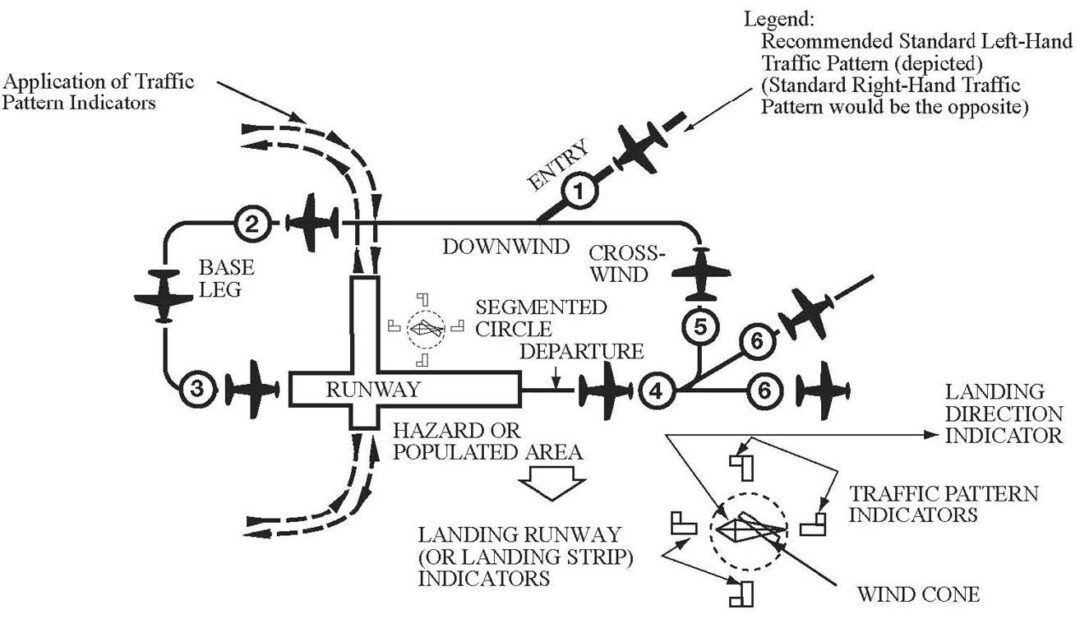
An airport traffic pattern exists to organize arriving and departing aircraft in a predictable flow. The FAA explains that traffic patterns are developed to help aircraft operate safely into and out of an airport, with local procedures based on runway layout, pattern direction, and altitude. Unless otherwise indicated, turns in the traffic pattern are made to the left. Right traffic is used only where published or marked.
For a student pilot, that predictability matters. A good pattern gives you time to plan the landing, monitor other traffic, and avoid abrupt corrections. A sloppy pattern usually causes problems later: an unstable base, a rushed final, poor spacing, or unnecessary radio confusion. The strongest pattern pilots are not the most aggressive pilots. They are the most consistent ones.
Learn The Purpose Of Each Pattern Leg
One of the biggest beginner mistakes is treating each leg as a separate event. In reality, every leg is part of one continuous setup.
| Pattern Leg | Primary Job | Common Student Error |
|---|---|---|
| Departure | Build climb performance and stay on runway track | Turning too early |
| Crosswind | Transition away from runway while climbing | Losing climb focus while searching for traffic |
| Downwind | Stabilize altitude, spacing, and landing setup | Flying too close or too far from runway |
| Base | Begin descent and align energy management | Turning base too late or too early |
| Final | Stabilize approach path and runway alignment | Chasing centerline or airspeed |
When you understand the job of each leg, your flying becomes smoother. Departure is about disciplined climb control. Crosswind is about safe transition and awareness. Downwind is where you organize the approach. Base is where you manage descent and geometry. Final is where you arrive already stabilized, not where you start fixing everything.
Downwind Is Where Most Of The Work Really Happens
Student pilots often think final approach is the most important part of the pattern. In reality, a lot of final approach quality is decided on downwind.
A strong downwind leg gives you time to confirm altitude, configure at the right moment, run your checklist, assess wind, and build the correct runway spacing. If downwind is rushed or uneven, the rest of the pattern becomes reactive.
This is why instructors repeat the same advice so often: fly a consistent downwind first, and your landings usually get easier. Pattern flying is really an exercise in creating repeatable setups.
If you are getting close to solo stage, that is also why traffic pattern work shows up so heavily in early milestone flights. PilotPointer’s first solo flight tips article connects that same idea to the first time you are flying the airplane alone in the pattern.
Pattern Altitude, Direction, And Entry Matter More Than Students Think
A traffic pattern is not just about staying near the airport. It has a published direction and a standard altitude structure, and student pilots need to learn to respect both. FAA guidance explains that pilots should conform to the traffic pattern in use, observe other aircraft already established in the pattern, and enter in a way that avoids conflict. At non-towered airports, pilots are expected to determine runway use from traffic and wind indicators, then integrate carefully.
That means students should never assume the pattern is always left traffic or always entered the same way at every airport. Local procedures matter. Published notes matter. Wind matters. Existing traffic matters.
A simple habit helps here: before you arrive, brief three things out loud—runway, pattern direction, and traffic pattern altitude. That one habit reduces a surprising number of errors.
Spacing Is A Skill, Not A Guess
Pattern spacing is one of the hardest early skills to master because it changes with wind, aircraft type, and runway environment. Students often want a fixed visual rule, but spacing is really a judgment skill built from repetition.
Too tight, and you rush the turn to base, crowd the runway, and create an unstable final. Too wide, and you end up stretching the pattern, descending awkwardly, or turning final with too much correction required.
The FAA’s guidance on airport traffic patterns emphasizes flying a uniform, orderly pattern and maintaining vigilance for other aircraft. In practical terms, spacing should support a stable descent and a normal final approach, not force last-second maneuvering.
Radio Calls Should Support Awareness, Not Distract From Flying
Student pilots sometimes become so focused on making the “perfect” radio call that they let the airplane drift. That is backwards. The airplane comes first. Radio work supports traffic awareness, but it should never replace basic aircraft control.
A useful rule is this: aviate, navigate, communicate. Make clear, concise calls, but do not let the radio pull you behind the airplane. Most instructors would rather hear a simple, timely transmission than a long, polished one delivered while altitude or heading control falls apart.
For a strong official reference on non-towered traffic pattern procedures and operations, the FAA’s Airport Traffic Patterns guidance is worth reviewing before your next lesson.
Wind Changes Everything In The Pattern
Traffic patterns are not flown in still air. Wind affects climb drift on departure, ground track on downwind, turn timing on base, and alignment on final. This is why students who “know the pattern” on calm days may struggle when conditions change.
A tailwind on base can stretch your approach quickly. A strong headwind on final can make the runway picture look unfamiliar. Crosswinds can change the visual spacing you thought was correct. The best response is not to fight the pattern harder. It is to recognize early that pattern geometry must adjust to conditions.
This is where pattern work starts becoming real pilot judgment instead of memorized procedure.
The Best Pattern Pilots Think Ahead Of The Airplane
The traffic pattern rewards anticipation. Students who improve fastest usually start doing three things earlier than everyone else:
- They look for traffic before each turn
- They brief their next action before reaching it
- They recognize unstable setups early enough to go around
That last point matters most. A go-around is not a failure. It is proof that you are thinking like a safe pilot. Traffic pattern training is not just about landing. It is about learning when a landing should not continue.
Frequently Asked Questions
What Is The Hardest Part Of The Traffic Pattern For Most Student Pilots?
For many students, the hardest part is combining spacing, radio work, and landing setup without getting behind the airplane. Downwind and base usually reveal whether the pattern is organized or rushed.
How Do Student Pilots Know If They Are Flying Too Tight Or Too Wide?
A good pattern should allow a normal descent and stable turn to final without aggressive correction. If you constantly feel rushed or stretched, your spacing is probably off.
Are Traffic Patterns Always Left Traffic?
No. Left traffic is standard unless right traffic is published, marked, or otherwise specified. Students should always check airport information and local procedures before assuming pattern direction.
Why Do Instructors Spend So Much Time On Pattern Work?
Because the traffic pattern teaches several core pilot skills at once: aircraft control, situational awareness, sequencing, communication, and landing preparation. It is one of the most efficient training environments in early flight instruction.
Final Takeaway
Traffic pattern basics matter because they teach the habits that carry into nearly every phase of flight training: discipline, consistency, awareness, and judgment. Student pilots who master the purpose of each leg, maintain organized spacing, adapt to wind, and stay ahead of the airplane usually improve faster and fly safer. The pattern is not just a place to practice landings. It is where many pilots first learn how to manage a flight from start to finish.