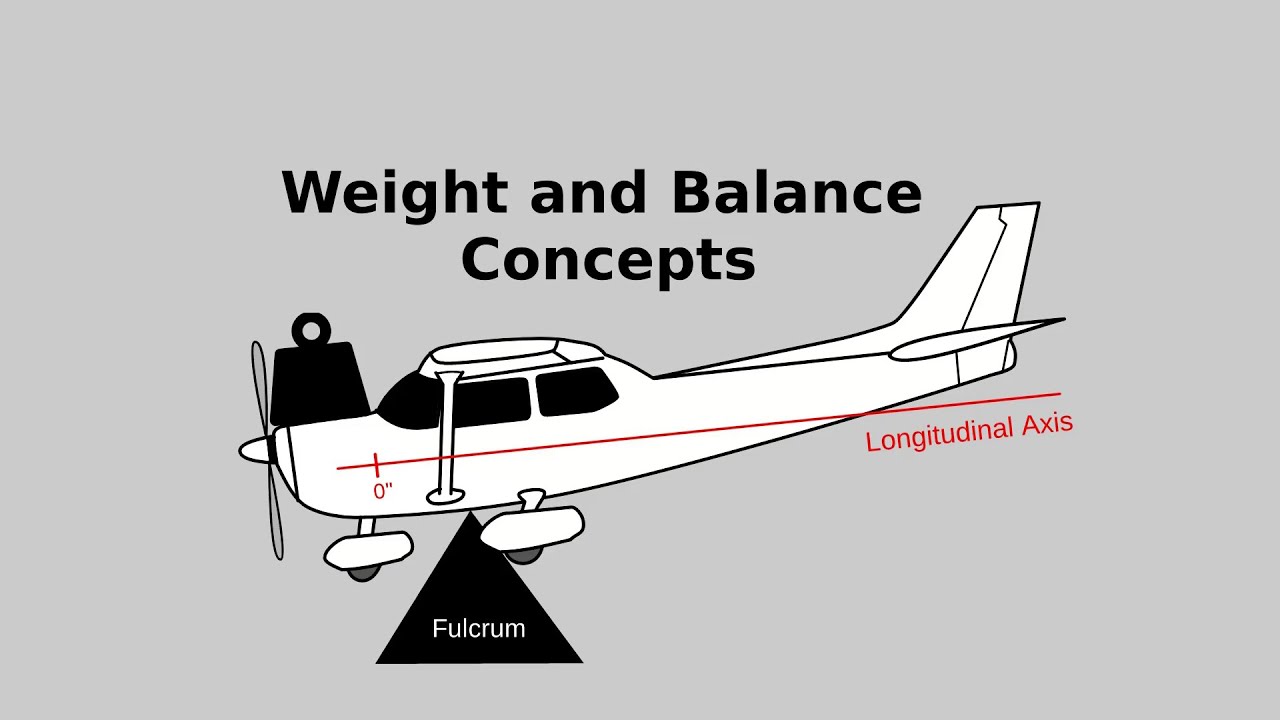
Aircraft weight and balance is one of the most important safety concepts a student pilot will learn because it affects nearly every phase of flight. An airplane that is too heavy may struggle to climb, require more runway, and perform poorly in hot or high conditions. An airplane loaded outside its center of gravity limits can become harder to control, less stable, or in some cases unsafe to fly. That is why weight and balance is not just a paperwork exercise. It is a real-world decision that affects takeoff performance, cruise handling, and landing characteristics.
For student pilots, the topic can seem more complicated than it really is because it mixes math with aircraft performance. The good news is that the underlying idea is straightforward. Every airplane has weight limits and balance limits, and pilots must make sure the aircraft stays within both before departure. Once that concept clicks, the calculations start making more sense and the practical value becomes obvious.
Why Weight And Balance Matters In Real Flight Operations
A properly loaded aircraft flies the way the manufacturer intended. A poorly loaded aircraft may still get off the ground, but that does not mean it is operating safely or efficiently. Weight affects performance, while balance affects control and stability. Those two factors work together, which is why pilots must check both instead of focusing only on total weight.
If an airplane is too heavy, performance usually suffers first. Takeoff distance increases, climb rate decreases, and the airplane may feel sluggish in maneuvering flight. If the center of gravity is too far forward, the airplane can become nose-heavy and require more control force, especially during landing. If the center of gravity is too far aft, the airplane may feel more sensitive in pitch and become less stable, which is a much more serious handling issue.
| Factor | What It Affects | Common Result |
|---|---|---|
| Excess total weight | Takeoff, climb, landing distance | Reduced performance |
| Forward center of gravity | Pitch control, flare capability | Heavier control feel |
| Aft center of gravity | Stability, stall behavior | More sensitive handling |
| Uneven loading | Balance and predictability | Poorer control feel |
Understanding The Difference Between Weight And Balance
Many students treat weight and balance as one idea, but they are really two linked concepts. Weight is the total amount the aircraft carries, including the airplane itself, fuel, passengers, bags, and anything else on board. Balance refers to where that weight sits in relation to the airplane’s center of gravity.
That distinction matters because two aircraft can have the same total weight and still fly differently if their loading is arranged differently. A flight with two passengers in front and light baggage may produce a very different center of gravity than a flight with lighter front seats and more weight in the rear compartment. The total number may look legal, but the distribution can still push the aircraft out of limits.
This is one reason pilots are taught early to think beyond simple totals. A legal total weight does not automatically mean a legal loading condition.
Basic Terms Student Pilots Need To Know
Weight and balance becomes much easier once you understand the vocabulary. The specific numbers come from the aircraft’s documents, but the basic structure stays the same across training aircraft.
| Term | Simple Meaning | Why It Matters |
|---|---|---|
| Empty weight | Aircraft weight with fixed equipment and unusable fuel | Starting point for calculations |
| Useful load | What the aircraft can carry | Includes people, fuel, and bags |
| Maximum gross weight | Highest allowable total weight | Safety and structural limit |
| Arm | Distance from a reference point | Used to locate weight |
| Moment | Weight multiplied by arm | Shows balance effect |
| Center of gravity | The aircraft’s balance point | Must stay within limits |
These terms matter because pilots are not just adding pounds. They are measuring how those pounds affect the aircraft’s balance point. That is where the arm and moment figures come in. Once you understand that moments help determine where the center of gravity sits, the worksheet starts looking much less intimidating.
How The Calculation Works In Practice
A standard weight and balance calculation begins with the airplane’s basic empty weight and moment. From there, you add each item being loaded into the aircraft, such as front-seat occupants, rear-seat occupants, baggage, and fuel. Each of those has a weight and an arm. Multiply weight by arm to get the moment, then add all weights and all moments together. The final center of gravity is determined from those totals.
The actual arithmetic is not usually the hard part. The harder part is being disciplined enough to use the correct figures from the aircraft records and loading data. Students often make mistakes by estimating baggage, using outdated numbers, or assuming a “normal” loading situation is always acceptable.
Here is a simplified example of how the loading process is usually organized:
| Item | Weight | Arm | Moment |
|---|---|---|---|
| Basic empty aircraft | 1,650 lbs | 39.5 | 65,175 |
| Pilot and front passenger | 340 lbs | 37.0 | 12,580 |
| Baggage | 40 lbs | 95.0 | 3,800 |
| Fuel | 240 lbs | 48.0 | 11,520 |
| Totals | 2,270 lbs | 93,075 |
This table is only an example, not a substitute for your aircraft’s approved data. The actual numbers must always come from the specific airplane you are flying.
Why Fuel Changes The Calculation More Than Students Expect
Fuel is one of the biggest reasons a weight and balance calculation can change quickly. Students sometimes focus heavily on passengers and bags while underestimating how much fuel affects both total weight and center of gravity.
A full fuel load may improve range, but it also increases takeoff weight. In some aircraft, that means you may not be able to carry full fuel and full seats at the same time. In others, fuel burn shifts the center of gravity during the flight. That is why the calculation is not only about takeoff legality. It is also about understanding how the aircraft loading changes from departure to landing.
This kind of planning also connects directly to other recordkeeping habits. If you are building good preflight discipline, PilotPointer’s flight time logging guide fits naturally with learning how to document flights carefully and think more methodically as a pilot.
Common Student Pilot Mistakes In Weight And Balance
Most student mistakes happen because the process feels routine, not because the concept is impossible. Once pilots become familiar with the airplane, they sometimes stop treating the calculation as a real performance and safety check.
The most common problems include using rounded passenger weights, forgetting baggage, skipping fuel recalculations, or assuming a familiar loading setup is always within limits. Another common issue is looking only at the total weight and not verifying whether the center of gravity remains inside the approved envelope.
A conservative pilot avoids all of those shortcuts. Weight and balance is not about proving the airplane will probably fly. It is about confirming the airplane will fly safely within its approved design limits.
How Weight And Balance Affects Training Flights
In early flight training, weight and balance can feel less dramatic because many lessons happen in lightly loaded aircraft with only a student and instructor on board. Even so, the concept matters from the start because it teaches pilots to respect aircraft limitations and performance planning before the loading becomes more complex.
Later in training, the importance becomes even more obvious. Solo flights, cross-country planning, higher temperatures, added baggage, and longer fuel loads all make the calculation more relevant. The student who understands weight and balance early usually handles these changes with much more confidence because the logic is already familiar.
For a strong technical reference, the FAA’s weight and balance guidance is one of the best places to review how loading affects performance, center of gravity, and safe flight operations.
Why Good Pilots Treat Weight And Balance As A Decision Tool
The best pilots do not see weight and balance as a worksheet to complete and forget. They use it as a decision-making tool. If the numbers are close to the limits, that may affect how much fuel to carry, whether to delay a flight, or whether to leave bags behind. If temperatures are high or the runway is short, those decisions matter even more.
That is what separates memorizing the process from understanding it. A pilot who understands weight and balance is not just calculating legal numbers. They are evaluating whether the planned flight makes sense under the actual conditions of the day.
Frequently Asked Questions
What Is The Difference Between Weight And Balance?
Weight is the total load carried by the aircraft. Balance refers to where that load sits and how it affects the aircraft’s center of gravity.
Why Is An Aft Center Of Gravity More Serious Than Many Students Expect?
An aft center of gravity can reduce stability and make the aircraft more sensitive in pitch. That can make the airplane harder to control, especially at lower speeds and during critical phases of flight.
Do Student Pilots Need To Calculate Weight And Balance For Every Flight?
Student pilots should follow their instructor’s guidance and aircraft procedures, but learning to review weight and balance consistently is an important habit. It becomes even more important as loading conditions vary.
Can An Aircraft Be Under Maximum Weight And Still Be Unsafe?
Yes. An aircraft can be below maximum gross weight and still be outside center of gravity limits if the weight is distributed improperly.
Final Takeaway
Understanding how aircraft weight and balance works is a core part of becoming a safe pilot because it connects directly to performance, control, and real-world decision-making. Once student pilots understand the difference between total weight and center of gravity, the process becomes far more practical and less intimidating. The goal is not simply to finish a worksheet. The goal is to confirm that the airplane is loaded in a way that supports safe, predictable flight from takeoff to landing.