Imagine Maverick’s visor from Top Gun – sleek and protective. It’s like having that tech for your eyes at 35,000 feet. Pilots need more than sharp vision; they need Star Trek-level eye care to handle bright cockpit screens.
The FAA’s 20/40 vision rule is just the starting point. It’s the minimum to avoid accidents. Pilots with refractive surgery often pass medical exams easily. But, they face challenges like screen glare and dry eyes.
This isn’t just about meeting standards. It’s about beating blue light and doing “eye yoga” in the air. We’ll explore anti-glare tech and hydration tips to keep your eyes sharp. When flying through storms, good enough vision isn’t enough.
Visual Demands of Aviation
Imagine trying to read War and Peace during a rollercoaster ride – that’s Tuesday for a pilot. Modern cockpits demand visual processing that would make Sherlock Holmes’ deduction skills look elementary. Scanning instrument panels is like finding Waldo in a high-stakes game.
Preflight inspections aren’t just checklists – they’re color-coded treasure hunts. Source 2’s Fig 2 shows pilots must spot micro-cracks smaller than a TikTok attention span. They also have to decipher runway markings that change meaning like a choose-your-own-adventure novel. Reading weather radar returns is like trying to understand a rave party’s light show.
Three key vision challenges define aviation safety:
- Dynamic focus shifts: Switching between 20/20-distance vision and close-up charts faster than a Netflix algorithm
- Color perception puzzles: FAA’s chromatic requirements aren’t suggestions – they’re written in blood (see: 2020 Kobe Bryant crash analysis)
- Information overload: Glass cockpits display more data points than a Wall Street trading desk
| Visual Task | Steam Gauge Era | Glass Cockpit Era |
|---|---|---|
| Data Points Monitored | 12-15 analog dials | 40+ digital parameters |
| Color Differentiation Needed | 6 primary hues | 18+ shades for terrain mapping |
| Decision Time Window | 8-10 seconds | 3-5 seconds |
The FAA’s 3pm refraction test isn’t some bureaucratic hazing ritual – it’s preparation for flying through nature’s kaleidoscope. Ever tried identifying cumulonimbus formations while sunlight refracts through ice crystals? It’s like playing chess against a strobe light.
And before you ask: No, “enhance image” Hollywood-style zoom doesn’t exist in real cockpits. That magenta weather blob moving at 50 knots? You’ve got 90 seconds to decide whether to climb, divert, or start drafting your memoir. Where’s the “avoid thunderstorms” app when you need it?
Blue Light and Circadian Disruption
Ever wonder why pilots feel so tired after flying? It’s because cockpits have a lot of blue light. This light is like a late-night scroll session on TikTok. It’s not just for reading altitudes; it messes with your body’s clock.
Let’s get into it. Flight decks have 57% more blue light than regular devices. Photochromic lenses try to help, but they’re slow. That’s where ZEISS Skylet lenses come in. They’re like the Top Gun of glasses, filtering light without making everything look old.
The Circadian Conundrum
Red-eye flights mess with your sleep and circadian rhythm. It’s like your body is in a time-travel movie. This messes with:
- How fast you get used to the dark
- Your vision during night landings
- How sharp you are at 35,000 feet
| Lens Type | Blue Light Filtering | Adaptation Speed | Best Use Case |
|---|---|---|---|
| Photochromic | Partial (UV-reactive) | 2-3 minutes | Ground operations only |
| ZEISS Skylet | Targeted cockpit spectrum | Instant | Multi-leg flights |
| Standard | None | N/A | Day VFR (if you’re nostalgic for eye strain) |
Night cargo pilots get hit with blue light overload and then dark runways. It’s like their eyes are stuck in a loop. New lens tech helps more than autopilot with turbulence.
It’s not just about better gear. It’s about how circadian rhythm pilot wellness affects safety. Next time you’re flying, think: Would Maverick settle for anything less than the best?
Eye Fatigue and Dryness
Ever felt like your corneas are auditioning for a Mad Max sequel at 30,000 feet? The air is drier than a stand-up comedian’s wit. Your eyes aren’t just dry; they’re fighting an environment as dry as the Sahara.
Pilots blink 62% less during landings than takeoff. This is because they focus harder than a millennial on Tinder. Less blinking and dry air lead to dry eyes. But there’s a solution as refreshing as pre-flight coffee.
Hydration Hacks for Sky Warriors
- Drink water like you’re training for a marathon sponsored by Starbucks
- Use preservative-free drops – they’re like mini humidifiers for your eyes
- Try scleral lenses (Source 1 calls them “hot tubs for eyeballs”) that keep moisture in
Pro tip: Pair your immune support for frequent flyers with eye care. Dehydration weakens your body’s defenses faster than a WiFi signal over the Atlantic. Avoid alcohol to prevent your dry eyes flight experience from feeling like a tequila sunrise.
Your eyes are not just windows to your soul. They’re the 4K monitors of aviation. Treat them well, or you’ll face landing approaches that look like a bad Zoom call.
Proper Use of Sunglasses and Screens
Your eyes aren’t like gas station sushi – they deserve better than cheap sunglasses. Aviation-grade eyewear is about survival, not just looking cool. Imagine trying to read an altimeter in the sun with bad lenses. It’s not safe at 30,000 feet.

ZEISS Skylet eyewear is the top choice. It blocks 100% UV rays and improves contrast. These lenses make blurry skies clear, like having an “eye wingman” watching your back.
Unlike polarized lenses, which are great for fishing but bad for screens, these tints keep instruments clear. The FAA says some lens colors are too risky for flying. Stick to neutral shades to avoid a light show in your cockpit.
| Feature | Aviation Shades | Gas Station Specials |
|---|---|---|
| UV Protection | 100% (ZEISS Skylet) | Questionable |
| Polarization | Controlled anti-glare | Altimeter distortion |
| FAA Compliance | Certified colors | Russian roulette |
Screen time is bad for your eyes, like blue light is a playground. Modern cockpits are like Vegas casinos, full of high-energy light. Use blue light filters on screens to help your body adjust to night flights. Your eyes aren’t vampires; they need protection from digital and solar light.
Investing in good lenses is like choosing a reliable parachute. Your pilot vision needs strong protection. In aviation, clear vision is not just nice; it’s necessary for survival.
Diet for Eye Health
Let’s face it, airline food is not great. But at high altitudes, your eyes need more antioxidants. That’s why fighter pilots eat carefully.
Your retinas work hard up there. They face oxidative stress. To fight it, eat:
- Carrot sticks with hummus (TSA’s least-favorite contraband)
- Walnuts packed with omega-3s – nature’s eye drops
- Blueberries that make your retinas say “Thank you, ma’am”
Salmon is great for your eyes. It helps your tear film stay healthy. Pro tip: Carry smoked salmon in a pouch. It’s okay with airport security.
Here’s your altitude nutrition cheat sheet:
| Snack | Eye Benefit | TSA Approval |
|---|---|---|
| Pumpkin seeds | Zinc for night vision | Yes |
| Dark chocolate (70%+) | Flavonoids boost blood flow | Melts… strategically |
| Pre-cut bell peppers | Vitamin C prevents UV damage | TSA’s existential crisis |
Hydration hack: Chia seeds in water bottles. They’re like mini Oasis tanks for your eyes. Plus, they won’t burst during pressure changes.
What you eat during layovers affects your next flight’s vision. That gas station hot dog? It’s a risk to your vision. Choose snacks that are good for your eyes, like air traffic control is for safety.
Eye Exercises and Breaks
Forget flight simulators – the real secret to surviving a transatlantic haul lives in micro-workouts for your eyeballs. Let’s talk about turning your cockpit into a vision gym without requiring clearance from air traffic control.
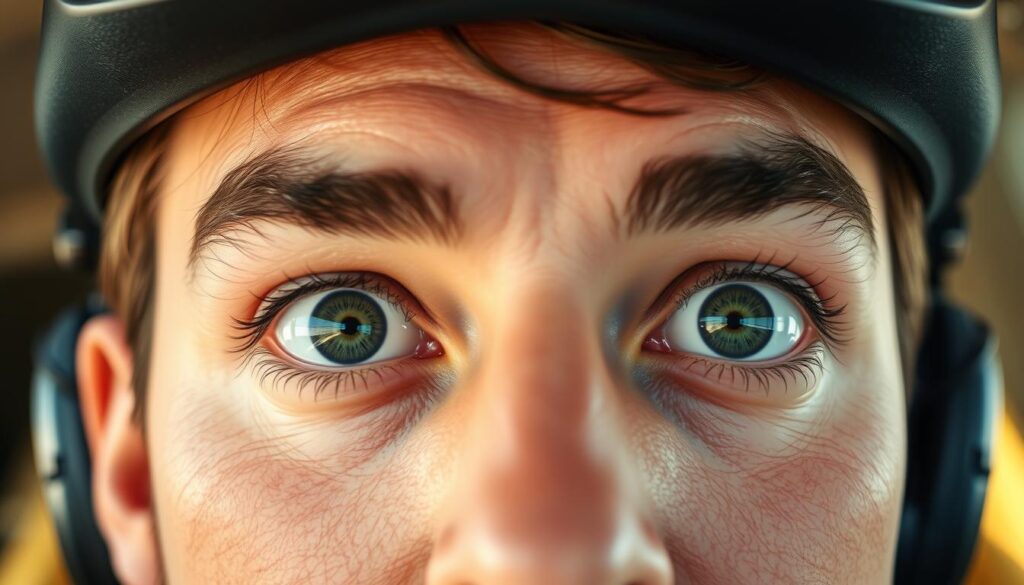
The 20/20-2 UCVA rule isn’t just aviation alphabet soup. Every 20 minutes, focus on something 20 feet away for 2 minutes. Try this during instrument cross-checks: stare at the altimeter, then snap to a distant cloud like you’re playing ocular whack-a-mole. Your retinas will thank you.
Here’s where it gets Top Gun-level strategic. The Three Mile Island method (no nuclear reactors required) trains your eyes to shift between near, medium, and far targets:
| Zone | Focus Target | Duration |
|---|---|---|
| Near | Checklist clipboard | 10 seconds |
| Medium | Windshield glare shield | 15 seconds |
| Far | Horizon line | 20 seconds |
Think of it as progressive overload for your ciliary muscles. Bonus points if you coordinate these shifts with radio chatter – nothing says professionalism like syncing eyeball calisthenics with approach instructions.
Now about those travel-proof workouts: The jump seat isn’t yoga studio. Try “cross-cockpit calisthenics” instead. Palming your eyes during pre-descent checks? That’s not napping – that’s strategic tear film redistribution. Circular head rolls while monitoring autopilot? You’re not stretching – you’re optimizing peripheral vision awareness.
Pro tip: Use beverage service intervals as natural break reminders. Three coffee cart passes = one full eye yoga sequence. Your peepers need warm-ups too – they’ve been working harder than the APU.
When to Get Professional Checks
Think of FAA eye exams as your pre-flight checklist. Skipping steps can be risky. Aviation medical examiners check more than just boxes. They see if you can spot runway lights in fog or read cockpit displays clearly.
The 20/20 vision rule is not random. It’s what lets you fly or not. It’s a big deal.
Modern optometrists act like ocular air traffic control. They watch for small changes in your vision. This is like tracking altitude changes in flying.
For example, after LASIK, the FAA wants 90 days of stable vision. This means your new vision must be better than your old glasses for three months.
But eye health for pilots is more than just seeing well. Dry eyes from cabin air can slow your reaction time. Eye strain can make you feel mentally tired fast.
For mental health in aviation, clear vision is key. It helps you stay sharp and aware, not flying blind.
Make sure to schedule checkups regularly. They’re as important as fuel stops. Your eyes are your main navigation system.