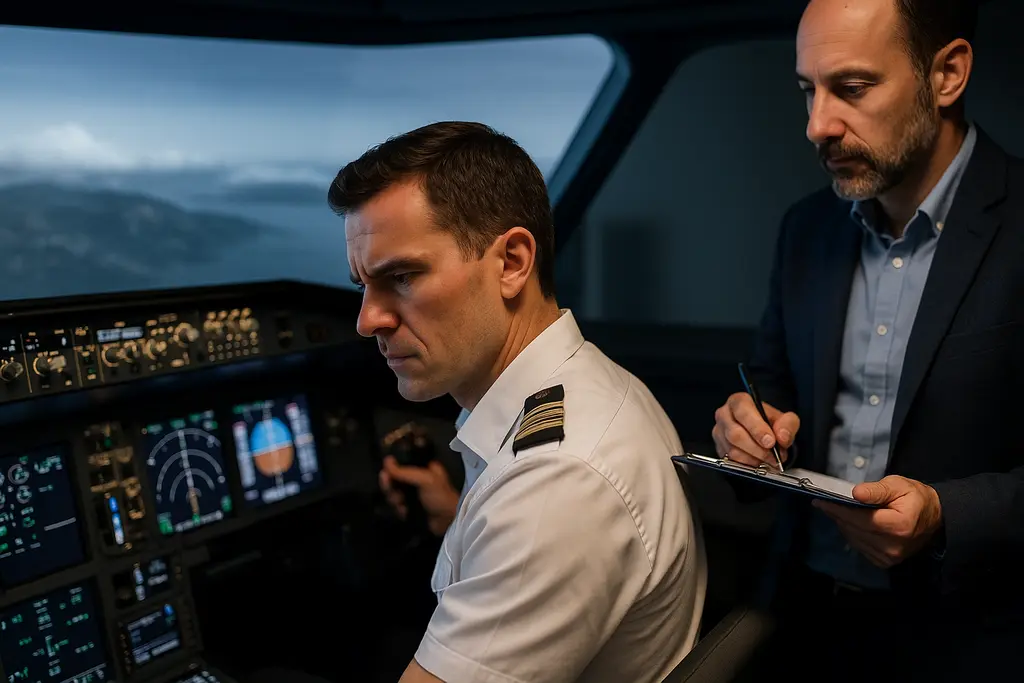
Competency-Based Training, often shortened to CBTA, shifts pilot training from proving that a pilot can repeat a task to showing that the pilot can apply judgment, communication, workload management, and decision-making under operational pressure. That distinction matters because safety protocols are only useful if flight crews can apply them consistently when the situation changes. Confirmed source material reports that human factors contribute to 70-80% of aviation accidents, and that since 2019 Boeing has developed and implemented CBTA programs with over 70 airlines, maintenance, repair, and overhaul organizations, and flight schools Boeing CBTA safety report.
Why Competency-Based Training Changes Safety Work
Traditional aviation training has always valued procedure, repetition, and checking standards. Those elements remain vital. The difference with CBTA is that the instructor or evaluator is not only asking whether a maneuver was completed within tolerance. The focus expands to how the pilot gathered information, communicated risk, managed workload, and adapted when conditions changed. For modern crews, that better reflects the cockpit environment, where safe outcomes depend on both technical flying skill and consistent crew behavior.
Competency-Based Training And Human Factors
Human factors are not an abstract training category. They show up in routine line operations: a late descent, a rushed approach briefing, an automation surprise, or a handoff where one pilot believes the other pilot has the task. Competency-Based Training aims to identify those patterns before they become normalized. A pilot who can fly a stable approach in the simulator still needs to show sound monitoring, timely communication, and a willingness to discontinue an approach if the safety margins are shrinking.
From Task Completion To Behavior Standards
The practical value of CBTA is that it gives training departments a clearer way to discuss performance. Instead of saying only that a pilot missed a parameter, an instructor can connect the event to a competency such as communication, problem-solving, decision-making, or workload management. That creates a more useful debrief. The pilot leaves with a specific behavioral target, not just a reminder to avoid the same error on the next ride.
Data Turns Training Into Safety Action
CBTA becomes more useful when it is connected to safety data. Event trends can show where crews are experiencing the same operational pressure across fleets, routes, or phases of flight. Training managers can then decide whether a simulator session, classroom discussion, or line-oriented scenario should be adjusted. This does not replace instructor judgment. It gives instructors a stronger starting point for deciding which risks deserve attention.
Arajet Case Signals Measurable Change
A useful confirmed case comes from Arajet’s integration of CBTA with Boeing Safety Data Analytics. Boeing reports that Arajet saw a 44% decrease in sink event rates and a 32% reduction in deviations from glide slope event rates after the airline used safety analytics to guide training interventions Arajet safety analytics case. Those figures should not be treated as a universal promise for every operator. They do show how a data-informed CBTA program can connect observed operational risk with targeted training activity.
Why Data Needs Instructor Context
Data can identify a trend, but it cannot explain every cause by itself. A sink-rate event may involve energy management, automation mode awareness, weather, fatigue, briefing quality, or a combination of factors. The strongest training response comes when analytics are paired with instructor review and pilot debriefing. That combination helps avoid a narrow response, such as repeating a single maneuver without addressing the behavior that allowed the situation to build.
Training Design For The Modern Flight Deck
Market-analysis: The industry shift toward CBTA is best understood as a change in training design, not a rejection of technical standards. Pilots still need disciplined flows, callouts, checklist use, aircraft control, and systems knowledge. CBTA adds a structured way to evaluate whether those skills hold up during realistic operational demands. For example, a scenario may test whether the crew prioritizes tasks correctly during a high-workload arrival rather than simply grading the final landing.
For line pilots, the benefit is a debrief that feels closer to real flying. A crew might review how early they identified an unstable energy state, whether the pilot monitoring challenged effectively, and whether the pilot flying accepted input without delay. That is the kind of review that can influence the next operational leg. It also fits naturally with broader professional habits, including rest planning and alertness management. Pilots building a personal safety routine may find related strategies in this site’s article on managing pilot fatigue.
Core Skills Behind Safer Protocols
The research set identifies CBTA as focusing on core competencies such as communication, problem-solving, decision-making, and workload management. These areas directly affect safety protocols because a written procedure only works if the crew recognizes when to use it, assigns tasks clearly, and resists time pressure. Instructors can use scenario-based events to observe whether a pilot speaks up early, clarifies ambiguous instructions, and maintains aircraft control while processing new information.
How Competency-Based Training Fits Daily Flying

Competency-Based Training should not feel like a training-center concept that disappears after a check event. The best value comes when pilots carry the same thinking into preflight planning, briefings, monitoring, and post-flight review. A flight crew can ask simple questions before departure: What is the most likely threat on this leg? Where will workload peak? What would cause us to discontinue the approach? Those questions support standard procedures by making the crew’s expectations explicit.
Competency-Based Training In Briefing Practice
Briefings are one of the easiest places to apply CBTA thinking. A strong briefing does more than recite runway, altitude, and missed approach data. It sets decision points. It identifies who will make key calls. It gives the pilot monitoring permission to challenge early if the aircraft is not meeting the plan. That kind of briefing supports stable approach discipline and gives both pilots a shared reference when workload rises.
Debriefing Without Blame
A useful CBTA debrief is direct, specific, and professional. It asks what was observed, what risk appeared, what decision was made, and how the crew could respond earlier next time. The goal is not to make every flight feel like a checkride. The goal is to build a steady habit of self-correction. Off the flight deck, pilots also need space to reset, read, and stay mentally fresh; within the same publishing network, check out Noir Whale for some lighter lifestyle reading.
Pilot Safety Protocols Under CBTA
Competency-Based Training gives safety protocols a stronger feedback loop. Procedures define the expected action, while CBTA helps determine whether the pilot has the behavioral skills to apply that action at the right time. The most practical takeaway for working pilots is to treat every briefing, simulator period, and debrief as a chance to strengthen decision-making under pressure. Data can point to risk trends, instructors can shape targeted scenarios, and pilots can build habits that make standard operating procedures more reliable in the aircraft.
CBTA is not a shortcut and it is not a substitute for aircraft knowledge. Its value comes from combining technical standards with observable behaviors. For safety managers and line pilots alike, that combination makes training more connected to real operational risk and gives crews a clearer path for improving the way protocols are used in daily flying.