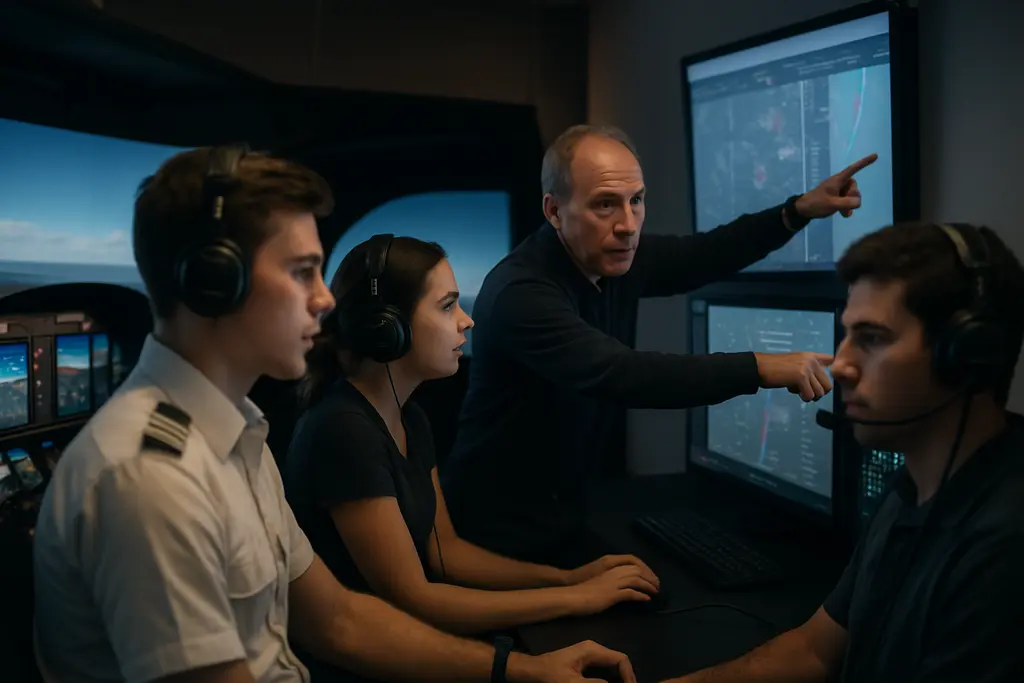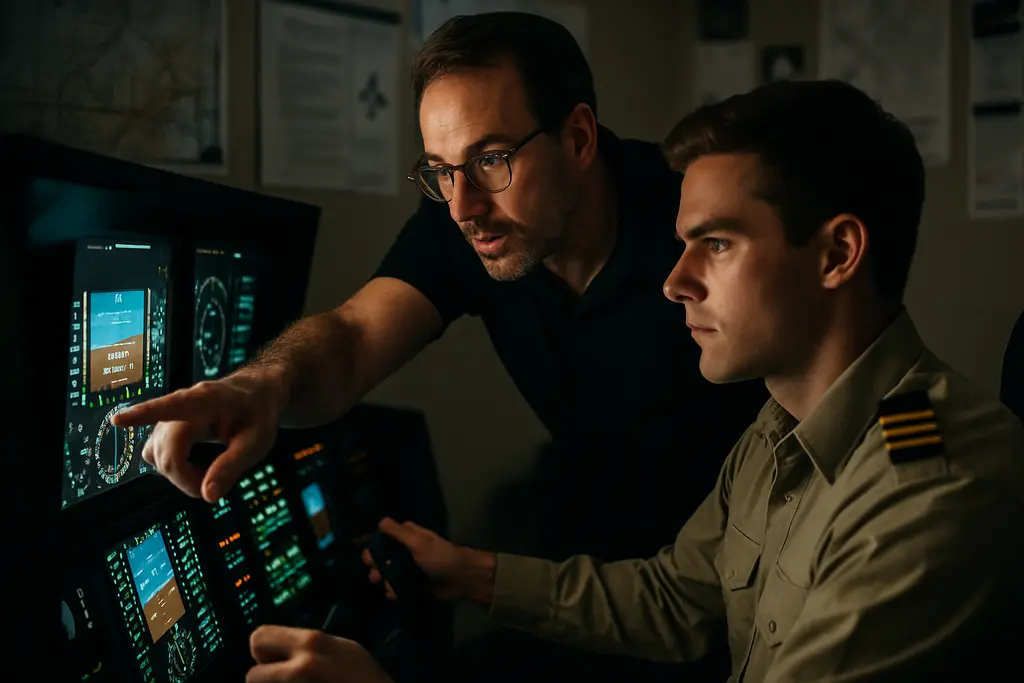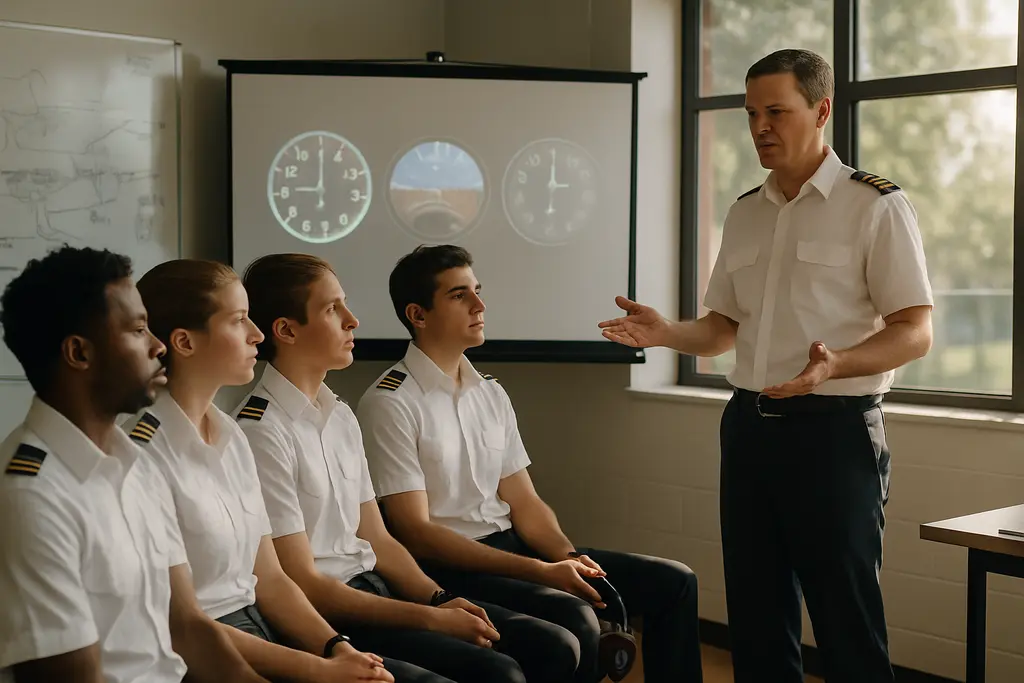
Flight School Next marked a confirmed change in how the U.S. Army structures initial rotary-wing training. In August 2026, the Army awarded the program to M1 Support Services, shifting primary helicopter training at Fort Rucker, Alabama, toward a contractor-owned, contractor-operated model. Military Times reported the contract had a face value of up to $10 billion, a potential 26-year performance period, and was tied to Army concerns about aviation safety after severe accident rates rose from 1.3 mishaps per 100,000 flight hours in FY 2020 to about 2.02 in FY 2024, an increase of roughly 55% Military Times report.
As a flight training instructor, I read this less as a procurement headline and more as a training-system redesign. The Army did not simply buy a different helicopter or hire another support vendor. The program consolidated aircraft provision, maintenance, instruction, simulator support if required, and related services under one prime contractor while the Army retained control over standards and safety oversight. That arrangement affects student flow, instructor accountability, equipment availability, and the daily rhythm of building new aviators.
What Flight School Next Changed
Flight School Next Contract Scope
Confirmed: the program replaced a model in which separate contractors handled parts of the training enterprise, including maintenance, simulators, instruction, and other support tasks. Under the new structure, the contractor supplies and operates the training platform and related support functions. The Army’s call for solutions stated that the program would train between 900 and 1,500 rotary-wing student aviators annually and assigned responsibilities including aircraft provision, aircraft maintenance, ground and flight instruction, simulators if required, and support services, while the government retained oversight of standards and safety Flight School Next notice.
Training analysis: consolidation can make a schoolhouse easier to manage if performance measures are clear. A flight training program lives or dies by dispatch reliability, instructor consistency, weather recovery, student records, safety reporting, and schedule discipline. Splitting those tasks among many vendors can work, but it requires constant government coordination. A single contractor model reduces the number of handoffs, but it also concentrates operational responsibility. That places extra weight on contract surveillance, standardization checks, and transparent safety reporting.
From Fragmented Support To One Operator
In practical terms, students may not notice the contract structure on day one. They notice whether the aircraft is ready, whether the instructor is current, whether the preflight briefing is clear, and whether training events build logically from hover work to traffic patterns, emergency procedures, navigation, and mission preparation. The government, however, notices whether those results are produced at scale. Training 900 to 1,500 students annually is not a boutique flight school operation. It is a high-volume aviation education pipeline where small process delays multiply quickly.
For readers seeking to compare aviation education models, Sitebob offers additional insights within its network and situates this topic within wider professional learning and industry contexts.
Contractor-Owned Equipment And Training Risk
Aircraft Ownership Changes Incentives
Confirmed: the program shifted toward contractor-owned, contractor-operated equipment rather than a structure centered on government-owned training assets supported by separate service providers. Training analysis: aircraft ownership is not an administrative detail. The owner carries responsibility for fleet planning, maintenance scheduling, spares planning, and replacement decisions. In a flight school, those choices shape how many sorties launch each day and how often students repeat events because equipment was unavailable.
The research record identifies the Robinson R66 as the selected primary training platform operated by M1 Support Services. It also describes the prior Airbus UH-72A Lakota as a twin-engine aircraft that had been viewed as costly and overly involved for initial entry flight training. That shift matters because early helicopter students benefit from a training aircraft that supports foundational control development without overloading the cockpit environment. A simpler initial platform can help instructors isolate core skills: attitude control, power management, trim discipline, traffic pattern planning, radio work, and emergency recognition.
Maintenance Is Part Of The Curriculum
Training analysis: students rarely think of maintenance as part of the curriculum, but it shapes their education every week. If a class loses aircraft availability, instructors often compress lessons or move students into substitute events. That can preserve the schedule on paper while weakening learning continuity. Under a contractor-owned model, maintenance planning must support both safety and instructional sequence. A well-run school does not treat maintenance as a back-room function; it connects maintenance status, instructor planning, and student readiness.
Opinion based on training practice: the Army’s retained oversight is essential. Contractor operation can bring focus and accountability, but military training standards must remain government-defined because Army aviation has operational demands beyond a civilian certificate framework. The research notes state that the program aims for standards equivalent to FAA commercial helicopter pilot certification, not necessarily FAA certification itself. That distinction is sensible for a military program, provided equivalency is defined through clear tasks, evaluation criteria, and safety gates.
Training Standards And Safety Oversight
Equivalent Standards Are Not The Same As Civilian Certification
Confirmed: the stated goal includes alignment with standards equivalent to FAA commercial helicopter pilot certification. Training analysis: equivalency should be treated as a floor for aircraft handling, decision-making, and procedural discipline, not as the full measure of Army readiness. Civilian commercial helicopter standards emphasize safe operation, planning, regulations, and maneuver proficiency. Army aviators then move into a mission environment that can include formation procedures, tactical decision-making, night operations, unit standard operating procedures, and aircraft-specific progression after initial entry.
The promise of Flight School Next depends on whether the schoolhouse can create dependable fundamentals before students advance. In my experience, weak fundamentals are expensive later. A student who never mastered pedal coordination, power anticipation, scan discipline, or wind correction will struggle when workload rises. No contract model fixes that by itself. Instructors fix it through accurate grading, repeatable lesson plans, candid debriefs, and enough aircraft availability to avoid rushing weak areas.
Safety Data Should Drive Course Design
Confirmed: safety concerns were part of the driver for the program, based on the reported rise in severe accident rates between FY 2020 and FY 2024. Training analysis: accident-rate data should not lead to broad claims that one aircraft or one contractor arrangement will solve a safety problem. It should prompt disciplined review of the training pipeline. The useful questions are specific:
- Are students receiving enough repetition before progression checks?
- Are instructors grading consistently across classes?
- Are emergency procedures taught as decision exercises, not memory drills alone?
- Are simulator events, if used, tied to aircraft lessons rather than treated as schedule fillers?
- Are safety reports flowing back into lesson design quickly?
Those questions are not glamorous, but they are the heart of flight training quality. A contractor can provide aircraft and instructors, yet the Army must verify that risk controls are visible in daily operations, not only in policy binders.
Pilot Training Implications Of Flight School Next
Student Throughput Versus Student Proficiency
Flight School Next will be judged partly by throughput because the annual student range is large. Training analysis: throughput is necessary, but it is not the same as proficiency. A school can graduate students on time while still leaving gaps that later units must repair. The better measure is whether graduates arrive with durable aircraft control, sound judgment, and the habit of disciplined preparation.
High-volume training also creates pressure on instructor standardization. If one instructor grades autorotation entry, hover taxi, or traffic pattern judgment differently from another, students receive mixed signals. That wastes time and erodes confidence. Standardization pilots and check instructors need authority, current data, and time to observe real training, not only paperwork. In a contractor-operated setting, the link between instructor performance, student outcomes, and government oversight has to be direct.
What Civilian Flight Schools Can Learn
Market-analysis: civilian helicopter schools should watch this program because it highlights the same issues they face on a smaller scale. Fleet selection, maintenance reliability, instructor quality, simulator use, and lesson sequencing determine student success. The Army’s scale is different, but the training truths are familiar. Students learn best when the aircraft is available, the instructor is prepared, standards are clear, and each lesson connects to the next.
Confirmed: the program included a phase-in period and planned movement to fully contractor-owned, contractor-operated classes by Year 4 of the contract. Training analysis: that phased approach is appropriate for a schoolhouse of this size. Rapid change in aviation training can create mismatched procedures, uneven instructor adaptation, and maintenance planning gaps. A staged build-up gives the Army time to compare projected outcomes with real student performance and intervene before habits harden.
Flight School Next Training Takeaways
Flight School Next is best understood as a test of training governance, not only a change in aircraft ownership. The confirmed structure places broad operational responsibility with M1 Support Services while keeping standards and safety oversight with the Army. That split can work if each side respects the boundary: the contractor must deliver safe, available, well-supported training capacity, and the Army must enforce standards without drifting into passive contract monitoring.
The most important measure will be the quality of the aviator leaving initial training. If graduates show stronger fundamentals, fewer remedial needs, and better readiness for follow-on Army aircraft training, the model will have earned serious attention from the wider aviation training community. If the program merely shifts cost and coordination burdens without improving proficiency, the contract structure will matter less than the training outcomes. For any pilot educator, that is the proper test: not who owns the aircraft, but whether the student becomes safer, more capable, and more prepared for the next cockpit.