MGA Aviation Training received a confirmed $3.48 million federal investment on September 9, 2026, giving Middle Georgia State University new support for FAA-certified flight, aircraft maintenance, and air traffic control programs. The funding came through the U.S. Department of Education and includes a $1 million student pilot fuel fund, a new 360-degree air traffic control simulator, new aircraft engines, specialized maintenance trainers, updated tools, and workstations, according to Middle Georgia State University. For student pilots, maintenance students, and future controllers, the significance is practical: the grant targets the parts of training that can be expensive, equipment-heavy, and directly tied to readiness.
What The Grant Changes For MGA Aviation Training
The most direct confirmed change is financial support for flight time. The $1 million student pilot fuel fund is aimed at offsetting one of the largest expenses students face while completing mandatory flight hours for professional pilot training. Fuel does not remove the need for disciplined scheduling, instructor availability, aircraft maintenance, or weather planning, but it can reduce pressure around a cost that affects nearly every flight student.
Fuel Support And Flight-Hour Completion
For pilot candidates, required flight time is not an abstract academic milestone. It is built one lesson, cross-country flight, checkride preparation block, and weather delay at a time. A fuel fund matters because fuel costs sit inside the repeating cost structure of flight training rather than at the edge of it. The confirmed purpose of this fund is to help students complete mandatory flight hours, not to guarantee completion, reduce standards, or replace the FAA-certified training structure.
From a training analysis standpoint, the fund may help students maintain steadier progress if fuel cost has been a barrier. That matters because long gaps between lessons can lead to skill fade and extra review flights. The funding does not erase those scheduling issues, but it gives the school a resource aimed at one of the clearest cost pressures in pilot education.
Simulator And Equipment Upgrades
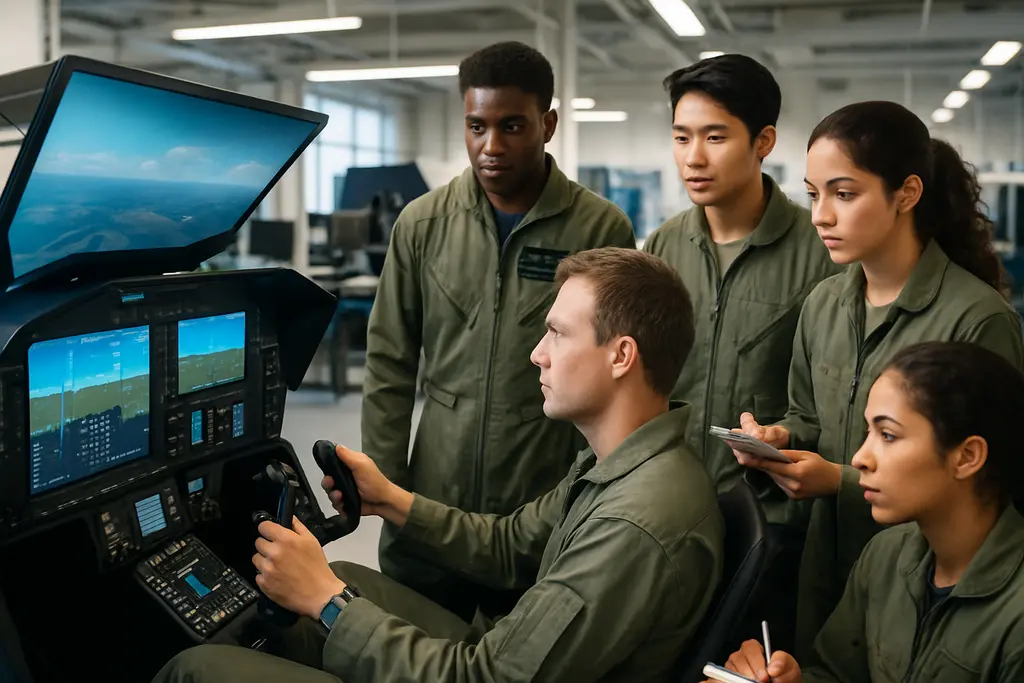
The new 360-degree air traffic control simulator is another major confirmed purchase. MGA’s air traffic control program is already tied to its FAA-recognized Air Traffic Collegiate Training Initiative pathway, and the school has reached Enhanced AT-CTI status. The research states that MGA is the first school in Georgia to receive that FAA recognition, which creates a more direct pathway for graduates into air traffic facility employment.
For maintenance training, the planned purchase of aircraft engines, specialized trainers, updated tools, and workstations points toward hands-on readiness. Aircraft maintenance education depends on repeated work with physical systems, not just classroom study. New engines and training devices can give students more chances to practice inspection, component recognition, and maintenance workflow under instructor supervision. The grant therefore supports all three aviation tracks rather than favoring only the flight deck.
Why The Three-Program Model Matters
MGA is described in the research as one of only a few schools in the United States, and the most affordable among them, offering three FAA-certified aviation programs: aircraft maintenance training under Part 147, flight training under Part 141, and an Air Traffic Collegiate Training Initiative program. That combination matters because aviation workforce preparation is not a single-lane issue. Airlines, airports, repair stations, and air traffic facilities all depend on separate skill sets that meet different certification and hiring requirements.
Part 141, Part 147, And AT-CTI In One School
Part 141 flight training gives students a structured FAA-approved training path. Part 147 maintenance training supports students preparing for aircraft maintenance careers. AT-CTI connects academic preparation with air traffic control workforce needs. Housing all three in one institution can create a broader aviation culture on campus, where students understand how pilots, mechanics, and controllers support the same safety system from different seats.
This is where MGA Aviation Training stands out as more than a flight school story. The federal funds are spread across flight, maintenance, and air traffic control resources. That distribution reflects the real aviation system, where a pilot shortage cannot be solved without maintenance capacity, and airport efficiency depends on well-prepared controllers as well as properly trained crews.
How Enhanced AT-CTI Changes The Student Path
The Enhanced AT-CTI status is a notable confirmed point because the research says it allows graduates a more direct pathway into air traffic facility employment. That does not mean every student receives a guaranteed job, and the research does not provide placement rates or hiring numbers. It does, however, signal that MGA’s air traffic control program has gained a higher level of FAA recognition within the AT-CTI structure.
For prospective students comparing aviation programs, that status should be reviewed alongside cost, location, equipment, instructor access, academic requirements, and career advising. The status itself is meaningful, but students still need to ask how often simulator sessions are available, how advising supports FAA-related steps, and what academic performance is required to stay on track.
What Students Saw At The September 17 Open House
MGA held a public aviation open house on September 17, 2026, at its Eastman Campus. The event showcased new and enhanced resources, including the ATC simulator, upgraded maintenance training equipment, new aircraft engines, renovated facilities, and the fuel fund. The same report noted that enrollment in the School of Aviation increased by 53 percent over the past five years and that tuition and related fees are among the most affordable in the nation for similar aviation programs, according to MGA’s open house announcement.
Because that open house already took place, the useful question now is not whether students could attend. The question is what the event revealed about MGA’s priorities. The items shown at the Eastman Campus point to a school trying to scale capacity while keeping direct training resources visible to students, families, and regional aviation employers.
- Confirmed: The grant included a $1 million student pilot fuel fund.
- Confirmed: Planned purchases included a 360-degree ATC simulator, aircraft engines, maintenance trainers, tools, and workstations.
- Confirmed: MGA’s School of Aviation enrollment rose 53 percent over the past five years.
- Analysis: The funding appears targeted at cost control, training capacity, and hands-on instruction rather than general campus spending.
For readers exploring aviation education efforts across different regions, Middle Georgia State University’s award is part of a broader trend seen in schools and technical centers aiming to build robust career pathways. A resource like biffaward.org can provide additional insights for those interested in related efforts within the same network.
Workforce Impact For Georgia Aviation

The research gives this funding a larger economic context: Georgia’s aerospace industry generated $8.8 billion in GDP in 2024. That figure helps explain why aviation education investments attract attention beyond campus boundaries. If a state has a major aerospace economy, training programs for pilots, technicians, and controllers can become part of a broader workforce strategy.
Still, the grant should not be treated as a cure-all. The research does not state how many new students the funding will support, how many extra flight hours will be subsidized, how many maintenance stations will be added, or how many air traffic control graduates will enter FAA facilities. A responsible reading is narrower: the funds support equipment, simulation, tools, engines, workstations, facilities, and fuel assistance that can strengthen training delivery.
That narrower reading is still significant. Aviation training often depends on high-cost assets. Aircraft need fuel and maintenance. Maintenance students need equipment that reflects real shop conditions. Controller candidates need structured practice environments. By targeting those areas, MGA Aviation Training receives support in places where training quality and student persistence can be closely linked.
What This Funding Means For MGA Aviation Training
The confirmed facts show a focused investment rather than a vague expansion campaign. Middle Georgia State University received $3.48 million in federal funds on September 9, 2026, and the planned spending touches the most resource-intensive parts of aviation education: flight hours, air traffic simulation, maintenance trainers, engines, tools, and workstations.
For future students, the smart approach is to view the funding as a reason to ask sharper questions. Ask how the fuel fund is administered, which students qualify, how simulator time is scheduled, what maintenance equipment has already arrived, and how Enhanced AT-CTI status affects the path after graduation. For working pilots and aviation professionals watching the training pipeline, the investment signals that MGA Aviation Training is strengthening all three major lanes of its aviation school at the same time: pilots, technicians, and air traffic control candidates.