

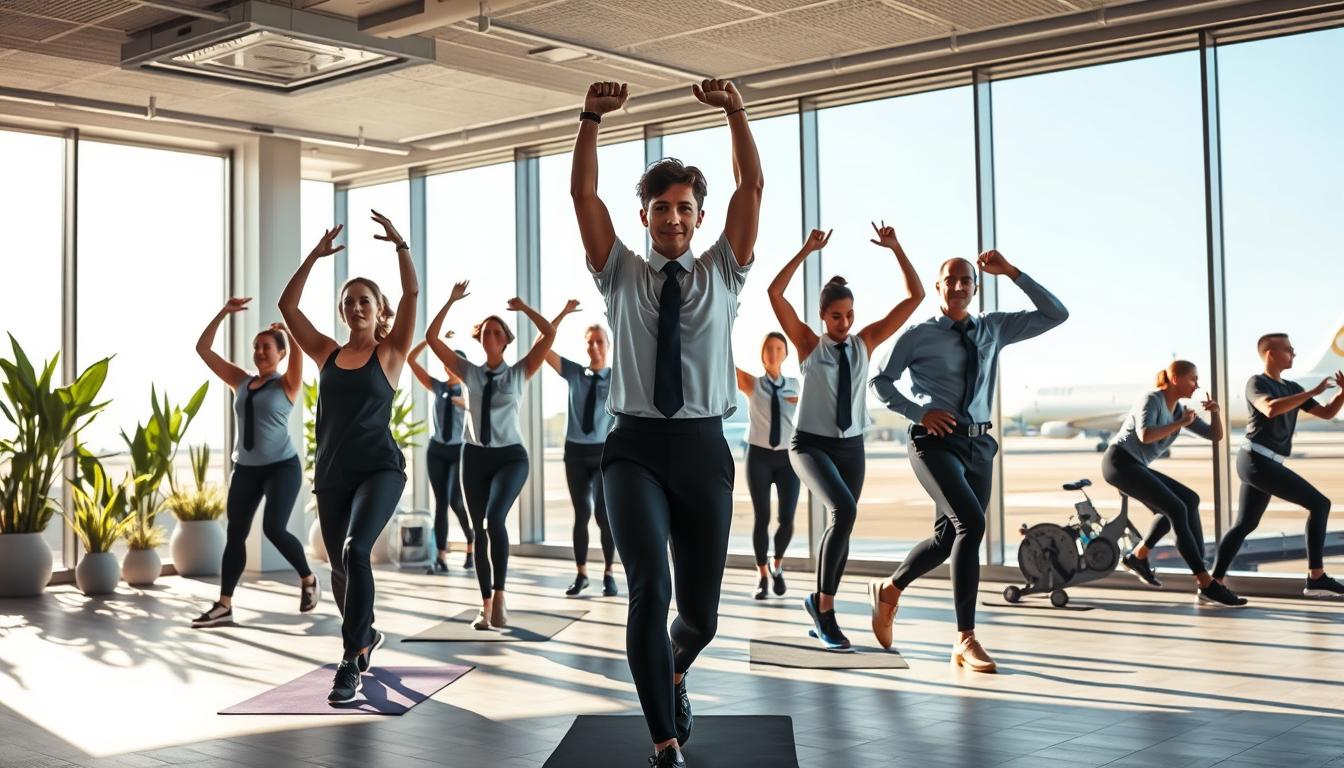
Forget Tom Cruise’s Top Gun bravado. The real heroics start long before takeoff. It’s about something simple: your water bottle.
Your body is more than just a passenger. It’s the most advanced tool you’ll ever use. The FAA’s maintenance rules aren’t just for planes.
Modern flying now recognizes what experienced pilots have always known. Being ready physically is key. Even a small amount of dehydration can affect you more than a sleepless night. The magnesium in your breakfast could mean the difference between a safe landing and a report by the NTSB.
This isn’t just about passing health checks. It’s about creating a pilot fitness program that tackles the harsh realities of flying. This includes dealing with changes in altitude, time zone shifts, and uncomfortable seats.
Your career isn’t just about technical skills. It needs a complete approach to staying ready to fly.
Cardiovascular and Strength Essentials
Imagine your heart deciding to file its resignation letter at cruising altitude. That’s not just bad career timing – it’s catastrophic aviation timing. While Hollywood loves dramatic cockpit emergencies, the real drama happens when pilots neglect their most critical equipment: their own bodies.
Cardiovascular fitness isn’t about running marathons. It’s about ensuring your heart doesn’t stage a mutiny when you need it most. The FAA requires pilots to maintain certain health standards, but the bare minimum won’t cut it when turbulence hits like a surprise audit.

Think of the cockpit as an airborne gym where the equipment occasionally tries to kill you. Your cardiovascular system needs to handle sudden pressure changes, reduced oxygen levels, and the stress of making split-second decisions. Twenty to thirty minutes of cardio three times weekly keeps your engine running smoothly when altitude tries to sabotage your performance.
Strength training takes on new meaning at 35,000 feet. This isn’t about beach muscles – it’s about having the functional strength to manhandle controls during unexpected weather without throwing out your back. Bodyweight exercises become your best co-pilot:
- Push-ups for upper body control during manual operations
- Squats for maintaining stability during long periods seated
- Core exercises that act as your built-in stabilization system
Pilates deserves special mention here. It’s like having an invisible co-pilot for your posture, core strength, and flexibility – three things that separate adequate pilots from exceptional ones.
The irony is almost poetic: we spend millions training pilots to handle every conceivable emergency except the one happening inside their own bodies. Your physical readiness isn’t just about passing medical exams – it’s about being prepared for the day your job literally tries to kill you.
| Exercise Type | Minimum Weekly Requirement | Cockpit Application | Risk Reduction |
|---|---|---|---|
| Cardiovascular Training | 60-90 minutes | Oxygen efficiency at altitude | 35% fewer stress-related errors |
| Upper Body Strength | 2-3 sessions | Control manipulation under pressure | 40% better emergency response |
| Core Stability | Daily 10-minute sessions | Posture maintenance during long flights | 50% reduction in back issues |
| Flexibility Work | 3-4 sessions weekly | Reach and mobility in confined space | 60% fewer mobility-related incidents |
Remember: if you can’t run a mile without sounding like a broken vacuum cleaner, you might want to reconsider your career choices. The sky doesn’t forgive weak links – specially when that weak link is pumping blood to your brain.
Your exercise for pilots routine should mirror flight requirements: consistent, measured, and always prepared for unexpected turbulence. Because in aviation, the most important emergency procedure is the one you never have to use.
Flexibility for Cockpit Comfort
Flexibility in aviation isn’t about touching your toes. It’s about reaching emergency controls easily. The cockpit makes even the fittest pilots bend in ways they never thought possible.
I’ve seen captains who could handle Category 5 storms calmly. Yet, they needed help getting their luggage from overhead bins. It’s ironic: we control three-dimensional space but forget how to move in one.
Stretching routines are key to fighting stiffness. Focus on hips, lower back, and shoulders, which get stiff from sitting. Yoga is not just for looks; it’s essential for anyone stuck in a small space for hours.
Pilates is tough but effective for pilots. It works on hip flexors, leg muscles, and shoulders, which weaken during long flights. It’s like maintenance for your body.
This isn’t just about looking good. It’s about being ready to fly. A good pilot fitness program knows that flexibility is key to flying safely. You can’t do precise maneuvers if your body resists every move.
The aim isn’t to become a human pretzel. It’s to keep enough flexibility to do your job well. For more tips on staying sharp, check out our guide to staying sharp and thriving in the skies.
Just like the aircraft needs to be flexible, pilots should too. Your pilot fitness program should include this important aspect of being ready to fly.
Mind-Body Connection
Here’s a truth about flying that’s rarely shared: stress makes your brain unreliable in the cockpit. We focus on airspeed and altimeters but overlook the mind-body link. This link can turn a simple flight into a crisis.
The mind-body connection is real, not just a myth. It’s what separates a calm emergency response from a freeze. Pilots who practice mindfulness can spot problems early. It’s not magic; it’s a clear mind.
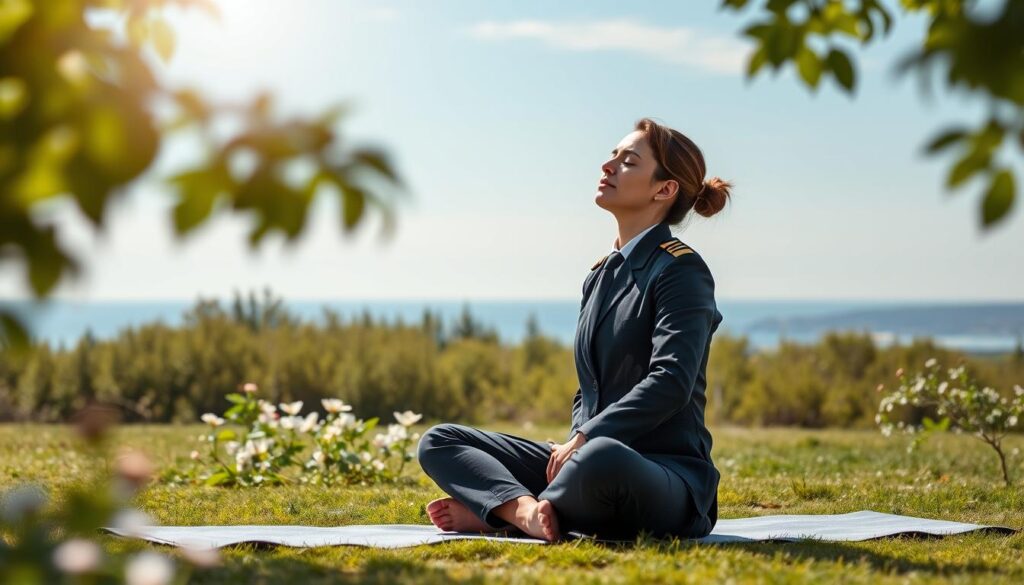
Aviation psychology backs up what experienced pilots know: structured attention exercises boost awareness. Breath control is more than yoga; it’s a tool for staying calm at high altitudes.
Try the 4-7-8 breathing technique: inhale for four, hold for seven, exhale for eight. It’s like rebooting your nerves. This isn’t stress relief; it’s mental optimization.
These techniques don’t need special gear or FAA okay. You can do them before flying, while cruising, or during delays. It’s about building mental strength for when it’s needed most.
For deeper mental prep, check out these 5 tips on mental and physical prep for pilots. No one wants to find out their stress response in turbulence.
Remember, the most critical exercise for pilots is in their minds. Your brain is the ultimate flight computer. Keep it in top shape.
Creating a Sustainable Routine
Ever tried sticking to a fitness plan while crossing six time zones in a week? It’s like herding cats while juggling flaming torches. The real magic isn’t in finding the perfect workout; it’s in building a system that survives layovers in Omaha and red-eyes to Singapore.
A solid pilot fitness program thrives on flexibility. Think of it as your co-pilot for health. Start your day with hydration, light exercise, and mental warm-ups. Visualisation isn’t just for flight prep; it’s for your body too.
Exercise for pilots isn’t about gym marathons. It’s about being consistent, not intense. Recovery tips? They’re your secret weapon. Listen to your body like you listen to air traffic control.
Your routine should adapt like a chameleon on a kaleidoscope. Forget perfection. Aim for progress. Because the most critical pre-flight check is the one you do on yourself.




