


Mental wellness trends often get a lot of attention. But, not many really get what’s behind them.
In aviation, this practice is more than just finding peace. It’s called calculated calm. It’s like having a backup system for your mind.
This old practice has become a key tool for pilots. It helps them stay calm and focused, even in tough situations. It’s gone from Buddhist monasteries to Boeing flight decks.
Pilots don’t meditate at 30,000 feet. They use special breathing and thinking skills. These help them stay sharp when it matters most.
Managing anxiety and staying grounded becomes easy for them. It’s not just meditation. It’s about being the best at what you do.
When to Use it in Flight
Aviation mindfulness isn’t about being zen all the time. It’s about using it wisely at key moments. Think of it like your cognitive flaps system – not for takeoff, and not for critical phases.
Three scenarios are perfect for mindfulness. Pre-flight checks are great for focused breathing. Your mind is already in checklist mode.
Long cruise segments are also ideal. Monotony can lead to distractions and mistakes. Brief meditation can help a lot here.
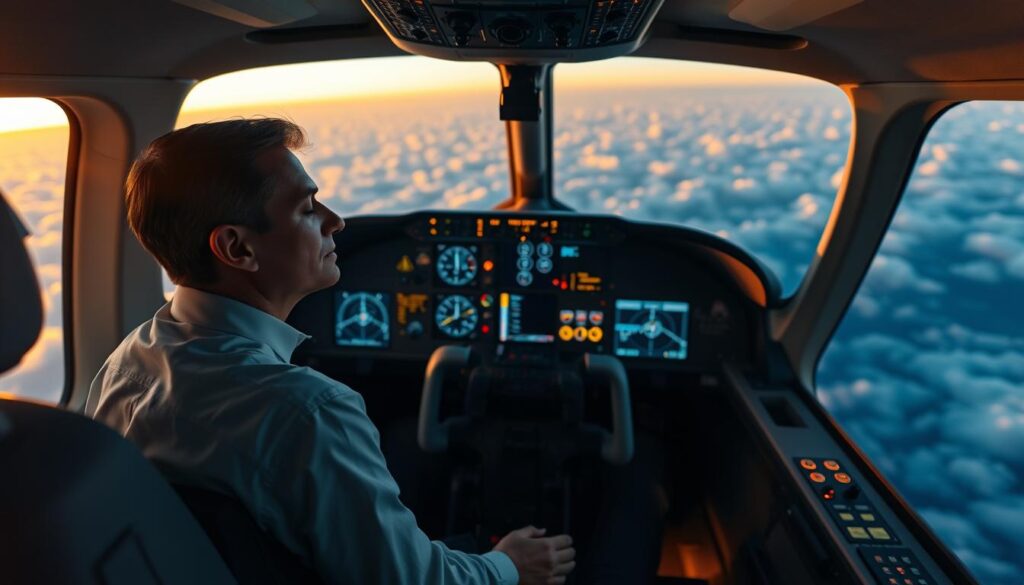
Turbulence tests your amygdala. When it happens, your brain might panic. But you know better. Grounding exercises help during these times.
The 4-4-4 breathing method is great for ATC instructions. Breathe in for four, hold for four, exhale for four. It’s like a brain upgrade.
Grounding techniques help during sensory overload. Name five things you see, four things you feel, three things you hear. It makes the storm look less scary.
The descent phase is critical for mindfulness. You’re moving from high-altitude to low-altitude. A mindfulness check can make your approach smoother.
This approach to meditation for pilots fits well with aviation psychology. It’s about being smart, not just hardworking. You’ve got enough to do without constant enlightenment.
Using mindfulness at the right time improves flight performance. It’s not about being a Buddha in the air. It’s about being sharp and present when it counts.
Step-by-Step Guided Practices
Let’s get real about staying sharp at 30,000 feet. No more Zen nonsense. We’re talking about cockpit mindfulness that keeps you alert, even when autopilot takes a break.
The Aviation Box Breath is first. It’s four seconds in, four seconds hold, four seconds out, and four seconds hold again. It matches the rhythm of scanning your instruments. It’s not meditation; it’s tactical breathing that fits your work pace.
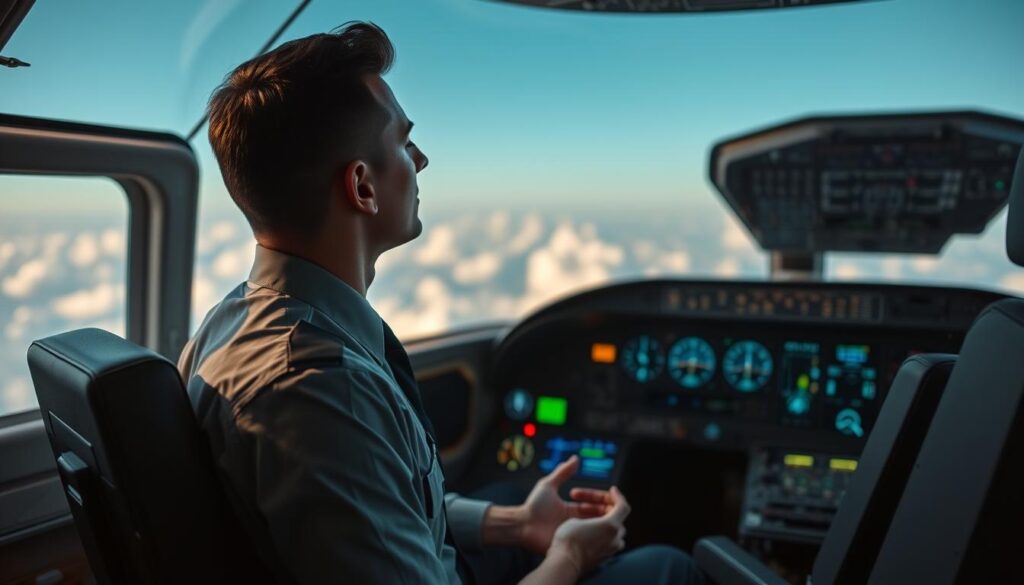
Next, we have the 5-4-3-2-1 Reset. You check five instruments, touch four controls, make three radio calls, take two deep breaths, and set one clear goal. It’s like rebooting your brain when the weather tries to reboot your plane.
The Turbulence Tango is our next technique. It’s not a real dance, but a mental one. When turbulence hits, you stay aware without freezing up.
Visualization isn’t about daydreaming. It’s about mentally rehearsing emergency procedures. See the checklist, feel the controls, and hear the radio calls. It’s not daydreaming; it’s preparation.
These techniques work because they’re part of your routine, not extra. Your breathing matches your scan, and your grounding exercise uses real cockpit elements. This is cockpit mindfulness that feels natural.
These methods are tested by pilots facing real challenges. They’re not just theories; they’re practical solutions for flying.
Good cockpit mindfulness isn’t about emptying your mind. It’s about filling it with what you need, when you need it. When focus is required, these techniques give you the clarity you need.
Think of it as managing your mental resources. You focus where it matters most. That’s the power of cockpit mindfulness – it works when you need it most.
Apps & Resources
Let’s cut through the digital noise. The app store might promise nirvana, but what actually works when you’re responsible for 300 souls at cruising altitude?
I’ve tested more mindfulness apps than I’ve had delayed flights. Some are brilliant. Others are about as useful as a parachute on a 747.
Headspace’s SOS mode isn’t just marketing fluff. Their emergency sessions are designed for high-stress moments. Three-minute breathing exercises that work with cockpit noise? That’s engineering.
Calm attempted aviation content but missed the mark. Their “sleep stories” featuring gentle rain might work on the ground. But at 35,000 feet? You’re competing with engine hum that could drown out a heavy metal concert.
The real gems are specialized programs. Aviation-specific meditation for pilots platforms understand you can’t close your eyes during approach. They offer pre-recorded briefings that integrate with flight planning.
| Resource | Best For | Aviation Fit | Cost |
|---|---|---|---|
| Headspace (SOS Mode) | Emergency stress relief | Works with cockpit noise | $70/year |
| Flight Mindfulness Pro | Pre-flight preparation | Integrates with checklists | $99 one-time |
| Paper Checklists | No-tech reliability | Never overheats | Free |
| Airline Wellness Programs | Professional support | Company-specific protocols | Varies |
Never underestimate old-school paper. When tablets overheat or systems crash, that laminated checklist becomes your mindfulness anchor. It’s the original meditation for pilots tool.
Most major airlines now offer wellness programs. These aren’t generic corporate wellness junk. They’re developed by aviation psychologists who understand cockpit dynamics.
The best resources acknowledge aviation’s unique constraints. They don’t ask you to achieve zen. They help you maintain focus during turbulence – both meteorological and operational.
Finding the right tools is part of comprehensive aviation stress management. The goal isn’t to become a monk. It’s to become a better pilot.
Your cockpit isn’t a meditation studio. Your resources shouldn’t treat it like one.
Combining with Pre-Flight Prep
True cockpit mindfulness doesn’t start when you buckle up. It begins days before flying, like an early bird at the airport. This early start can really help.
Think of getting ready mentally as loading your mind for flight. Do it wrong, and you’ll face mental challenges at high altitudes. Do it right, and you’ll fly like a pro.
The night before flying, try mental rehearsal instead of counting sheep. Imagine your flight from start to finish. See yourself handling tasks smoothly and making decisions calmly. It’s like training your brain.
On the morning of your flight, skip the triple espresso. Try box breathing instead. Breathe in for four, hold for four, breathe out for four. It’s like updating your brain’s software.
At the airport, turn chaos into focus. Notice your flight bag’s weight and the feel of your boarding pass. Listen to the airport sounds. It’s not just for relaxation; it helps you stay sharp during flight.
This isn’t just another thing to do. It’s about making mindfulness part of your routine. Breathe while you check the plane, stay present while setting up the avionics, and stay aware during the runup.
Professional pilots know this secret. They see mental prep as key as checking fuel. Your mind is the most important tool in the cockpit. Shouldn’t you prepare it too?
This mindset sets apart the serious pilots from the weekend flyers. In the air, you don’t rise to the challenge. You fall to your level of prep. And that prep starts long before you start the engine.
Case Studies
Forget about theory. Aviation is all about hard facts and proven results. Take the captain who cut his landing stress by 40% with simple breathing. His success is supported by science.
A recent study looked at 16 interventions with 395 pilots. Mindfulness and CBT showed big improvements in resilience. Pilots using these methods made quicker decisions in emergency simulations.
CBT has an 80% success rate in fighting flight anxiety. That’s not just feel-good stuff. It’s about getting the job done better. Airlines aren’t into meditation for pilots because it’s cool. They do it because it’s effective.
This isn’t about becoming a zen master in the air. It’s about having the right mental tools for tough times. The best meditation for pilots is simple. It keeps everyone safe and makes the job enjoyable.




