


Ever wonder why your flight instructor glared at your breakfast burrito during those 6 AM briefings? Science has the answer. A study of 45 pilots found that high-protein diets worsened flight performance scores compared to balanced nutrition.
Think about that triple-bacon burger before your next cross-country. It’s not just about avoiding food coma. It’s about keeping your mind sharp for unexpected turbulence and that passenger in 12B who thinks they know better than your altimeter.
Your brain needs top-notch fuel, not leftovers from the food court. The right nutrition for mental fitness is essential. It’s what makes the difference between a smooth landing and a bumpy ride.
Your cognitive performance literally depends on what’s on your plate. It’s time to rethink your pre-flight meal strategy.
In-Flight Nutrition
You’re great at doing many things at once, even at 30,000 feet. But, eating a big meal before flying might not be the best idea. Aviation nutrition shows that timing is everything for pilots.
Eating a big meal before flying can make you less alert. Your body focuses on digesting food instead of staying sharp. This is called “postprandial somnolence” or being “food-drunk” while flying.
Good nutrition for pilots is like refueling a plane. You wouldn’t fill up right before landing. Eating the right foods at the right time helps you stay alert and focused.
Good meals have three important parts:
- Complex carbohydrates for steady energy
- Lean proteins to keep your mind sharp
- Healthy fats for brain function
It’s like making your body a high-performance machine. Eating right can improve your work by up to 23%. Your body is like a precision tool, not a trash can.
When you eat matters a lot. Eat big meals 2-3 hours before flying. Have small, healthy snacks during long flights. This keeps your mind clear and focused.
Good nutrition starts in the kitchen, not just in the air. It’s not just about what you eat, but when. This ensures you’re always at your best.
Managing Energy and Mood
Being a pilot is more than just knowing how to fly. Your brain needs top-notch food to stay sharp. Think of your brain as a high-tech system that works best with healthy foods, not junk.
Omega-3 fatty acids are key for your brain. They help your neurons talk clearly. Salmon and mackerel are great sources. For plant-based options, try algae or walnuts.
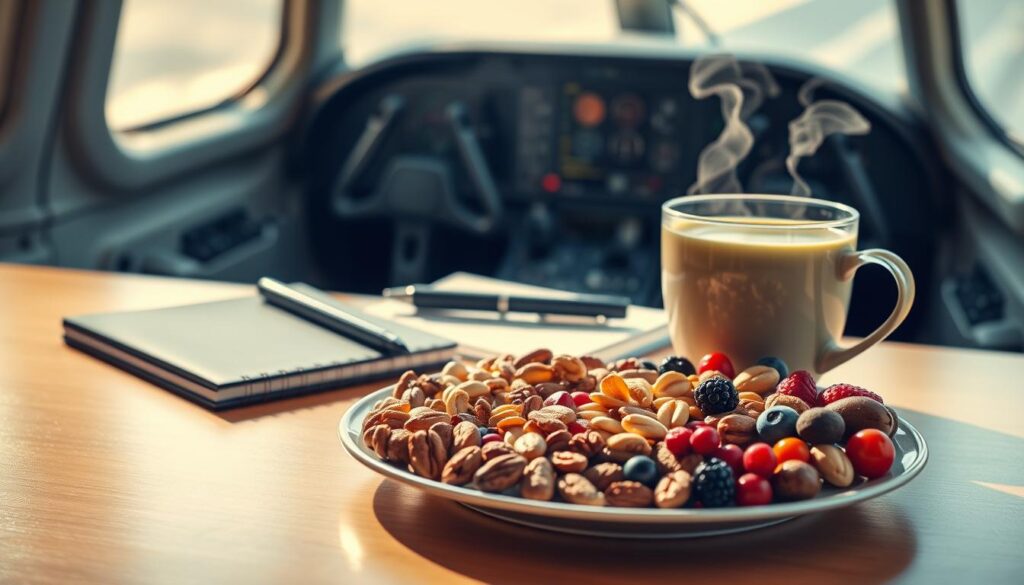
Fruits and veggies are not just colorful. They’re full of antioxidants that protect your brain. Berries, leafy greens, and peppers keep your brain cells safe. This helps when you’re doing complex math in the air.
Spices and dark chocolate are also important. Turmeric has curcumin, a natural anti-inflammatory. Dark chocolate boosts blood flow to your brain. It’s like upgrading your flight experience.
Coffee fans, you’re in luck. It can improve memory and protect against brain decline. Tea also helps with focus. It’s great for long flights.
Vitamin D is vital for pilots. Lack of it can lead to Alzheimer’s. Make sure to get enough sunlight to keep your brain healthy.
Saturated fats are bad for your brain. They cause inflammation and slow down your thinking. Eating fast food before flying is not a good idea.
| Brain Food Category | Top Choices | Cognitive Benefits | Flight Performance Impact |
|---|---|---|---|
| Omega-3 Sources | Salmon, walnuts, algae | Neural communication, anti-inflammatory | Sharper decision-making |
| Antioxidant Foods | Berries, dark leafy greens | Reduces oxidative stress | Better stress management |
| Cognitive Enhancers | Dark chocolate, coffee, tea | Improved focus and memory | Enhanced alertness |
| Vitamin D Sources | Sunlight, fortified foods | Neuroprotection | Reduced mental fatigue |
| Avoid These | Saturated fats, processed foods | Cognitive decline risk | Slower reaction times |
The link between diet and mental performance is real. It affects how well you can manage energy and mood in flight.
Good brain food for pilots is simple. Choose foods that keep your brain sharp. When flying, your brain needs the best fuel to keep everyone safe.
Hydration at Altitude
Ever wonder why airline coffee tastes like jet fuel yet remains your cognitive lifeline? The answer lies in the brutal physics of altitude. At 35,000 feet, the cabin humidity sits at about 10-20% – drier than the Sahara Desert. Your body becomes a moisture-wicking machine, silently draining your mental reserves.
Research shows that just 2% dehydration – easily achieved during a cross-country flight – impairs attention, psychomotor speed, and memory. That’s the difference between crisp decision-making and struggling to recall approach procedures. It’s not merely about comfort; it’s about maintaining neurological fluidity when processing multiple data streams.

The cockpit environment turns hydration into a strategic imperative. Recirculated air and temperature controls create conditions that would make a camel nervous. Proper hydration isn’t optional – it’s operational readiness disguised as a water bottle.
Consider this: your brain is 73% water. Dehydration shrinks brain tissue, reducing cognitive function precisely when you need it most. A recent study confirms that even mild dehydration impairs executive function and working memory.
| Hydration Level | Cognitive Impact | Physical Symptoms | Performance Rating |
|---|---|---|---|
| Optimal (0-1% loss) | Peak alertness | None | Excellent |
| Mild (1-2% loss) | Reduced focus | Subtle thirst | Good |
| Moderate (2-3% loss) | Impaired memory | Dry mouth | Fair |
| Significant (3%+ loss) | Poor decision-making | Headache | Poor |
Smart hydration involves more than chugging water. Electrolytes matter at altitude. Sodium and potassium help maintain fluid balance when your body’s working overtime. The recirculated air doesn’t just dry your skin – it leaches minerals critical for neural communication.
Timing matters too. Sipping consistently beats periodic gulping. Your body absorbs fluids better in smaller, frequent amounts. Think of it as cognitive drip irrigation.
Remember: thirst is a late-stage warning sign. By the time you feel parched, dehydration has already begun compromising your performance. The dry mouth that makes radio communications sound like you’ve been chewing on runway gravel? That’s your brain already working at a deficit.
Supplements & Cautions
Dealing with FAA rules on medication and supplements is like flying without a compass. The supplement world is less watched than a new pilot’s first flight. So, NSF certification is key for safety.
Many brain boosters have hidden ingredients that could ruin your career. That “natural” brain enhancer might help you focus but could also lead to a positive drug test. This is not welcome when you’re renewing your medical certificate.
Getting advice from aviation medical experts is your best strategy. They know about nutrition and FAA rules. Your medical certificate needs more protection than any mental boost from untested supplements.
If you’re looking for nutritional support, check out the Mayo Clinic’s research on vitamins and mental health. It offers science-backed advice that fits with aviation safety rules.




