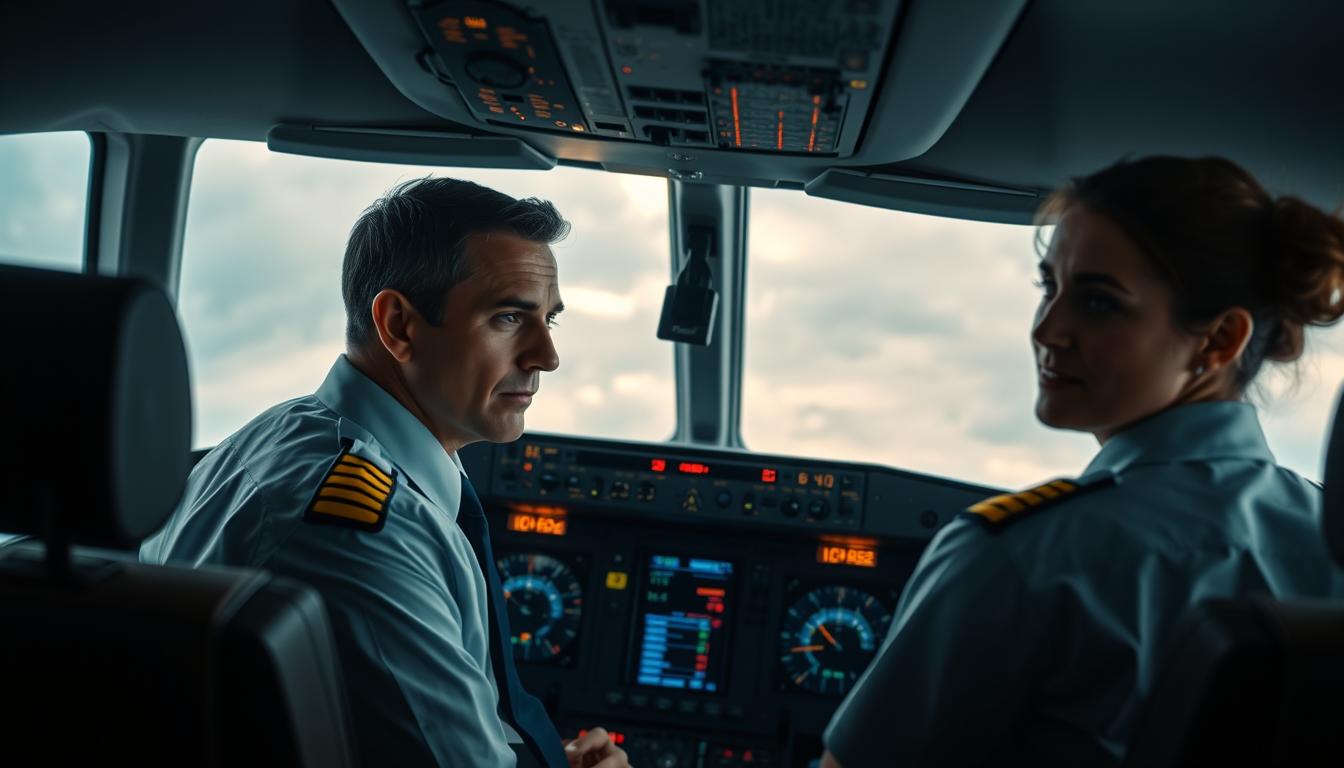
When a pilot’s sharp focus starts to fade, it’s not just a bad day. It’s a sign of something deeper. We’re seeing the early signs of trouble in the human mind.
I’ve seen professionals change right before my eyes. They become irritable, even when it’s not just about needing more coffee. They make mistakes they wouldn’t normally make.
They stare off into space during checks. These aren’t just small issues. They’re warning signs from someone who usually stays calm.
These signs include pacing, tapping their fingers, and talking fast. They’re like the first raindrops before a big storm hits.
The aviation industry’s mental health crisis shows us how important it is to spot these signs early. Like in Asia, where staff noticed the signs of overwhelm before things got worse.
Seeing these small changes isn’t just being nice. It’s a matter of safety. It’s about knowing when someone is facing a real crisis response for pilots situation. We need to pay attention to these signs.
Immediate Steps to Take
When warning lights flash in someone’s mind, you don’t look for a manual. You become the manual. The first moments are as critical as landing a plane in bad weather. It’s not about being a therapist; it’s about being a human with a plan.
Think of yourself as an emotional air traffic controller. Your job is to guide them through tough mental weather. You need structure, clarity, and lots of check-ins to keep them safe.
Transportation Safety Tips for Flying (Medicated)
Medication and altitude don’t mix well. When someone’s flying medicated, their body is like it’s at sea level, but they’re really at 35,000 feet. The air is recycled, and the pressure is high.
Hydration becomes your co-pilot. Dehydration makes side effects worse fast. I’ve seen many crises worsen because of dehydration. It’s a silent enemy of mental stability.
Alcohol and substances are like gasoline on a fire. Mixing them with medications creates dangerous reactions. The rule is clear: if you’re medicated, you’re sober.

Sleep cycle disruption is like being a confused time traveler. Jet lag and medication timing create a mess. Treat sleep as part of the medication protocol.
Decreasing the Risk of Over-Stimulation before Travel
Airports are like anxiety theme parks. They have flashing lights, announcements, and lots of people. For someone already struggling, it’s overwhelming.
Here’s your pre-flight checklist for mental safety:
- Noise-canceling headphones: block out other people’s excitement
- Pre-planned routes: know your way around like you know your emergency exits
- Time buffers: add extra hours like you’re cooking turkey – better safe than sorry
- Exit strategies: have plans for when things get too much
The color code system is for everyone. Green means “I’ve got this,” yellow means “I’m struggling,” and red means “I need help.” It’s like having your own emotional air traffic control system without the static.
Rehearsal is key in pilot crisis response. You wouldn’t fly without practicing emergency procedures. The Cornerstone team showed that practicing responses can prevent disasters.
Have playbooks for all scenarios, from flight cancellations to when someone hits their limit. The best response is the one you’ve practiced.
Ground Support Resources
While everyone’s watching the cockpit, the real action happens back on Earth. It’s like NASA’s mission control for mental health emergencies. The difference between containment and resolution often comes down to one thing: your ground game.
Modern crisis response for pilots isn’t about heroic individualism. It’s about assembling what I call the “triple-threat team.” Medical professionals assess medication regimens. Mental health experts decode symptoms. Risk management specialists navigate the bureaucratic nightmare of fit-to-fly regulations.

Platforms like BNW AgentConnect have revolutionized this space. They’re the Swiss Army knives of crisis management – real-time updates, communication hubs, and geo-tagged alerts that give you satellite-level situational awareness. No more playing telephone tag across time zones.
The local connection piece separates competent crisis response from truly exceptional intervention. Embassy contacts who actually answer their phones. Medical facilities that understand aviation regulations. Logistics coordinators who can navigate repatriation when every rule seems designed to prevent it.
Remember the Cornerstone case? What made it work wasn’t individual brilliance. It was having a well-oiled machine where everyone knew their role. The medical advisor assessed side effects while the logistics team figured out transportation. The mental health professional provided support while risk management handled regulatory compliance.
Here’s what elite crisis response for pilots actually looks like in practice:
- 24/7 emergency hotlines with actual humans, not menus
- Pre-vetted medical facilities worldwide
- Direct embassy and consulate relationships
- Real-time medication interaction databases
- Multi-lingual support staff
This isn’t just about having resources – it’s about having integrated resources. The medical team talks to risk management. Logistics coordinates with mental health. Everyone operates from the same playbook.
The best part? This level of crisis management in aviation actually prevents bigger problems down the line. Early intervention means quicker resolution. Quicker resolution means less downtime. Less downtime means everyone gets back to doing what they do best: flying safely.
Managing a psychiatric emergency abroad is like playing chess while the board’s on fire. You need multiple people looking at different angles. You need systems that work when stress levels are through the roof. Most importantly, you need a team that’s done this before and knows how to win.
Aftercare and Follow-up
Think the emergency ends when the plane lands? That’s like thinking the movie’s over when the hero escapes the first trap. The real work starts at the gate. Post-crisis care is not just paperwork. It’s a mix of forensic psychology and aviation protocol.
We treat every aviation mental emergency like a black box recovery mission. We look at what systems failed and what warnings were missed. This isn’t about blame. It’s about building better shields for the next turbulence.
De-escalating Situations during Travel
De-escalation doesn’t end at altitude. The most critical moments often happen during layovers or connecting flights. That’s when distraction techniques become your secret weapon.
I’ve seen seasoned travelers change when they know there’s a Plan B. Maybe it’s a hotel near an emergency room on their route. Or backup medications accessible mid-journey. This isn’t paranoia. It’s strategic anxiety reduction.
Our three-phase approach to post-crisis management:
- Immediate debrief within 24 hours while memories are fresh
- Root cause analysis that digs deeper than surface symptoms
- Protocol enhancement based on actual traveler experiences
The traveler feedback system is where magic happens. These aren’t complaints. They’re blueprints for improvement. When someone shares what actually helped during their crisis, we’re getting intelligence no manual can provide.
| Phase | Key Action | Success Metric | Tool/Technique |
|---|---|---|---|
| Recognition | Distress pattern identification | Response time under 15 min | Sensory consideration checklist |
| Mitigation | Distraction implementation | Anxiety reduction by 50% | Backup medication protocols |
| Analysis | Root cause investigation | Protocol updates within 48h | Traveler feedback systems |
Boarding decisions become smarter when we learn from each incident. That moment when stress levels hit yellow? That’s our cue to activate contingency plans before they reach red.
The real measure of success isn’t surviving the crisis. It’s emerging with systems so robust that the next aviation mental emergency becomes a manageable situation instead of a catastrophe.
Because in aviation as in life: the best emergency protocol is the one that prevents the emergency altogether.
Peer & Trainer Roles
Think of peers and trainers as aviation’s early warning system. They’re not therapists—they’re the first alert when something feels off. It’s about spotting turbulence in a colleague’s behavior before it becomes a full-blown aviation mental emergency.
Crisis response for pilots isn’t just a policy manual. It’s practiced. Organizations like On Call International run Crisis Response Exercises—tabletop drills that stress-test protocols without real-world stakes. These sessions force tough questions: Who decides if a pilot isn’t fit? What’s our tolerance for risk?
Three hours in a CRE can save three days of chaos later. You don’t need perfect plans to start—sometimes the best time to train is when you’re figuring things out. It’s about building a culture where everyone, from new hires to veterans, knows their role. Peer support, like the program backed by BALPA, turns colleagues into confidants.
This isn’t snitching. It’s caring. When pilots look out for each other, the whole system stays airborne.