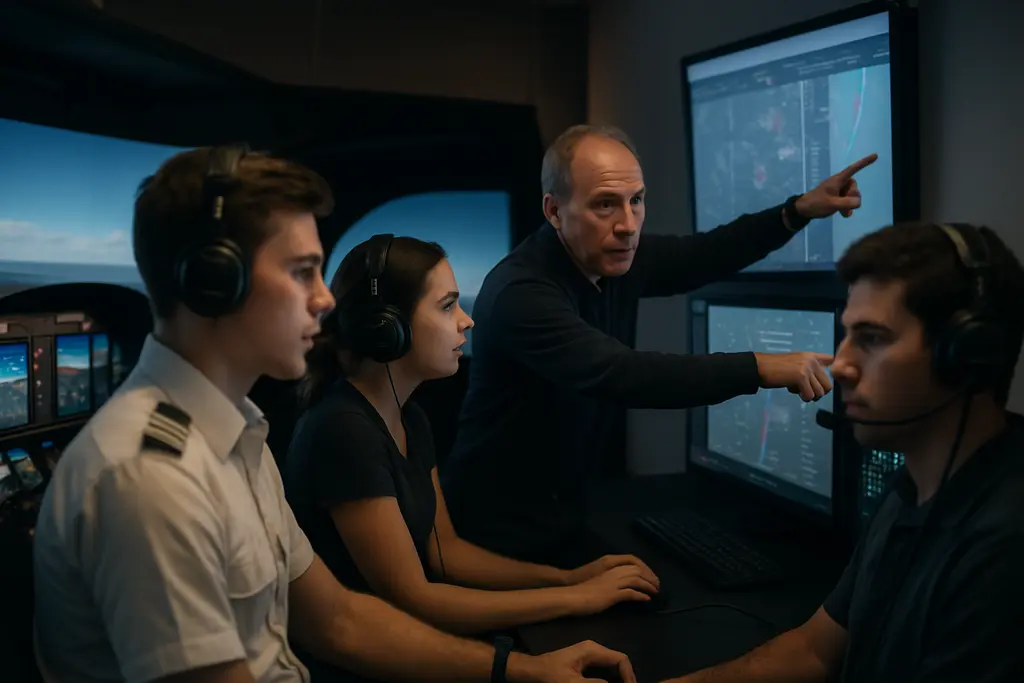
Choosing where to train dictates your budget and your timeline. Two distinct pathways exist for prospective aviators. You can enroll in an immersive, accelerated flight academy, or you can train locally at a Fixed Base Operator (FBO). Securing pilot scholarships and funding only helps if you apply that money to the right training environment. Making the wrong choice forces you to restart your progress, wasting thousands of dollars in the process. Comparing the actual structures of these two models protects your financial investment and keeps your career progression on track.
The Structure Of Accelerated Flight Academies
Accelerated academies treat flight training like a demanding, full-time job. Students fly five to six days a week, often logging multiple lessons per day. This intense immersion builds muscle memory quickly, preventing the skill regression that plagues part-time students. These programs operate under strict regulatory oversight. Reviewing the certification standards provided by the Federal Aviation Administration reveals that approved Part 141 schools follow a rigid, government-approved syllabus. You cannot skip lessons or change the curriculum.
If you fall behind the established timeline, the academy will remove you from the program. This high-pressure environment works perfectly for career-oriented students who need to reach commercial minimums in less than a year. You sacrifice your personal life and commit entirely to studying aerodynamics, weather, and systems management.

The Flexibility Of Local FBO Training
Local FBOs operate under Part 61 regulations, offering complete scheduling flexibility. You pay per lesson and fly exactly when your personal schedule permits. This model fits perfectly for working professionals who cannot quit their jobs to pursue aviation full-time. This flexibility introduces major timeline risks. Flying only once a week destroys your momentum. You spend half of every lesson relearning what you forgot from the previous week.
Your primary instructor will likely leave for a regional airline midway through your training, forcing you to adapt to a new teacher. Industry data published by the Aircraft Owners and Pilots Association shows that part-time students routinely take over a year just to earn their private pilot certificate. Weather cancellations compound this delay, easily stretching a commercial training footprint across three or four years.
Direct Financial Comparison
Academies quote a massive upfront price tag, often exceeding eighty-five thousand dollars for a zero-to-commercial program. This number shocks new students. It accurately reflects the true cost of completing all required ratings. FBOs advertise much lower numbers by quoting the legal minimum flight hours required to pass a checkride. Almost zero students pass their checkrides at the absolute minimum hour requirement. The true cost of an FBO matches the academy once you factor in the extra hours required to combat skill degradation.
| Feature | Accelerated Flight Academy | Local FBO (Part 61) |
| Primary Schedule | Full-time, daily flying | Part-time, flexible |
| Cost Structure | Fixed upfront pricing | Pay-as-you-go per flight |
| Financing Options | Direct partnerships with major lenders | Personal loans or cash |
| Estimated Zero-to-Commercial Timeline | 7 to 9 months | 18 to 36 months |
Evaluating Your Career Goals
Your end goal dictates your path. Reaching a legacy airline flight deck requires building seniority as fast as possible. Every month you delay your training costs you hundreds of seniority numbers at the regional level. If your goal involves flying heavy jets, the accelerated academy provides the necessary speed. You can track hiring waves and economic demand through the Bureau of Labor Statistics to time your entry into the job market.
If you simply want to fly your family on weekend cross-country trips, the high cost of an academy makes no financial sense. The local FBO allows you to earn your ratings at a sustainable pace without taking on massive debt. Analyze your timeline, review your budget, and select the operation that aligns directly with your intended seat in the cockpit.