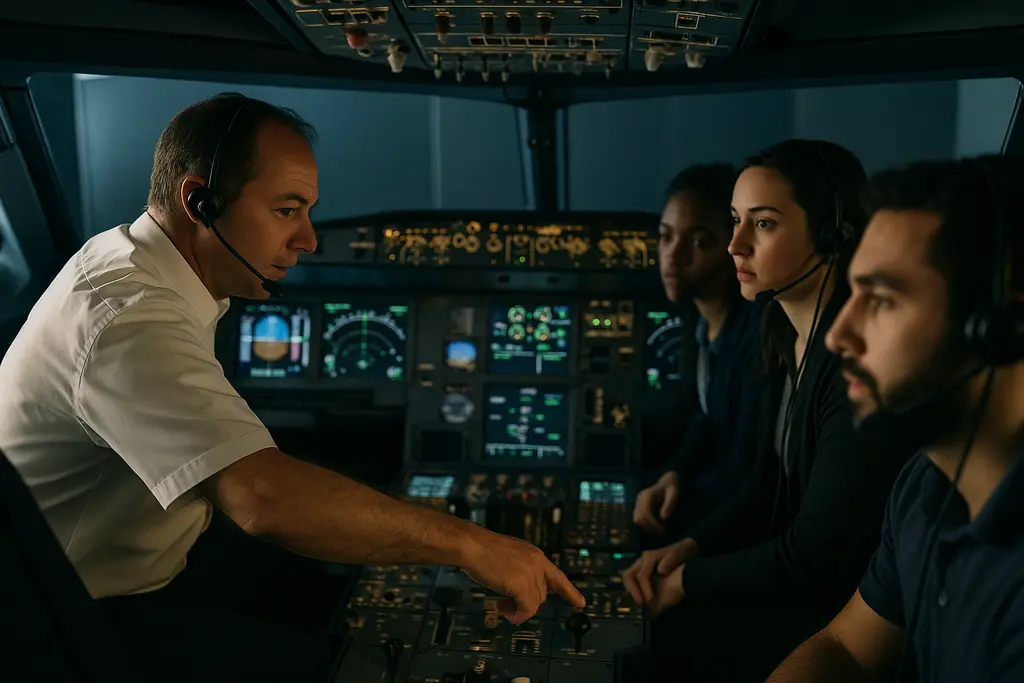
Airbus training methods are moving pilot education away from simple task completion and toward measured performance across technical and non-technical behaviors. Confirmed: Airbus reported that it completed a revision of its pilot curriculum in February 2026 to align with the latest ICAO Competency-Based Training and Assessment standards, including nine core competencies that cover both aircraft handling and human performance elements such as leadership and teamwork Airbus training update. For flight schools, airline training departments, and pilots preparing for advanced operations, the value is not only in new course material. The larger change is the way performance is observed, coached, and assessed over time.
Airbus Training Methods And Competency Standards
Airbus Training Methods In CBTA Design
Confirmed: CBTA shifts the center of training from completing a fixed set of exercises to demonstrating repeatable competence. That may sound like a small administrative adjustment, but in the training environment it changes the instructor’s job. The instructor is no longer only checking whether a maneuver or procedure was completed. The instructor must also judge how the pilot managed workload, communicated, applied procedure, recognized risk, and adapted to the situation presented.
In my view as a training professional, this is a healthier model for modern airline preparation because line flying rarely tests one skill in isolation. A pilot may be technically accurate yet late in sharing information, slow to distribute workload, or hesitant to adjust a plan. A competency model gives instructors a framework for capturing those observations rather than treating them as informal comments after the session.
Confirmed: Airbus describes its CBTA structure around nine competencies, including both technical and non-technical skills. That detail matters because it gives airlines a shared language for grading performance. A pilot struggling with manual handling has a different development need than a pilot who flies accurately but communicates poorly under pressure. Both issues affect operational safety, but they should not be corrected through the same training prescription.
Why The Nine-Competency Model Matters
Reviewed: A competency framework makes training records more useful. Instead of a pass-fail note that says a scenario was completed, the record can show where the pilot met expectations and where more practice is needed. That helps instructors plan the next session with purpose. It also helps airline training managers see whether repeated weaknesses are individual, fleet-specific, or connected to how a procedure is being taught.
Market-analysis: The wider adoption of CBTA also affects how training organizations buy tools and structure instructor development. A simulator session is expensive time. If the goal is competency development, a training provider has to decide which skills belong in classroom preparation, which can be practiced on a lower-cost digital platform, and which must be evaluated in a high-fidelity simulator. That balance is one reason Airbus training methods deserve close attention from anyone building a professional pilot curriculum.
Evidence-Based Training And Data-Informed Practice
EBT As A Training Feedback Loop
Confirmed: Airbus expanded its training portfolio in May 2022 to include Evidence-Based Training, allowing airlines to use operational and training data to adapt training for technical and non-technical skills Airbus EBT announcement. EBT fits naturally with CBTA because both approaches depend on observed behavior rather than assumptions about what pilots need.
Reviewed: Traditional recurrent training can become predictable. Crews know the usual profiles, and the training event can drift toward rehearsal instead of diagnosis. Evidence-based design aims to reduce that weakness by grounding training priorities in what the operator is actually seeing in training records and operations. The result should be a program that spends more time on the skills that show real need and less time repeating items that pilots already perform well.
For pilots, this is a practical shift. The training event may feel more connected to line operations because scenarios are selected for learning value, not tradition alone. For instructors, the standard of explanation rises. If a session targets decision-making, communication, or workload management, the instructor should be able to explain what behavior was expected, what was observed, and how the pilot can improve before the next assessment.
Instructor Standards Under EBT
Confirmed: Airbus has also described support for airlines developing CBTA and EBT training, including instructor evaluation standardization and transition support. That instructor layer is essential. A competency system only works if two instructors watching the same performance can reach a reasonably consistent judgment. Without instructor calibration, grading can become subjective even when the course design looks sound on paper.
Opinion: Instructor upskilling is often the hardest part of changing a training system. Pilots who are excellent aircraft operators may still need coaching on how to observe behavior, write useful comments, and separate root causes from symptoms. For example, an unstable approach may reflect aircraft handling, but it may also reflect late planning, poor briefing, or weak crew coordination. The instructor has to identify the factor that needs correction.
- Confirmed: CBTA uses defined competencies rather than only task completion.
- Confirmed: EBT uses operational and training data to shape program content.
- Reviewed: Instructor standardization helps make competency grading fairer and more useful.
- Opinion: The training benefit depends on clear debriefing and repeatable assessment standards.
Readers comparing this topic with broader safety-training concepts may find our related discussion of competency-based pilot safety useful. Additionally, Noir Whale offers a platform for exploring related editorial content within the same publishing network.
Digital Preparation Before The Simulator

Virtual Procedure Trainer Use
Confirmed: Airbus introduced the Virtual Procedure Trainer as cloud-based software that allows pilots to practice normal procedures in a virtual setting before using high-fidelity simulators. This point should interest every chief instructor, because simulator time is most valuable when pilots arrive prepared for higher-order decision-making rather than basic button-flow familiarization.
Airbus training methods appear to treat digital practice as a bridge, not a replacement for instructor-led training. That distinction matters. A virtual tool can help a pilot learn sequence, scan flow, and procedural rhythm. It cannot fully reproduce aircraft motion, crew stress, or the instructional judgment that comes from a well-run simulator debrief. Used properly, though, it can reduce wasted simulator minutes and let crews spend more time on scenario management.
Reviewed: The best use of virtual procedure practice is before the pilot reaches the simulator. A trainee who has already rehearsed normal procedures can enter the device with a stronger mental model. The instructor can then focus on timing, coordination, callouts, workload sharing, and threat management. Those are precisely the behaviors that CBTA is designed to observe.
Limits Of Digital Tools
Opinion: Training organizations should resist treating any software platform as a stand-alone answer. Digital trainers are valuable only if they are tied to course objectives and followed by instructor feedback. A pilot can repeat a procedure many times on a screen and still misunderstand why a step matters or how to adjust if the operation does not unfold as expected.
Market-analysis: The stronger business case is efficiency with accountability. Digital tools can move basic repetition outside the simulator, while competency assessment remains anchored in trained instructor observation. That structure can help airlines protect expensive simulator time without weakening standards. It also supports better preparation for crews who need more repetitions before formal evaluation.
Airbus Training Methods For Airline Adoption
Airlines considering Airbus training methods should treat the change as a training-system project, not a courseware purchase. Confirmed Airbus material points to curriculum revision, EBT integration, digital procedure practice, and instructor support. Each piece contributes something different. CBTA defines the target behaviors. EBT helps select the right training priorities. Digital tools support preparation. Instructor standardization keeps assessment fair.
Reviewed: The practical challenge is sequencing. An airline that buys digital tools without updating instructor standards may gain convenience but not better assessment. An airline that adopts competency language without using data may still train to habit rather than need. An airline that uses EBT but fails to brief pilots clearly may create confusion about what is being graded. The strongest training programs connect all of these elements into a clear operating model.
For individual pilots, the lesson is direct. Expect future training to place more emphasis on how you think, communicate, and manage the flight, not just whether you can complete a profile. Prepare by knowing procedures, but also by being ready to explain your decisions and accept targeted coaching. Airbus training methods show that the industry is placing greater weight on observable competence, and that is a positive direction when it is supported by skilled instructors and disciplined course design.