Most adults see the path to being a commercial pilot like handling taxes. It comes with a checklist, costs, and lots of forms. It’s more about paperwork than the movie “Top Gun”. In the U.S., the Federal Aviation Administration (FAA) sets the rules. Every step is important, documented, and double-checked.
Getting an FAA commercial pilot certificate means you can get paid to fly. It lets you earn money by flying passengers or cargo. This opens doors to many jobs like charter flights, corporate flying, or starting a career at airlines.
Thinking about pilot uniforms and flying sounds fun, but first, let’s be real about what it takes. You’ll face flight schools, FAA rules, study materials, and a medical exam. These ensure you’re fit to fly. Also, there are age requirements, like a strict rule at a club for geeks.
This bit explains what a Commercial Pilot License (CPL) is, the training involved, where your money goes, and the tests you need to pass. If you’re looking for simple steps, you’re out of luck. Getting a pilot’s license involves lots of steps and checks. Your flight logbook is key, and passing a checkride is your goal.
What is a CPL?
A Commercial Pilot License (CPL) is what you need to fly planes for money. It sounds simple and exciting. However, there’s a lot more to it, especially when you start dealing with aircraft maintenance costs.
Getting a CPL from the FAA means you’re allowed to be the main pilot for jobs that pay. Suddenly, flying isn’t just a hobby; it becomes a way to earn a living. Your flight log changes from personal notes to a professional record.
Having a CPL opens doors to many jobs, but it’s not magical. You can become a flight instructor, do aerial surveys, fly for businesses, or work in charter operations. There are also unique jobs like air ambulance, firefighting from the sky, or flying over farms.
Many describe it as flying people or goods for money, which is true. Places like Genesis Flight College see it as a first step towards working for airlines. Yet, having a CPL is about meeting professional standards more than chasing dreams in the sky. It requires meeting several prerequisites and passing tests.
If structured training sounds good to you, then you’re in for a ride. Courses like the one at BCIT are serious about making you a competent pilot. It covers everything from ground school and flying multiple engines to getting your license.
| What the CPL unlocks | Where it shows up day-to-day | What employers look for |
|---|---|---|
| Paid flying under commercial privileges | Charter and corporate operations with tighter schedules | Consistency in decision-making, clean paperwork, strong cockpit discipline |
| Time-building pathways | Flight instructor work, structured training environments | Clear communication, patience, strong maneuvers and procedures |
| Specialized aviation tracks | Aerial surveying, surveillance, agricultural work, firefighting support | Low-level awareness, risk management, mission focus, local regulations |
| Step toward airline credentials | Building hours and experience toward ATP eligibility | Solid fundamentals, strong instrument habits, professionalism under pressure |
| Proof you met a higher bar | Interview screens and insurance requirements in many ops | Meeting commercial pilot prerequisites, then validating it via a knowledge test and practical standards |
In essence, a CPL is more than just a license. It’s your entry into a professional world of flying. It shows you can turn flying skills into a career. Remember, flying is about business first, even if it feels like an adventure.
The Roadmap to Your CPL
I like things to be neat and organized. But flight training is often unpredictable. You’ll face weather delays, changing schedules, and having to check your ego. Yet, the best way to get a Commercial Pilot License follows a clear path, starting with the basics. Think of it like building a playlist where you don’t skip the intro song.
Starting with the Private Pilot License (PPL) is key. You need at least 45 hours of flying, pass a written test, and ace a flight exam. As you learn, you’ll fly solo and navigate long distances, proving navigation isn’t just about following a map on your phone.

After that, you’re in the time-building phase. Now, flight hours are crucial, filling your schedule. For many pilots, this involves specific training flights, long trips, and practice that hones your decision-making and flying skills.
Then, you’ll take a special course for your CPL. You must be at least 18 and ready to work hard. If you think charm will get you through, think again. Aviation requires more than just a pleasant personality.
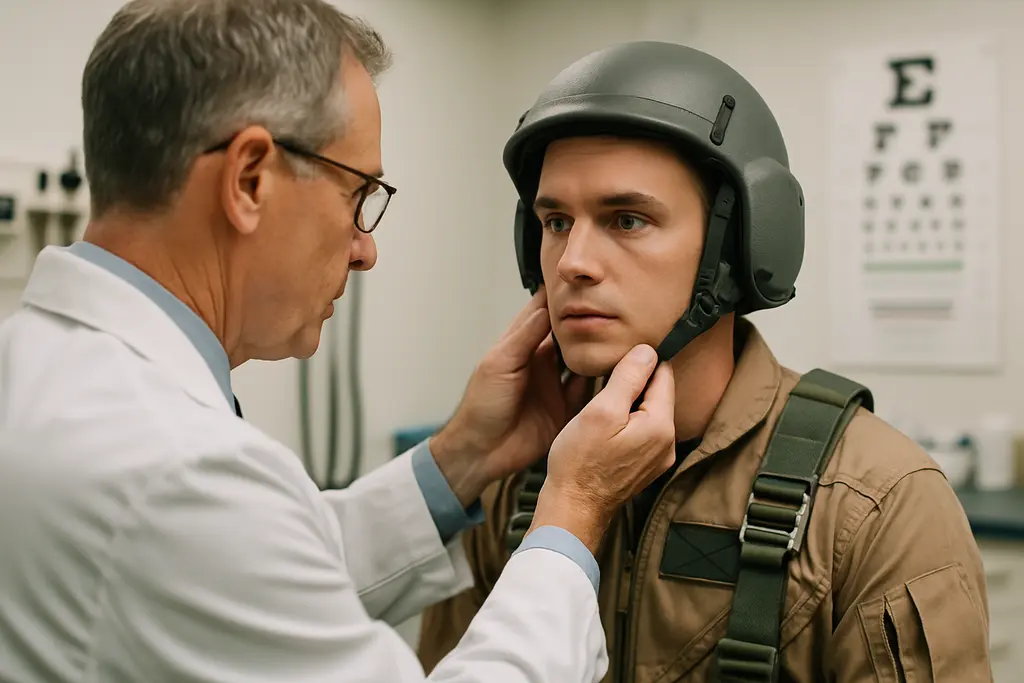
Dealing with the medical requirements is also important. Get a Category 1 Medical Certificate early on by seeing an approved examiner. This ensures your health won’t surprise you after investing time and money into your training.
Many assume you need a strong education background, but that’s not always the case. However, being good at math and physics helps a lot. These subjects are crucial when dealing with flight performance and weight limits. It’s easier to understand if these subjects aren’t completely new to you.
| Milestone | Typical target | What you’re building |
|---|---|---|
| PPL foundation | 45+ total hours, written exam, flight test | Core airmanship, solo confidence, cross-country basics |
| Time-building phase | Focused logging toward flight hour requirements | Judgment, consistency, real-world planning, cockpit workflow |
| CPL eligibility | 200+ total hours, including 100+ PIC | Commercial-level precision, professionalism, tighter standards |
| Personal prerequisites | Age 18+, Category 1 medical | Legal readiness and fitness to exercise commercial privileges |
By the time you reach nearly 200 total flying hours, including 100 as the Pilot-in-Command, you’re doing more than just logging time. You’re showing you can lead a flight, manage risks, and stay calm when it gets hectic. The experience you gain from flying at night, navigating the country, and using instruments becomes vital. This is because commercial flying values skill and discipline over just having a good time.
Cost Breakdown & Financing Options
When we talk about costs, the picture changes. Instead of seeing training as just a buy, think of it as a journey. Becoming a commercial pilot demands more than skills. It needs stamina, careful planning, and a budget ready for surprises.
Often, folks miss out on hidden expenses. The biggest mistake is thinking costs stop once you get a license. But that’s far from true. Flight hour requirements are strict and won’t bend.
Consider finances in three stages. First, the Private Pilot phase costs about $15,000–$25,000. Next is the Commercial phase, at $25,000–$45,000. Finally, there’s the ratings phase, adding $10,000–$25,000 for Instrument and Multi-Engine.
What you spend can vary. It depends on how fast you learn, the plane you use, where you study, and the school itself. Regular flying improves retention and saves money. But stretching it out means paying more, especially when life interjects.
| Phase | What You’re Paying For | Typical Cost Range | What Drives the Price |
|---|---|---|---|
| PPL phase | Initial flight training, ground school, exams, and the early hours that build habits | $15,000–$25,000 | Local rental rates, instructor availability, weather delays, and how consistently you train |
| CPL phase | Time-building, advanced maneuvers, commercial standards, and meeting commercial pilot prerequisites | $25,000–$45,000 | Aircraft type, hourly rates, how efficiently you log hours, and regional demand for instructors |
| Ratings phase | Instrument and Multi-Engine training that expands where and what you can fly | $10,000–$25,000 | Simulator vs. aircraft mix, multi-engine hourly cost, and how quickly you complete training blocks |
Financing isn’t just about finding money. Some schools offer payment plans and scholarships are there, but it’s not easy. The key is to plan ahead. Know when costs will rise and schedules become tighter.
For a clear view on costs, I suggest looking at this breakdown. Then, do the hard task of pricing your journey.
- Training pace: moving quickly means less time spent re-learning.
- Aircraft and avionics: modern tech might cost more, but it can fast-track learning.
- School and location: local demand, weather, and the area can impact how fast you learn.
Budgeting smart means understanding the process. Your goals are set, but how you reach them can vary. Plan well, considering time, ratings, and finances together, and you’ll find the journey smoother.
Required Training and Endorsements
To get that FAA commercial pilot badge, the dreamy part ends and hard work starts. Flight hour requirements are strict, not flexible. You must log your time carefully, because an examiner will check every detail.
Your medical check-up is crucial too. It’s how the industry ensures you’re fit for the job. This matters especially when flights get long and weather gets tough.
| Training bucket | What you log | Why it matters in real flying |
|---|---|---|
| Total time | 200 total flight hours | Shows broad exposure across aircraft handling, airspace, and decision-making under pressure. |
| Pilot-in-command | 100 hours PIC | Proves you can run the flight, not just ride along with a plan you didn’t build. |
| Cross-country | 20 hours, including a 300-nautical-mile trip | Forces planning discipline: routing, fuel, alternates, weather trends, and timing that actually matters. |
| Night flying | 5 hours | Because depth perception changes, workload spikes, and the runway lights don’t care about your confidence. |
| Instrument training | 20 hours instrument flying | Builds control and scan habits for low visibility operations when “looks fine to me” isn’t a legal strategy. |
In ground school, you learn the reasons behind the rules. You’ll dive into meteorology, navigation, air law, and flight operations. These subjects might seem boring but they can save you at 3,000 feet.
Training methods have improved too. Level Flight’s online school uses adaptive learning to help you. It changes the lessons if you’re struggling, making studying more efficient.
Adding endorsements and ratings can turn your flying into a career. These specializations let you fly different planes and take on various jobs. They make you more attractive to employers.
- Instrument Rating (IFR): Teaches you to fly in clouds using instruments. It combines simulators with real flights, covering IFR procedures and navigation.
- Multi-Engine Rating: Lets you fly multi-engine planes, useful for charters and building up flight hours early in your career.
- Flight Instructor Rating: Enables you to train new pilots, converting your experience into income and refining your skills.
- Float Rating: Prepares you to operate floatplanes, ideal for work in coastal or northern areas with water runways.
Your medical certification is also key. It’s like a required subscription for flying. If it expires, you can’t fly until it’s renewed. It’s part of the structured and regulated U.S. aviation world.
Written and Practical Exams
Training is like working out at the gym. The exams feel like the moment of truth when everything counts. Suddenly, everything is on the clock, recorded, and feels very serious.
The written part for a FAA commercial pilot is a big deal. It tests knowledge on weather, regulations, performance, and navigation. These aren’t just study topics anymore; they’re facts you need to get right. If you pass, you move forward. If not, you’re back to studying hard.
Canada offers a useful reality check: the CPL Written Exam (CPAER) tests you with 100 multiple-choice questions on theory. Even though it’s a different agency, the goal is the same. It’s about thinking clearly, not guessing wildly.
Prepping means more than just reading a lot. In Canada, Level Flight preps students for the CPAER and even recommends when to take it. In the U.S., your school and instructor guide you, making sure you’re ready before you spend money on flight time.
The practical exam is next, where the check pilot evaluates you closely. You’ll need to plan, fly, and handle risks as they happen. For FAA commercial pilot hopefuls, this is when the skills must show through your decisions.
In Canada, the flight test checks if you can really do what’s needed, like maneuvers, navigation, and making smart choices. Your instructor is your coach and your biggest critic, pointing out your flaws, even those you hope to hide.
| Exam piece | What gets tested | What it looks like in real life | Common slip-ups |
|---|---|---|---|
| knowledge test (U.S.) | Air law, weather theory, performance, systems, navigation math | Timed, computer-based questions that punish vague understanding | Rushing calculations, missing “except” wording, weak weather interpretation |
| CPL Written Exam (CPAER) (Canada) | Theoretical knowledge across core commercial topics | 100-question multiple-choice format with broad coverage | Over-focusing on one subject and neglecting balance across the syllabus |
| Practical flight test (checkride) | Maneuvers, navigation, procedures, decision-making, risk management | Oral questions plus a flight where standards and judgment both count | Unclear briefings, checklist drift, unstable approaches, poor workload control |
| Instructor readiness sign-off | Consistency and safety, not just “one good day” flying | Targeted polishing flights and scenario work before the scheduled test | Trying to “wing it,” ignoring debrief patterns, weak ADM under pressure |
The secret is to see both parts as linked. What you learn on the ground should guide you in the air. And how you act in the cockpit should show you’ve learned from your studies. This is what commercial pilot requirements are really about, even if it feels super stressful.
Career Potential and Job Opportunities
“Career potential” might sound fancy. But, jobs boil down to someone checking your logbook to see if you’re a fit. The commercial pilot prerequisites open doors for you. However, your flight hours determine how wide those doors open.
Age plays a role too. It’s not just about the thrill of flying. Operators and insurers can be quite selective. If you meet the commercial pilot prerequisites and prove you’re wise for your age, you’ll likely find a cockpit to call home.

A CPL doesn’t just lead to jobs. It leads to serious careers that pay well. The field is diverse, favoring those who prefer mastering a specialty over catchy phrases. You could work in regional services, airlines, or on-demand aviation—each offers unique challenges and schedules.
- flight instructor work to build skill fast and stack clean hours
- air ambulance pilot flying with tight procedures and higher stakes
- aerial surveying with long legs, sensors, and serious patience
- charter and on-demand flying with clients who expect “now”
- corporate operations with higher standards and sharper dispatch
- airline pilot pathways that turn routine into a science
- cargo transport where the boxes never complain about legroom
Genesis Flight College praises the variety in aviation for good reason: certain niches are always looking to hire. Jobs like surveillance, forest firefighting, air ambulance, and agricultural spraying aren’t just extra options. They are solid career paths. Each one has its own set of commercial pilot prerequisites, influencing your next target for flight hours.
Landing your first paying job is often hard because it requires experience you may not have yet. Many pilots begin by teaching or working in small charter operations. Then, they work their way up. It’s more about strategic steps than simply following a dream.
| Role | Typical early path | How flight hour requirements show up | What hiring teams notice (besides age) |
|---|---|---|---|
| Flight instructor | Teach in a structured syllabus; fly short local legs daily | Hours accumulate quickly and predictably | Communication, consistency, clean decision-making |
| Charter / on-demand | Start with simpler trips and grow into complex airspace and weather | Often expects a stronger total-time base than brand-new commercial pilot prerequisites | Customer handling, flexibility, risk discipline |
| Regional airline track | Build time in instruction, survey, or small operators, then apply | Recruiting commonly targets 500–1,500 hours depending on the market | Standard operating habits, checklist culture, training performance |
| Air ambulance | Step in after proving judgment in demanding ops | Higher expectations for instrument proficiency and real-world flying | Calm under pressure, procedure discipline, crew coordination |
| Aerial survey / surveillance | Fly precise profiles; learn equipment workflows and data runs | Hours can build steadily, but the flying is exacting | Precision, endurance, attention to detail |
Networking makes a huge difference. The aviation industry values skill and a well-documented logbook. Think of your logbook as a resume but with neater handwriting. Keep updating your ratings, maintain clear records, and treat each flight as an unplanned job interview.
Maintaining and Upgrading Your CPL
Getting a CPL is exciting. But keeping it means focusing on daily habits, not just the big moments. An FAA commercial pilot must keep their skills fresh. They do this by flying often, taking care of paperwork, and always learning.
First, take care of your medical certificate. It’s not the most exciting part, but it’s essential. Make sure you know when it expires, keep your health records up to date, and get enough sleep. These steps help ensure you’re always ready to fly.
Next, think about adding new skills. For example, an Instrument Rating (IFR) boosts your reliability. A Multi-Engine Rating opens up more job possibilities. And becoming a Flight Instructor helps you gain hours and improve your skills by teaching others.
Studying is key, not just when you’re in training, but always. You might need to take more tests as you add ratings or change paths. Study regularly, focus on real-life flying situations, and avoid cramming at the last minute.
The demand for pilots is growing. This is due to retirements and new planes needing pilots. Pilots who continuously improve their skills are seen as assets by employers. They’re always in demand.
| Career Move | What It Adds | Where It Helps Most | What You’ll Need to Stay Sharp |
|---|---|---|---|
| Instrument Rating (IFR) | More dispatch reliability and better decision-making in real-world weather | Charter, corporate flight departments, serious cross-country schedules | Regular instrument practice, disciplined scan, strong approach brief habits |
| Multi-Engine Rating | Access to twin-engine operations and broader aircraft types | Charter fleets, corporate flying, some entry pathways beyond single-engine work | Engine-out procedures, performance planning, tighter checklist flow |
| Flight Instructor Rating | Structured hour-building and deeper mastery through repetition | Flight schools, mentoring environments, long-term professional credibility | Lesson planning, consistent standards, patience under pressure |
| Regulatory and ops trend tracking | Fewer surprises when rules, training norms, or expectations shift | Any operation that audits, standardizes, or scales quickly | Recurring review habits, sharper documentation, a calendar that respects deadlines |
Licenses need regular attention to stay valid. Keep your medical certificate updated. Stay honest in your studies for the knowledge test. And always add new skills that are in demand. This way, your career will keep moving forward.
Comparing CPL vs. PPL
Think of the PPL as your first step into flying. It’s like driving, but you’re in the sky, not on the road. You learn how to follow the rules, talk on the radio, and handle the plane in wind. To get a PPL, you need at least 45 flight hours, pass a written test, and complete a flight test. This includes flying by yourself and going on longer trips.
The CPL turns your flying hobby into a possible job. It is when flying can start paying you back. With a CPL, you’re not just flying for fun. You’re training to make flying your job. You take everything you learned in the PPL, but now the expectations are higher and the training is stricter.
Getting your commercial pilot’s license means more time flying. You’ll need 200 total hours and 100 PIC hours. This includes 20 hours for a big 300-nautical-mile trip. You also need 5 hours of night flying and 20 hours using instruments. Classes cover weather, how to navigate, laws, and how to run flights safely.
Are you flying for fun or for a job? If it’s for love of flying, the PPL is your start. It’s easier to get with fewer hours and straightforward goals. But, if you want to make money flying, the CPL is your key. You’ll need to meet all the commercial pilot requirements. No matter what, the PPL is your first step. The CPL helps turn your flying time into a career.