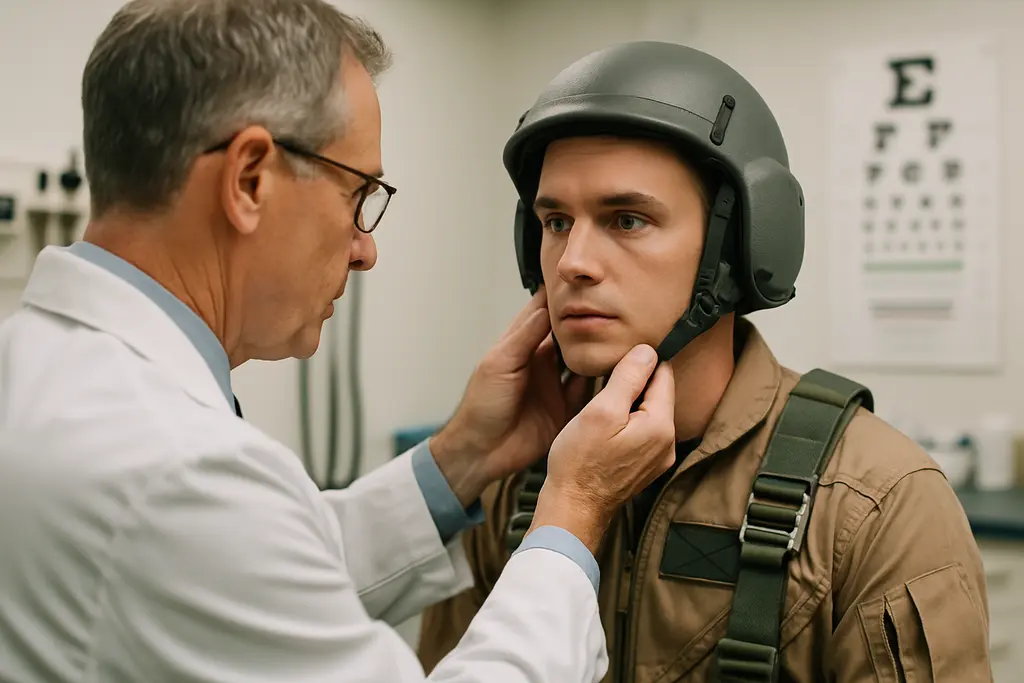
Most student pilots assume their biggest hurdle will be passing the written exam or mastering crosswind landings. However, the very first test of your aviation career happens in a doctor’s office, long before you ever touch the flight controls. Before you invest thousands of dollars into your flight training, you must prove to the federal government that you are physically and mentally fit to safely pilot an aircraft.
Navigating the FAA medical exam requirements can feel incredibly intimidating, especially for individuals who wear glasses, take daily medications, or have a history of childhood diagnoses like ADHD. The internet is full of terrifying rumors about pilots being permanently grounded for minor health infractions. The reality is that the Federal Aviation Administration wants you to fly, but they require uncompromising transparency regarding your medical history.
For aspiring aviators, understanding this process is about protecting your financial investment and your future career. Knowing the exact difference between the certificate classes, preparing for the physical exam, and understanding how the FAA handles complex medical histories will remove the anxiety from the process and get you cleared for takeoff.
Understanding The Three Medical Certificate Classes
| Medical Class | Target Pilot Privilege | Distant Vision Requirement |
| First-Class | Airline Transport Pilot (ATP) | 20/20 (corrected or uncorrected) |
| Second-Class | Commercial Pilot (Compensation/Hire) | 20/20 (corrected or uncorrected) |
| Third-Class | Private, Recreational, or Student Pilot | 20/40 (corrected or uncorrected) |
When comparing a Class 1 vs Class 3 medical, the primary difference lies in the stringency of the physical standards and the duration of the certificate’s validity. A Third-Class medical is the baseline requirement for student and private pilots. It focuses on general health, basic hearing, and a vision standard of 20/40, ensuring you possess the minimum physical capability to safely fly a light aircraft for personal use.
Conversely, a First-Class medical is the gold standard required for airline captains carrying hundreds of passengers. The vision requirement tightens to 20/20, and the cardiovascular standards become much stricter. For example, if you are applying for a First-Class medical and are 35 years or older, you must undergo a baseline electrocardiogram (ECG), which then becomes an annual requirement after the age of 40 to monitor your heart health.
The Exam Process: What To Expect At The AME
You cannot simply walk into your primary care physician’s office to get cleared for flight. You must schedule an appointment with an aviation medical examiner (AME), a physician specifically trained and authorized by the FAA to conduct aeromedical evaluations. Before you arrive at the clinic, you are required to fill out FAA Form 8500-8 online through the official FAA MedXPress portal, which generates a confirmation number you must present to the doctor.
The physical exam itself is highly standardized but generally straightforward. The AME will check your blood pressure (which currently must fall below 155/95), test your hearing by ensuring you can hear a conversational voice from six feet away, and conduct a thorough vision screening that includes colorblindness testing. You will also provide a urine sample, which is not a drug test, but rather a screening for proteins and sugars that could indicate undiagnosed diabetes or kidney issues.
Once you have successfully passed this baseline physical and the AME has verified your medical history, they will print your certificate right there in the office. This single piece of paper is what legally clears you to begin logging dual instruction and preparing for what to expect during your first flight lesson.
FAA Medical Disqualifying Conditions And Special Issuance
The most stressful part of the MedXPress application is the medical history questionnaire. There are 15 specific FAA medical disqualifying conditions outlined in the regulations. These include severe cardiovascular issues like a heart replacement or a pacemaker, neurological conditions such as epilepsy, and psychological conditions including bipolar disorder, psychosis, and severe personality disorders. A history of substance abuse or dependence is also strictly disqualifying.
However, the word “disqualifying” does not always mean a permanent ban from aviation. If you check “yes” to a history of conditions like depression, anxiety, or ADHD, the AME cannot issue your certificate in the office. Instead, your application is deferred to the FAA’s Aeromedical Certification Division in Oklahoma City. You will then enter a rigorous, often expensive, and time-consuming process to prove your condition is stable and controlled.
If you can provide the required neurological evaluations, specialist reports, and cognitive testing, the FAA frequently grants a “Special Issuance” medical certificate. This allows pilots with managed conditions to legally fly, often with the stipulation that they provide updated medical reports to the FAA on an annual basis. The system is designed to assess your individual risk to flight safety, not to punish you for past medical treatments.
Final Thoughts
The medical certification process is the foundational safety net of the national airspace system. It is designed to ensure that the pilots operating complex machinery thousands of feet in the air are physically and mentally capable of handling high-stress environments.
For student pilots, the absolute golden rule of the FAA medical exam is honesty. Never omit a diagnosis, medication, or legal issue on your MedXPress application. If you have a complex medical history, it is highly recommended to schedule a “consultation only” appointment with an AME before ever submitting your official online paperwork. By taking a proactive, transparent approach to your aeromedical fitness, you ensure a solid, legal foundation for your entire aviation career.