
We check our planes carefully, but often overlook our own health. While you’re doing a thorough preflight check, do you also check yourself?
The IMSAFE framework is not just paperwork. It’s a personal check for the most important part of the flight – you.
Illness, medication, stress, alcohol, fatigue, and emotion are real risks. They can make your flight dangerous.
Seeing these as risks is like getting ready to fly in bad weather without the right gear.
Recognizing Warning Signs
Mental red flags can look like everyday annoyances, like ATC static covering important messages. Feeling frustrated with flight delays or distracted by cabin noise? These might be your brain’s way of telling you something’s wrong.
Dr. Vanichkachorn from Mayo Clinic calls these small changes “altitude sickness for the mind.” They sneak up on you until you’re in a thin air of thinking. The National Business Aviation Association’s model shows how stress can turn into a problem if not managed.
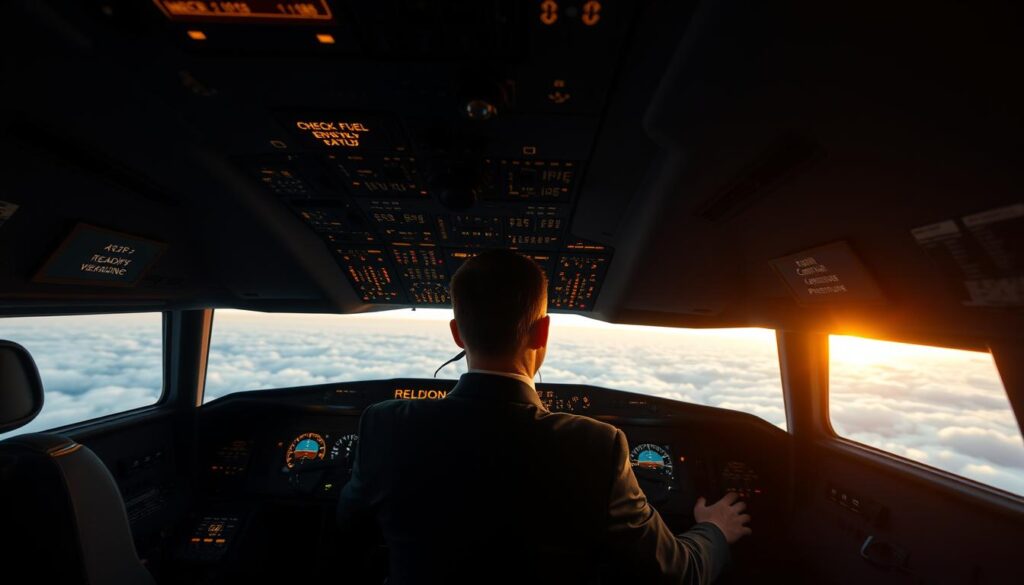
Look out for three signs: losing interest in flying, getting irritable with others, and having trouble with radios or checklists. These aren’t just bad days. They’re signs that your performance is slipping.
The FAA’s 2011 study found drugs in 42% of pilots in fatal accidents. Your cockpit readiness isn’t about feeling happy. It’s about being sharp when every decision matters. Are you really tired, or is your mind not working right?
True cockpit readiness means knowing when to reboot your mind before it fails. In aviation and life, ignoring warnings is the biggest danger.
Incorporating into Routine
Ever tried adding one more item to your preflight checklist? It’s like trying to fit another passenger in a Cessna – theoretically possible, but someone’s going to be uncomfortable. The secret isn’t adding more boxes to check. It’s about rewiring your entire approach to aviation safety.
Think of mental fitness as the psychological equivalent of your flow checks. You don’t “add” them to your routine – they are your routine. The University of North Dakota gets this right. Their aviation students practice the IMSAFE checklist daily, not just on flight days. Why? Because mental readiness doesn’t punch a time clock.
Auburn University takes it further with peer support programs that normalize conversations about stress. Imagine that – pilots actually talking about being human. Revolutionary concept, right?
The NBAA’s organizational culture recommendations hit the nail on the head. They suggest building mental muscle memory through consistent practice. It’s not about dramatic interventions. It’s about creating habits so ingrained they become second nature.
Here’s how top aviation programs integrate mental checks into daily operations:
| Program | Approach | Key Benefit | Implementation |
|---|---|---|---|
| University of North Dakota | Daily IMSAFE application | Normalizes mental checks | Integrated into all training scenarios |
| Auburn University | Peer support systems | Reduces stigma | Regular group discussions |
| NBAA Recommendations | Cultural integration | Creates lasting change | Organization-wide policies |
The most dangerous attitude in aviation isn’t necessarily a steep bank angle. It’s the “I’m fine” when you’re clearly not. Building proper single-pilot resource management skills means making mental checks as automatic as checking your fuel levels.
Your pilot preflight mental checklist shouldn’t feel like extra work. It should feel like breathing. Because when things get tense at 10,000 feet, you won’t have time to think about thinking. You’ll either have the habits or you won’t.
The best pilots aren’t those who never feel stress. They’re the ones who’ve practiced acknowledging it so thoroughly that it becomes just another data point in their decision-making process. Now that’s what I call flying smart.
When to Postpone a Flight
Ever notice how pilots sometimes make tough decisions? Like saying they’re “unavailable” when others push on. That’s not weakness – it’s advanced cockpit readiness.
The FAA tells us 8 hours from drinking to flying is okay, but 12-24 hours is better. It’s like saying “You can drive after two martinis, but maybe don’t operate heavy machinery.” Wait, that’s exactly what they’re saying.

Legal doesn’t always mean safe. The 8-hour rule is just the minimum. True pros know they need more time if they drank a lot.
Medications are another tricky issue. Taking cold medicine doesn’t mean you’re okay. It means you’re sick. It’s like putting a bandage on a broken arm and saying you’re ready for heavy lifting.
Let’s talk about fatigue. There’s acute fatigue (staying up too late) and chronic fatigue (not sleeping well for years). One needs a nap; the other needs a big change in lifestyle.
| Fatigue Type | Solution | Flight Readiness |
|---|---|---|
| Acute Fatigue | Single rest period | Possible after sleep |
| Chronic Fatigue | Lifestyle changes needed | Not until resolved |
| Illness + Medication | Full recovery | Ground until symptom-free |
| Alcohol Consumption | 24-hour buffer | Wait beyond legal minimum |
The bravest decision you’ll make might be before you fly. It’s knowing when today isn’t your day. This is where the IMSAFE checklist helps – it lets you be human.
Postponing a flight isn’t failure. It shows you’re ready by taking care of yourself. It’s about managing your own body.
Being a good pilot isn’t just about flying hours. It’s about knowing when not to fly.
Reporting Procedures
Dealing with FAA medical reporting can feel like navigating a minefield. Your medical certificate is at risk. But, the system aims to help pilots, not harm them.
Some medical issues need to be reported, but not all counseling sessions do. There are only a few approved meds for anxiety and depression. Plus, finding a mental health expert in aviation can be tough. Your pilot preflight mental checklist is key. The NBAA works to make seeking help okay, without ending your career.
Being ready for flight means tackling problems early. Pilots know asking for help shows courage, not weakness. Your ability to fly safely is more important than your medical certificate. This is what matters most for every flight.