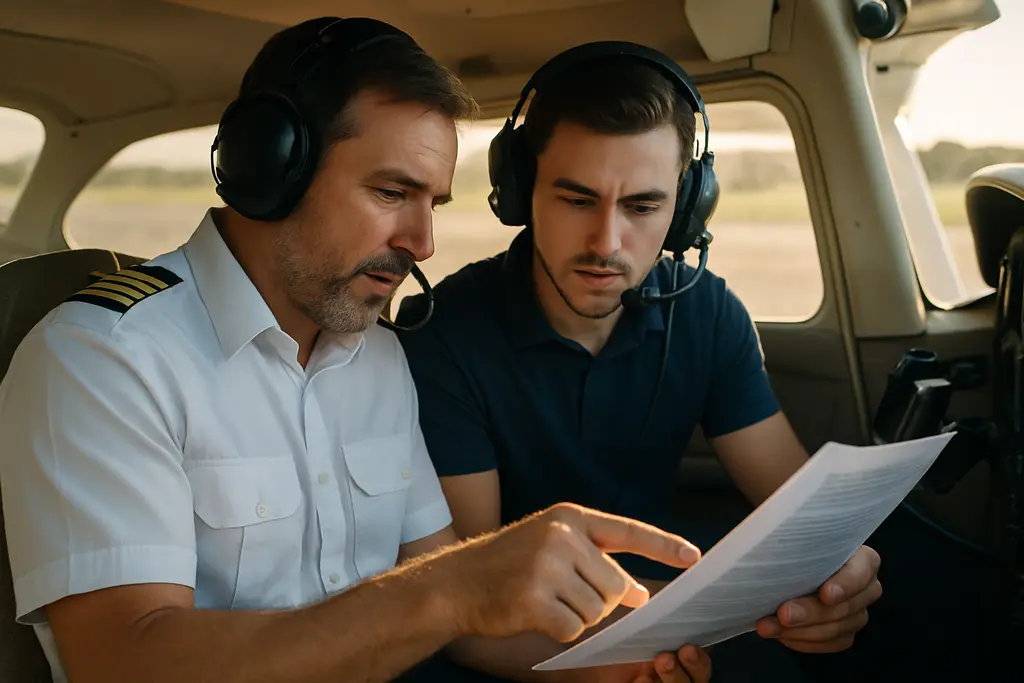
Training to be a pilot can cost a lot, like “tens of thousands of dollars.” It can seem like only the wealthy can afford it, leaving others just dreaming. Yet, I found a way to see it differently. It became a big task, mixing planning, extra jobs, and looking for financial help.
Financing flight training is more about money management than just believing in yourself. It’s about understanding your money, time, and how much you can borrow. Suddenly, the dream of flying feels possible—more practical than fantasy, but it works.
I’m going to show you how to save for flight school. We’ll talk about making a budget, finding scholarships, working part-time, and not rushing into training. Choosing the right school is crucial too. You don’t want to waste your money.
We’ll also explore getting loans, tax benefits, borrowing from loved ones, selling things you don’t need, always having a plan B, and practicing with a flight simulator to save time and money.
But, here’s a heads-up: saving for flight school requires patience and smart choices, and automating savings helps a lot. By planning carefully and not spending all you have, you can afford flight training. It’s all about creating a stable step-by-step approach, not taking huge risks.
Why Flight Training Feels Expensive and What You’re Really Paying For
I once thought pilots were all about looking cool. That changed once I saw the real costs. Flight training feels expensive because it includes plane time, fuel, expert teaching, and top-flight safety. These things never come cheap.
The pace of your training also affects the cost. Training twice a week means you might forget stuff and need to relearn. Training four or five times a week helps you remember your lessons better. This isn’t just talk; it’s proven.
Typical flight training costs: “tens of thousands of dollars” and why totals vary
In the U.S., the cost might make you blink. When you hear “tens of thousands of dollars,” it’s no joke. It’s the honest truth.
The total cost depends on your training location, frequency of flights, passing key tests, and weather disruptions. Local living costs also play a part in your overall expenses. Yes, even the cost of rent and gas affects your aviation education budget.
In Europe, the situation is similar but with different rules. EASA says getting a Commercial Pilot Licence (CPL) costs about €60,000 to €100,000. Fast-track programs last about 18-24 months and cost €70,000 to €100,000. Choosing a step-by-step path might reduce costs to €50,000–€80,000, though it could take longer.
Core cost buckets to plan for beyond flight time
Flight time grabs headlines, but there’s more to the story. If you only account for the plane and teacher, other costs will catch up with you. They always do.
- Tuition and ground school: classroom time, online modules, and progress checks
- Checkrides and exam fees: examiner fees, written tests, and retest costs if you stumble
- Books and test prep: textbooks, question banks, and charts
- Gear: headset, flight bag, iPad mounts, and sometimes uniforms
- Living expenses: rent, utilities, groceries, transportation, insurance, and the “I had to eat near the airport” tax
| Cost bucket | What it really covers | Why it changes your total |
|---|---|---|
| Aircraft + instructor time | Hourly wet rate, instructor hourly rate, fuel, basic maintenance allocation | Longer gaps between lessons mean more review, raising your training costs |
| Checkrides and testing | Designated examiner fee, knowledge test fee, ground portion time | Delays in scheduling can lead to extra prep flights, upping your costs |
| Ground school and materials | Tuition, books, online courses, practice tests | Costs vary as schools bundle these differently, making some seem cheaper at first glance |
| Gear and tech | Headset, EFB setup, charts, backup battery, kneeboard | Early purchases can be a big hit, even if you’re not flying much yet |
| Housing and commuting | Rent, utilities, car costs, parking, insurance | Living in or near big cities can push your school costs higher, without more flying time |
How aircraft type and avionics affect price without changing the certificate outcome
The type of airplane you train in can really change your costs. A new Cessna 172 with the latest Garmin systems costs more than an older Cessna 152. You pay extra for modern features, comfort, and reliability.
But fancy screens don’t give you a better license. The key is finding what works with your money and time without jacking up the cost of training.
Where you train also affects your budget. Big city locations can make everything more expensive. If you can do ground school remotely or online, you could save on travel and maybe even moving costs. Every little bit helps reduce your overall flight school expenses.
Build a Budget and Savings Plan That Can Actually Fund Flight School
It’s like your money loves to play hide and seek. But when it comes to saving for flight school, you can’t afford to lose sight of it. Treat budgeting for flight training like you’re prepping for a flight: start with a quick check, dive into the details, and stick to the plan.
Assess your full financial picture: income, recurring bills, debt, and savings you can allocate
First, do a quick review of your money. Add up your monthly income from all places—work, side gigs, dividends, anything regular. List your recurring expenses next: rent, bills, groceries, transport, insurance, and those small fees that end up costing a lot.
Now, look at your debts: loans and credit cards. Measure your debt against your income. Aim to keep it below 30%. If you’re already close to 40%, think twice before adding more costs. It’s like planning to fly with too much weight—it’s risky.
Create a detailed budget separating living expenses from training expenses
I recommend keeping two budgets: one for everyday life, and one for flight school. This way, you won’t confuse or mix up your spending. It makes it easier to see where your money’s going, especially when unexpected costs show up.
| Living expenses (keep steady) | Training expenses (plan precisely) | Why it matters for cash flow |
|---|---|---|
| Rent/mortgage, utilities, groceries | Tuition and flight hours | Housing costs don’t change much; flying more means spending more quickly |
| Transportation, fuel, car insurance | Ground school and instructor time | Driving costs go up during busy training periods; it affects your budget |
| Health insurance, prescriptions | Exam and checkride fees | Checkride fees are big; it’s best not to be surprised by them |
| Phone, basic internet | Textbooks, uniforms, equipment | Equipment is a must, but you can manage costs by timing your purchases |
Automate savings and cut “leaks” (subscriptions, dining out, impulse spending) to accelerate saving for aviation school
Make saving easier by automating it. Move money to a special account automatically. Think of it as a bill that must be paid, not an optional expense. This helps keep your savings on track without much effort.
Next, fix the leaks in your spending. Cancel unused subscriptions, eat out less, and avoid spur-of-the-moment buys. Even small savings add up. Want to get serious? Follow a practical plan to mix savings with other funds for flight school.
Emergency fund planning: aiming for three to six months of living expenses during training
Before diving into training, save for emergencies. Aim for a fund that covers three to six months of living costs. Life is full of surprises like health issues or car fixes. Without savings, these surprises could interrupt your training. And stopping and restarting can cost more in the long run.
Here’s the truth about personal finance for pilots: It’s not about being perfect, but about keeping things moving. A solid plan helps you stay on track, protects your skills, and saves money. That’s why it’s smart to budget carefully for your flight training.
Find Pilot Scholarships, Grants, and Cadet Programs in the United States
Free money is the best, especially when it comes to education. Scholarships and grants help you avoid debt while training to be a pilot. They’re practically a shortcut in aviation education in the USA.
Where to look
Begin by exploring top aviation organizations. Groups like the Aircraft Owners and Pilots Association (AOPA), Women in Aviation International (WAI), and the Experimental Aircraft Association (EAA) are big players. They are reputable and familiar with scholarship applications.
Then, search locally. Flight schools, universities, and aviation partners often offer scholarships based on various factors. Looking locally can lead to less competition compared to national programs.
How scholarships and cadet programs differ
Scholarships are typically based on merit which can be your grades or community efforts. Cadet programs, though, are more about finding future pilots. They involve interviews and tests to see if you’re a good fit.
| Feature | pilot scholarships | airline cadet programs |
|---|---|---|
| Main “ask” | Proof you’ll use funds well: transcripts, essays, goals | Proof you’ll perform: application steps, screening, interviews |
| Typical selection signal | Merit and consistency over time | Aptitude, readiness, and fit with an airline pipeline |
| What funding may cover | Tuition, fees, books, sometimes checkrides | Training costs and, in some cases, a stipend for living expenses |
| Trade-offs | More flexibility in where you train | More structure, plus expectations and timelines |
How cadet pathways can ease upfront costs
Airline cadet programs offer a smoother start by promising jobs. They turn training into an opportunity to network with airlines. Think of it like having VIP access, but you have to impress the judges first.
Some options may even take care of tuition and give a little extra for living. Because, let’s face it, your dream doesn’t pay the bills. A predictable financial support can be a game-changer.
Application strategy that actually helps
Ignoring deadlines is risky. It’s wise to track them early. Procrastinating with applications for pilot scholarships usually ends badly.
- Build a simple deadline tracker for aviation scholarships USA and keep it updated weekly.
- Gather recommendation letters early from a CFI, employer, professor, or volunteer lead who can speak to reliability.
- Write an aviation-focused resume that shows progress: written exams, flight hours, safety mindset, and any airport or club involvement.
- Prepare for interviews if you’re pursuing airline cadet programs, with clear reasons for this career and a calm, structured story.
Flight School Loans and Smarter Borrowing Strategies
When I hear people talk about flight training debt like it’s “good debt,” I imagine a motivational poster on a cockpit. Sure, getting loans can help you start flying sooner. But they can also become a burden in your monthly budget.
Using loans wisely for flight training is a strategy, not a trap. It’s all about balancing your training while managing real-life expenses like rent and car payments.
Common borrowing options: private loans, personal loans, and comparing lender terms
Pilot training loan options usually fall into two groups: private loans for education, and personal loans for anything. Both can be useful. But you should be cautious and review each option’s details.
The best approach is to compare loans like weather reports. Don’t settle for the first one. Check the lender’s terms, costs, types of interest rates, and payback rules before committing.
| Borrowing route | What it’s best for | What to compare before signing | Common gotcha |
|---|---|---|---|
| Private loans | Structured schooling costs and larger training budgets | Interest rates, repayment terms, origination fees, deferment options | Payments can jump fast after any grace period ends |
| Personal loans | Gap funding for checkrides, gear, or short training pushes | APR range, fixed vs. variable rate, penalties, total cost | Higher APR if your credit profile isn’t strong |
| Education lending routes (when you qualify) | Programs that treat training like formal education spending | Eligibility rules, enrollment requirements, repayment timing | Assuming “education” automatically means cheaper |
How to evaluate interest rates, repayment periods, and your projected monthly payment
Loan details can seem fine until you do the math. For flight school loans, always check interest rates, the repayment period, and projected monthly payments. Compare this to your costs for necessities and any other debt.
I recommend comparing a “best month” and “worst month” scenario. If the payments only work in the best times, that’s risky.
Debt-to-income reality check: why a ratio above about 40% is considered critical
Your debt-to-income ratio shows if your finances are healthy. Try to keep it below 30%. Going above 40% can spell trouble, making even one unexpected bill a potential disaster.
Close to that risky line? It might be wise to borrow less, slow down, or save more. Skipping payments is not an option.
Risk controls: borrowing only what you need and keeping cash reserves
The safest strategy is to borrow only what you truly need. Not what makes you feel secure or what you’d get if you were acting in a movie.
Also, save some money for emergencies. Delays in training can happen for various reasons. Without savings, these obstacles can force you into costly decisions.
- Cap borrowing to the necessary training costs.
- Protect savings so you’re ready for unexpected expenses.
- Read the agreement carefully to avoid surprises.
Work and Train at the Same Time: Working While Learning to Fly
When you’re learning to fly, it feels like your money flies away fast. People often joke about when you’ll fly a jet. That’s why having a job while training is like a safety belt for your bank account.
Having a job means you borrow less money. This reduces the time your finances are at risk. It’s not fun, but it beats paying extra for stress.
Schedules that don’t collide with your lesson slots
Good part-time jobs for pilots work around the weather and unexpected delays. Find a job where schedules are flexible.
Being an operations clerk at a flight school is a smart choice. You get an insider’s view, similar to seeing behind the scenes of a show.
Jobs in aviation, especially at airports, are also a good fit. Look for roles that require working mornings or evenings.
| Role | Why it fits training | Skills you build | Hidden cost-control perk |
|---|---|---|---|
| Flight school operations clerk | Shift work that can match flight blocks and weather windows | Dispatch flow, scheduling, basic regs talk, radio comfort | First pick of open slots; fewer gaps that cause rusty flying |
| Front desk or admin support at a flight school | Predictable hours; easy to swap shifts around checkrides | Customer service, paperwork accuracy, logbook awareness | Fewer missed lessons from “life admin” spirals |
| Airport operations support (entry-level) | Early/late shifts that leave midday for flying | Airfield awareness, safety culture, coordination | Real-world context makes ground study stick faster |
| Scheduling or call-center style work in aviation-adjacent teams | Remote or structured shifts; easier weekly planning | Clear communication, process discipline | Steady pay reduces last-minute training pauses |
Trading skills for lower costs
Some schools let you work for them in exchange for cheaper training. It’s a practical way to save money, not just a nice story.
If you have skills in sales, marketing, or graphic design, you might get an even better deal. Being useful can make you more valuable than just being eager.
This approach keeps your training funds flowing. It also helps you make important connections for the future.
Time management as cost control
Working while flying means keeping your training steady. If you slow down, it may end up costing more due to repeating lessons and needing more time with your instructor.
I plan my week like a pilot. I schedule flight time, then study periods, then work. I also plan time to rest, to avoid pricey mistakes.
Email Marketing Campaign Launch Email Marketing Campaign OptimizationThe aim isn’t to do everything. It’s about choosing the right tasks at the right time. This way, your progress remains steady without financial surprises.
Reduce Paid Flight Hours by Flying Smarter and Using a Home Simulator
Flight training costs a lot because you pay by the hour. Many things you’re taught could be learned at home. The best way to save money is to come prepared. Use the time you pay for to improve, not to learn the basics. To cut down on flight hours, being prepared is everything.
Make a plan that includes studying on your own, practicing, and being okay with making mistakes. Know the material before you fly, so your flight time is for practicing, not learning. Using a home flight simulator can save money. It’s not just for fun.
How self-study and strong ground prep can shorten paid instructor time
Think of ground prep like warming up the oven. Without it, you’re just wasting time and fuel. With books, FAA handbooks, and online courses, you can learn at your speed. You can go over tough topics more than once.
This preparation makes each flying lesson more valuable. You’ll focus on improving your skills rather than learning the basics. This way, you cut down on flight training time without missing out on learning.
Home simulator value: practicing procedures and maneuvers to reduce costly cockpit repetition
With a home flight simulator, you can practice without pressure. Practice checklists, radio calls, and navigating instruments until they feel natural. Try landing in different weather without worrying about the cost.
The goal isn’t to imagine you’re a top pilot. It’s to remember what to do next in the cockpit. Use this tool alongside checkride prep resources. This way, you’ll develop skills that examiners look for: being organized, calm, and sure of your next move.
Low-cost setup idea: entry-level joystick plus a basic PC or Xbox for meaningful skill-building
You don’t need an expensive setup to improve your flying skills. A simple $30 joystick and a basic PC or Xbox are enough. This setup lets you practice the basics well. Although more pricey options offer more realism, starting simple can still be very helpful. It could even save you money by reducing how many lessons you need.
| Budget Setup | What You Practice Well | How It Can Save Money | Common Pitfall to Avoid |
|---|---|---|---|
| $30 joystick + basic PC | Checklist flow, pitch/power habits, pattern setup, scan discipline | Fewer paid repeats of “basic handling” and smoother lesson pacing | Chasing perfect graphics instead of repeatable procedures |
| $30 joystick + Xbox | VFR navigation cues, situational awareness, simple weather changes | More confident briefings and less cockpit confusion on new routes | Skipping real-world references like charts and airport diagrams |
| Upgraded yoke/rudder pedals | Finer control inputs, coordinated turns, steadier approaches | Less time “finding the feel” during paid flights | Assuming hardware replaces instruction or proper technique |
Using question banks and structured practice to improve checkride and written-test readiness
Doing well on tests and exams means being organized. Question banks and prep tools help you see patterns and know where you need to improve. AirheadATPL offers lots of questions, explanations, and keeps track of your progress.
A good study routine is key. Take short quizzes every day, jot down what you missed, and review tough spots weekly. With your knowledge well-organized, you save time and money. And if your simulator practice goes with your study plan, a home flight simulator becomes a smart investment, not just an extra expense.
financing flight training With Cost-Saving Choices at the Flight School Level
I used to think picking a school was about vibes: a shiny lobby, a cool ramp, maybe a coffee bar. But then I learned what really matters: it’s all about the cost. When choosing an affordable flight school, think of it as a big purchase. Compare prices, check the details, and save your receipts.
Financing flight training can seem cheap at first glance, but it can add up. Unexpected cancellations, aircraft issues, and scheduling problems can stretch your budget. To avoid surprises, look at the entire operation of the school, not just the price per hour.
How to compare schools: aircraft rates, instructor quality, maintenance standards, and scheduling reliability
First, look at the numbers. Then, ask about the system behind them. Find out how often planes need maintenance, how the schedule is managed, and the plan for bad weather. Your answers will affect how often you can fly, maybe twice a week or less.
| What to compare | What to ask | Why it changes the total bill |
|---|---|---|
| Aircraft hourly rates (wet) and instructor rates | Are rates “wet” (fuel included)? Any surcharges for avionics or weekend slots? | Extra fees add up quickly, making it hard to compare flight school costs. |
| Instructor availability and continuity | Will you have one primary instructor? What’s the instructor turnover like? | Changing instructors means you might repeat lessons, costing more for the same training. |
| Maintenance standards and dispatch reliability | What’s the dispatch rate? How do they manage repairs and checks? | More downtime means training takes longer, costing you more in the end. |
| Scheduling reliability | How many aircraft per student? How do they handle weather cancellations? | Poor scheduling can mean more training hours and delays in your progress. |
| Upfront policies and refund terms | Are deposits refundable? Any “use it or lose it” blocks? What’s in writing? | Having a backup plan is key. Don’t get stuck due to bad planning. |
Why “older aircraft vs. new aircraft” can be a rational trade-off (same certificate, different experience)
Flying a brand new Cessna 172 with top-notch avionics is exciting, like stepping into the future. Meanwhile, a 1970s Cessna 152 might feel outdated but still works for training. In both cases, you’ll earn the same pilot certificate.
What you’re paying for includes modern features, comfort, and reliability. If saving money is your goal, an older plane could be a smart choice. This works if the plane is well-maintained and ready to fly when you are.
Payment plans and pacing options that can reduce financial strain (even if training takes longer)
When money is tight, taking it slow is an option, not a setback. Some schools offer payment plans, smaller deposits, or a less intense schedule to help you manage costs. Stretching your training might cost more over time, but it’s better than rushing into debt.
If you need to take out a loan, examine the terms carefully, as if buying a used car. For those considering flight school loans, check how the school works with lenders, how funds are given out, and policies for taking a break from training.
Location matters: controlling housing and transportation costs if you need to relocate
The cost of flight training doesn’t stop at the airport. Housing, car payments, and getting to school can add up. Moving to a cheaper area or one with better weather can save you time and money.
Before moving, compare everyday living costs too. Living close to the airport might save on commuting costs. Maybe you can study online to cut down on trips. Making simple, smart choices often helps save money in flight training.
Alternative Funding: Family Loans, Sponsorship Deals, and Creative Cash Strategies
When flight school seems expensive, you look for other ways to pay. You’ll find both traditional and creative solutions, all with their own trade-offs. Choose the ones you can handle.

Borrowing from family or friends
Getting a loan from family or friends can be quick and cost-effective. But, it might make family gatherings awkward if things go south.
Always put the loan terms in writing: how much, the monthly payments, and when you’ll have it paid off. Be clear about the consequences of missing a payment. Not only could your credit score take a hit, but your relationships could suffer too.
Sponsorship arrangements with a work commitment
Sponsorships offer a trade-off: money for flight school now in exchange for a commitment later. Usually, this means agreeing to work for a certain period after getting your qualifications.
This path can be beneficial in the long run. However, be aware of the downsides like lower pay and less appealing work conditions. You’re essentially trading your freedom for stability.
Selling unused items for fast cash
Selling stuff you no longer use is a straightforward way to fund your flight training. It’s a simple swap: items you don’t need for flying hours that you do.
You might sell a car, furniture, or electronics. These sales can help pay for your training costs without accruing debt. Think of it as a temporary move towards minimalism.
Delaying training on purpose
Waiting to start your training can be a wise move. It allows you to save money, continue working, and ensure you’re committed to flying. If you find flying is just a hobby for you, you’ll still have savings and no regrets.
Set a savings goal and discuss payment options with the flight school. Always have a Plan B in case finances get tight. This approach helps avoid unpleasant surprises.
| Option | What you gain | What it costs | How to keep it from going sideways |
|---|---|---|---|
| family loan for flight training | Low or no interest, fast access to funds | Relationship risk if payments slip | Clear repayment timeline, written terms, realistic monthly amount |
| Sponsorship with obligation | Training support with predictable funding | Multi-year commitment; limited leverage on pay and conditions | Read the obligation length, compare job terms, keep an exit plan |
| selling items to fund training | Cash without debt or credit checks | Less convenience and fewer “extras” at home | Sell high-value items first, earmark proceeds for fees and checkrides |
| Strategic delay | Lower future stress; career validation time | Slower start and possible momentum loss | Set savings milestones, schedule training windows, avoid draining reserves |
Conclusion
By now, you might understand that the cost of flight training isn’t just a big mystery. It’s more like figuring out a math problem that includes airplanes. You won’t find one simple solution. Instead, you’ll need to take several steps: start saving early, cut unnecessary spending, and look for scholarships and good cadet programs.
Next, be smart about your training methods. Use a simulator at home to practice, so you don’t spend too much money flying. When choosing a flight school, think of it as if you’re buying a car. Look at how reliable they are, their schedule flexibility, and how they handle maintenance. It’s about planning your financing well, not just dreaming big.
If you’re thinking about taking out a loan for your training, be careful. Make sure to compare loan terms, borrow only what you really need, and have some money saved for unexpected costs. The same goes for borrowing from family: write everything down, agree on payback terms, and keep your personal relationships smooth.
What I learned the hard way is simple: you don’t need to be rich, you just need a solid plan. Keep a backup plan ready, be patient, and stay disciplined. Avoid spending all your money just to prove you’re dedicated. Instead, avoid increasing your expenses thoughtlessly while focusing on your goals in flying and in saving money for your future.