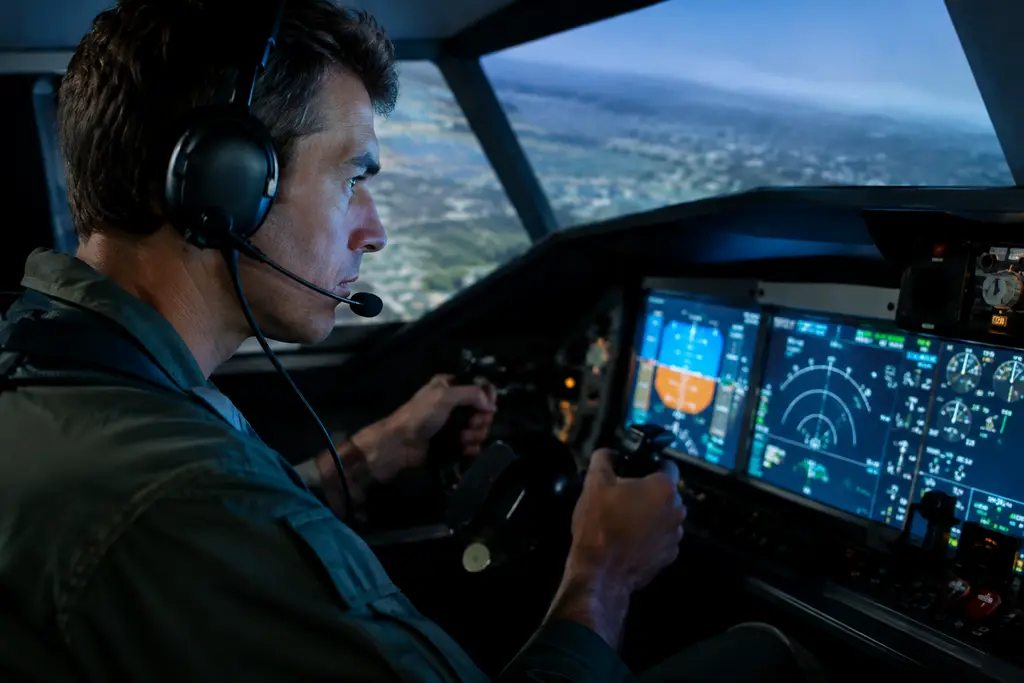
ASAP Safety Training took on sharper meaning after the Air Charter Safety Foundation’s 2026 mid-year ASAP review. Between January and June 2026, ACSF members submitted 760 ASAP reports covering 432 distinct safety events, with 703 sole-source reports and 57 non-sole-source reports, according to the ACSF mid-year review. For flight schools, Part 135 training departments, and business aviation safety managers, the central lesson is not that aircraft are becoming less reliable. The data point more directly toward human performance, crew coordination, traffic awareness, and altitude management.
What The Mid-Year ASAP Data Showed
Confirmed Report Counts And Category Mix
The confirmed mid-year reporting pattern was concentrated in three categories. Altitude deviations accounted for 16% of reports, traffic proximity events accounted for 14%, and coordination or communication issues accounted for 11%. Together, those three categories represented 41% of all reports in the January-June 2026 review period. That mix matters because each category is strongly connected to cockpit discipline, workload control, and shared crew awareness.
For training leaders, the data argue for a shift in emphasis. Mechanical knowledge remains essential, but the higher-frequency problems in this review came from the operational side of flying. A crew may know the aircraft systems well and still lose margin during a busy arrival, a rapidly changing clearance, a handoff between sectors, or a high-density terminal environment. That is where repeated practice, clear callouts, and flight deck role discipline earn their value.
Operational Risk Outpaced Mechanical Risk
Mechanical issues involving airframe, powerplant, and structures made up about 10% of all reported events in the same January-June 2026 period, as reported by GlobalAir’s ACSF analysis. That does not reduce the need for aircraft systems training. It does suggest that business aviation operators should avoid letting simulator sessions become centered only on rare mechanical failures while leaving daily operational threats undertrained.
The multi-year comparison adds weight to that reading. From 2024 through 2026, altitude deviations and traffic proximity remained the leading two categories, together accounting for 31% to 33% of reports each year. That consistency is hard to ignore. A one-year spike can be treated as a signal to watch. A repeated three-year pattern deserves structured training time, tracked evaluation, and follow-up during line operations.
ASAP Safety Training Priorities From The Review
ASAP Safety Training For Altitude Discipline
Altitude deviations were the largest category in the mid-year review, so ASAP Safety Training should place altitude awareness near the center of recurrent instruction. The practical target is not just knowing assigned altitudes. Crews need to practice recognizing when automation mode awareness, task saturation, communication timing, or workload has started to weaken altitude monitoring.
Scenario-based simulator training fits this need because it can reproduce high-workload moments without waiting for them to occur on the line. A well-built event can include a late clearance, a busy frequency, a change in vertical planning, and a requirement for both pilots to verify the aircraft’s path. The training value comes from pausing after the scenario and asking what cues were missed, which callouts worked, and where crew coordination could have caught the deviation earlier.
Traffic Proximity Scenarios In Busy Airspace
The review identified traffic proximity concentrations in the New York Metro area, Van Nuys in southern California, and South Florida airspace. Those locations are not interchangeable, but they share a training lesson: dense traffic and fast communications leave little room for passive monitoring. For crews operating into similar busy airspace, simulator and classroom sessions should include traffic conflict recovery, concise radio discipline, and task sharing during arrival and departure phases.
ASAP Safety Training also benefits from treating traffic proximity as more than a visual lookout issue. It is tied to crew resource management, automation monitoring, ATC communication, and fatigue management. A crew that is tired, behind the aircraft, or unclear on roles can see a traffic situation later than it should. That is why the review’s training implications point toward CRM, communication training, automation-monitoring skills, fatigue management, and simulator scenarios based on reported events.
SMS And Feedback Loops For Charter Operators

Regulatory Pressure After The April 2024 Part 5 Revision
The FAA’s April 2024 revision to 14 CFR Part 5 expanded mandatory Safety Management System requirements to about 1,848 Part 135 charter and commuter operators, certain Part 21 manufacturers, and Part 91.147 air-tour operators. That change gave safety training a more formal structure. Training is no longer just a calendar requirement or a collection of checkride tasks. It has to connect with safety policy, risk management, safety assurance, and safety promotion.
For ASAP Safety Training, that means reported hazards should feed the training plan rather than sit in a database. If altitude deviations remain a leading category, the training department should be able to show where altitude-related risks are taught, practiced, checked, and revisited. If communication issues are declining, leaders should ask which changes may be helping and whether those practices should be preserved in standard operating procedures.
Using Voluntary Reports For Practice Design
The review showed that coordination and communication issues, airframe mechanical issues, and flight diversions had multi-year improvement, with decreasing incidence since early 2025. Non-sole-source event reports also declined significantly since the first quarter of 2025, falling from 57 to below 30 per quarter over the latest four quarters. The data do not prove one single cause, but they support the value of repeated feedback, procedural focus, and training that responds to what crews are actually reporting.
This is where competency-based training fits the safety discussion. A training program can move beyond checking whether a maneuver was completed and examine whether the crew managed workload, communicated clearly, monitored automation, and recovered the operation before risk increased. Operators that compare resource material across related aviation sites can also use the resource at this related network as a pointer to connected publishing projects, while keeping official FAA and ACSF material as the basis for policy decisions.
ACSF Review Impact On Charter Training
Practical Training Actions
The strongest use of ASAP Safety Training is to turn mid-year data into practice that crews recognize. A pilot should leave recurrent training able to connect a simulator event with the real reports behind it. That connection makes the session feel less abstract and helps crews treat altitude, traffic, and communication discipline as daily safety work rather than as checkride talking points.
- Build simulator scenarios around altitude deviation recovery and traffic conflict recognition.
- Use CRM exercises that force clear task sharing during busy ATC exchanges.
- Include automation-monitoring errors in recurrent training, not only system failures.
- Address fatigue and workload as operational risks that can weaken crew performance.
- Review voluntary report trends often enough for training content to stay connected to current hazards.
What The Data Can And Cannot Prove
The ACSF review is based on reports submitted by ACSF members through June 2026. It is highly useful for spotting reported patterns, but it should not be treated as a complete measurement of every business aviation operation. Reporting culture, membership profile, and event definitions all shape what appears in the data. Training departments should use the review as a disciplined input, then compare it with their own ASAP, SMS, audit, and line feedback records.
For charter operators, the impact is direct: the leading risks in the review are trainable. Altitude discipline, traffic awareness, communication, automation monitoring, and fatigue management can all be practiced and assessed. The mid-year data give safety leaders a clear reason to keep training close to real operational experience, where small corrections in crew behavior can protect the widest margin.