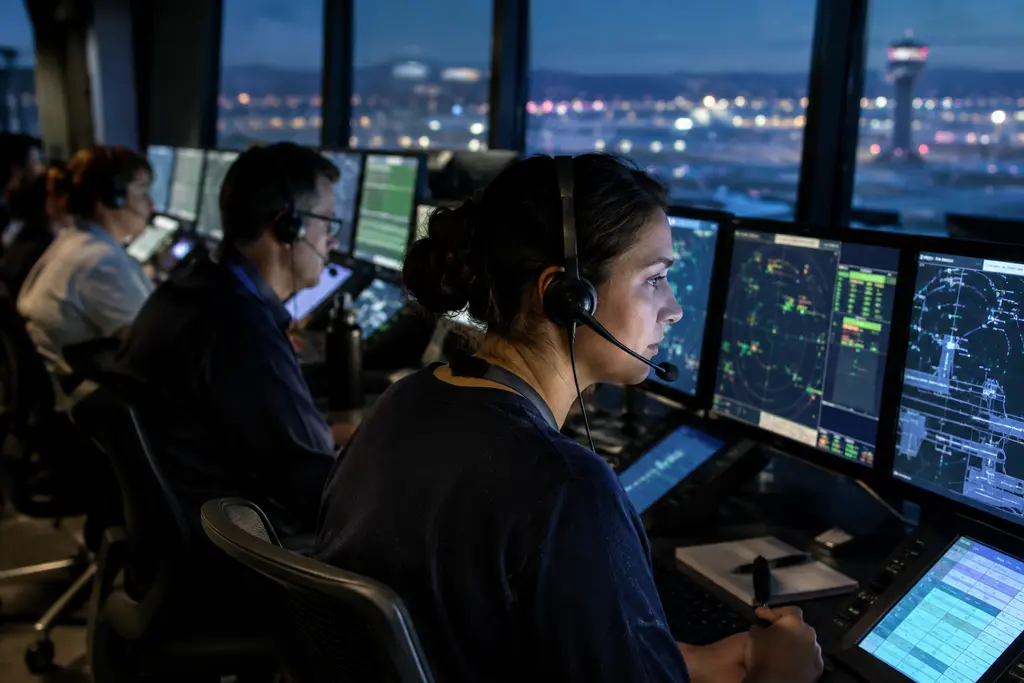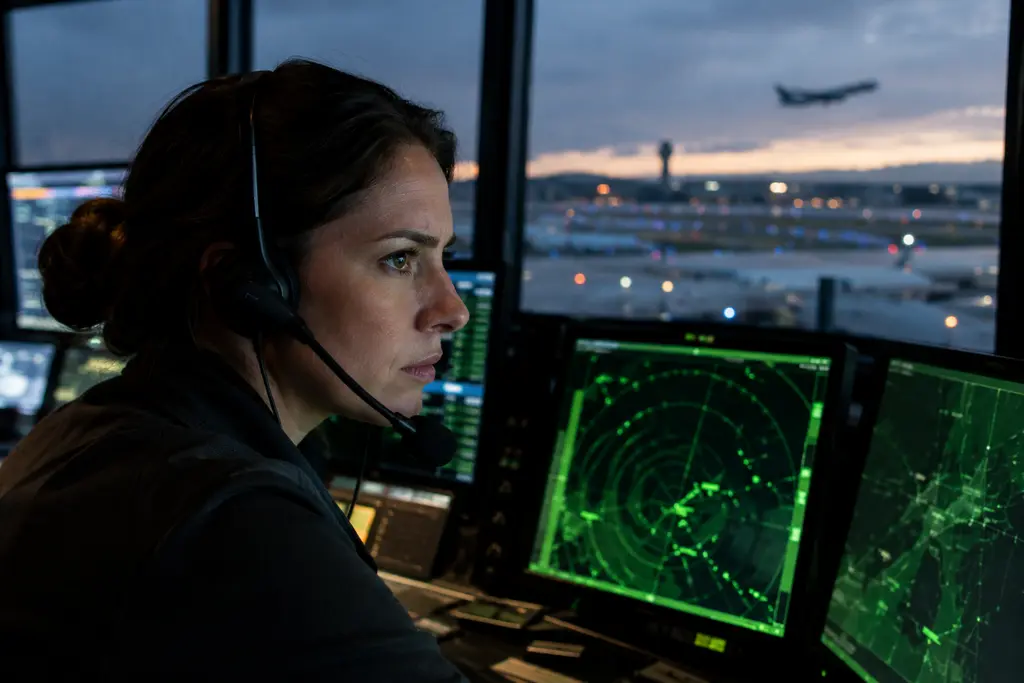
ATC system disruptions have moved from an airline delay story to a direct planning issue for pilots, dispatchers, instructors, and operators. The most useful lesson is not that the system failed on isolated dates, but that several failure modes have already appeared: NOTAM outages, radar and radio losses, automation failures, aging telecommunications lines, and staffing pressure. Confirmed by the Government Accountability Office, the FAA managed 138 air traffic control systems, and as of September 2024, 37 percent were considered unsustainable while 39 percent were considered potentially unsustainable GAO modernization audit. For the working pilot, that finding changes how preflight briefings, alternates, fuel decisions, and communication backup habits should be taught and practiced.
Why ATC system disruptions Matter To Pilots
Air traffic control technology is often treated as background infrastructure until it affects a release, clearance, departure slot, or approach sequence. Recent disruptions showed that those systems are not abstract. The January 11, 2023 nationwide NOTAM outage caused a national ground stop for departing aircraft, with more than 1,300 flights canceled and nearly 10,000 delayed, according to the GAO. The same GAO review also noted further NOTAM system failures in February and March 2025, even after a backup system had been put in place in mid-2024 GAO report PDF.
ATC system disruptions And Cockpit Workload
In the cockpit, the first effect is workload. A NOTAM outage does not simply delay paperwork. It can force crews and dispatchers to reassess runway closures, equipment outages, lighting status, approach availability, temporary flight restrictions, and field conditions using whatever approved alternate channels remain available. That reassessment takes time, and time pressure is where errors can enter a flight deck.
Radar and communication failures create a different cockpit problem. The Philadelphia-Newark disruptions in April and May 2025 involved loss of radar and radio contact tied to aging telecommunication lines at the Philadelphia TRACON controlling Newark Liberty International airspace. The Dallas TRACON outage in September 2025 involved loss of radar, radio frequencies, and automation equipment, producing ground stops and more than 1,800 delays and cancellations. Those facts point to an operational lesson: pilots should expect that ATC services can degrade unevenly, with one layer failing while another remains partly usable.
Delay Is Not The Only Safety Signal
Passenger delays are visible, but they are not the only signal. From a pilot’s viewpoint, the sharper concern is degraded information flow. A crew can still fly safely without perfect system performance, but only if the crew recognizes the degraded mode early, slows the decision cycle, and confirms instructions with disciplined radio technique. The safety value comes from treating uncertainty as a cue to verify, not as a nuisance to work around.
What Recent Failures Revealed About ATC Modernization
The GAO findings described a modernization challenge that is larger than replacing a single server or buying one new display. Systems become fragile when hardware ages, parts are harder to obtain, and fewer technicians retain direct experience with legacy platforms. A backup system may reduce risk, but the 2025 NOTAM failures showed that backup capability alone does not remove operational exposure if the wider architecture still has weak points.
Redundancy Must Be Practiced, Not Assumed
For pilots, the practical parallel is familiar. A second radio is valuable only if the crew knows how to select it, test it, and use it under pressure. The same principle applies at the system level. Redundancy needs routine testing, clear responsibility, and defined procedures for shifting traffic, data, and communications when one component fails. If a facility loses automation or frequency capacity, the pilot response should not be improvisation; it should follow trained habits: aviate, confirm, comply with assigned routing, and ask for clarification when needed.
The main lesson from ATC system disruptions is that modernization and training cannot be separated. New equipment can reduce risk, but pilots still need recurrent practice for lost communications, stale NOTAM information, amended clearances, reroutes, ground stops, and airborne holding. Operators should also review how crews coordinate with dispatch when the normal information chain is interrupted.
Local Failures Can Have Network Effects
ATC is a national network, so a facility-level failure can quickly affect airports well beyond the original site. Ground stops, flow restrictions, reroutes, and reduced arrival rates can cascade through crew duty limits, fuel planning, gate availability, and maintenance schedules. That means flight planning should include more than weather and aircraft status. Crews and operators benefit from asking whether a route depends heavily on constrained airspace, a busy terminal area, or a facility that has recently experienced service disruptions.
Training Habits That Hold Up During Disruption
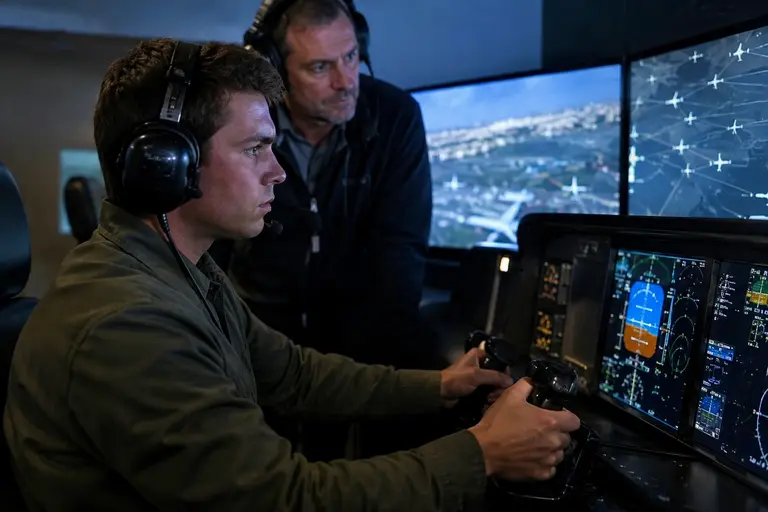
Good training converts a rare event into a manageable event. For general aviation pilots, business aviation crews, and airline flight decks, the habits are similar: brief the possibility of degraded service, identify backup information sources approved for the operation, and keep communication short, standard, and precise. A pilot who has practiced those steps is less likely to rush through an amended clearance or accept an instruction that does not match the aircraft’s position, performance, or fuel state.
- Brief NOTAM and communication contingencies before engine start, especially at busy or unfamiliar airports.
- Carry enough fuel margin to absorb holding, rerouting, or a delayed release when system capacity drops.
- Use standard readbacks and query any clearance that seems incomplete, unexpected, or inconsistent with traffic flow.
- Review lost communication procedures for the airspace and flight rules being used on that leg.
- Coordinate early with dispatch, flight service, or company operations when normal ATC information channels are impaired.
After ATC system disruptions, instructors should resist teaching the events as one-off technical failures. The better training frame is threat and error management. The threat is degraded information or reduced ATC capacity. The errors may include missed NOTAMs, rushed taxi planning, poor readbacks, fuel assumptions, or continuing toward a saturated airport without a clear alternate plan. That frame gives pilots actions they can practice rather than headlines to remember.
Pilots who want a deeper training angle on infrastructure risk may also find value in this related Pilot Pointer analysis of aging ATC infrastructure. For readers interested in exploring broader cultural topics within the same publishing network, NoirWhale offers insights outside of the aviation field.
Pilot Actions After ATC system disruptions
Treat ATC system disruptions as a planning category, not a surprise category. Before departure, confirm that the flight release, NOTAM package, weather briefing, and destination plan are still valid. During taxi and flight, slow the tempo when instructions change abruptly. In the air, use conservative fuel thinking when ground stops or metering programs start affecting the route ahead. On arrival, remain alert for runway, vehicle, and surface movement changes if tower workload rises.
What Operators Should Review Now
Flight departments and schools should review standard operating procedures for degraded ATC service. That review should include who approves a departure after a major information outage, how crews document alternate briefing sources, how dispatch communicates systemwide constraints, and how instructors evaluate radio discipline under abnormal conditions. These are not paperwork exercises. They shape whether a crew reacts calmly or starts solving too many problems at once.
There is also a leadership lesson. The GAO findings show that modernization planning needs credible cost, schedule, and risk controls. Pilots do not manage FAA acquisition programs, but they do live with the operational consequences. A professional response is to stay informed, train for degraded modes, and avoid treating automation or ATC capacity as guaranteed. The safest crews are not the crews that assume the system will always work; they are the crews that know how to keep the aircraft, communication, and decision-making stable when the system is under stress.