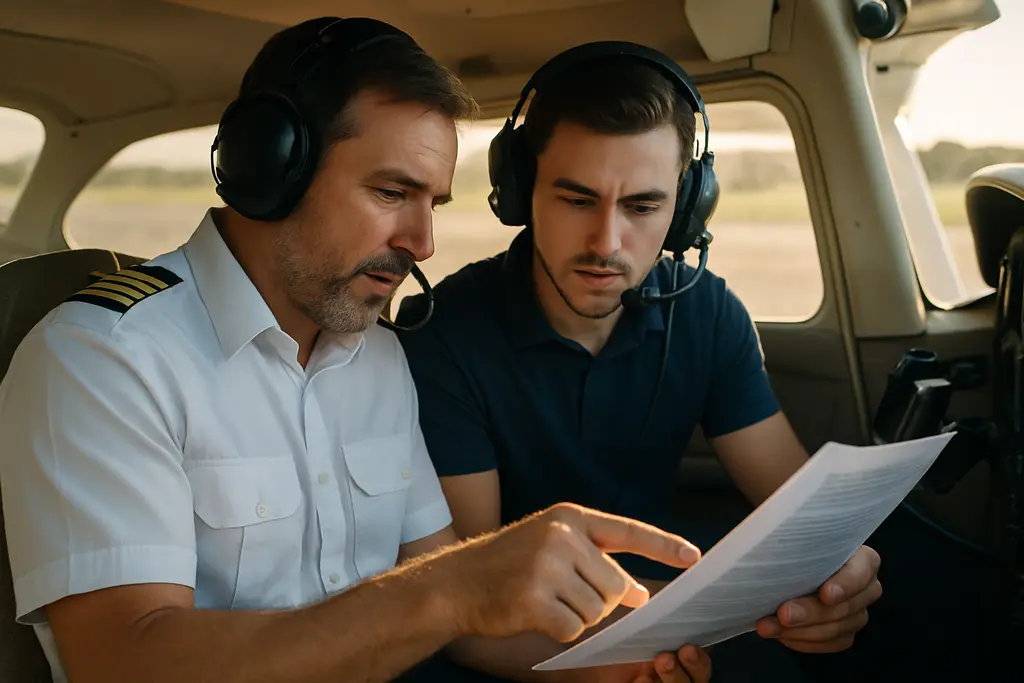
Talking to air traffic control is one of the skills that makes many student pilots nervous early in training. The pressure usually comes from trying to sound perfect while also flying the airplane, listening for traffic, and staying ahead of the next task. In reality, good radio work is not about sounding advanced. It is about being clear, concise, and predictable. The FAA emphasizes that radio communications are a critical link in the ATC system and that standard phraseology improves understanding and safety.
For student pilots, that is good news. You do not need a “radio voice” or a memorized script for every situation. You need a few repeatable habits: know who you are calling, know what you want, listen before you transmit, and keep the message simple. When those habits become routine, radio communication starts feeling less like a performance and more like another cockpit procedure. AOPA’s student guidance similarly points new pilots to the AIM basics for contact procedures, call signs, and standard phraseology.
Understand What ATC Actually Needs From You
Most student pilots improve faster once they realize ATC is not asking for fancy phrasing. Controllers need accurate information delivered in an organized way so they can separate traffic and keep operations moving efficiently. The FAA’s guidance specifically recommends using words and phrases from the Pilot/Controller Glossary and notes that jargon and casual “CB” slang do not belong in ATC communications.
That means your job is usually simple. Identify who you are calling, state your aircraft callsign, say where you are if needed, and explain what you want. The cleaner that structure becomes, the easier it is for a controller to help you.
| Communication Element | What It Does | Common Student Mistake |
|---|---|---|
| Who you are calling | Gets the right controller’s attention | Keying the mic before listening |
| Your callsign | Identifies your aircraft | Dropping part of the callsign too early |
| Position or location | Gives context | Giving a vague location |
| Request or intention | Tells ATC what you need | Talking too long before the request |
Learn The Pattern Of A Good First Call
A strong first call usually follows a predictable rhythm. You call the facility, identify yourself, give your position if appropriate, and state your request. At towered airports, that might mean saying you are at the ramp with information Alpha and requesting taxi. In the air, it may mean checking in with approach and stating your altitude and request.
The key is to avoid over-explaining. Student pilots often add unnecessary words because they think more detail sounds better. Usually, it just creates clutter. Professional radio work sounds short because it is organized, not because it is rushed. The AIM’s radio communications section centers on understanding, brevity, and standard message format.
Aviate First, Then Communicate
One of the biggest early errors in radio work is letting the microphone distract from basic aircraft control. If your heading, altitude, or airspeed starts slipping while you are trying to sound polished on frequency, the priority is clear: fly the airplane first.
That same principle shows up in every early training milestone. In PilotPointer’s traffic pattern basics guide, pattern success comes from staying ahead of the airplane instead of reacting late, and the same is true on the radio.
A clean radio call made one second later is better than a perfect-sounding transmission delivered while your workload is falling apart. Student pilots gain confidence faster when they treat communication as part of cockpit management, not a separate performance task.
Read Back Clearly And Listen For The Important Parts
Talking to ATC is only half the skill. The other half is hearing instructions accurately and reading back the parts that matter. Taxi instructions, hold short instructions, runway assignments, headings, and altitudes all require real attention.
Many student pilots do not struggle because they cannot speak clearly. They struggle because they are mentally preparing the next thing they want to say instead of listening to what was actually said. That is why brief readbacks are so important. They confirm the instruction and force you to process it before acting on it.
| ATC Instruction Type | What To Focus On In The Readback | Why It Matters |
|---|---|---|
| Taxi clearance | Taxi route, runway, hold short point | Prevents ground confusion |
| Takeoff or landing clearance | Runway assignment and clearance | Confirms runway use |
| Heading assignment | Heading number | Prevents vector mistakes |
| Altitude assignment | Assigned altitude | Supports separation |
Use Standard Phraseology Instead Of Inventing Your Own
The FAA’s phraseology guidance is valuable because it gives pilots a common language with controllers. That common language reduces confusion, especially when the frequency is busy. The Pilot/Controller Glossary exists specifically to promote a shared understanding of the terms used in the air traffic system.
For student pilots, this means you should resist the temptation to improvise. “Request full stop,” “ready for departure,” “with information Bravo,” and similar standard phrases work because controllers hear them all day. They are easier to process than casual wording.
A strong external resource to review before training flights is the FAA’s radio phraseology guidance in the AIM, which lays out standard communication procedures and techniques for pilots.
Tell Controllers You Are A Student Pilot When It Helps
Controllers are used to working with student pilots, and telling them you are a student can help set expectations, especially if you are operating from a busy airport or handling something unfamiliar. That does not mean saying it on every transmission. It means using it when it adds useful context.
For example, if you are unsure about a taxi route or need a slower pace, letting ATC know you are a student pilot can make the exchange smoother. The goal is not to ask for special treatment. The goal is to improve clarity and reduce preventable mistakes.
Practice Radio Work On The Ground Before You Need It In The Air
Radio confidence usually improves fastest when students practice away from the cockpit first. Saying sample calls out loud, chair-flying common airport scenarios, and listening to real tower or CTAF traffic can make a major difference. Once your mouth has practiced the flow a few times on the ground, your brain has more space available in flight.
This is why radio communication should be trained like checklist use or traffic pattern discipline. It becomes smoother through repetition, not through last-second courage. The more familiar the structure sounds in your headset before the flight, the less intimidating it feels when it is your turn to key the mic.
Frequently Asked Questions
Do Student Pilots Need To Sound Perfect On The Radio?
No. Student pilots need to be understandable, concise, and accurate. Standard phraseology matters far more than sounding polished.
What Should A Student Pilot Say On The First Call?
In most cases, identify the facility, state your callsign, give your position if needed, and say what you want. Keep it short and organized.
Is It Okay To Tell ATC You Are A Student Pilot?
Yes. It can be helpful when you need a little more time, extra clarity, or support in a busy environment.
What If I Miss Part Of An Instruction?
Ask for clarification. It is much safer to request a repeat than to guess. Controllers would rather repeat themselves than have a pilot act on the wrong instruction.
Final Takeaway
Learning how to talk to air traffic control as a student pilot is really about building disciplined communication habits. When you listen first, use standard phraseology, keep calls organized, and protect aircraft control above everything else, radio work becomes far less intimidating. Over time, the microphone stops feeling like a test and starts feeling like what it really is: another tool that helps you operate safely and professionally.