Private pilot training is not just about learning how to take off, fly around, and land. It is about building the control, judgment, and coordination needed to operate an airplane safely across normal, abnormal, and higher-workload situations. That is why the FAA’s training framework and Private Pilot Airman Certification Standards place so much emphasis on core maneuvers such as slow flight, stalls, steep turns, takeoffs, landings, and ground reference work. These are not random practice items. They are the building blocks that shape how a pilot manages the airplane when precision matters most.
For student pilots, that can be easy to miss early on. A maneuver may feel like a checkride task to memorize, but in reality each one teaches a deeper skill. A short-field landing teaches energy management. A power-off stall teaches recognition and recovery before loss of control develops. Turns around a point teach wind correction and visual planning. The FAA’s guidance makes clear that these maneuvers are part of a broader proficiency system designed to turn basic aircraft control into safe decision-making in real flight conditions.
For that reason, the most important maneuvers in private pilot training are not always the most dramatic ones. They are the ones that keep showing up throughout the entire learning process because they teach control, awareness, and consistency. Understanding why they matter can make training more efficient and can also help students connect each lesson to the bigger goal of becoming a dependable pilot.
Why Maneuvers Matter More Than Memorization
One of the biggest mistakes student pilots make is thinking of maneuvers as isolated checkride events. In practice, the FAA teaches maneuvers as a way to develop aircraft control, situational awareness, and risk management. The Airplane Flying Handbook explains that the four fundamentals of flight—straight-and-level, turns, climbs, and descents—are the principal maneuvers used to control the airplane through its various motions. Everything else in training builds from those foundations.
That is why a well-taught maneuver lesson always goes beyond “do these steps in this order.” The point is to understand what the airplane is doing, what the wind is doing, what the energy picture looks like, and what corrections are needed before the situation degrades. Students who grasp that idea usually progress faster because they stop chasing rote performance and start flying with intent.
The 10 Most Important Maneuvers At A Glance
| Maneuver | Why It Matters In Training | Core Skill It Builds |
|---|---|---|
| Straight-and-Level Flight | Teaches baseline control and trim | Precision and stability |
| Climbs and Climbing Turns | Builds departure control and pitch awareness | Energy management |
| Descents and Descending Turns | Prepares for pattern work and approach control | Planning and airspeed control |
| Steep Turns | Sharpens coordination and attitude control | Precision under load |
| Slow Flight | Teaches control near critical angle of attack | Feel and awareness |
| Power-Off Stalls | Builds stall recognition in landing-type situations | Recovery timing |
| Power-On Stalls | Builds stall recognition in departure-type situations | Pitch and coordination control |
| Ground Reference Maneuvers | Teaches wind correction using visual cues | Outside scan and planning |
| Short-Field Takeoffs and Landings | Teaches precision when runway margin is limited | Accuracy and discipline |
| Soft-Field Takeoffs and Landings | Teaches control on low-support surfaces | Smooth handling and attitude control |
These tasks closely track the FAA’s private pilot airplane standards, which specifically include steep turns, ground reference maneuvers, slow flight, stalls, and normal, short-field, and soft-field takeoff and landing tasks.
Straight-And-Level Flight
Straight-and-level flight sounds basic, but it is one of the most important skills in private pilot training because it teaches the student how to actually hold the airplane where it belongs. The FAA identifies straight-and-level as one of the core flight fundamentals, and it becomes the reference point for nearly everything else a pilot learns afterward.
In practical terms, this maneuver teaches attitude control, trim use, and disciplined instrument cross-check. A pilot who cannot hold altitude and heading consistently in straight-and-level flight will struggle in climbs, descents, traffic pattern work, and emergency scenarios. It is also where many students first learn that smooth control inputs usually work better than constant chasing.
Climbs And Climbing Turns
Climbs and climbing turns are critical because they train pilots to manage pitch, power, coordination, and visibility while the airplane is in a changing energy state. The Airplane Flying Handbook treats climbs as one of the four fundamentals, and that makes sense because departures are one of the most routine yet demanding parts of flight training.
Students use climbs to learn the relationship between airspeed, attitude, and performance. They also begin to understand why scan discipline matters when the nose is high and outside visibility changes. When combined with climbing turns, this maneuver becomes even more important because the pilot must divide attention between bank control, coordination, traffic awareness, and maintaining the desired climb profile.
Descents And Descending Turns
Descents and descending turns matter because they prepare a pilot for one of the most common real-world tasks in training: coming back down in a controlled, predictable way. The FAA includes descents among the flight fundamentals because they teach airspeed control, configuration awareness, and planning for where the airplane needs to be next.
This becomes especially important in pattern entries, approach planning, and traffic sequencing. A student who learns to descend with purpose is usually better prepared for stable approaches and runway alignment later on. That is one reason PilotPointer’s own coverage of traffic pattern basics fits naturally into maneuver training: many pattern mistakes begin with poor descent planning long before the landing itself.
Steep Turns
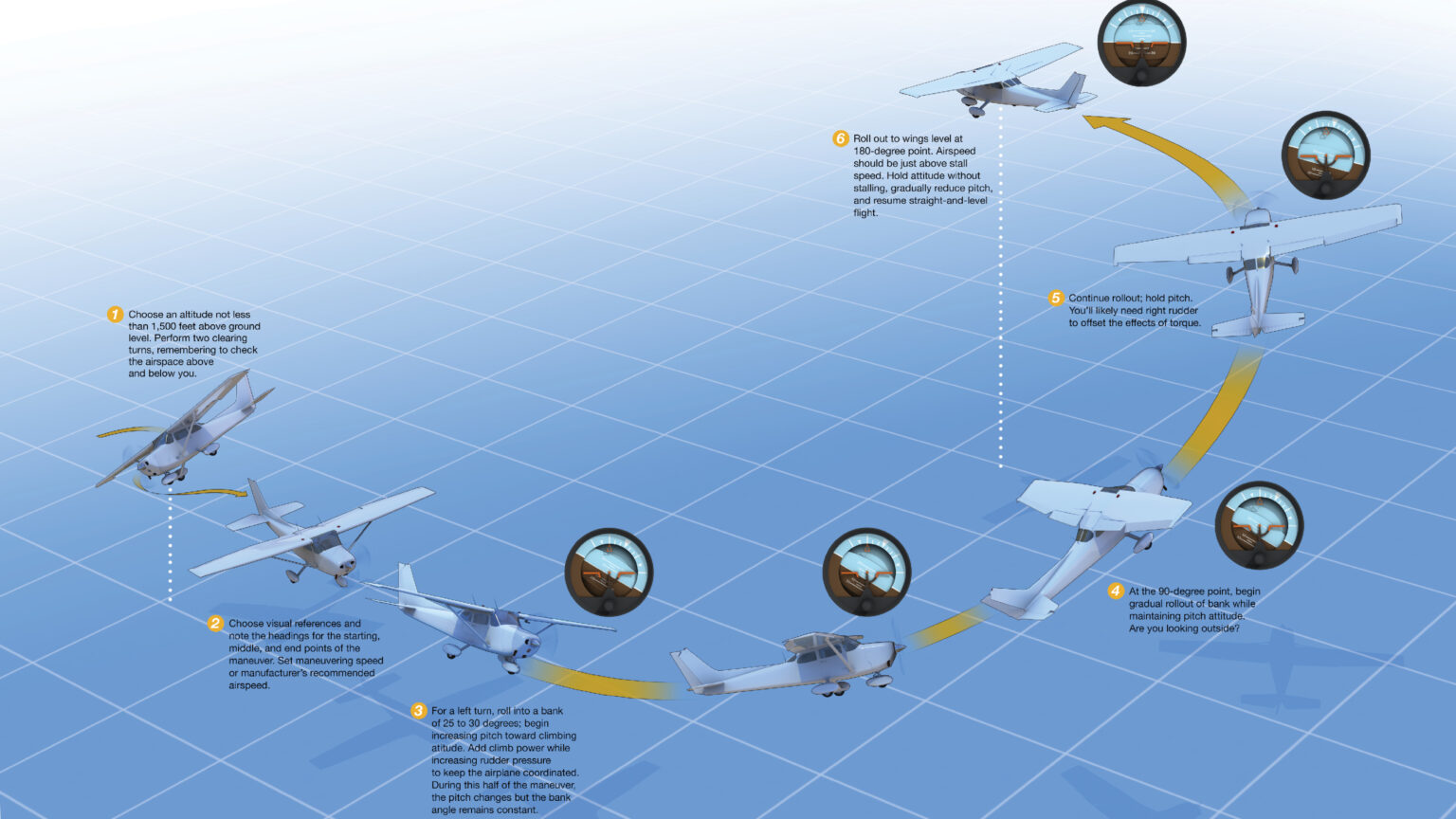
Steep turns are one of the clearest tests of developing aircraft control. The FAA lists steep turns explicitly in the Private Pilot ACS because they force the pilot to manage bank, back pressure, trim, altitude, and rollout timing all at once.
What makes steep turns so valuable is that they expose weak spots quickly. If a student is behind the airplane, uses uncoordinated controls, or fails to scan effectively, the maneuver usually shows it. At the same time, a good steep turn teaches smoothness under pressure, which carries over to all kinds of flying. It is not just about passing a checkride task. It is about learning how control pressures, load factor, and attention management come together in a more demanding maneuvering environment.
Slow Flight
Slow flight remains one of the most valuable maneuvers in private pilot training because it teaches pilots how the airplane feels and behaves when operating closer to the critical angle of attack. The current Private Pilot ACS still includes maneuvering during slow flight, and the FAA notes that the task is meant to evaluate knowledge, risk management, and skill associated with operating in that regime.
For students, this is where the airplane starts to talk back more clearly. Control response changes. Stall awareness becomes more immediate. Coordination becomes more important. Slow flight teaches feel, and that matters because many real-world problems develop when pilots are slow, distracted, and close to the ground. A student who truly understands slow flight is usually better prepared for approach control, go-arounds, and stall avoidance.
Power-Off Stalls
Power-off stalls are important because they simulate the aerodynamic conditions associated with approach-to-landing scenarios. The FAA includes them as a required private pilot task, and that is not accidental. Loss of control in the landing phase remains one of the most serious general aviation risk areas, so students need to recognize the signs of an approaching stall early and recover correctly.
In training, power-off stalls teach more than recovery technique. They teach the student not to force the airplane to do something it can no longer do safely. They reinforce coordination, angle-of-attack awareness, and the importance of reducing stall risk before it fully develops. That makes them central not just for the checkride, but for safer landings and go-around decisions later on.
Power-On Stalls
Power-on stalls matter because they represent a departure-type situation, where the airplane is pitched up, power is high, and the pilot may be vulnerable to overcontrol or poor coordination. The FAA’s private pilot standards include this task because it teaches recognition and recovery in a phase of flight where distraction or improper control input can escalate quickly.
For many students, this is where the relationship between pitch attitude, left-turning tendencies, and coordination becomes much more real. The lesson is not to provoke an extreme event. The lesson is to recognize how quickly a departure can deteriorate if the airplane is mishandled near stall conditions. That understanding is especially valuable for student pilots heading toward solo work, where confidence must be matched by disciplined technique.
Ground Reference Maneuvers
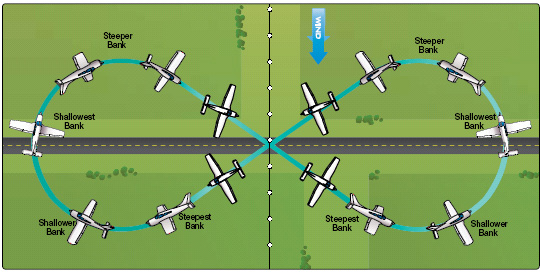
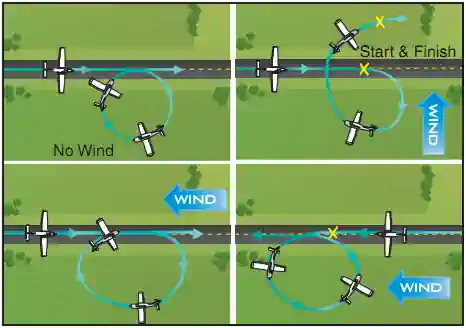
Ground reference maneuvers are often underestimated because they do not look as dramatic as stalls or steep turns, but they are essential for teaching wind correction and outside visual awareness. The Airplane Flying Handbook explains that ground reference maneuvers combine the four fundamentals into a set of practical visual maneuvers, and the ACS still includes them as a required area of operation.
That makes them far more important than many students realize. A maneuver like turns around a point teaches the pilot to read wind drift, adjust bank, and stay ahead of the airplane using visual references rather than instruments alone. Those same habits show up later in traffic patterns, circling, and visual navigation. In other words, ground reference work helps transform basic stick-and-rudder ability into useful pilot judgment.
Short-Field Takeoffs And Landings
Short-field work matters because it teaches pilots to fly with precision when runway margin is limited. The Private Pilot ACS includes both short-field takeoffs and short-field approaches and landings because these tasks develop disciplined airspeed control, accurate touchdown planning, and better performance awareness.
Even students who never plan to operate from very short runways benefit from this training. Short-field technique builds respect for numbers, aiming points, and energy management. It forces the pilot to understand that landing performance is not a casual guess. It is something shaped by planning, configuration, airspeed, and execution. Those lessons improve normal landings too, which is why short-field work often has value far beyond the maneuver itself.
Soft-Field Takeoffs And Landings
Soft-field technique is important because it teaches pilots how to protect the airplane and maintain control when the surface does not support normal rolling and braking the same way pavement does. The FAA specifically includes soft-field takeoff and landing tasks in the Private Pilot ACS, recognizing that many training environments and real-world airports involve grass, uneven surfaces, or conditions where attitude control becomes especially important.
For students, soft-field work teaches smoothness, nosewheel protection, and attitude awareness in ground effect. It also reinforces the idea that the airplane must sometimes be flown very deliberately even while it is still close to the ground. That lesson carries forward into takeoff technique, landing discipline, and overall confidence in handling different runway conditions.
Which Maneuvers Give Students The Most Trouble
The answer varies by student, but several maneuvers tend to challenge people for the same underlying reasons. Steep turns expose coordination and scan problems. Slow flight reveals discomfort near the edge of the performance envelope. Ground reference maneuvers punish poor wind awareness. Short-field landings often uncover weak airspeed discipline and unstable approaches. The FAA’s own training structure reflects this by emphasizing not just mechanical completion, but risk management and correction before the airplane gets away from the pilot.
What usually separates stronger students from weaker ones is not raw talent. It is the willingness to understand the purpose behind each maneuver. Once a pilot sees that a maneuver is really a lesson in control, energy, and planning, training becomes more coherent and progress usually improves.
Why These Maneuvers Matter After The Checkride
One of the most important truths in private pilot training is that the maneuver itself is rarely the end goal. A steep turn helps build coordination under load. A stall teaches recognition and recovery before control is lost. A short-field landing teaches a pilot not to waste runway or float through an unstable approach. The specific maneuver may be practiced in a training area, but the skill behind it continues to matter in day-to-day flying.
That is why good instruction keeps bringing students back to fundamentals. The FAA’s Airplane Flying Handbook remains such a useful resource because it ties maneuvers to broader flying skill instead of treating them like isolated checkride drills. Pilots who approach training that way tend to come out more capable, not just more prepared for an examiner.
Final Thoughts
The most important maneuvers in private pilot training are the ones that teach a pilot how to control the airplane with precision, manage energy intelligently, and recognize developing risk before it turns into a problem. Straight-and-level flight, climbs, descents, steep turns, slow flight, stalls, ground reference maneuvers, and precision takeoff-and-landing work all matter because together they form the core of safe VFR flying.
For student pilots, the right mindset is not to memorize these maneuvers and move on. It is to understand what each one is trying to teach. That is where real progress happens, and that is also what makes a better private pilot in the long run.