Every pilot starts their journey by looking out the window. Learning to control the airplane by referencing the natural horizon is the foundation of private pilot training. However, as pilots progress and seek to fly in more challenging weather conditions, that reliance on visual cues must shift to the flight instruments inside the cockpit. This transition represents the fundamental difference between Visual Flight Rules (VFR) and Instrument Flight Rules (IFR).
For student pilots, understanding these two sets of rules is about more than passing a written exam. It dictates where you can fly, when you must stay on the ground, and how you make go/no-go decisions. VFR flying relies on the pilot’s ability to see and avoid traffic, navigate by ground landmarks, and maintain aircraft attitude visually. In contrast, IFR flying relies entirely on the aircraft’s instruments and an active dialogue with air traffic control.
Recognizing when and how to apply these rules shapes a pilot’s entire career. Whether you are navigating busy local airspace or planning a cross-country flight through marginal weather, knowing the boundaries of VFR and the precise demands of IFR is what keeps flights safe, legal, and predictable.
The Core Differences At A Glance
| Rule Set | Primary Navigation Method | Core Skill Required |
| Visual Flight Rules (VFR) | Visual reference to the natural horizon and ground | Outside scan and spatial awareness |
| Instrument Flight Rules (IFR) | Cockpit flight instruments and ATC guidance | Procedural precision and instrument scan |
| Marginal VFR (MVFR) | Visual reference in deteriorating weather conditions | Aeronautical decision-making and risk management |
Visual Flight Rules (VFR): Flying By The Horizon
VFR is the starting point for every aviator. Under Visual Flight Rules, the pilot is solely responsible for aircraft control, navigation, and terrain clearance by looking outside the cockpit. The FAA mandates that VFR flights remain in weather conditions that allow the pilot to see other aircraft and maintain visual contact with the ground or a distinct horizon.
This means mastering situational awareness and visual scanning. A VFR pilot must constantly divide their attention between checking the panel and looking out the window. During foundational training like mastering traffic pattern basics, students learn that keeping their eyes outside is critical for maintaining proper spacing, managing descent profiles, and executing stable approaches without fixating on the dashboard.
Instrument Flight Rules (IFR): Flying By The Numbers
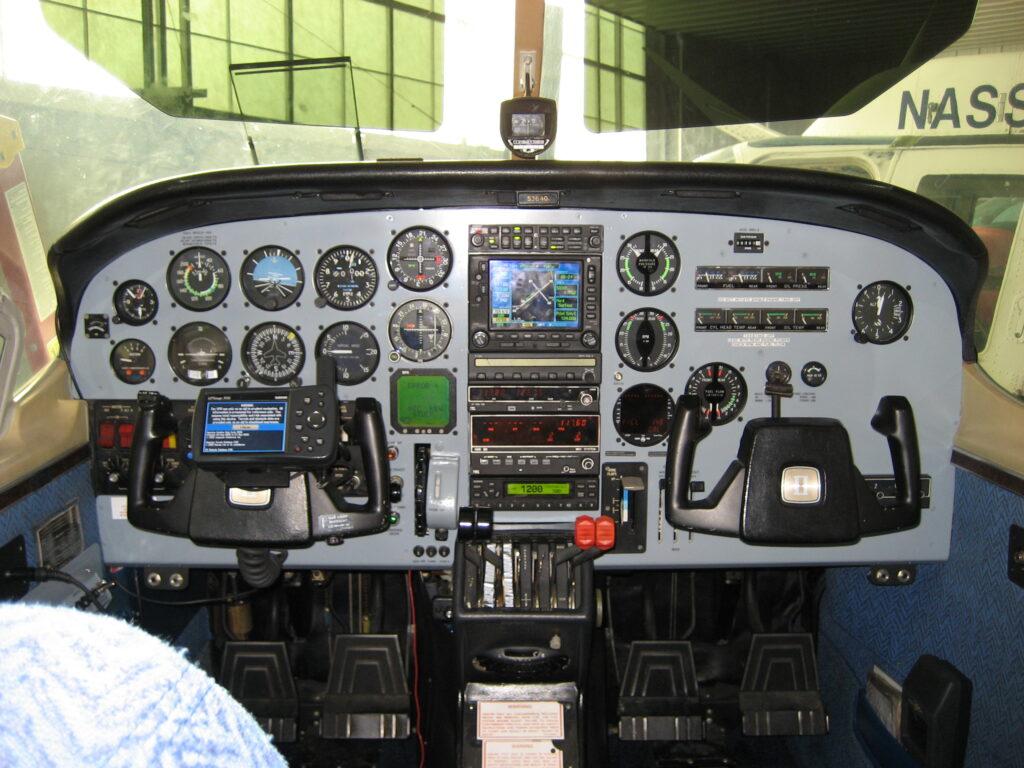
When the weather deteriorates or a pilot needs to fly through the clouds, Instrument Flight Rules come into play. IFR flying removes the reliance on the outside horizon and places the burden of aircraft control entirely on the flight instruments. Under IFR, air traffic control provides separation from other participating aircraft, but the pilot must meticulously follow assigned headings, altitudes, and routing.
This type of flying demands precision, trust in the instruments, and excellent radio communication. Pilots must learn to ignore spatial disorientation and physical sensations that conflict with what the panel displays. The FAA’s official Instrument Flying Handbook emphasizes that a strong, continuous instrument scan and strict adherence to procedures are what keep an IFR pilot safe when outside visibility drops to zero.
Weather Minimums And Airspace Requirements
The most practical difference between VFR and IFR lies in the legal weather minimums required to fly. Basic VFR generally requires at least three statute miles of visibility and specific cloud clearances depending on the airspace class. If the cloud ceilings are too low or the visibility drops below these minimums, a VFR-only pilot must delay the flight, turn around, or land safely before inadvertently entering instrument meteorological conditions.
IFR flights, however, can operate in much lower visibility and legally fly right through cloud layers. This requires the pilot to file an IFR flight plan and receive a specific clearance from air traffic control before entering controlled airspace. The aircraft itself must also be certified and equipped for instrument flight, featuring redundant navigation systems and gyroscopic instruments to ensure the pilot always has reliable data to fly the airplane.
Making The Transition: When To Pursue An Instrument Rating
Earning a Private Pilot Certificate allows you to fly VFR, but many pilots quickly realize that weather often dictates their schedule. Pursuing an Instrument Rating is the logical next step for anyone looking to increase their utility and safety as a pilot. It is also a mandatory stepping stone for those pursuing commercial aviation careers with the airlines or corporate flight departments.
Transitioning to IFR requires a massive shift in mindset. A student must unlearn the instinct to look outside when overwhelmed and instead focus intensely on the six-pack or glass panel. This training heavily emphasizes procedural discipline, complex approach plate briefings, and managing a much higher workload in the cockpit without the comfort of a visual horizon to correct pitch and bank errors.
Final Thoughts
Understanding VFR vs IFR flight is essential for every pilot navigating the national airspace system. Visual Flight Rules teach you how to feel the airplane, respect the weather, and navigate the world using your own eyes. Instrument Flight Rules teach you discipline, absolute precision, and how to operate safely when the outside world completely disappears.
For student pilots, mastering VFR fundamentals is the priority, but recognizing the capabilities and demands of IFR flying provides a clear roadmap for future training. Both sets of rules require distinct skills, but together they build a well-rounded, capable, and confident aviator ready for whatever conditions the sky presents.