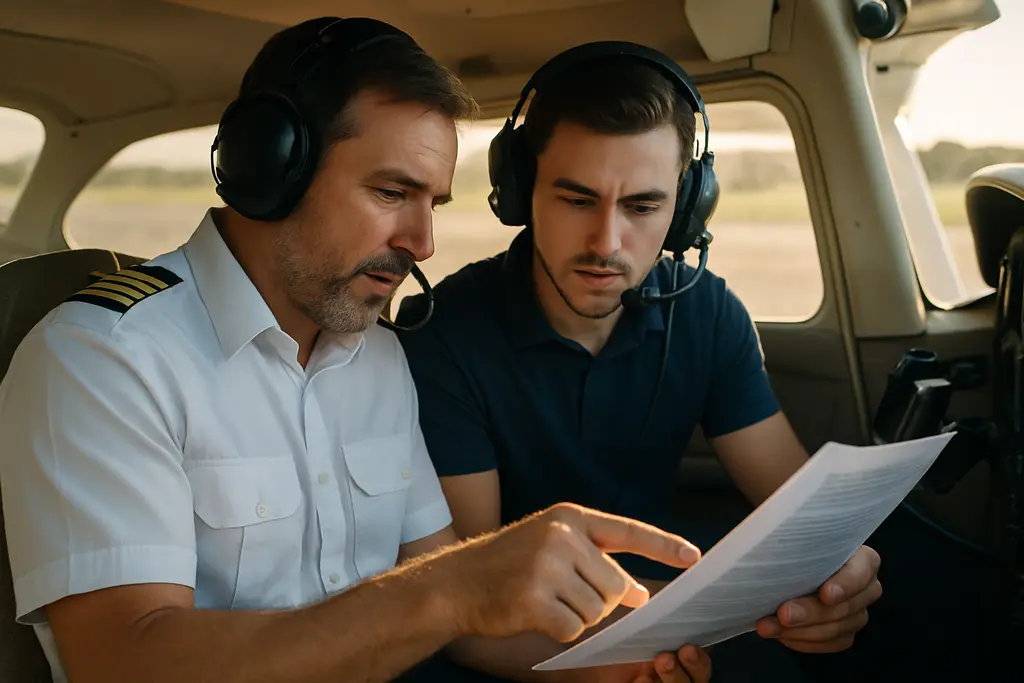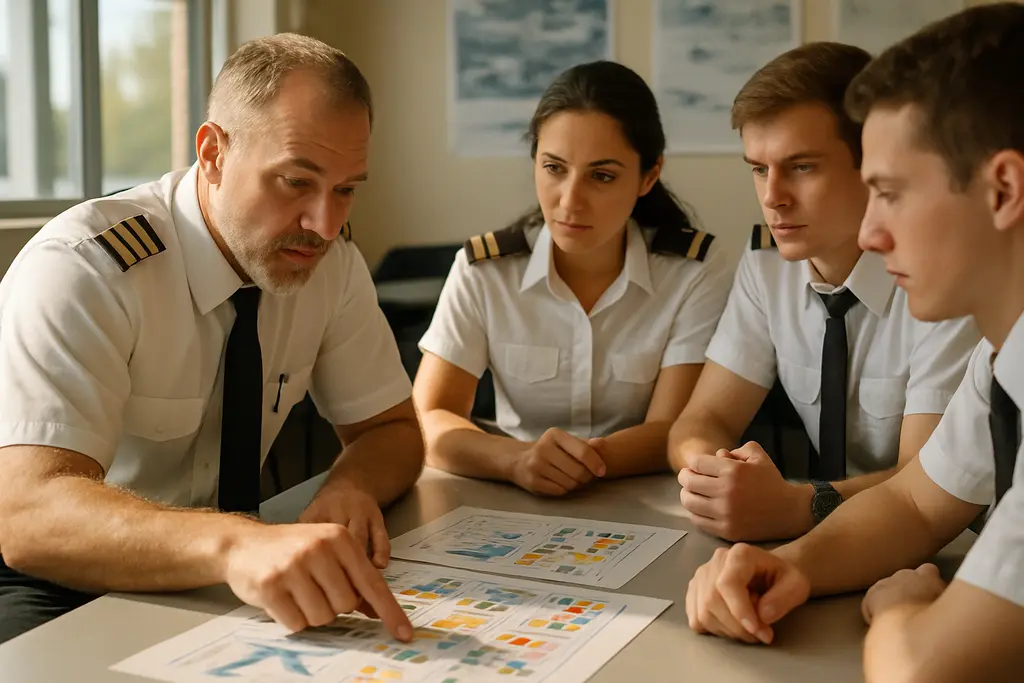
Competency-Based Training gives pilots a clearer standard than hours alone: demonstrate the behaviors, decisions, and technical skills needed for safe operations. The safety case for that shift has become stronger as traffic grows. Confirmed by ICAO: in 2025, airlines carried nearly 5 billion passengers on 38 million flights, while global accidents decreased from 95 in 2024 to 85 in 2025; the fatal accident rate also fell from 0.27 to 0.11 fatal accidents per million departures, even though fatalities rose from 296 to 387 because a small number of accidents had high casualty counts ICAO safety analysis. For pilots and training managers, the lesson is direct: better training must be tied to known risk patterns, not just lesson completion.
Why Competency-Based Training Needs Safety Protocols
Confirmed: ICAO reported that high-risk categories, including loss of control in flight, controlled flight into terrain, mid-air collision, runway excursion, and runway incursion, accounted for more than half of fatal accidents in 2025. Loss of control in flight was especially prominent, representing nearly one-third of fatal accidents among those categories. Those findings give flight schools and airline training departments a practical starting point. A safety protocol should identify which risks deserve repeated scenario exposure, how those scenarios are graded, and what remediation follows when a pilot shows a weak behavior pattern.
Operational Risk Sets The Agenda
Training analysis: a safety protocol is not a binder that sits on a shelf. It should define how instructors select scenarios, brief expected behaviors, capture performance, and decide whether a pilot is ready to advance. In Competency-Based Training, the test is not whether a maneuver was performed once under calm conditions. The better question is whether the pilot can manage the threat, detect the error, and recover safely while preserving aircraft control, communication quality, and flight path discipline.
For a student pilot, that might mean practicing unstable approach recognition before the runway environment becomes a distraction. For a multi-crew pilot, it might mean speaking up early when energy state, configuration, or callout discipline starts to drift. For an instructor, it means grading observable actions rather than vague impressions. This is where the protocol protects both fairness and safety: every pilot knows what will be evaluated, and every instructor works from the same standard.
Competency-Based Training And Scenario Design
A sound Competency-Based Training syllabus should connect each lesson to a realistic operational threat. The FAA’s Industry Training Standards research supports scenario-based training, risk management, aeronautical decision making, and single-pilot resource management in general aviation training, though the supplied research does not provide recent post-2022 quantitative outcome data FAA FITS research. That limitation matters. Schools should avoid claiming more than their evidence supports, but they can still use the model to build better habits.
Practical application: scenario design should begin with a clear trigger, such as deteriorating weather, late runway change, abnormal indication, fatigue risk, aircraft performance concern, or conflicting traffic. The instructor should then define the expected pilot competencies: workload management, communication, procedural compliance, flight path control, leadership, and decision making. The debrief should compare the pilot’s actual behavior with the expected standard, then assign practice that targets the gap.
Turning Safety Data Into Training Standards
Confirmed by research notes: modern safety programs are placing more weight on safety intelligence, data-driven oversight, and proactive safety management systems. In training, that means the syllabus should not be fixed forever. If safety reports show recurring unstable approaches, callout drift, or poor response to automation surprises, the training team should turn those findings into lesson objectives and recurrent checking items.
Closed-Loop Feedback
Training analysis: a closed-loop system starts with data, moves into training design, measures pilot performance, and then checks whether the risk trend improves. The loop can use flight data monitoring where available, safety reports, instructor notes, simulator grading, line check findings, and debrief themes. The goal is not to punish pilots. The goal is to identify where normal training is failing to create reliable behavior under pressure.
This approach also protects the instructor. Without data, an instructor may overemphasize the last event they personally saw. With data, the training manager can prioritize the threats that show up repeatedly across a fleet, school, or operation type. That makes recurrent training more useful and helps pilots see why a scenario exists. A rejected takeoff drill, terrain-awareness exercise, or go-around decision point carries more weight when pilots understand the risk record behind it.
Instructor Calibration
Reviewed practice: instructor standardization is one of the most sensitive parts of any safety protocol. Two instructors should not grade the same performance in opposite ways. Calibration sessions can compare sample scenarios, discuss borderline performance, and align grading language. A pilot who misses a callout, delays a go-around, or accepts a rushed checklist needs feedback that is specific enough to drive improvement.
For career-minded pilots, this also builds trust. A clearly explained standard feels demanding but fair. A vague standard feels arbitrary. That distinction matters during checkride preparation, airline training, and recurrent events, where stress can already be high. For a related training safety perspective, Pilot Pointer has covered competency-based pilot safety as part of a broader shift toward targeted practice and stronger decision habits.
Practical Protocols For Flight Schools And Airlines

Practical application: the best safety protocol is simple enough to use every day and detailed enough to prevent weak habits from slipping through. It should state which threats are trained, which competencies are measured, which minimum standards apply, how remediation works, and how data is protected. Pilots should know before the lesson whether the focus is manual handling, automation management, crew coordination, or decision making.
- Define the operational threat before the lesson begins.
- Use observable behaviors for grading, not broad personality labels.
- Brief the expected standard for SOP use, callouts, and decision points.
- Record debrief notes in a consistent format that supports trend review.
- Assign remediation that targets the specific gap, then verify improvement.
SOP Discipline And Human Performance
Training analysis: standard operating procedures matter because they reduce guesswork during high workload. A protocol should make SOP discipline visible in every scenario. Did the pilot brief the threat? Did the crew use required callouts? Was the checklist run at the right time? Did the pilot verbalize a change in plan before the situation became unstable? These questions are not paperwork details. They are the habits that hold a flight together when workload rises.
Safety managers should also account for fatigue, distraction, and startle effect. A pilot may perform well in a quiet classroom but struggle when several problems arrive at once. Scenario-based grading helps reveal that difference without waiting for a line operation to expose it. The point is not to overload pilots for sport. The point is to create controlled pressure that shows whether training has produced reliable judgment.
Simulator And Video-Based Learning Boundaries
Reviewed practice: simulators, briefing videos, and structured debrief recordings can support safer training, but they need guardrails. A simulator scenario should have a written objective, a defined start state, and a clear termination point. Video review should focus on observable actions, such as scan pattern, callout timing, or checklist flow, rather than personal criticism. Training teams that use video-based instruction can benefit from broader media literacy; related coverage in the same network appears at Internet Video Magazine.
Flight schools should be careful with claims around new training devices. If a device is used for preparation rather than creditable training, the syllabus should say so. If a regulator qualifies a device for a specific use, the school should stay within that authorization. Pilots deserve to know what a tool can and cannot replace. Technology supports judgment, but it does not remove the need for instructor oversight, manual skill, and disciplined briefings.
Safety Protocols In Competency-Based Training
Competency-Based Training should leave a pilot with more than a passing grade. It should leave a record of strengths, weak points, recovery actions, and next steps. That record helps the pilot plan practice, helps the instructor adjust teaching, and helps the organization spot repeated risk themes. The path forward is practical: match training to known accident categories, build scenarios around real operational threats, grade observable behaviors, standardize instructors, and use safety data to revise the program.
For pilots, the takeaway is encouraging. A demanding safety protocol is not an obstacle to a career; it is part of becoming the aviator crews want beside them and passengers rely on. The strongest programs do not treat safety as a slogan. They turn it into daily habits: brief the threat, fly the aircraft, follow the procedure, speak up early, correct the error, and learn from the debrief. That is how training becomes more than preparation for a test. It becomes preparation for the flight deck.