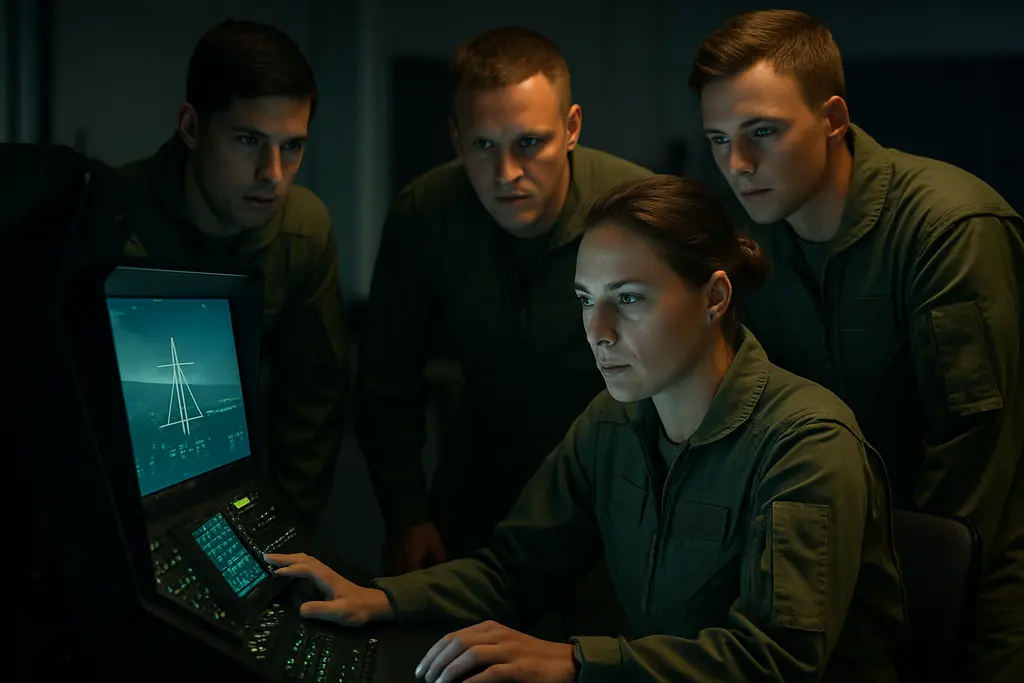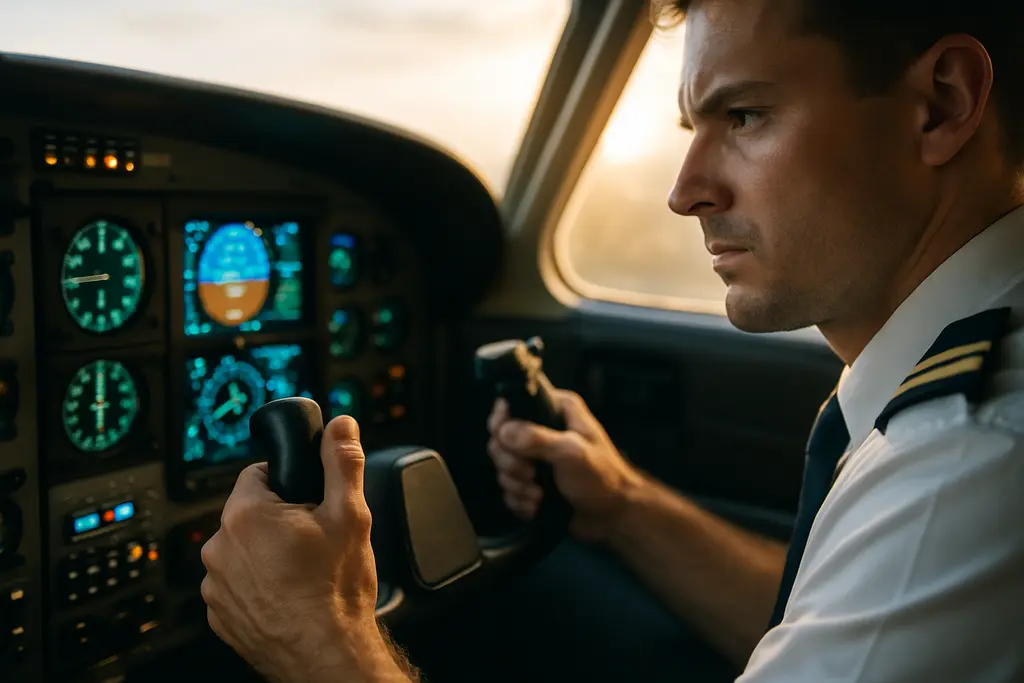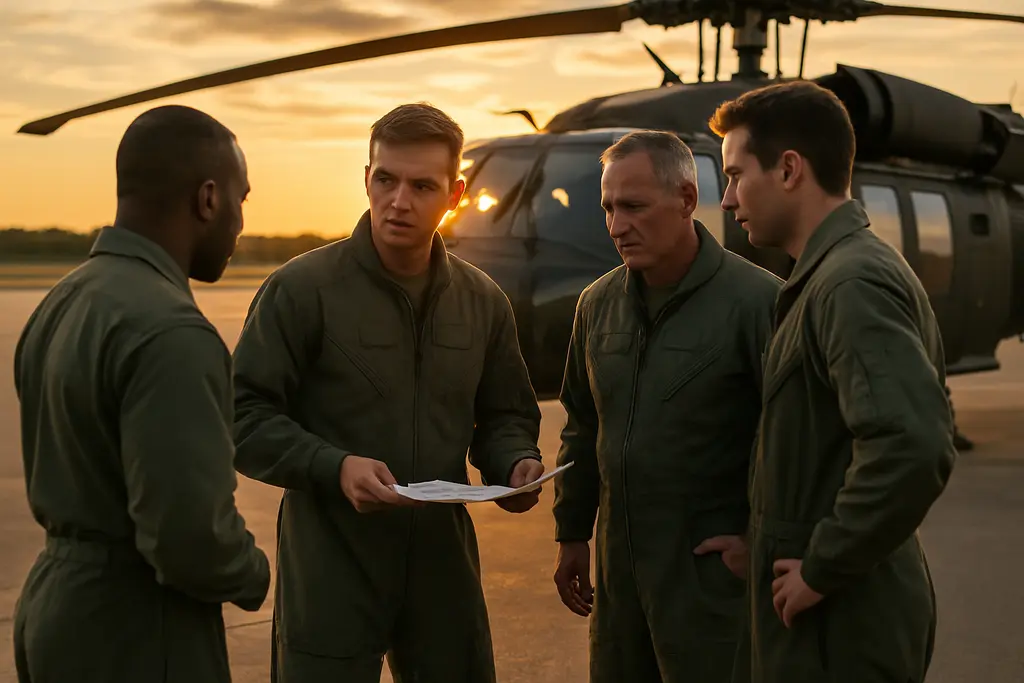
Army Pilot Training changed because the Army faced a measurable safety problem, not because of a single headline or one isolated event. Confirmed: in Fiscal Year 2024, Army aviation recorded 15 Class A flight mishaps and 2 ground Class A mishaps, the highest number of serious incidents since Fiscal Year 2014, according to the NTSB report on the January 29, 2025, Potomac River midair collision NTSB report. For pilots, instructors, and families watching military aviation closely, the training response matters because mishap trends often reveal where skill development, supervision, procedures, and cockpit judgment need stronger daily attention.
Why Army Pilot Training Changed After The Mishap Spike
The Numbers Behind The Training Reset
Confirmed: the research record shows that the Class A flight mishap rate in Fiscal Year 2024 reached about 1.9 mishaps per 100,000 flight hours, up from 1.3 per 100,000 flight hours in Fiscal Year 2020. That change represented a major rise over four years and pushed Army aviation leaders to look beyond aircraft type or mission tempo alone. Serious mishaps are never just statistics to the crews who train for low-level flight, degraded visual environments, formation work, and demanding airspace coordination. They are signals that the training system must test how well crews manage risk before an abnormal situation becomes unrecoverable.
Confirmed: by Fiscal Year 2025, the Army reported improvement, with five Class A flight mishaps and a Class A flight mishap rate of 0.66 per 100,000 flight hours. That was below the five-year average and described in the research as among the lowest rates in Army Aviation history. The drop did not remove the need for reform. Instead, it gave leaders a clearer question: which changes were helping, which gaps remained, and how should early flight training prepare new aviators before they enter advanced aircraft and operational units?
What Army Pilot Training Had To Correct
Confirmed: the research ties part of the mishap increase to an experience gap in aircrews, especially a decline in mid-career pilots at the Chief Warrant Officer 3 and Chief Warrant Officer 4 levels. That point is highly relevant for training culture. Mid-career aviators often carry the practical judgment that connects formal standards to real cockpit decisions. When that layer thins, younger crews may have fewer seasoned voices to model threat recognition, crew coordination, and conservative decision-making during uncertain conditions.
Confirmed: Army investigations also emphasized unsafe acts such as skill errors, judgment errors, and failures to follow procedures or warnings. That finding puts the spotlight back on fundamentals: aircraft control, checklist discipline, crew communication, mission planning, and the willingness to stop a plan that no longer fits the situation. Army Pilot Training also had to address how aviators respond under pressure, not only how they perform maneuvers under ideal conditions.
Training Reforms And Policy Changes
The April 2024 Aviation Training Stand-Up
Confirmed: in April 2024, the Army ordered a focused aviation training stand-up to address the sharp rise in crashes. The point of that action, based on the research, was not a broad operational pause. It was a targeted effort to address training topics that leadership believed needed immediate attention. That distinction matters. A stand-up can keep units flying while forcing commanders, instructor pilots, safety officers, and crews to review recent mishap patterns against local training habits.
For student aviators, the practical lesson is direct: safety culture is built through repetition before the emergency. A strong stand-up should not feel like a one-day briefing that gets forgotten after the slides disappear. It should change how crews brief risk, how instructors grade judgment, how units discuss near misses, and how commanders track whether lessons are reaching the flight line.
Policy Changes After The January 2025 Collision
Confirmed: after the January 29, 2025, collision near Washington, D.C., involving an Army UH-60 Black Hawk and a commercial jet, the Army adjusted flight-training policy, including how helicopters broadcast positioning data through ADS-B Out, even during sensitive missions. The Associated Press reported that the Army changed tracker policy and flight training after the collision AP report. The safety issue here is not just technology. It is the relationship between mission requirements, airspace visibility, and shared situational awareness.
Reviewed: for training programs, that means crews must understand both the procedure and the reason behind it. Broadcasting aircraft position can affect how other airspace users, controllers, and safety systems see traffic. If policy allows exceptions, crews need clear criteria, not informal habits. Training must also prepare aviators to operate near dense civil traffic without assuming that military mission status removes the need for disciplined coordination.
What The Changes Mean For Students And Units
Flight School Next And Early Skill Development
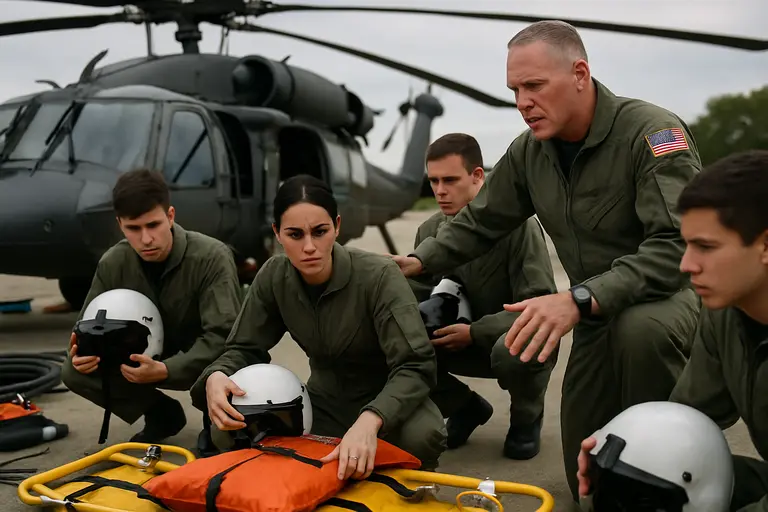
Confirmed: as of August 2026, the Army awarded a contract to M1 under the Flight School Next initiative. The research states that the plan moved initial helicopter training toward contractor-owned Robinson R66 aircraft and civilian instructors, with goals tied to safety, reliability, cost control, and stronger fundamental flying skills. A related PilotPointer analysis on Flight School Next examines why that shift raised practical questions about standards, safety, and cost.
Confirmed: the planned fall 2026 redesign placed greater emphasis on more solo flight time, decision-making training, and simpler aircraft during early training. As of September 4, 2026, the research described that redesign as planned for fall 2026, so its full results were not yet proven. Still, the training logic is clear. Simpler aircraft can expose core handling errors earlier. More solo work can reveal whether a student has internalized aircraft control, traffic awareness, and judgment without relying too heavily on an instructor in the other seat.
Doctrine, Records, And Instructor Priorities
Confirmed: in March 2025, the Army published new versions of FM 3-04 “Army Aviation” and the Aviation Training Strategy. The research links those updates to changes in how flight fundamentals, aeromedical work, and combat survivability training were being structured for aviators. Doctrine cannot make a pilot safer by itself, but it can define what units are expected to train, measure, and reinforce.
Training reform also depends on record-keeping and honest reporting. If a unit records only completed tasks but not recurring judgment errors, unstable habit patterns can hide in plain sight. If instructors are pressured to move students through events too quickly, weak fundamentals can follow a pilot into more demanding aircraft. The better approach is direct: identify the error, connect it to a standard, practice the correction, and track whether performance actually improves. For readers eager for more in-depth insights across related platforms, Noir Whale is a useful resource within this network.
Army Pilot Training After The Mishap Spike
Market-analysis: the Army’s training response shows a shift from reacting to crashes toward using mishap trends to reshape instruction, policy, and early skill development. The reforms described in the research point to three priorities: rebuild fundamentals, make risk reporting more useful, and close the experience gap that can leave junior crews without enough seasoned mentorship. None of those priorities is quick. They require instructor quality, command follow-through, and a willingness to treat procedural discipline as a flying skill rather than a paperwork requirement.
Army Pilot Training will be judged by whether these reforms produce safer habits under operational pressure. The Fiscal Year 2025 improvement was encouraging, but one better year does not prove that every training weakness has been fixed. The most useful measure will be whether new aviators show stronger aircraft control, clearer cockpit communication, better decision-making, and higher respect for warnings, checklists, and airspace coordination. That is the standard that matters to crews who live the pilot lifestyle every day and to the families who count on them returning safely.