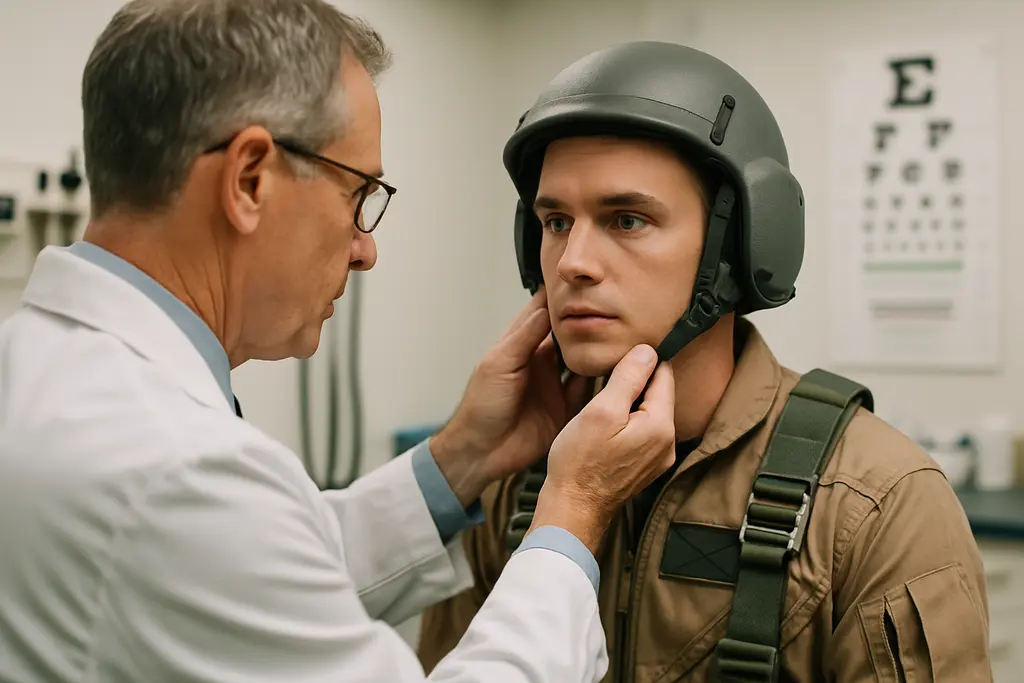
The FAA’s military pilot medical proposal, published on August 10, 2026, would change one narrow but meaningful step in pilot certification for certain military trainees. As of October 13, 2026, the public comment period had closed on October 9, 2026, and the rule had not been finalized. That timing matters for training departments, Part 141 schools, and military-sponsored students because the proposal is not yet a live exemption. It is a pending rulemaking that may affect how qualified trainees document medical eligibility before solo flight or practical testing.
The proposed rule is titled “Removal of FAA Third-Class Medical Certificate Requirement for Military Pilot Trainees.” It appeared as an FAA Notice of Proposed Rulemaking under docket FAA-2026-9177, with comments due by October 9, 2026, according to the Federal Register notice. The central idea is simple: if a trainee already has an up-to-date U.S. military pilot medical examination authorizing pilot flight status, the FAA has proposed that the trainee would not also need an FAA third-class medical certificate for training that does not require a higher medical certificate.
What The Military Pilot Medical Proposal Would Change
Current FAA Medical Step
Under current rules described in the NPRM, military pilot trainees still need an FAA third-class medical certificate to solo or take practical tests under a Part 141 pilot school curriculum. The FAA proposal would remove that separate third-class certificate step for qualifying trainees, but only within the defined scope of the proposed exception. The agency’s stated rationale is that the existing military medical examination already serves the safety purpose for this training group, making the FAA certificate process duplicative in covered cases.
The proposal would define “military pilot trainee” as a person in the U.S. Armed Forces, or a foreign military member, who is receiving pilot training sponsored by a branch of the U.S. Armed Forces. That definition is significant because it does not cover every student with prior military experience, every veteran, or every civilian student training near a military installation. The sponsorship requirement keeps the proposed exception tied to active military training pathways.
Military Pilot Medical Eligibility Boundaries
The proposal would also define a qualifying military pilot medical examination as a U.S. Armed Forces medical exam intended to establish eligibility for military pilot duties onboard military aircraft. That wording matters for documentation. A general medical review, a non-pilot military physical, or an expired status would not meet the stated concept described in the NPRM. The medical exam would need to be current and connected to pilot flight status.
The FAA also set a scope limit: the proposed exception would apply only where the flight activity does not require a medical certificate higher than third class. A trainee who needs a higher FAA medical certificate for a particular operation would still need to meet that higher requirement. A trainee who separates from qualifying training, loses military medical eligibility, or no longer trains under U.S. Armed Forces sponsorship would not fit the proposed exception as described.
Training Impact For Part 141 Schools
Scheduling And Administrative Effects
For Part 141 schools, the biggest effect would likely be administrative rather than instructional. Today, a qualifying military-sponsored trainee may already hold military medical clearance, yet still must obtain a separate FAA third-class certificate before certain civilian training milestones. If the FAA finalizes the proposal, schools may be able to verify the military status and medical documentation instead of waiting for a separate FAA medical certificate to be issued.
That change could reduce friction in course start dates, solo authorizations, and practical test planning. It would not remove the school’s duty to confirm that the student is eligible for the training event. Instead, it would shift part of the eligibility review from FAA third-class certificate possession to proof of qualifying military pilot medical status and sponsorship. Schools would need clear intake procedures so dispatchers, chief instructors, and check instructors apply the exception consistently if it becomes final.
| Proposal Element | Supported Detail | Training Meaning |
|---|---|---|
| Publication Date | August 10, 2026 | Rulemaking began through an NPRM, not a final rule. |
| Comment Deadline | October 9, 2026 | As of October 13, 2026, the comment window had closed. |
| Covered Group | U.S. or foreign military trainees sponsored by U.S. Armed Forces | Eligibility depends on sponsorship and active training status. |
| Medical Standard | Current military pilot medical exam authorizing pilot flight status | Documentation would replace the FAA third-class certificate only in covered cases. |
Cost And Workload Considerations
The FAA estimated that the Armed Forces currently incur about $437 per FAA third-class medical certificate for each affected trainee, and the NPRM’s regulatory evaluation describes savings tied to eliminating duplicate applications and FAA review burden in qualifying cases, as shown in the official FAA proposal PDF. The research record also states that the affected population is about 2,000 trainees per year, made up of roughly 1,850 U.S. military pilot trainees and 150 foreign military trainees sponsored by the U.S. Armed Forces.
For training leaders, the value is not limited to dollars. A certificate step that duplicates an existing military flight-status medical can add calendar risk. Medical appointment availability, application processing, and review questions can slow a training timeline even when the trainee has already met the military standard. For a school operating structured Part 141 syllabi, fewer duplicate steps can support cleaner class sequencing, but only if the final rule gives schools a reliable way to verify eligibility.
Readers tracking adjacent FAA policy changes may also find this related analysis of third-class medical requirements useful, especially where Part 141 training records and military sponsorship intersect.
Safety Limits And Documentation Duties

Why The FAA Framed The Proposal As Redundant
The FAA’s safety rationale is that U.S. military pilot medical examinations meet or exceed the safety standards established by FAA third-class medical certificate requirements. On that basis, the agency proposed that removing the separate FAA medical requirement would not reduce safety for the covered training group. That point is central: the proposal is not framed as a lower medical standard, but as recognition of an existing military medical process for a narrow population.
Even so, schools should not treat the proposal as permission to relax medical record checks. If finalized, the exception would likely demand disciplined documentation. A school would need to know whether the trainee is actively sponsored by a U.S. Armed Forces branch, whether the medical examination is current, whether it authorizes pilot flight status, and whether the planned flight activity falls within third-class medical territory. A missing document or an unclear status could create compliance risk.
Practical Recordkeeping Questions
For training managers, the military pilot medical proposal raises practical questions that should be answered before any policy changes are made. Who verifies the trainee’s sponsored status? What document proves current military pilot flight medical eligibility? How will that proof be stored in the student file? Who checks continued eligibility before solo flight, stage checks, and practical tests?
Those are not speculative concerns. They flow directly from the proposal’s narrow eligibility language. A school that trains both civilian and military-sponsored students would need a checklist that separates normal FAA third-class certificate review from the proposed military exception. Staff training would also be needed so instructors do not assume the exception applies to former military members, unsponsored foreign trainees, or students whose military medical status has lapsed.
Flight schools that publish student briefings or internal policy explainers may also benefit from clearer training media practices; a related network resource, Internet Video Magazine, offers insights into video publishing topics that can support better communication without replacing official FAA guidance.
Military Pilot Medical Proposal In Practice
If finalized, military pilot medical documentation could become a key administrative checkpoint for covered trainees in Part 141 programs. The practical benefit would be strongest where a trainee already has valid military pilot flight status but would otherwise wait for a separate FAA third-class certificate before advancing to solo or testing events. The proposal would not open the door to unrestricted civilian training privileges, and it would not apply after the qualifying sponsorship or medical status ends.
For aspiring pilots connected to military training pipelines, the best step after the comment period is patience and preparation. The FAA had not finalized the rule as of October 13, 2026, so trainees and schools should continue following current medical certification requirements until a final rule says otherwise. Training departments can still prepare by reviewing intake forms, student record systems, instructor briefing materials, and dispatch release procedures. If the proposal is adopted, the schools that benefit most will be the ones that can prove eligibility clearly, protect safety oversight, and avoid treating a narrow exception as a broad waiver.