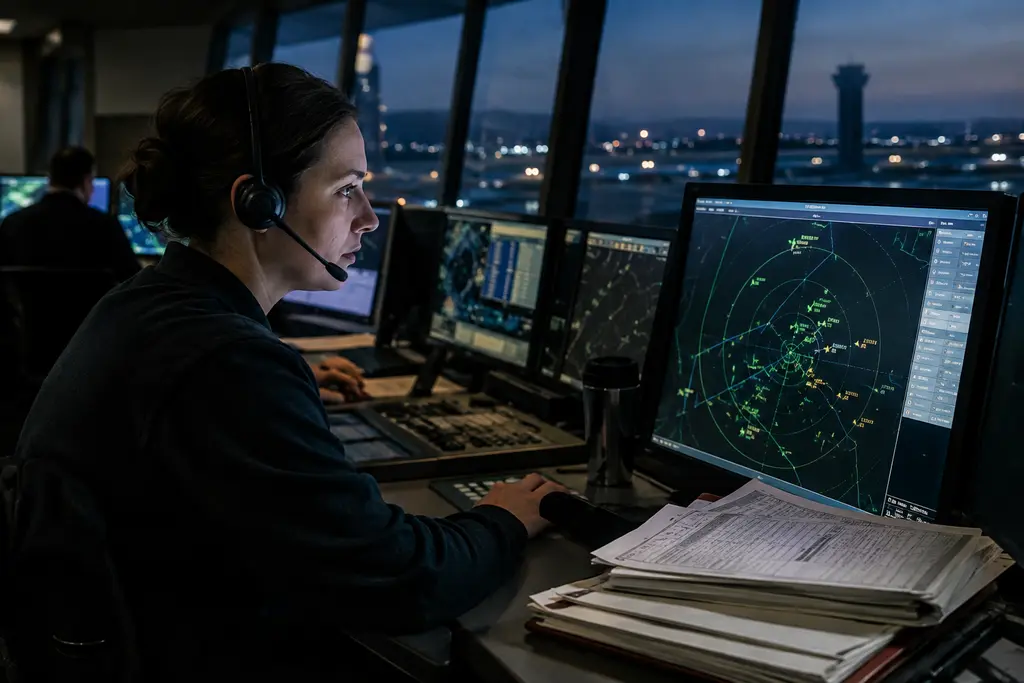
ATC System Vulnerabilities have moved from an infrastructure concern to a training concern for pilots, instructors, and certification candidates. Confirmed federal findings point to aging air traffic systems, cybersecurity exposure in aircraft communications, and modernization work that will take years to complete. For aspiring pilots, the practical lesson is direct: certificate preparation should include stronger communication verification habits, backup procedure practice, and workload management during system degradation. These findings do not replace FAA certification standards by themselves, but they do show where flight schools and individual pilots can strengthen daily safety protocols.
ATC System Vulnerabilities In FAA Findings
Why ATC System Vulnerabilities Matter To Training
Confirmed in a federal audit, the FAA determined as of May 2025 that 51 of 138 critical air traffic control systems were unsustainable and 54 were potentially unsustainable. The same review identified 17 systems as especially concerning, with some more than 30 years old, according to the GAO modernization report. For pilots, the concern is not simply that equipment is old. The training issue is how flight crews respond when radar, radios, telecommunications links, or automation do not support the normal flow of instructions.
That matters during certification because many practical test scenarios already examine lost communications, equipment failures, abnormal decision-making, and aeronautical decision-making. The new relevance is that these skills are not theoretical backup items. They are part of a realistic safety mindset in a system where modernization is underway but not complete. Instructors can use these findings to frame scenario-based training around partial communication loss, unclear instructions, frequency congestion, and switching between data link and voice channels.
Modernization Schedule And Cost Signals
The FAA’s Brand New Air Traffic Control System initiative is intended to replace outdated infrastructure, including radar, communications, software, and related systems. Phase 1 was scheduled for completion by December 2028. Congress appropriated $12.5 billion in July 2025 toward the effort, largely for Phase 1, while Phase 2 included an estimated requirements cost of about $10.2 billion excluding facilities. By May 2026, the FAA had replaced 2,560 of 5,170 old copper wires with high-speed fiber optic cables.
Those details are useful for pilots because modernization should be viewed as a transition period, not an instant fix. A student pilot learning radio work in 2026 or 2027 may train in airspace where some systems have been improved and others still depend on older infrastructure. Certification training should reflect that mixed environment. A pilot who can maintain aircraft control, verify instructions, and use published backup procedures has a more durable safety foundation than one who relies only on normal automation and routine communications.
Communication Integrity And Flight Deck Protocols
ATC System Vulnerabilities In Data Link Use
Confirmed in a separate federal cybersecurity review dated September 21, 2026, GAO found that the FAA had identified spectrum-related threats such as spoofing, jamming, and interference. These threats could degrade or block communication, navigation, or surveillance systems, and GAO also found that the FAA had not completed system-specific risk assessments or implemented real-time detection for all threat types, according to the GAO aviation cybersecurity report. The same research record identified vulnerabilities in ACARS and CPDLC because messages are generally unencrypted and unauthenticated, creating exposure to interception, spoofing, or false instructions.
For the flight deck, the implication is disciplined verification. If a data link instruction appears unusual, conflicts with a clearance expectation, or creates confusion with the aircraft’s position, altitude, routing, or traffic picture, the safer habit is to verify through voice communication before acting. This is not a call to distrust normal ATC service. It is a reminder that pilots are part of the safety chain, especially when communication integrity is uncertain.
Practical Radio And Backup Habits
Training providers can convert these findings into practical cockpit habits. Students should rehearse standard readbacks, request clarification without delay, and treat ambiguous instructions as unresolved until confirmed. They should also practice frequency management, transponder use, lost communication flows, and alternate navigation planning. A related Pilot Pointer analysis of ATC vulnerabilities and pilot safety extends this topic into communication backup planning and recurrent training discipline.
Good safety protocol also includes knowing when workload is rising. A pilot who is hand-flying, troubleshooting avionics, monitoring weather, and clarifying ATC instructions may reach task saturation quickly. Instructors should teach students to slow the operation where possible, use plain language when standard phraseology does not resolve the issue, and prioritize aviate-navigate-communicate. Readers interested in exploring more about aviation safety can find Sitebob helpful as it offers connected resource pages from the same network.
Surface Operations And Workload Effects
Runway Movement Requires More Verbal Cross-Checks
The research record ties aging radar, communication, and telecommunications failures to multiple 2025 incidents, including near-collisions at Phoenix Sky Harbor and Chicago Midway, as well as loss of radar or radio contact affecting aircraft when systems failed in Newark. It also identifies airport surface surveillance gaps as a safety concern, including the February 4, 2023 Austin runway event where lack of surface detection technology impaired pilot and controller situational awareness.
For pilots, surface movement deserves as much attention as airborne routing. Taxi instructions should be written down or read back with precision, runway crossings should be verbally confirmed, and crews should pause when the airport diagram, signage, visibility, or clearance sequence does not match expectations. Student pilots often focus heavily on takeoff and landing performance, but taxi safety is a certification-relevant skill because runway incursions can develop before an aircraft ever leaves the pavement.
Single-pilot operations require special caution. Without a second crewmember, a pilot must divide attention among taxi routing, radio calls, checklist use, traffic scanning, and hold-short compliance. If tower workload is high or surface surveillance is limited, the pilot’s own positional awareness becomes even more valuable. This is why instructors should treat airport diagrams, progressive taxi requests, and sterile cockpit habits as safety tools rather than administrative details.
Certification And Recurrent Training Implications
How Instructors Can Convert Findings Into Scenarios
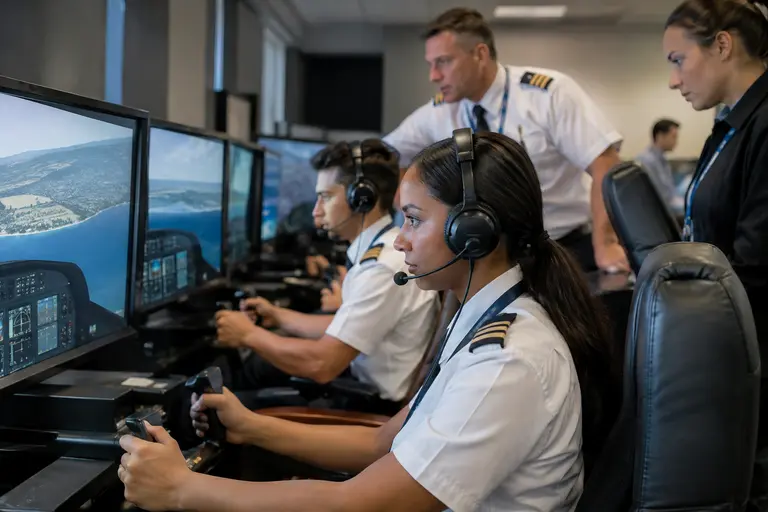
The cited findings do not create a new pilot certificate category or a confirmed rewrite of practical test requirements. Their value is in scenario design. A private pilot applicant can be asked to explain what to do after a suspected radio failure near controlled airspace. An instrument student can be given a reroute through data link followed by a conflicting voice instruction. A commercial applicant can be evaluated on passenger communication and workload control after an ATC service interruption.
These scenarios help connect federal infrastructure findings to the skill areas examiners already expect: communication, risk management, aircraft control, and decision-making. Recurrent training can use the same structure for certificated pilots who want to stay sharp during the FAA modernization period.
| Training Area | Supported Risk From Findings | Protocol Emphasis |
|---|---|---|
| Radio Communication | Outages, congestion, or unclear instructions | Readbacks, clarification requests, lost communication procedures |
| Data Link Use | Unauthenticated or spoofed messages | Voice verification for unusual or conflicting instructions |
| Navigation Backup | Jamming, interference, or degraded surveillance | Alternate navigation sources and conservative route management |
| Surface Movement | Limited detection coverage or tower workload | Airport diagram use, hold-short discipline, progressive taxi when needed |
ATC System Vulnerabilities And Pilot Certification
What Applicants Should Carry Forward
ATC System Vulnerabilities should not make new pilots fearful of the National Airspace System. They should make pilots more disciplined. The confirmed findings show why certification training must treat communication verification, backup planning, and surface awareness as active safety skills. A pilot candidate who can calmly question an unclear clearance, revert to voice communication when data link integrity is uncertain, and manage workload during abnormal system behavior is better prepared for real operations.
For flight schools, the practical step is to build these risks into normal lesson plans instead of treating them as rare events. For individual pilots, the practical step is to keep personal minimums, chart knowledge, communication habits, and backup procedures current. FAA modernization may improve the system over time, but pilot safety protocols still depend on disciplined actions in the cockpit on every flight.