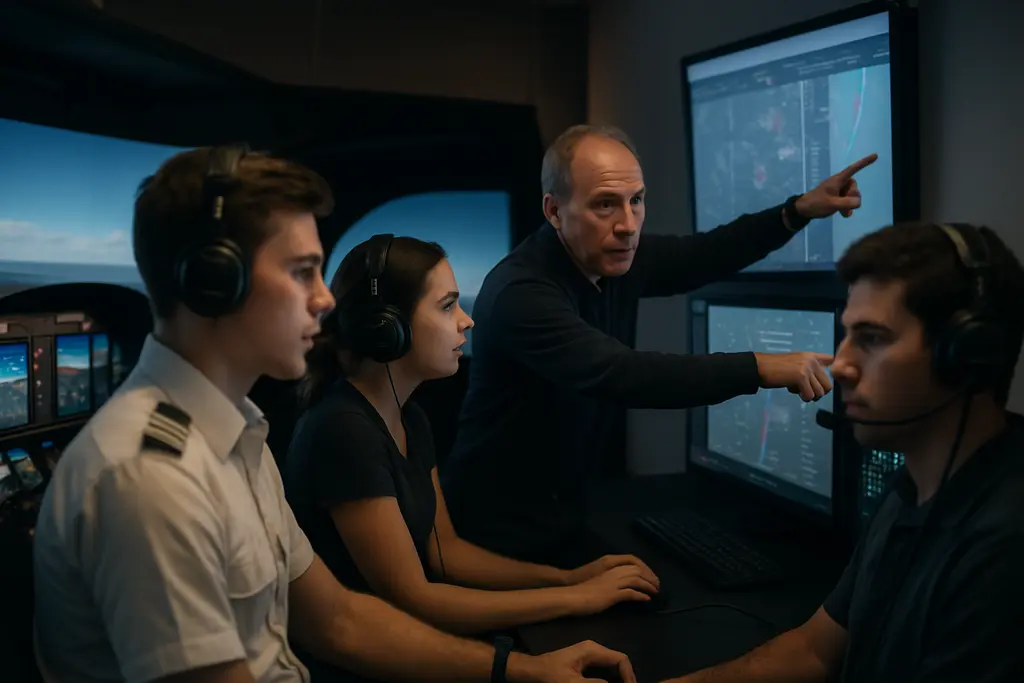
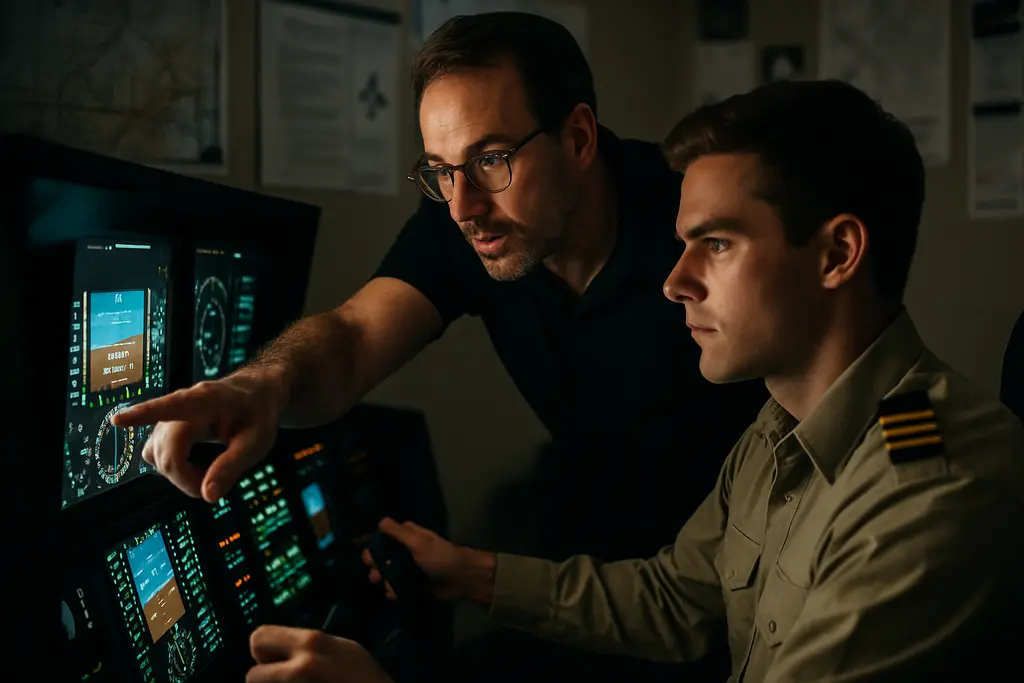
I used to view ground school as dull and dreary. Just me, copying rules until my hand hurt. Then I discovered its true purpose. It’s the core of pilot training. It teaches why planes do what they do and why it must be legal.
Your flight school journey has two main paths. One enriches your knowledge. The other polishes your skills. The goal is to blend judgment, skill, and confidence smoothly. Instead of letting them fight like TV debate shows.
Aviation classes zip by, but the roadmap is clear. You’ll dive into rules, airspaces, weather, and how to predict it. You’ll study engines, plane systems, the basics of flying, and how weight impacts balance. Navigation, radio communication, and emergency plans are also key.
And there’s a good reason “human factors” come up early. Issues like tiredness, drinking, stress, medicine, and high altitudes. They can mess up your flying dreams without making a sound.
What the Written Exam Covers
The FAA knowledge test changes the game for pilot students. It’s taken at approved places and is all about picking the best answer out of four. This test truly tests your aviation skills.
Private pilot exams usually have around 60 questions. Other levels might have up to 100. Knowing what’s on the test can really help you prepare.
The test content is based on FAA’s learning goals. It’s not just random facts. Topics like aerodynamics, stability, and how aircraft systems work are all covered. This helps you understand an airplane’s behavior.
Weather plays a big part too. You’ll learn to read weather reports and forecasts. Understanding weather is key to safe flying, not just guessing because the sky looks clear.
Expect to use math and decision-making for navigation and flight planning. You’ll work out routes, look at maps, and calculate fuel and time. It’s all about making sure your flight goes as planned, even when the weather tries to mess things up.
| Knowledge area | What you’re expected to do | What it looks like on the test |
|---|---|---|
| Aerodynamics and aircraft systems | Explain lift, drag, stalls, stability, and basic system function | Scenario questions on stall cues, load factors, and system limits |
| Weather theory and reports | Interpret METARs/TAFs and connect conditions to flight risk | Decoded weather strings, frontal passages, icing, and thunderstorm risk |
| Navigation and flight planning | Use charts, headings, wind correction, and time/fuel planning | Plotter/E6B-style questions and route decisions based on winds and airspace |
| Performance calculations | Compute takeoff/landing distance and climb performance with conditions | Chart-based questions tied to weight, temperature, and pressure altitude |
| Regulations and airspace | Apply FAR basics, right-of-way, minimums, and airspace rules | Class B/C/D/E/G requirements, VFR cloud clearances, and currency rules |
| Human factors and aeromedical topics | Spot fatigue, hypoxia, and risk traps before they spot you | IMSAFE and decision-making questions tied to real-world judgment calls |
A good pilot school covers what the FAA wants you to know, not what we think they should ask. Students often use FAA books, lessons, and apps to prepare. An app saying you’re “67% ready” feels like a big deal.
Some programs, like Leopard Aviation, design their materials around the FAA’s questions. This makes sure the theory stays relevant and helps students avoid guessing on the test.
Effective Study Schedules
My best study weeks are quiet, not exciting. That’s because a wise study plan for flying school isn’t about studying harder. It’s about studying smart: being organized, consistent, and aiming for the next goal.
Consider what a training day looks like. You show up and do various tasks before and after flying. You have a short ground briefing—often just 10 minutes. This time is for review, not for learning everything from scratch.
If you haven’t prepared, this briefing turns costly. If you’re ready, you fly more, talk less, and save money. It’s simple math, not a romantic idea.
I approach studying like building up flying skills step by step. First, you master basic controls and movements. Then, you practice keeping the plane straight and level. Next, you work on climbing and descending smoothly.
Your flight school lessons are designed this way on purpose. So, your study schedule should follow the same pattern. Studying regularly beats cramming because it keeps your skills sharp. This way, you learn new things quicker.
| Time Block | What I Study | Why It Works |
|---|---|---|
| 15 minutes (daily) | Definitions, airspace basics, weather symbols, quick FAR/AIM lookups | It keeps your memory fresh, so classes feel more like a review. |
| 30 minutes (3–4x/week) | Scenario questions: cross-country planning, fuel, alternates, risk decisions | This approach ties rules to real-life decisions, like in exams. |
| 45–60 minutes (1–2x/week) | Challenging topics: performance charts, weight and balance, METAR/TAF decoding | Allocates enough time for tough subjects without overwhelming your week. |
| 10 minutes (night before a lesson) | Preview the “mission”: today’s maneuvers, key terms, common errors | This aligns with your curriculum and makes pre-flight briefings quicker. |
The key to studying right is regularity. I treat it like brushing my teeth: done briefly but steadily. Trying to learn everything at once doesn’t last.
If you have a busy life, plan wisely. Do quick study sessions on hectic days and save the big topics for when you have more time. This way, class feels familiar, like spotting a runway from afar.
Recommended Books and Apps
If you’re aiming for an easy ride through pilot ground school, think simple. Aim for a concise stack: one structured course, a set of official references, and a way to test yourself. This approach ensures you’re fully prepped and brimming with confidence.
This combination prevents aviation theory from becoming a game of random facts. A reliable online ground school unfolds the storyline. Official textbooks provide the must-know rules and definitions. And apps? They offer the repetitive practice and instant feedback everyone needs but rarely admits to.
When it comes to official references, I recommend looking for clarity and focus. The TP 12880 study and reference guide from Canada simplifies things. It categorizes knowledge into four main areas—Air Law, Navigation, Meteorology, and Aeronautics—General Knowledge. This guide makes it clear that skipping topics isn’t an option.
This is useful even if you’re training in the United States. The guide’s structure naturally aligns with how students learn best: starting with rules, followed by weather, then navigation, and finally, the airplane’s mechanics. This neat structure aims to help you ace the pilot written exam without needing to bank on luck and caffeine boosts.
| Resource type | What it’s best for | How to use it without wasting time |
|---|---|---|
| Online ground school program | Structure, explanations, and steady pacing | Watch one lesson, then do 15–25 targeted questions right away while the logic is still warm |
| FAA handbooks and official references | Definitions, standard procedures, and source-of-truth details | Skim for the concept, then reread the exact paragraph that explains what your quiz got wrong |
| Test prep apps and practice exams | Recall speed, weak-spot tracking, and exam rhythm | Use timed sets, flag misses, and redo only the categories that keep breaking your streak |
If you’re learning to fly modern planes, your study tools need to be just as current. For students flying Cessna 172S Skyhawks with the latest tech, understanding those systems is critical. The Garmin G1000, for instance, integrates navigation and system management, signaling a big leap from aviation’s past practices.
The goal isn’t to pile up as many apps as possible. Instead, it’s about using each tool to target the same learning points. When your textbook, course, and quizzes all line up, passing the pilot written exam becomes a clear-cut process, much like solving a math problem.
Practice Test Strategies
Practice tests make ground school real by measuring what you know. It’s like checking how well you’d do as a pilot at 3,500 feet. Think of them as rehearsals for the actual exam, not just fun facts.
Study everything from airspace rules to weather forecasts and navigation. Also, focus on performance math and understanding plane systems. This broad study helps you see how flying topics connect in real life, not just in books.

Treat every test question like a real-life scenario. Choose a weather challenge and decide if you’d fly or not. Plan flights considering fuel, weather changes, and time. Yes, it’s hard work. That’s the true purpose of ground school.
- Use mixed sets to prevent “pattern memory” from doing your thinking.
- Grade like a skeptic: review every missed question and any correct one you guessed.
- Track weak areas by topic, not by ego.
- Re-test after 48 hours so recall has to earn it.
Combine practice tests with FAA books, videos, and classes to fully understand materials. Classes explain why answers are correct. This helps when the FAA changes how questions are presented.
| High-Value Topic | What the FAA Likes to Probe | Practice Test Move | Real-World Scenario to Anchor It |
|---|---|---|---|
| Regulations & Airspace | Legal minimums, equipment rules, and where you can’t “just wing it” | Do 20 mixed questions, then summarize the rule in one sentence | Entering Class C with a comm issue and deciding the safest, legal next step |
| Weather Products | Reading METARs/TAFs, radar limits, and what “looks fine” can hide | Translate the report, then state a risk and a mitigation | Routing around building convection and avoiding the “radar says it’s clear” trap |
| Navigation & Flight Planning | Course, wind correction, groundspeed, time en route, alternates | Work it once with a plotter/E6B, then once without looking at notes | Choosing an alternate when ceilings slide and fuel margins tighten |
| Performance & Weight and Balance | CG shifts, density altitude effects, takeoff/landing distance | Recalculate with one variable changed (temp, runway, passenger) | Hot day, short runway, and deciding whether to offload baggage or delay |
| Human Factors | Hypoxia, illusions, fatigue, and decision-making breakdowns | Match symptoms to actions, then identify the bad habit involved | Night flight with rising fatigue and the urge to “push through” |
With consistent practice, passing the exam is about hard work, not luck. Ground school teaches you the essentials. Practice tests help you apply them confidently. When classes feel slow, remember, this is when you move from guessing to knowing.
Memorization Techniques vs. True Understanding
Memorizing is needed for flying at times. Emergency steps and checklist discipline are strict. The FAA won’t allow interpretive dance instead of the correct methods.
The private pilot written exam values deep understanding. Aviation theory is structured, not just facts to remember. The best answers show how different parts work together under stress.
Consider aerodynamics. You could just memorize the basics: lift, drag, thrust, and weight. It’s smarter to understand how they interact during different flight stages and why stalls are about the angle, not luck.
Weather understanding is similar. Reading a METAR is just the start in pilot ground school. True wisdom lies in interpreting the factors: temperature, pressure, wind, and moisture, and predicting the weather.
Navigation can really test your confidence. You learn various navigation techniques and then realize technology can fail. Good flight schools prepare you for this by teaching backup methods. Reality checks overly confident plans.
| Topic | Memorize fast | Understand deep | Why it matters on the written |
|---|---|---|---|
| Aerodynamics | Key terms, basic definitions, common V-speeds | Angle of attack, stability, stall cues across phases of flight | Questions test your reasoning by changing variables |
| Weather | METAR/TAF codes, cloud types, standard abbreviations | Pressure patterns, wind shifts, density altitude, frontal behavior | Scenarios require decision-making, not just decoding |
| Navigation | VOR basics, chart symbols, fuel reserve rules | Course corrections, wind correction angle, alternates and contingencies | Problems ask “what now?” with limited information |
| Human factors | IMSAFE, hypoxia signs, alcohol rules | Fatigue, stress management, and disorientation risks at night | FAA focuses on risk management in human contexts |
So, memorize what’s necessary, but strive to understand deeply what’s adaptable. This balance is key in pilot ground school for both passing and thinking like a true pilot.
If your flight school relies too much on memorization, add a layer of “why” yourself. Understanding aviation theory becomes easier when each fact is linked to a cause, effect, and its role in the larger system.
Handling Test Day Stress
Test day stress feels like my brain forgot to invite me to its own seminar. The solution is simple, and that’s why it works: think of the test as just part of the training. It’s a standard test from the FAA, based on what you’ve learned in pilot school.
New things make us nervous. Having a set plan takes that away. When I prepare using FAA books, practice tests, and good classes, the testing room feels familiar right away.
Flight training has prepared us well for this. The steps are reassuring: plan the mission, then do it. A quick review before the test helps keep stress in check. I review key topics—rules, weather, plane performance, navigation, and more—then I’m ready for the test.
- Brief: identify likely questions and weak spots
- Execute: answer steadily, one at a time
- Cross-check: mark hard questions, revisit them later
Something important I’ve realized: the right training environment is key. Some programs intentionally build your confidence. For instance, Leopard Aviation focuses on ground support and test prep. This approach—focused preparation—helps a lot when you want to pass the pilot written exam.
| Stress Trigger | What It Looks Like in the Room | Practical Countermove |
|---|---|---|
| “This feels different from training” novelty | Fast heartbeat, rushing, second-guessing easy items | Replicate the format in pilot ground school with timed blocks and review notes that match FAA objectives |
| Content overload | Blanking on weather charts or airspace rules | Do a tight pre-brief: regs/airspace, weather products, performance and weight & balance, nav, instruments, human factors |
| Perfectionism | Spending forever on one question like it owes you money | Mark it, move on, and return later; aim for consistent accuracy, not drama |
| Noise from other people | Comparing study apps, scores, and timelines in your head | Stick to the plan you built in aviation classes and trust your practice-test trend line |
On the test day, I keep it simple: get enough sleep, eat, arrive early, and bring what’s needed. Then, I focus on calm breathing and steady pace. Stress looks for drama; being well-prepared doesn’t allow for any.
Mistakes to Avoid
The biggest mistake in pilot ground school is not being prepared. You end up paying an instructor to watch you relearn the basics. Flight schools expect you to have studied beforehand. The brief meeting before a flight is to confirm knowledge, not to teach it all over again.
Early on, you’ll learn important routines: preflight walk-around, weight and balance, weather check, paperwork, post-flight responsibilities. If you skip preparation, you’ll spend more time talking than flying. It’s like paying for concert tickets just to listen to the soundcheck.
Another mistake is not taking radio communication seriously. Aviation has many rules that seem optional until you’re stuck answering ATC. Knowing standard phrases and the difference between towered and non-towered airport communications is crucial for safety.
Being overly optimistic about weather can also lead to trouble. Your training expects you to understand weather reports, not just glance at an app. Making decisions on whether to fly must consider severe weather risks. The sky won’t change its conditions for your plans.
Not focusing on performance planning is another error. Ground school emphasizes the importance of weight, balance, and understanding takeoff and landing distances. What works for cooking pasta doesn’t work for calculating runway lengths.
| Mistake | What It Usually Looks Like | What the Flight School Curriculum Expects Instead | Why It Matters in Aviation Theory |
|---|---|---|---|
| Arriving unprepared | Needing the entire ground briefing taught from scratch | Briefing used as a quick review of the plan and risks | Learning is staged; each lesson builds on prior knowledge |
| Soft-pedaling radio skills | Long pauses, vague wording, and missed callouts | Using standard ATC phraseology with clear intent | Communication reduces ambiguity and workload under stress |
| Outsourcing weather judgment to apps | “The colors look fine” without reading the report | Interpreting METARs/TAFs and cross-checking radar trends | Weather decisions rely on patterns, not optimism |
| Skipping performance planning | Guessing takeoff roll and ignoring density altitude | Calculating distances and confirming weight and balance | Physics stays consistent even when confidence doesn’t |
The lesson is straightforward: don’t mix up being familiar with being competent. Pilot ground school and aviation theory might seem theoretical online. But they become very practical with a checklist in hand and time ticking away.
What to Do After Passing
Passing the pilot written exam is a big deal. It’s like you’ve won a major challenge in a game. But don’t stop now. This victory means you’ve got through the tough paperwork. Now, training can speed up.
For those who’ve been through pilot ground school, it’s time to use what you’ve learned. Start reading the weather more carefully. Figure out the weight and balance for real, no more guessing. Your preflight checks will become more about making decisions.
Now, focus on connecting theory with real flying activities. This includes takeoffs, landings, and how to handle stalls and emergencies. Learning to communicate with air traffic control (ATC) while staying calm is crucial too.
As you improve, the exercises become more complex. Ground reference maneuvers will show you the actual effect of wind. Performance maneuvers will test your coordination and focus.
It’s also time to get smart with cross-country planning. Create detailed flight routes that include backup plans and think about fuel needs. Treat each lesson as an opportunity to learn and improve one specific thing.
If you’re aiming for more than just flying for fun, keep your end goal in mind. There are many training programs that lead from a Private to a Commercial license. They offer flexibility but maintain high standards. Considering how far you want to take your flying? A Discovery Flight could be a great way to decide, giving you valuable experience.
| Next Step | What You Do This Week | Why It Keeps Training Moving |
|---|---|---|
| Preflight upgrade | Write a weather brief, run weight and balance, and plan a conservative go/no-go | Turns pilot ground school knowledge into faster, cleaner cockpit decisions |
| Maneuver focus | Pick two: stalls, slow flight, steep turns, or ground reference maneuvers, then practice with clear standards | Stops lessons from turning into endless review after passing the pilot written exam |
| Cross-country depth | Plan one route with alternates, NOTAMs, fuel reserves, and a “what if the wind shifts?” backup | Makes aviation classes feel practical instead of theoretical |
| Long-range path | Ask your CFI how your current pace maps to FAA Part 61 milestones | Keeps expectations realistic and progress measurable |
Final Words of Encouragement
People often say it’s “easy” if you just believe. But real life isn’t powered by vibes and good intentions. Instead, pilot ground school transforms curiosity into sound judgment with a specific skill set.
The flight school curriculum is more than just a bunch of facts. It includes aerodynamics, systems, and a lot more, carefully organized. The basic maneuvers you learn first are the foundation for everything else.
It’s important to match your flying time with your study time. When you practice aviation theory in the air, it becomes natural. Always ask questions; your instructor’s time is precious.
Keep at it, even if your schedule gets hectic. Plan ahead and celebrate every victory, no matter how small. Soon, you’ll find yourself running checks smoothly—it’s the ultimate goal for a pilot.