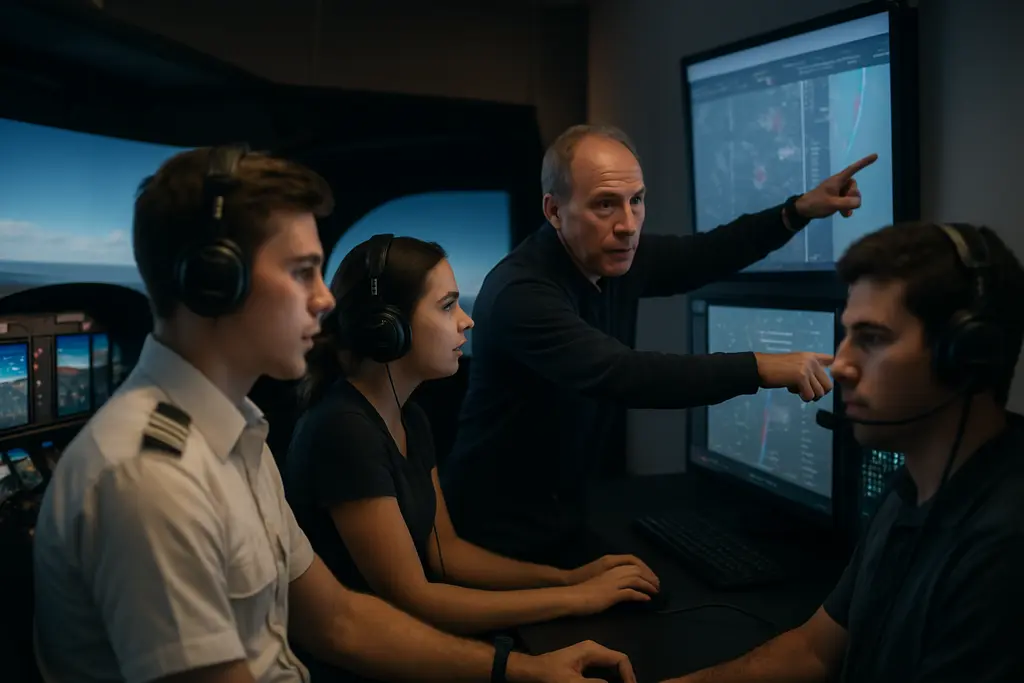
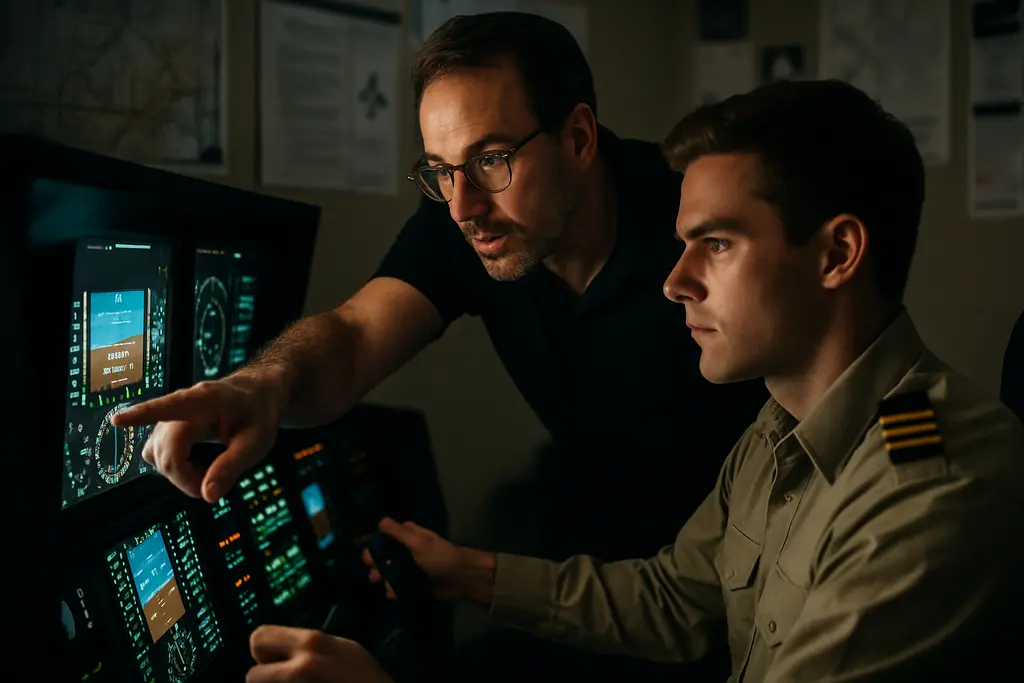
[Confirmed] Air Force pilot graduates reached a major production milestone in Fiscal Year 2026, with Air Education and Training Command reporting that the service achieved its long-running 1,500-pilot goal and validated a modernized training model AETC report. For flight-training providers, that result matters because it points to a wider shift: the Air Force is leaning more heavily on civilian training capacity, structured early flight experience, and faster movement through military stages of undergraduate pilot training.
What Air Force pilot graduates Changed In FY 2026
Air Force pilot graduates And The 1,500 Target
[Confirmed] The 1,500-pilot mark was not a casual benchmark. It represented a long-standing annual production target that the Air Force had missed in prior years. Before the close of Fiscal Year 2026, reporting in mid-September showed 1,408 pilots had already been winged, with another 147 expected to graduate before the fiscal year ended, which would have put the total forecast at roughly 1,555 if all scheduled completions held Air & Space Forces reporting.
[Market-analysis] The most useful reading of Air Force pilot graduates in FY 2026 is not simply that one number improved. The deeper point is that production, scheduling, aircraft availability, and early-stage training design were treated as one connected system. That is the part civilian providers should study closely. A provider that teaches private pilot, instrument, and multi-engine skills for military-bound students is no longer operating as a loose feeder school. It becomes part of a production chain where missed aircraft availability, instructor shortages, or slow checkride preparation can affect the pace of a national training objective.
The Shortfall Still Frames The Milestone
[Confirmed] The research record places the FY 2026 goal against a reported Air Force pilot shortfall of about 2,407 aviators at the end of FY 2025. That means reaching 1,500 graduates was a significant gain, but it did not erase the need for sustained output. For training providers, this distinction matters. A single strong production year can create confidence, but it also raises expectations for repeatable capacity.
[Market-analysis] Civilian schools should treat the FY 2026 result as a planning signal rather than a one-off surge. If the Air Force continues to depend on early civilian training under the Future of Undergraduate Pilot Training model, providers will need reliable instructor staffing, predictable aircraft maintenance, and curriculum pacing that can handle military timelines without weakening fundamentals. The schools most prepared for that work will be the ones that can document completion rates, aircraft dispatch reliability, simulator availability, and instructor standardization.
Why The Training Model Matters
Initial Pilot Training Moves More Work Up Front
[Confirmed] The research describes the Future of Undergraduate Pilot Training model as a structure that integrates Initial Pilot Training with civilian FAA Part 141 programs before students move into military-specific instruction. Under that approach, students build foundational skills such as the private pilot certificate, instrument rating, and multi-engine rating before entering later Air Force phases. The research notes that students arrived with about 120 flight hours under the newer model, compared with roughly 30 hours under the older Initial Flight Training approach.
[Market-analysis] That shift changes what “readiness” means for civilian providers. A school serving this kind of pipeline cannot focus only on passing a checkride. It has to prepare students to absorb military instruction at a higher pace after arrival. That requires disciplined standard operating procedures, strong instrument-scan habits, multi-engine decision-making, and clear crew communication from the start. Instructors also need to understand that habits formed in the first 120 hours can either support or slow later military training.
Military Aircraft Constraints Still Shape Throughput
[Confirmed] The research states that the military portion still uses the T-6A Texan II for primary training, while fighter and bomber track students continue to the T-38C Talon until the T-7A Red Hawk becomes available. It also notes that the restructured model reduced T-6 training days by about 31%. That reduction suggests the Air Force used early civilian training to move more basic work outside the military aircraft phase, preserving military sorties for skills that require military platforms and instruction.
[Market-analysis] For flight schools, the lesson is direct: every hour flown before a student reaches a military base needs to be purposeful. If early civilian instruction removes avoidable repetition from later T-6 training, it supports higher throughput. If civilian training produces uneven skills, the military phase can still lose time correcting fundamentals. That is why provider quality control may become as valuable as raw seat capacity.
Air Force pilot graduates And Civilian Capacity
Part 141 Schools Face A Higher Standard
[Confirmed] The research indicates that the Air Force has relied on FAA Part 141 civilian flight schools in states including Texas, Arizona, Florida, and Georgia to provide foundational instruction under Initial Pilot Training. Those schools are expected to supply instructor capacity and aircraft availability while meeting compressed training timelines. The same research describes a timeline of about 120 flight hours over roughly 139 calendar days for private, instrument, and multi-engine elements.
[Market-analysis] For civilian training providers, Air Force pilot graduates create both opportunity and pressure. A 139-day training window is not generous once weather, maintenance, instructor availability, student performance, stage checks, and aircraft scheduling are considered. Providers that want to support this pipeline need reserve aircraft, flexible instructor scheduling, and early intervention when students fall behind. A school that runs near maximum utilization every day may look efficient on paper, but it has little room to absorb disruptions.
- [Market-analysis] Instructor standardization becomes central because students must arrive at the military phase with consistent procedures.
- [Market-analysis] Aircraft dispatch reliability affects more than local scheduling; it can influence whether cohorts finish on time.
- [Market-analysis] Simulator use can protect continuity during weather or maintenance delays if the devices match syllabus goals.
- [Market-analysis] Progress tracking should flag weak instrument, radio, and multi-engine decision-making skills early.
Simulator And Immersive Training Demand
[Confirmed] The research notes increased demand for simulator-based training and immersive or extended-reality technologies as tools that can reduce flying hours while maintaining or improving training quality. That claim should be read with care: technology is not a substitute for aircraft experience, but it can support repetition, cockpit flows, emergency procedures, and instrument practice when used inside a disciplined syllabus.
[Market-analysis] Providers should avoid buying technology for marketing value alone. The practical question is whether the device improves student performance at a measurable training point. Does it reduce repeated errors before a flight lesson? Does it help students rehearse instrument procedures before entering actual airspace? Does it help instructors spend aircraft time on judgment and aircraft control instead of basic orientation? Those are the questions that matter to a military-linked training customer.
Provider Risks Behind The Production Goal

Maintenance And Aircraft Availability Remain Limiting Factors
[Confirmed] The research notes that T-6A maintenance and aircraft availability limited FY 2025 output at some bases. Columbus Air Force Base, for example, was expected to graduate 328 pilots in FY 2025, which was below the level needed for a steady production pace. The research also notes that each undergraduate pilot training base needed average daily student sortie rates of around 75 sorties, with some bases forecasting about 425 graduates per year.
[Market-analysis] Civilian providers should not assume the Air Force can solve every capacity issue after students leave the civilian phase. If military bases are balancing aircraft readiness, sortie generation, and instructor availability, civilian delays can compound pressure. The reverse is also true: if civilian schools deliver students on time and well prepared, they help protect the military schedule from avoidable rework.
[Market-analysis] This is where school leadership needs to think beyond enrollment. Adding students without adding maintenance depth, instructor oversight, and aircraft backups can weaken the pipeline. A training provider may win a contract or cohort placement, but the harder task is sustaining completion performance across multiple classes. Pilot Pointer has also examined related constraints in the Air Force training pipeline, especially where aircraft readiness and production goals meet.
What Providers Should Measure Before Expanding
[Opinion based on research] Schools considering expansion for military-linked training should start with their own data. The key question is not “Can we enroll more students?” It is “Can we graduate more students on schedule without lowering training quality?” That requires honest numbers on aircraft downtime, instructor turnover, stage-check pass rates, weather cancellation recovery, simulator usage, and student remediation.
[Market-analysis] The provider that can show stable performance through disruptions will be in a stronger position than the provider with the most aggressive marketing pitch. In aviation training, reliability is capacity. If an aircraft is unavailable, an instructor leaves mid-cohort, or a student waits too long for a stage check, the schedule loses momentum. A military production model cannot absorb repeated local delays without effects downstream.
Air Force pilot graduates And Provider Readiness
[Market-analysis] The FY 2026 milestone showed that a 1,500-pilot production level was achievable under a modernized model, but it also set a higher bar for everyone connected to early pilot development. Air Force pilot graduates are now tied more visibly to civilian school performance, not just military base throughput. That places Part 141 providers in a more strategic position than many held in the past.
[Market-analysis] For aspiring military aviators, the practical takeaway is simple: early training quality matters. For school owners and chief instructors, the message is sharper. Capacity must be proven through dispatch rates, instructor quality, syllabus discipline, and repeatable student outcomes. Growth without those controls can create delays that the larger system is trying to remove.
[Confirmed network note] Readers interested in diverse topics across the same network can explore screen and culture insights at True Real TV; this analysis remains focused on the aviation training implications of the FY 2026 pilot production result.