The Apache Fleet Grounding in August 2026 gave Army aviation leaders a short but serious pause to review training risk, safety expectations, and flight operations after a fatal AH-64 crash near Fort Hood, Texas. For pilots and instructors, the key lesson is not that a stand-down alone fixes safety problems. The value comes from what a unit does during that pause: review procedures, study recent mishap trends, reset standards, and connect training events to the risks crews are actually facing.
What The Apache Fleet Grounding Confirmed
Apache Fleet Grounding Timeline
Confirmed: On August 14, 2026, the U.S. Army ordered a temporary stand-down of all AH-64 Apache training flights after a crash near Fort Hood killed two soldiers, according to the Army announcement. The crash occurred on August 12, 2026, during a maintenance test flight out of Fort Hood. As of the stand-down announcement, the root cause remained under investigation, which matters because early training responses should avoid assuming a cause before investigators finish their work.
Confirmed: The grounding ended at midnight on August 18, 2026, and operations resumed on August 19, 2026, after a review of safety procedures and flight operations, according to Defense One. That timeline shows a short operational pause, not a long fleet removal from service. For training leaders, that distinction matters. A brief pause must be structured tightly, with clear learning objectives, assigned briefings, and measurable follow-up.
What Was Still Unknown
Reviewed analysis: The Apache Fleet Grounding did not publicly identify a completed accident finding by the time the stand-down began. That leaves instructors with a disciplined task: train against known hazard categories without turning an open investigation into classroom certainty. Crews can still review maintenance test flight discipline, crew coordination, emergency procedure memory items, and risk acceptance thresholds. They should not be told that one factor caused the Fort Hood crash unless an official investigation later confirms it.
That approach is central to professional flight instruction. Students and rated pilots need confidence that safety discussions are based on evidence. If a training department fills knowledge gaps with assumptions, it can teach the wrong lesson and weaken trust. If it clearly separates confirmed facts from open questions, pilots learn the habits investigators and safety officers expect in serious aviation work.
Training Signals From The Safety Review
Academic Instruction And Commander Direction
Confirmed: During the August 2026 grounding, the Army committed to focused safety and training reviews that included aviation academic instruction, safety topics, senior commander involvement, current safety statistics, trends, and root-cause lessons. For a flight training program, that combination is stronger than a single safety lecture. Academic review gives crews a shared knowledge base. Commander involvement signals that standards are not optional. Trend briefings help pilots see where risk is building before a pattern reaches another mishap.
Training analysis: The most useful stand-down sessions are not passive. They ask crews to connect a statistic or past event to a cockpit decision. A maintenance test flight, for example, should be briefed differently than a routine training sortie because the aircraft may be flying after corrective work, inspection, or troubleshooting. The training value comes from asking who owns each risk control, what conditions would stop the flight, and how the crew will communicate a degraded system or abnormal indication.
Turning Statistics Into Practice
Reviewed data from the research record shows why trend briefings were relevant. Fiscal Year 2024 saw 15 Army Class A flight mishaps, compared with nine in Fiscal Year 2023, and the Class A flight mishap rate rose to 1.90 per 100,000 flight hours. The same research record states that nine of the 15 Class A flight mishaps in Fiscal Year 2024 involved AH-64 Apaches. Those figures should not be used to blame crews. They should be used to focus training time on the aircraft, mission profiles, and human factors showing the most risk.
For pilots in any training pipeline, this is where a safety pause becomes practical. Instead of repeating broad reminders to “be safe,” instructors can build short scenarios around recent categories: maintenance release questions, go/no-go decisions, crew challenge-and-response, and emergency procedure selection under workload. PilotPointer has covered this same training philosophy in its discussion of competency-based training and pilot safety, where the goal is to measure judgment and response quality rather than treating a completed task as proof of readiness.
Maintenance And Human Factors Lessons
Maintenance Test Flights Need Explicit Risk Controls
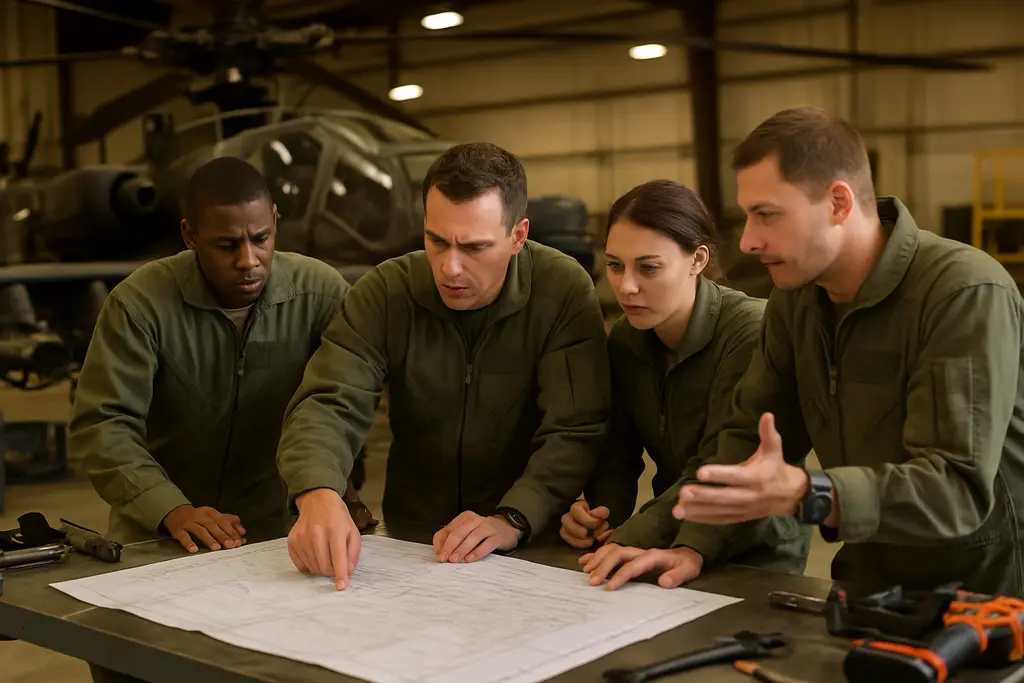
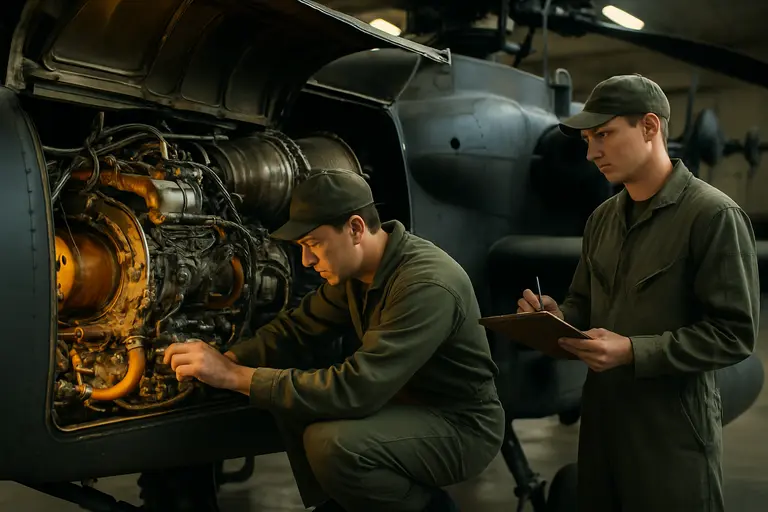
Training analysis: A maintenance test flight deserves its own risk conversation because it is not simply another launch. The August 12 crash occurred during that type of flight, based on the research provided. Even without a confirmed root cause, instructors can use the event type to sharpen risk controls. Before launch, crews should be able to state what work was performed, what systems are being checked, which maneuvers or profiles are required, and what abnormal indications would trigger an immediate return or landing.
That is a training discipline, not paperwork. In high-performance military helicopters, pilots must manage aircraft state, crew coordination, airspace, mission requirements, and emergency options at the same time. If the maintenance history is not clearly understood by the crew, the cockpit starts with an avoidable blind spot. Future training should make aircraft status briefings part of graded performance, especially for flights linked to post-maintenance checks.
Technical Concerns Must Stay Separate From Cause
Confirmed in the research: An AH-64E transmission issue had been under review because it could lead to loss of tail rotor thrust, electrical power, and hydraulics. The Army found that issue was not causative in the Fort Hood crash, though it had led to earlier grounding of parts of the fleet. That distinction is a valuable classroom case. A real technical hazard may exist, yet still not be the cause of a specific accident. Pilots need both truths held at once.
Reviewed analysis: Human factors also deserve direct attention. The supplied research states that eight of nine Apache mishaps in Fiscal Year 2024 were tied to human causes, with one tied to a bird strike. In pilot training, “human error” should never be treated as a vague label. It should be broken into teachable elements: maintenance documentation, supervisory pressure, checklist discipline, task saturation, confirmation bias, and crew communication. Video-based training can help crews review decision points, and readers interested in engaging with similar content and digital media can explore more at Internet Video Magazine.
Apache Fleet Grounding Training Takeaways
Practical Training Priorities
The Apache Fleet Grounding offers several grounded training priorities for Army aviation and for civilian schools studying military safety practice. First, stand-down content should be tied to current mishap trends rather than generic reminders. Second, maintenance-related flights should include specific instruction on aircraft status, test objectives, abort criteria, and crew coordination. Third, senior leaders should take part in safety messaging so that the standard is heard as an operational requirement, not an optional classroom theme.
Fourth, training departments should teach pilots how to speak accurately during uncertainty. If the root cause is unknown, say so. If a technical issue is under review but not linked to a crash, say that clearly. That habit protects the integrity of safety learning and keeps crews focused on verified hazards. Fifth, scenario training should be updated after safety reviews so the lessons appear in simulators, oral evaluations, and flight briefs rather than staying in meeting notes.
What Schools And Units Can Apply
For flight schools, Army units, and instructors, the lasting value of the Apache Fleet Grounding is the reminder that safety work must be specific. Pilots do not improve because a fleet paused for several days. They improve when the pause produces better questions, sharper briefings, clearer standards, and more realistic training events. The August 2026 stand-down was tied to a tragic loss, and any training response should keep that seriousness at the center while staying factual and disciplined.
A well-run safety review should leave pilots with usable habits: verify the aircraft history, brief the mission type honestly, challenge unclear assumptions, respect abort criteria, and practice emergency actions under realistic workload. Those habits matter in an AH-64 cockpit, and they carry into every professional flight deck where training, maintenance, and judgment meet.