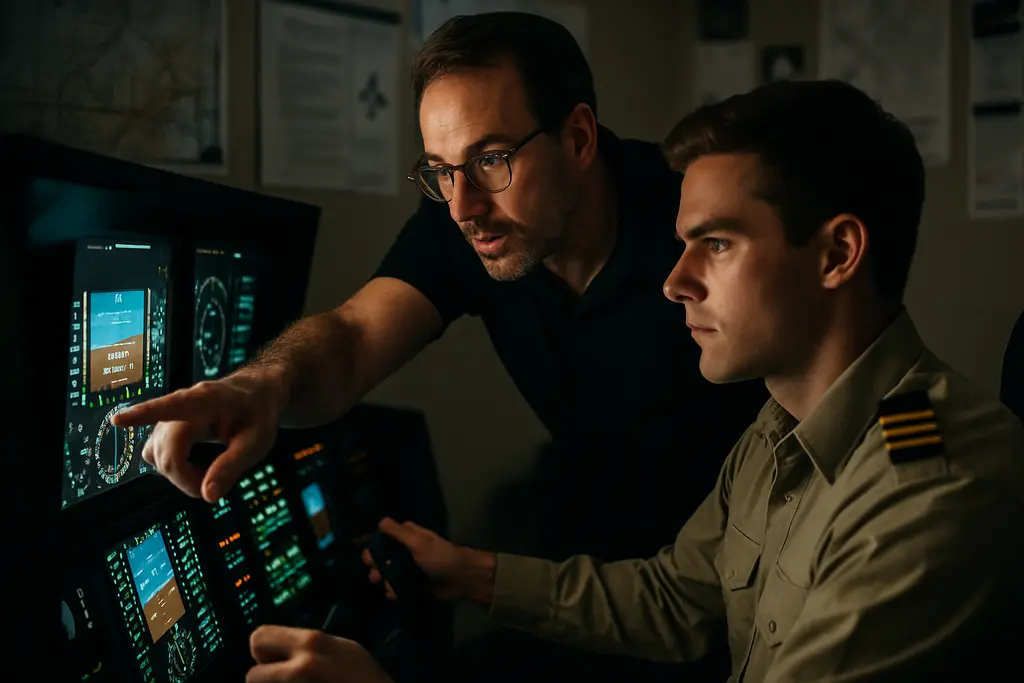
The Aviation Professionals Initiative in southwestern Ohio is best understood through the documented launch of Butler Tech’s Aviation Center at Middletown Regional Airport. The center opened to students on January 20, 2026, with an initial group of about 80 high school students, and the program was projected to grow to more than 150 students per year once full operations were in place, according to the Alliance for Aviation Across America. From a flight training standpoint, the key change was not just a new building. It was the move toward placing academic instruction, technical labs, aircraft maintenance exposure, flight training activity, and aerospace engineering preparation in one airport-based setting.
As of September 15, 2026, the available record supports a practical reading of this effort: it expanded access for high school students in Butler County and northern Hamilton County while giving instructors a more direct environment for career and technical aviation education. If the phrase refers to a broader named program beyond Butler Tech’s Aviation Center, the research record provided here does not confirm that separate structure. The confirmed facts point to Butler Tech’s new aviation school as the main Southwestern Ohio development.
Aviation Professionals Initiative In Southwestern Ohio
Why The Airport Setting Matters
For students considering aviation careers, location affects daily learning. A program based at Middletown Regional Airport gives learners proximity to the operational setting they are studying. The research record states that the new center includes classrooms, labs, and a hangar for aviation maintenance, flight training, and aerospace engineering. WLWT reported that Butler Tech celebrated the opening of a $15 million, approximately 28,000-square-foot Aviation Center at Middletown Regional Airport, with those instructional spaces included in the facility WLWT.
That arrangement matters because aviation education works best when theory and application stay close together. A lesson on aircraft systems has more weight when students can connect it to maintenance labs. A discussion of flight planning becomes more concrete when students see how airport operations frame daily decision-making. For instructors, this supports tighter coordination between classroom objectives and applied training periods. It also reduces the separation that often appears when students split their day between a home campus and a specialized training site.
District Reach And Student Access
Butler Tech serves 11 public school districts in Butler County and northern Hamilton County, and the research notes show that Northwest Schools in northern Hamilton County were added. That matters for aviation workforce development because student access often depends on geography, transportation, and district participation. A centralized airport-based facility can only build a pipeline if sending districts can consistently place students into the program.
The Aviation Professionals Initiative also reflects a larger education design choice: introduce aviation careers before students graduate from high school. Not every learner will become a pilot, mechanic, engineer, or airport operations specialist. Still, exposing students to those pathways earlier gives them a clearer basis for choosing postsecondary training, military service, direct employment, or further technical certification. That is a practical advantage for families as well, because aviation training can carry high costs if students discover requirements late.
Facility Design And Training Pathways
From Shared Space To Full-Day Aviation Learning
The research record states that the center was designed so students could spend the full school day on site, with academic core classes, labs, and lunch facilities housed in the new building after classes began. Before that move, students split time between Butler Tech’s main campus and temporary facilities. In training design, that shift is significant. Time lost to movement between sites can reduce continuity, especially in programs that mix academics with technical practice.
A full-day aviation setting allows the school to treat aviation as the organizing theme rather than an isolated elective. Math, science, technical writing, systems instruction, and hands-on practice can reinforce one another across the day. For a student learning aircraft maintenance fundamentals, the benefit is not only access to tools or a hangar. It is repeated exposure to the habits expected in aviation: procedural thinking, clear communication, schedule awareness, and respect for safety boundaries.
Engineering Pathway Timing
The aviation engineering pathway was described in the research record as scheduled to fully launch during the 2026-27 academic year. That timing placed the engineering option after the center had already opened to students on January 20, 2026, and after the formal ribbon-cutting on March 16, 2026, followed by a community open house on March 18, 2026. Those dates matter because they separate the start of classes from the public ceremonies and from the planned full buildout of every pathway.
For flight training leaders, staggered pathway development is common sense. A school must align staffing, lab readiness, curriculum sequencing, student recruitment, and district scheduling. The supported facts do not provide every operational detail, so it would be premature to claim how the engineering pathway performed after launch. What can be said is that the facility was built to house aviation maintenance, flight training, and aerospace engineering under one roof, which gives the program room to connect multiple aviation career tracks.
What The Aviation Professionals Initiative Means For Training Design

Workforce Pipeline Lessons
The Aviation Professionals Initiative shows how a regional training pipeline can start before college or employer-sponsored instruction. The initial enrollment figure of about 80 students, along with projections above 150 students per year at full operation, points to a program built for scale within the high school career and technical education model. Those figures do not guarantee industry outcomes, but they do show that the facility was not planned as a small demonstration classroom.
In aviation, scale must be handled carefully. A larger student body requires enough instructional supervision, realistic lab scheduling, and consistent safety culture. The research record does not list instructor counts, aircraft availability, or maintenance training equipment inventory, so no claim should be made about capacity beyond the published enrollment and facility details. From an educator’s perspective, the next valid questions are straightforward: Can the program maintain student engagement as enrollment rises? Can each pathway preserve enough hands-on time? Can students leave with a clear understanding of the next step after high school?
What Students And Families Should Watch
Families evaluating a program like this should look beyond the excitement of a new aviation building. The stronger questions are about daily structure, pathway requirements, transportation, safety expectations, academic credit, and how students move from high school aviation exposure into postsecondary or workforce options. The available research confirms the building, launch dates, enrollment expectations, service area, and program areas. It does not confirm individual student outcomes, hiring rates, licensure pass rates, or college credit arrangements.
- Confirmed: The Butler Tech Aviation Center opened to students on January 20, 2026, at Middletown Regional Airport.
- Confirmed: The facility was reported at about 28,000 square feet and $15 million.
- Confirmed: The opening enrollment was about 80 students, with growth projected above 150 students per year at full operation.
- Confirmed: The center supports aviation maintenance, flight training, and aerospace engineering education.
- Not confirmed in the provided record: Graduate placement rates, certification results, or long-term employer outcomes.
That distinction is healthy. Aviation training benefits from enthusiasm, but it depends on evidence. New facilities can attract attention quickly; sustained results come from curriculum discipline, qualified instruction, safety habits, and honest communication with students. For readers curious about broader education and workforce trends, Noir Whale offers additional perspectives within the same network.
Aviation Professionals Initiative Takeaways
A Practical Measure Of Success
For instructors and training managers assessing the Aviation Professionals Initiative, the most useful measure is whether students receive clearer, earlier, and more realistic exposure to aviation careers. On the confirmed facts, Butler Tech’s new center improved the physical setting for that goal by moving students into an airport-based facility with classrooms, labs, a hangar, and full-day school functions. It also widened the program’s potential reach through multiple public school districts.
The responsible assessment is positive but measured. The launch on January 20, 2026, marked a real step for Southwestern Ohio flight training and aviation career education. The March 2026 public events gave the community a formal view of the facility after classes had already begun. The projected enrollment growth suggested confidence in demand. The unanswered questions involve outcomes over time: retention, student progression, technical readiness, and how well each pathway connects to the next stage of training. Those results will require future reporting based on verified program data, not assumptions.