
Every flight requires a definitive go or no-go decision before the engine starts. Making this call based on a gut feeling is incredibly dangerous. Aviation risk management relies on hard data, weather trends, and calculated probabilities. When you try to beat a thunderstorm to the runway, you take a blind risk. Sports handicappers evaluate statistical probabilities and minimize financial risk using analytical platforms like Heritage Sports rated and graded to make informed choices. A pilot who gambles with fuel reserves and weather minimums puts actual lives on the line. Eliminate the guesswork and ground the airplane if the data does not support a safe flight.
The PAVE Checklist And Personal Minimums
Federal regulators provide strict frameworks to help aviators quantify risk before departure. The Federal Aviation Administration publishes the Risk Management Handbook, detailing the PAVE checklist. This acronym forces you to evaluate the Pilot, Aircraft, enVironment, and External pressures objectively.
Before every flight, you must assess your physical and mental state. Are you fatigued? Did you take an over-the-counter medication that causes drowsiness? Next, you evaluate the aircraft’s maintenance status and weight limitations. Establishing hard personal minimums removes emotion from the decision. If your personal minimum for crosswind landings is ten knots, and the automated weather observation system reports fifteen knots, you cancel the flight. The decision is binary. You do not test your luck on short final.
Recognizing External Pressures
The most dangerous hazards originate outside the cockpit. External pressure pushes pilots to launch into marginal conditions to satisfy passengers, meet a schedule, or get home. Aviation instructors label this phenomenon “get-there-itis,” and it routinely results in controlled flight into terrain. Passengers often fail to grasp why a seemingly clear sky prevents a departure, placing immense social pressure on the pilot-in-command to fly anyway.
Reviewing accident data published by the National Transportation Safety Board reveals exactly how often external pressures lead to catastrophic spatial disorientation. Pilots who force a flight to meet a dinner reservation often end up flying visual flight rules into instrument meteorological conditions. You must brief your passengers days in advance, explaining that delays and cancellations are a normal part of light aircraft travel. If a passenger absolutely must be at a destination by a certain time, tell them to buy a commercial airline ticket.

Analyzing Weather And Environmental Factors
Environmental risk analysis demands far more than glancing at a local television forecast. A legally sound preflight requires analyzing primary meteorological data to anticipate frontal boundaries and icing conditions. By decoding aviation weather charts, you build a three-dimensional mental model of the atmosphere along your entire route.
| Weather Factor | Baseline Legal Minimums (VFR) | Recommended Personal Minimums |
| Ceiling | 1,000 feet AGL | 3,000 feet AGL |
| Visibility | 3 statute miles | 5 statute miles |
| Crosswind Component | Aircraft demonstrated limit | 50% of demonstrated limit |
Legal minimums do not guarantee safety. The regulations simply establish the absolute lowest threshold at which the federal government permits operation. A newly certificated private pilot flying in three miles of visibility will struggle to spot traffic and identify emergency landing sites. You must scale your personal minimums to match your current proficiency, not your total logbook hours. If you have not flown in thirty days, your weather thresholds must increase to provide a wider margin of error.
The Continuous Evaluation Process
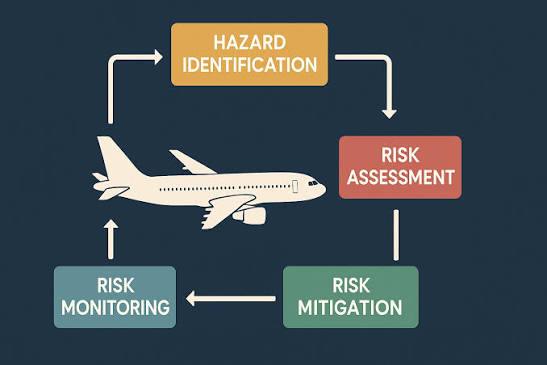
A go/no-go decision does not expire the moment the wheels leave the pavement. Risk management requires continuous evaluation throughout the entire flight. Deteriorating weather, unexpected headwinds, or a rough-running engine demand immediate reassessment.
The Aircraft Owners and Pilots Association teaches aviators to establish specific en-route decision points. If you reach a predetermined waypoint and your fuel reserves drop below your calculated minimums, you divert immediately. Establishing these parameters on the ground prevents you from rationalizing bad choices in the air. Treat every phase of flight as an active evaluation, and maintain the discipline to turn the airplane around the exact moment the data shifts against you.