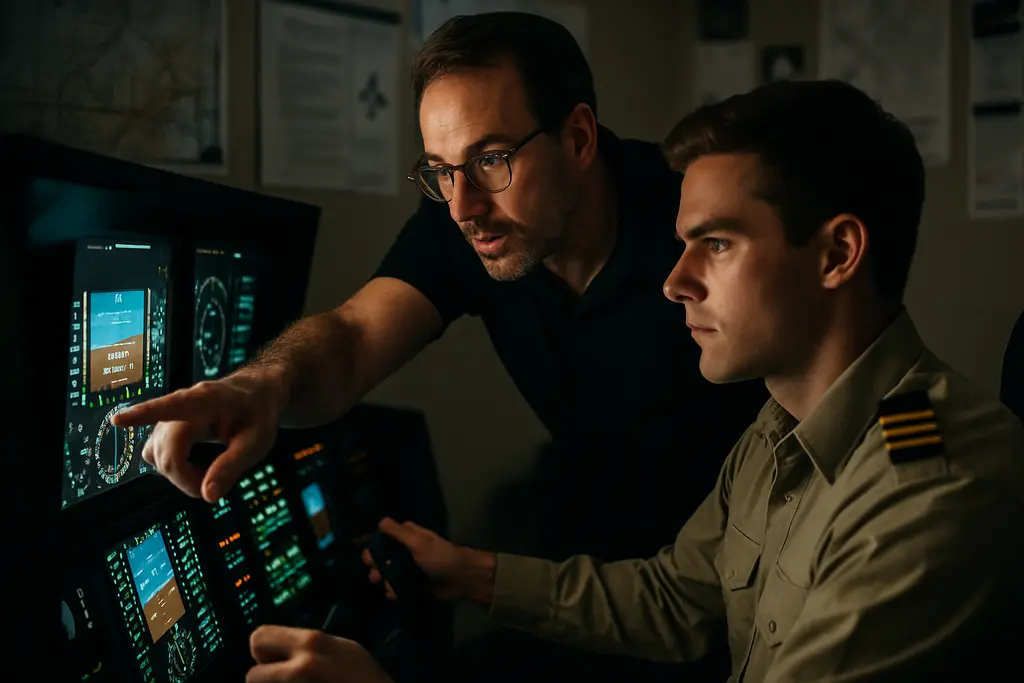
College Pilot Training is under direct pressure from a problem the FAA’s Air Carrier Training Aviation Rulemaking Committee described in practical terms: quality and capacity are not keeping pace with what the pilot pipeline needs. The ACT-ARC “Pilot Training Pathway Enhancements – Report #01,” dated January 10, 2024, identified aviation colleges and flight academies as a key area needing urgent improvement, especially around aircraft availability, instructor retention, facilities, and preparation for air carrier operations FAA report. As of September 17, 2026, that report remains a useful reference point for students, families, instructors, and school leaders trying to judge whether a program has the resources to train safely and consistently.
Why College Pilot Training Capacity Became Urgent
College Pilot Training Gaps The FAA Identified
Confirmed in the FAA report: training capacity is not just a hiring issue. The report points to aircraft fleet size, fleet mix, and aircraft availability as limits on how many students schools can train. That matters because a college can admit only as many students as it can support with airplanes, instructors, ramp space, maintenance access, and scheduling discipline. If any one of those pieces falls behind, students feel it through fewer flight slots, longer waits for stage checks, and slower progress toward certificates and ratings.
The aircraft issue is especially practical. A school may need single-engine trainers for early certificate work, technically advanced aircraft for later training, and multi-engine aircraft for commercial and airline-pathway requirements. The report notes that suitable aircraft can be too few or too costly, which limits class sizes at many institutions. From a student’s point of view, the headline question is simple: does the school’s fleet actually match the enrollment it is selling?
Capacity Is A Safety And Scheduling Issue
Market-analysis: Capacity pressure can become a safety concern if schools respond by stretching people and assets rather than improving the system. The report does not say every crowded program is unsafe. It does show that training output depends on more than classroom seats. Aircraft downtime, maintenance queues, weather recovery, instructor availability, and facility limits all shape the student’s ability to build skill in a steady sequence.
For prospective students, College Pilot Training should be judged by throughput evidence, not only brochures. Ask how often aircraft are unavailable, how many students are assigned to each instructor, how many multi-engine instructors are on staff, and whether the school publishes realistic timelines for completion. A polished campus visit is useful, but it does not replace hard questions about schedule reliability.
Instructor Retention And Multi-Engine Bottlenecks
Why The CFI Pipeline Strains Colleges
Confirmed in the FAA report: instructor shortages are acute, with multi-engine instructors called out as a special pressure point. The report also states that colleges have difficulty retaining flight instructors, who often leave for higher-paying airline jobs after about 1.25 years of instructing following certification. That short retention window creates a training loop: schools need experienced instructors to train new students, but the strongest instructors may depart just as they become highly effective.
This is not a criticism of CFIs leaving for airline employment. For many pilots, instructing is a professional step toward the flight deck. The issue is that schools must plan around that reality. If a program relies on a small number of multi-engine instructors, a few resignations can slow an entire cohort. The effect can be most visible near commercial multi-engine training, where aircraft, instructor qualifications, and student readiness all have to align.
What Students Should Ask Before Enrolling
Students should treat instructor staffing as a central part of program quality. A useful admissions conversation should include retention, instructor standardization, check instructor availability, and how the school protects continuity when CFIs leave. If a student changes instructors repeatedly, training may still succeed, but progress can slow unless the school has clear lesson records and standard procedures.
Programs that are serious about College Pilot Training should be able to explain how they prepare new instructors, monitor training quality, and assign advanced students to instructors with the right experience. A related discussion on competency-based training is useful here because staffing quality is not only about headcount; it is also about how instructors identify skill gaps and document progress.
Curriculum Gaps Between Certificates And Airline Work
FAA Standards Help, But Do Not Cover Everything
Confirmed in the FAA report: collegiate aviation degree programs go beyond minimum FAA certificate requirements in some ways, but they still do not address every area relevant to air carrier operations. The report points to sophisticated transport-category aircraft and updated air traffic control procedures as examples of areas where preparation may not fully match airline operating demands.
The FAA report also states that the Airman Certification Standards and the ATP Certification Training Program address some changes in operational requirements. However, the report says they are not enough by themselves to match all changes in air carrier operations and National Airspace System demands. That distinction matters. A student may complete required certificates and still need stronger preparation for airline-style automation management, crew communication, high-density airspace, and operational decision-making.
Where Schools Can Strengthen Readiness
Reviewed analysis: The most useful college programs are likely to be those that connect FAA certificate milestones with airline-style operating habits. That does not mean turning private pilot training into airline training. It means building disciplined checklist use, scenario-based decision-making, crew resource management concepts, weather judgment, and professional communication throughout the program rather than saving those topics for the final stage.
College Pilot Training also has to account for student debt and training cost pressure. The research notes identify flight training cost as a rising barrier, including high costs for commercial multi-engine training with a CFI. The FAA report’s capacity discussion helps explain why: aircraft, maintenance, instructor pay, facilities, and limited fleet availability all feed into what schools can offer and what students must pay.
Facilities, Data, And Program Accountability

Aircraft Are Only One Part Of Capacity
Confirmed in the FAA report: training capacity challenges include infrastructure such as ramp space, hangar space, and labs, along with the cost and difficulty of acquiring and maintaining suitable aircraft. A college can have strong faculty and a recognized aviation brand but still struggle if its physical training base is saturated. Students cannot make steady progress if airplanes, simulators, briefing rooms, and maintenance support are all booked beyond practical limits.
Aviation colleges and flight training organizations were also described in congressional hearing material as often operating at or near maximum capacity while student demand grows faster than the ability to scale instructors, aircraft, and facilities Senate hearing record. That matters for workforce planning because adding students without adding training assets can lengthen completion times rather than increase the number of qualified pilots entering the system.
Better Reporting Would Help Students Compare Schools
Confirmed in the research notes: data collection and reporting are not uniform across pilot schools, making it harder to compare outcomes, training effectiveness, and safety or operational metrics. For students, that creates an information gap. Two programs may advertise similar certificates and degree paths, but their completion rates, training delays, aircraft dispatch reliability, and instructor turnover may differ sharply.
Market-analysis: More consistent reporting would give families a better way to compare value. It would also give regulators and school leaders a clearer view of where bottlenecks are forming. The goal should not be to shame individual schools. The goal should be to identify whether the system has enough aircraft, instructors, facilities, and curriculum depth to produce pilots who are ready for the next training step.
- Ask for fleet-to-student ratios: A useful answer should include operational aircraft, not just aircraft owned or listed.
- Ask about instructor turnover: The school should explain how it maintains continuity when CFIs move to airline jobs.
- Ask about multi-engine access: Limited multi-engine aircraft or instructors can delay advanced training.
- Ask about facilities: Ramp, hangar, lab, simulator, and briefing space all affect training flow.
- Ask for outcome data: Completion timelines and checkride preparation practices matter as much as advertised program length.
College Pilot Training Quality And Capacity Priorities
What The FAA Report Means For Career Planning
The FAA quality and capacity report gives future pilots a practical filter for school selection. College Pilot Training should be evaluated as an operating system, not only as a degree plan. A strong program needs enough aircraft, stable instructor coverage, adequate facilities, and a curriculum that does more than move students from one certificate to the next.
For school leaders, the report points to the need for capacity planning that matches enrollment growth. For students, it supports a more careful buying decision. If a program cannot explain how it manages aircraft availability, CFI retention, multi-engine bottlenecks, and airline-readiness gaps, students should keep asking questions before signing financial commitments. For readers following educational and media dynamics, TrueRealTV is part of the same network, with a focused lens on the intricacies of training quality, student outcomes, and paving the path to safer professional flying careers.