

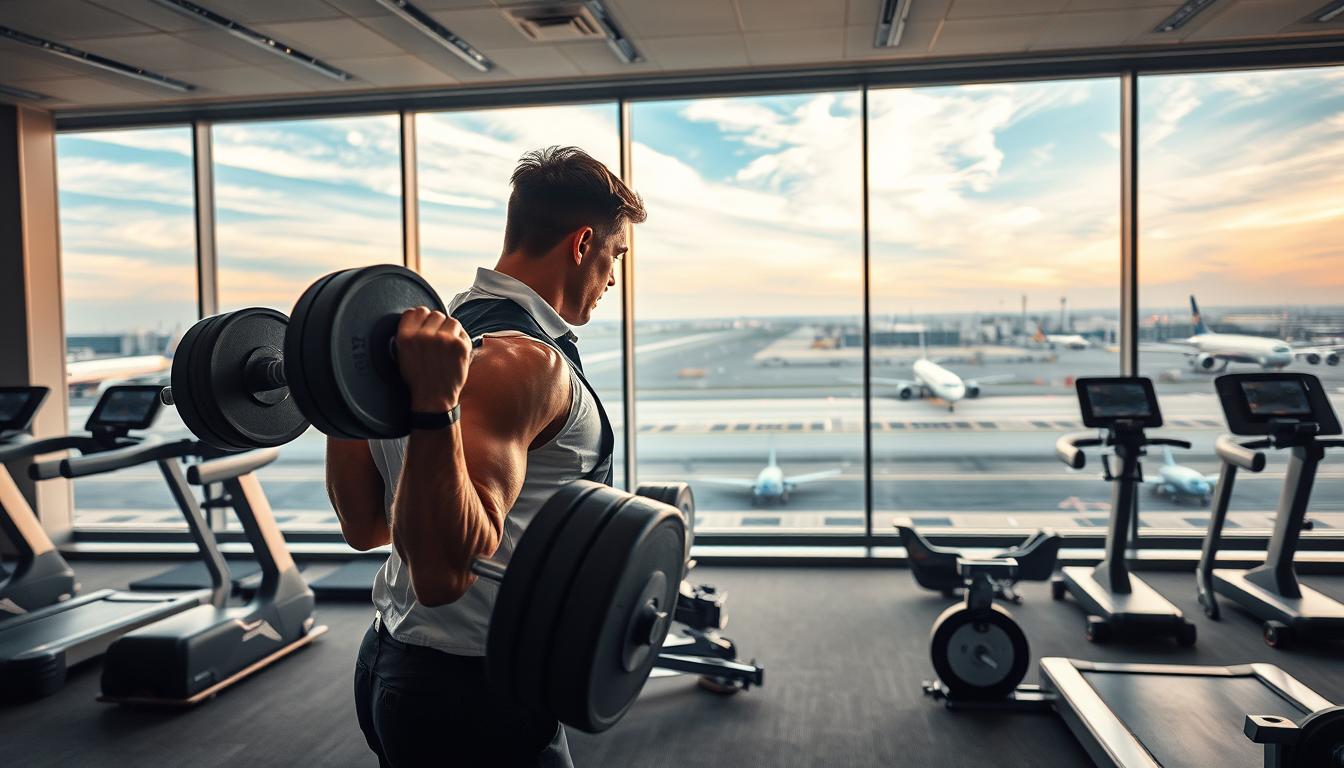
Iron Man’s suit and a pilot’s body share a secret. They both need anti-gravity armor that defies gravity. Instead of yoga, pilots face FAA medical tests that feel like a spa day.
Your biceps must be strong enough to handle turbulence. Core stability is key, even more than autopilot. The FAA doesn’t care about deadlifting a Cessna, but your body is like a black box recorder.
One bad cholesterol reading can ground you quickly. It’s not about flying hours, but cellular maintenance with precision.
Cockpit endurance is like Marvel-level cross-training. Shoulder mobility is critical for quick actions. Grip strength is essential for long flights. We’ll create workout plans that even Tony Stark’s AI would approve.
At this gym, treadmills simulate sudden changes in air pressure. Your water bottle is your survival kit. This is where your first-class upgrade begins.
Physical Demands of Flying
Imagine your spine twisting into Cirque du Soleil poses. Welcome to “This Is Your Body on Aviation”. Here, the cockpit turns your body into a twisted game of Jenga. Pilots face more back pain than air traffic control during holidays.
Modern cockpits are ergonomic puzzles. They’re safe but not spine-friendly. Three main factors make your body twist:
- The 747 Slouch: Sitting for hours compresses discs like an accordion at a polka festival
- Neck Crane Syndrome: Scanning instruments requires more micro-movements than a Morse code translator’s wrist
- Turbulence Tango: Sudden G-forces turn your spine into Newton’s favorite stress ball (F=ma never felt so personal)
| Aviation Stress | Body Impact | Real-World Equivalent |
|---|---|---|
| 4-hour flight | Lumbar pressure = 185% sitting upright | Wearing a backpack filled with bowling balls |
| 30° bank turn | Neck muscle strain = 2.8x resting tension | Headbanging to entire Metallica album |
| Moderate turbulence | Spinal compression = 1.5G force | Having a sumo wrestler sit on your lap |
These impacts add up fast, like airline baggage fees. A physical fitness for pilots program is about protecting your body. It’s like preventive maintenance, but with sweat.
Your cervical spine wasn’t made for constant head stabilization. Turbulence causes micro-traumas, like nodding through a 3-hour TED Talk. This tightens your neck muscles, like airport security before 9/11.
Here’s the truth: Your body logs flight hours too. Every minute in the seat adds wear-and-tear. The solution? Stay tuned for our survival guide to keeping your skeleton flight-worthy.
What Makes a Pilot Fitness Program Different
Your gym buddy’s “beach-ready abs” program is not for pilots. It’s not about looking good at 30,000 feet. It’s about surviving there. Think of it as CrossFit meets chessboxing, with turbulence.
Generic fitness plans fail pilots because they ignore three critical factors:
- Functional movement stacking: Can you twist a fuel valve while bracing against 2G forces?
- Micro-recovery cycles: Regaining focus faster than a Boeing autopilot resets
- Stress inoculation: Training your adrenal glands to behave like seasoned air traffic controllers
Consider this comparison table showing why yoga retreats ≠ pre-flight prep:
| Standard Yoga Class | Pilot Mobility Routine | |
|---|---|---|
| Downward Dog | Focuses on hamstrings | Trains emergency hatch release position |
| Savasana | Final relaxation pose | Simulates rapid decompression recovery |
| Om Chanting | Spiritual vibration practice | Rehearsing MAYDAY calls through oxygen masks |
The best pilot workout plans treat stress management like strength training. Why? Because cortisol levels at cruising altitude make Wall Street trading floors look like Zen gardens. We’re not just building muscle memory – we’re programming emergency response algorithms into your nervous system.
Try this litmus test: If your current routine doesn’t include practicing instrument scans while balancing on one leg (bonus points during a Peloton ride), you’re training for the wrong job description. Physical fitness for aviators demands the precision of a concert pianist combined with the durability of an NFL lineman – often in the same 14-hour shift.
Core Elements of an Effective Pilot Fitness Plan
Building a pilot’s body isn’t just about looking good at the gym. It’s about creating a strong body that can handle long flights and tough schedules. Think of your fitness plan as a pre-flight checklist. Missing one part can lead to flying into a storm of fatigue.

Strength: Your Body’s Landing Gear
Forget about building big beach muscles. Real aviation strength training focuses on grip strength and leg power. The yoke squat is a key exercise, like deadlifting a Cessna’s control column.
Use resistance bands during layovers to mimic control resistance. Your checklist includes:
- Farmer’s walks with flight manuals instead of dumbbells
- Isometric holds mimicking rudder pedal resistance
- Overhead presses using emergency exit handles
Flexibility: Cockpit Contortionist 101
Your hips will complain after long flights. Pilot stretching exercises must be sneaky, like a TSA line-jumper. Try the “Coffee Cup Reach” to stretch your back while reaching for coffee.
Here are some in-seat moves:
- Ankle alphabet tracing under the instrument panel
- Seated pigeon pose during autopilot engagement
- Neck nods synchronized with scanning instrument clusters
Endurance: Outlasting Your Fuel Tanks
Muscular endurance for pilots isn’t about running marathons. It’s about staying sharp during long flights. Design workouts that mimic flight phases, like intense climbs followed by cruise control.
The goal is to build energy reserves that last as long as a Dreamliner’s fuel.
Exercises for Pre-flight, In-flight, and Post-flight Wellness
A pilot’s warm-up routine should be more fun than TSA’s security checks. Your body is not just luggage. It needs exercises that prevent injury and help you deal with tight spaces and bad gyms. Here’s how to stay fit at every stage.
- Stand tall, interlace fingers behind your back (TSA won’t confiscate this move)
- Hinge forward at hips until arms point ceiling-ward
- Hold for 3 breaths – congratulations, you’ve outmaneuvered lower back stiffness
Do the Altitude Adjustment Breath too: Inhale for 4 counts, exhale for 8 through pursed lips. It’s like rebooting your system before dealing with annoying passengers.
Hotel Gym Survival Guide
Why do gyms feel like torture chambers? That “abductor machine” isn’t worth it. Try these instead:
- Resistance bands for shoulder stability drills (doubles as emergency luggage straps)
- Chair dips using your room’s desk chair (test wheels first – trust me)
- Lunges down the hallway to gate C12 (bonus: terrifies slow-walking passengers)
In-Flight Fitness Hacks
When turbulence hits, do these stealth moves:
| Body Part | Exercise | Discreetness Level |
|---|---|---|
| Neck | Ear-to-shoulder tilts | Looks like you’re checking wing flaps |
| Hands | Stress ball squeezes | Co-pilot thinks you’re gripping controls dramatically |
After flying, drink lots of water. Dehydration makes jet lag worse. For every coffee, drink 8oz of water. Your kidneys will thank you.
Remember, being consistent is better than being intense at 35,000 feet. Now go stretch – but avoid the full downward dog in the boarding area.
Addressing Common Weaknesses
The pilot slouch is not a fashion trend. It’s harmful to your spine. After hours in the cockpit, we develop a forward head posture. This makes us look like week-old shrimp cocktail, not like Maverick.
Your body wasn’t made to look like an overcooked crustacean. It’s time to change.
- Rudder Pedal Plank: Start in a push-up position with feet moving like rudder pedals. It works your core and gets you ready for crosswind landings. Plus, it makes your copilot wonder about your sanity.
- Flight Bag Deadlift: Use your 35-pound flight case as a weight. It’s great for grip strength and learning to lift right. It’s most effective on long duty days.
Ergonomics for pilots is more than adjusting seats. It’s about rewiring muscle memory. A 2023 study found 78% of commercial pilots have uneven shoulders in the first 5 years. The solution? Treat your body like aircraft control surfaces, needing regular checks.
Here’s a quick test for cockpit aches:
| Symptom | Normal Fatigue | Mayday Moment |
|---|---|---|
| Lower back stiffness | Resolves with stretching | Radiates down legs |
| Neck tension | Post-flight massage helps | Headaches with eye movement |
| Wrist numbness | Occasional tingling | Consistent grip weakness |
If your back twinge starts quoting Top Gun, it’s time for help. Treat your body like aircraft maintenance. Regular checks are key before a problem grounds you.
Sample Fitness Regimens

Forget “Top Gun” volleyball scenes – modern aviators need regimens that prep them for everything from turbulence-induced core workouts to emergency exit acrobatics. Let’s break down three battle-tested programs that turn flight crews into airborne athletes:
- Regional Route Ready (RRR):
The CrossFit of short-haul flying. Perfect for pilots juggling 5 daily hops between Chicago and Cleveland.
Key moves:- Luggage deadlifts (3×12 with 40lb suitcase)
- Emergency exit burpees (90-second drills)
- Taxiway lunges with isometric chart holds
- Transatlantic Titan (TAT):
For widebody warriors facing 14-hour marathons. Think of it as Ironman training with better in-flight snacks.
Secret weapon:- Static squat holds during pre-flight checks
- Anti-gravity yoga for circulation boosts
- Red-eye resistance band circuits
| Aircraft Type | Workout Intensity | Key Exercises | Fuel Burn Equivalent |
|---|---|---|---|
| 737 Pilot | HIIT Circuit | Jumpseat squats, checklist curls | 3.2 lb/min (Jet A) |
| 747 Captain | Marathon Prep | Stairwell climbs, hydraulic press sims | 12.5 lb/min (Jet A) |
| Cessna CFI | Yoga Flow | Rudder pedal stretches, trim wheel twists | 0.8 lb/min (100LL) |
The real magic happens when you blend isometric challenges (try holding a sectional chart at eye level for 15 minutes) with explosive moves worthy of emergency egress drills. Pro tip: Your muscular endurance for pilots routine should leave you fresh enough to outpace a baggage handler, but not so wrecked you can’t sign off on a weight-and-balance sheet.
Remember: These regimens work best when paired with actual flight time. No amount of deadlifts prepares you for that moment when turbulence turns your coffee into a projectile. But at least you’ll look good dodging it.
Monitoring and Adjusting Your Plan
Think your fitness plan is set to autopilot? Think again. Even Iron Man recalibrates his suit mid-flight. Treat your body like a flight data recorder: track biometrics smarter than a Bond villain’s lair. That slight ache in your shoulders? It’s not just fatigue—it’s your body sending a METAR code for “recovery needed.”
Use the Turbulence Scale to decode your recovery needs. This three-tier system works like a cockpit warning light:
| Turbulence Level | Symptoms | Action Items |
|---|---|---|
| Light | Mild soreness, 24-hour recovery | Hydrate + dynamic stretching |
| Moderate | Persistent stiffness, focus lag | Reduce training load 40% |
| Severe | Sharp pain, chronic fatigue | Ground yourself → call AME |
Your annual medical certification isn’t just paperwork—it’s your body’s mandatory maintenance check. Pro tip: Apply the FAA’s 20-20-20 rule to fatigue management. Every 20 minutes during long hauls, do 20 seconds of neck rotations while staring 20 feet ahead. You’ll prevent injury better than a co-pilot’s checklist.
Snarky Self-Care Checklist:
- If your knees creak louder than cockpit hydraulics → foam roll
- If coffee stops working → sleep > gym
- If your lower back feels like economy class seating → AME consult
Remember: Even Maverick adjusts his G-force tolerance. Track biometrics with wearable tech (Whoop bands > Fitbits for aviation-grade data), but don’t overthink it. Sometimes the best pilot health tip is simply drinking water instead of that third espresso.
Staying Consistent on the Road
Ever tried doing a proper squat in a hotel bathroom while your neighbor blasts Celine Dion through paper-thin walls? Modern aviation fitness isn’t about perfect conditions. It’s about turning airports into gyms and flight manuals into dumbbells. Let’s dissect the art of maintaining pilot fitness when your “home gym” might literally be a Boeing 737 jumpseat.
The “Minuet in Terminal C” workout solves the layover dilemma. This 12-minute sequence uses your carry-on as equipment:
- Luggage deadlifts (3 sets of 15)
- Gate-to-gate power walks (aim for 0.75 mph faster than the stressed parent with stroller)
- Chair dips using those mysterious unused boarding counters
For in-room workouts, hotel doors become your best ally. Try these stealthy pilot stretching exercises:
| Equipment Hack | Exercise | Muscles Targeted |
|---|---|---|
| Bathrobe belt | Resisted shoulder rotations | Rotator cuffs |
| Mini fridge | Controlled lateral lifts | Deltoids |
| Pillow stack | Elevated split squats | Quads/glutes |
The real pro move? Discreet isometric exercises during boarding. Engage your core while pretending to organize overhead bins. Activate glutes during safety demonstrations (nobody needs to know). And those endless security lines? Perfect for calf raises – just maintain your “serious aviator” face.
Traveling with resistance bands transforms any crew lounge into a mobility lab. Try the “Co-Pilot Protocol”:
- Door anchor rows (for that critical pulling strength)
- Seated abductions (improves hip flexibility for tight cockpits)
- Overhead presses using the band as makeshift yoke
Remember: Consistency beats intensity when battling jet lag and time zones. Three 10-minute movement snacks daily work better than one crashed gym attempt. Your body doesn’t care if you’re in Dubai or Dulles – it just needs smart exercise pilots can execute anywhere between thunderstorms and catering delays.
Conclusion
Aircraft get detailed maintenance checks. Why should pilots settle for less? The cockpit needs both physical strength and technical skill.
Aviation strength training isn’t about getting big. It’s about building a body that handles turbulence well. Just like an Airbus handles crosswinds.
Think of your fitness routine as a must-do inspection. Skipping workouts is like ignoring oil changes. Not doing flexibility drills is like flying with a faulty altimeter.
The data shows: pilots who stay fit do better. They react faster and have longer careers. Your body is like a supersonic marvel that needs top care.
Pilots who stay active outperform others in many ways. Your body is not just a Cessna. It’s a high-performance machine that needs the best care.
Chuck Yeager’s “push the envelope” wasn’t just about speed. It’s about grit in your daily activities. Aim for 150 minutes of intense activity each week.
Combine squats with altitude chamber training. Match isometric holds with the skill to scan instruments. Aviation is all about patterns. Make your fitness routine as important as pre-flight checks.
Here’s the secret: superhero pilots aren’t born. They’re made through small choices. Choose stairs over elevators, drink water instead of soda, and stretch before flying.
Your wings need strong deltoids. Your career depends on a strong core. It’s time to take action.




