If you’ve ever looked up how to become a student pilot and quickly gave up, you’re not alone. This guide is the simple, straight-talk version I wish I had found earlier. It’s free of over-the-top promises and clichés.
This beginner flight training in the United States is laid out like a real plan. You’ll get to know the first steps, important choices, and what can wait. It’s like a roadmap of US flight training, minus the myths and filled with useful checklists.
Becoming a pilot means investing money, time, and a bit of your pride. But, you’ll pick up skills that are almost like learning a new language. Only instead of grammar, you have physics, and instead of spelling, there’s airspeed. Main Keyword and Related Keywords are important: they mean you’re on a journey, not just looking around.
I’ll outline the steps, significant milestones, costs, and the crucial first 90 days. Don’t talk yourself out of it. Often, the biggest challenge is starting while you’re still thinking about it on the ground.
Who Can Become a Student Pilot?
If you’re wondering who can become a pilot, think about what it takes first. To be a student pilot, you need to learn well, follow rules, and train safely. This type of discipline is key in aviation, where following procedures is crucial.
In the US, being a student pilot is more about being ready to learn than just looking cool. Are you punctual, open to feedback, and can you study independently? If so, you’re on the right track.
“Medical,” “citizenship,” and “security vetting” are terms you’ll hear early on. They aren’t there to exclude people; they help keep aviation safe and predictable. Think of aviation as airport coffee: costly, heavily regulated, but always the same.
Being able to communicate clearly, especially under stress, is crucial for pilots. This isn’t just for the US; countries like Canada have specific language requirements for pilots. They check if you can speak and understand well during tests, as stated in their guidelines.
Wondering if you fit the beginner pilot profile? Try this simple test. It’s more serious than a casual quiz and gives you a real sense of where you stand.
| What matters early | What it looks like in real training | Why it signals eligibility to be a student pilot |
|---|---|---|
| Coachability | You can hear “do it again” without taking it personally | Flight training runs on feedback loops, not ego loops |
| Consistency | You study a little most days, not a lot once | Knowledge tests and maneuvers reward repetition |
| Communication | You speak clearly, listen closely, and ask clean questions | Radio work and briefings depend on precision, not volume |
| Risk awareness | You respect weather limits and don’t “send it” for pride | Good judgment is a core skill for who can fly safely |
| Time and budget honesty | You plan for lessons, cancellations, and extra practice | Stable planning keeps training moving for the US aviation training audience |
Worried you’re not cut out for this? That’s actually a good sign. Being a bit doubtful can mean you’re aware of your surroundings. Focus on the basics. Being prepared to learn is what really matters.
Basic Requirements (Age, Language, Education)
Before diving into the thrilling world of flying, let’s talk about the essentials for becoming a student pilot. It’s not about the paperwork, even though that’s not the exciting part. It’s because in aviation, clear rules are crucial. The Main Keyword is important, and so are Related Keywords. Clear rules make everything easier.
The first step is age requirements for flying. In the U.S., there’s no set age to begin learning with an instructor. However, you must be a certain age to fly solo and another to get a private pilot license. This might seem tough, but it’s better than risky decisions based on impulse.
Then, there’s the English language requirement. The FAA wants you to be good at English. You need to understand and use it well in different situations. This is about being clear, not about your grammar skills.
Education for pilots is simpler than some think. No need for a college degree to start or to get your license. You should be ready to study, understand basic math, and learn about various topics. Think weather, air spaces, and how planes work, not as extras but as essentials.
| Requirement Area | What It Means in Practice (U.S.) | What to Bring or Prepare |
|---|---|---|
| Age requirements to fly | You can take lessons at any age with an instructor; minimum ages apply for solo flight and for the private pilot certificate. | Government-issued photo ID; a plan to train consistently so age milestones don’t stall progress. |
| English language requirement | You must communicate clearly on radios and understand aviation English in real time, including fast instructions. | Practice standard phraseology; get comfortable with listening under pressure and asking for repeats when needed. |
| Education for pilots | No degree required, but you must learn aviation knowledge, pass a written test, and apply concepts in flight. | A steady study routine; note-taking that doesn’t lie to you; comfort with basic math, charts, and weather reports. |
| Proof and documentation | Flight schools and exam steps require identity checks and records; accuracy matters more than vibes. | ID, logbook readiness, and a folder (digital or paper) for endorsements, test results, and training notes. |
Keeping an eye on the Main Keyword means getting the basics right: age, language, and education. Add these to your preparation early on. Then, the rest of the requirements will feel straightforward, not like hurdles. They’re the steps that help you build a strong foundation for your flying career.
How to Choose a Flight School
Choosing training is like picking a journal: you match aims, scope, style, and constraints. This is true for flight schools too. If you go by vibe alone, you’ll end up with just that.
First, consider what you want. A private pilot license for fun? Or a path to become an airline pilot? Your goal helps decide which schools fit you best.
Don’t be swayed by fancy brochures. They’re fun but don’t show everything. Think of them like movie trailers: exciting but incomplete.
To compare schools accurately, look at key details. These include how often you can fly and the quality of the aircraft. Regular, quality lessons are better than random, chaotic ones.
If you’re looking for the top flight school in the USA, know what “best” means to you. It could be safety, reliable planes, or flexible schedules. Remember, your time and budget decide what’s possible.
| What I check | Why it matters | What “good” looks like | What to watch for |
|---|---|---|---|
| Safety culture and maintenance rhythm | Quality training relies on serious safety measures | Orderly repair processes, thorough inspections, cautious weather calls | Risky flying conditions, unclear maintenance responses |
| Instructor depth and scheduling | Your steady progress needs regular, consistent lessons | Enough instructors, reliable schedules, quick rebooking | Irregular lessons, frequent instructor changes |
| Aircraft availability and dispatch reliability | Too many cancellations increase both cost and time | Instant booking, spare aircraft, reliable dispatch | Regular repairs, constant absence excuses |
| Training structure and standards | A clear plan prevents aimless, costly flying | Detailed syllabus, checkpoints, clear skill requirements | Vague lesson plans, indistinct goals |
| Total cost realism | Initial quotes often grow with hidden fees | Clear pricing, detailed estimates, listed extra charges | Unexpected fees, unclear averages, pressured upsells |
When visiting a school, I dig for details. How long till solo flight? Checkride time? Their weather cancellation policy? I look for straightforward answers.
In the end, it’s about the people. Can these instructors teach you under stress? This is what really matters when choosing a flight school.
Steps in the Student Pilot Journey
Trying to put together IKEA furniture without tears is tough. Here’s a simple roadmap to becoming a student pilot, without the hefty rulebook. It’s a quick look at the main steps you’ll encounter in the complete guide.
Objective: Turn your curiosity into skill without wasting time or money. Method: Stick to a well-ordered flight training plan and regularly check your progress. Expected outcomes: Learn real flying skills, make steady progress, and avoid costly surprises.
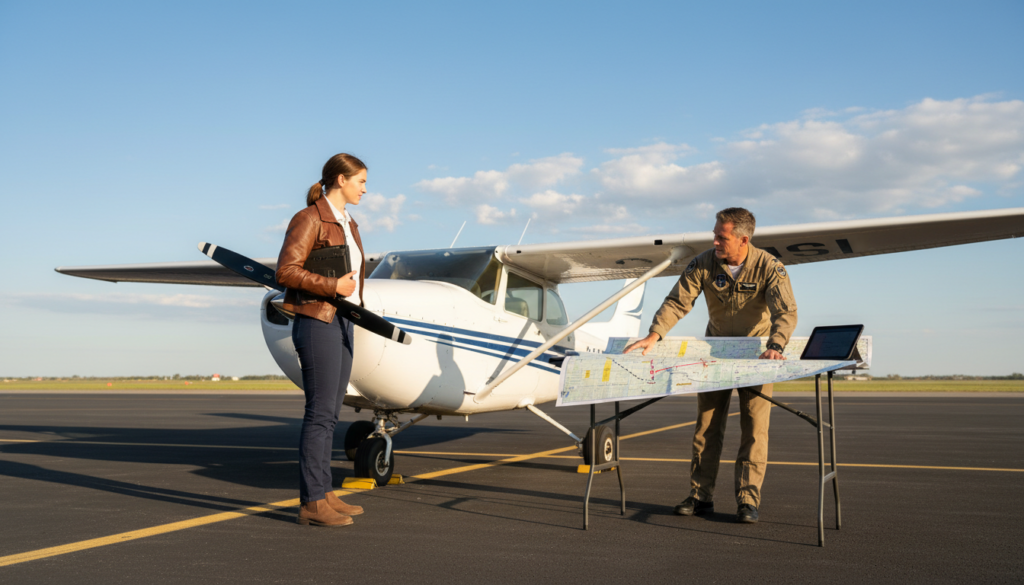
- Decide your mission. What’s driving you? Fun weekends, a career shift, or fulfilling a dream? Your training path will depend on this choice.
- Pick the training setup. Find an airport, aircraft, and schedule that fit your real life, not an ideal version of it.
- Start the flight training process. Combine classroom learning with flying. It’s all about building good habits early.
- Track progress like an adult. Keep a detailed log of your lessons and regularly review your improvement areas.
- Prepare for the big gates. Understand the milestones, costs, and resources early on. The first 90 days will come quickly.
| Phase | What you do | What you’re building | Common friction point |
|---|---|---|---|
| Orientation | Set goals, confirm scheduling, learn how lessons are run | Creating a consistent training schedule | Taking on more than your schedule allows |
| Core skills | Work on takeoffs, landings, understanding airspace, and communicating over the radio | Developing good habits and managing tasks | Focusing on performing perfectly instead of learning |
| Progress checks | Go over maneuvers, improve precision, correct repetitive errors | Getting better under stress | Feeling stuck at times, which is often normal |
| Milestone prep | Strengthen weak areas and integrate study with practice | Being ready for the next big step | Cramming instead of steady learning |
Imagine training as a loop: learn, fly, review, study, and do it again. Each time, the loop gets more efficient. Treating your pilot training like a well-oiled machine, not just a casual effort, is key. This mindset will really pay off in your training in the United States.
This guide is like a map for your pilot journey. It shows the milestones, financial planning, effective study habits, and what to expect in the first 90 days. Those terms you’ll hear? They’re the signposts of your training, helping you recognize the path ahead.
Key Milestones: First Lesson to First Solo
I thought learning to fly would be like a fast-paced movie scene. It’s not. It’s more like a spreadsheet that can feel joy or fear, with important steps marked by your teacher’s silence.
The outcome is unique to you. Think of it as a one-person journey. The defining moment is when your instructor quietly notes your missed landing spot with a raised eyebrow.
Your first lesson is nothing like an action film. It’s like figuring out a completely new gadget. You’ll learn how the controls interact, how the plane responds to gentle hands, and why trimming helps avoid arm fatigue.
You discover a key pilot habit, too. You’ll say what you’re going to do, do it, then check it’s done. This pattern becomes a silent guide during your training.
Then, you enter a phase where you build true skill. You practice taxiing until it feels second nature. Your takeoffs improve until you can steer smoothly without just hoping for the best.
Landings become about making smart, small adjustments: controlling speed, following the glide path, correcting for wind, and perfecting the flare. Words like “pattern work” and “stabilized approach” become important as they describe your real actions, not just wishes.
Suddenly, your instructor becomes quiet in a different way. The first solo flight marks a milestone. It’s about proving your consistency. You’ll prepare, run checks, and fly the route you know, only this time, you’re in charge and alone in the cockpit.
To sum it up, here’s a real-world guide to flight training milestones. These help you check your progress in tangible ways during your next session.
| Milestone moment | What you do (concrete) | What your instructor watches for | Common snag |
|---|---|---|---|
| First flight lesson | Preflight walkaround, basic straight-and-level, gentle turns, simple climbs and descents | Hands relaxed, eyes outside, safe attitude control, listens and corrects | Over-controlling and fixating on the instruments |
| Pattern and landing phase | Taxi with centerline discipline, takeoff roll control, fly a traffic pattern, aim point and flare practice | Stable approach setup, airspeed control, uses rudder for alignment, go-around decision-making | Late corrections that create a “chase the runway” spiral |
| Readiness for solo | Solo briefing, normal takeoffs and landings, radio calls, spacing, and checklist flow | Predictable performance, calm workload management, no surprise deviations | Rushing the checklist when nerves spike |
| First solo flight | One or more laps in the pattern alone, with a clear stop point if conditions change | Maintains standards without coaching, manages pace, keeps decisions conservative | Letting excitement speed up the airplane and the mind |
Keep track of your flying journey with notes, not just feelings. Jot down what you did, what’s new, and your next steps. This keeps your story accurate and makes flying feel more real and less like a legend.
Cost Breakdown and Financial Aid
The first part was like a warm-up talk, and now we’re getting real with numbers. It’s all about organizing costs for search engines and our bank accounts. Becoming a pilot isn’t about facing one big expense. Instead, it’s like dealing with a series of smaller bills constantly asking for money.
In the US, flight training costs are mainly about renting planes, paying instructors, fuel charges, and lessons. Then, there are unexpected costs like buying headsets, books, paying for tests, and the checkride. It’s simpler to manage your budget by seeing each cost as actual cash because that’s what it is.
| Expense Category | What It Covers | Why It Swings | Budgeting Pilot Training Tip |
|---|---|---|---|
| Aircraft rental | Hourly use of a trainer (often wet rate) and basic wear | Model, local demand, and maintenance downtime | Ask for typical hourly rates by aircraft type and plan buffer hours |
| Instructor time | Flight instruction plus pre/post briefings | Instructor availability and lesson pacing | Track briefings as billable time so the invoice won’t “mystically” grow |
| Ground school | Knowledge prep, stage checks, and exam readiness | Online vs. in-person, pace, and retakes | Set a weekly study block to avoid paid re-teaching later |
| Testing and checkride | FAA knowledge test, examiner fee, and paperwork | Regional examiner pricing and scheduling delays | Build a dedicated “checkride fund” early, not the week before |
| Gear and materials | Headset, E6B/app subscriptions, charts, logbook | New vs. used gear and brand choices | Buy only what you’ll use; “premium” is not a certificate requirement |
I keep my budgeting methods simple: divide fixed and hourly costs, then add extra for possible delays. Flying just twice a month can lead to losing skills and more bills. This is just how the numbers work, like cool math.
Flight school financial aid can come from payment plans, job programs, scholarships, or military benefits for those who qualify. The trick is to find out what help you can get for your specific training plan, not just any plan. When you understand your funding options, the journey to becoming a pilot becomes clear.
- Objective (budget): set a target monthly spend and a hard ceiling you won’t cross
- Methods (how costs show up): list hourly charges, one-time fees, and “almost always” extras
- Planning lens: compare payment timing to your paychecks, not your optimism
- Paperwork discipline: keep receipts and training totals so numbers don’t drift
It’s ironic: we want to fly freely but have to watch our expenses closely. Smart budgeting means you’ll fly sooner rather than just dreaming about it. Remember to consider main and related keywords when looking for schools. And keep your calculator ready.
Study Resources and Tips
As a student pilot, studying is about learning to sort important info from the rest. You’ll need to know what’s essential, what’s not, and recall it fast. My top tips are: keep summaries tight, focus on what really matters, and review as if you might be quizzed mid-flight.
Think of aviation as a world with its own special vocabulary. Words like stall, V-speeds, and airspace have specific meanings. To prepare, it’s best to stick to the FAA’s exact words, not your own version.
I use trusted materials for pilot ground school, like the FAA’s handbooks and lessons from Sporty’s and King. ForeFlight helps turn study plans into a habit by offering visuals on weather and airspace. Adding related keywords to your notes can make them a quick-reference index for yourself.
A good study plan should be a bit boring, but effective. It’s better to have short, regular study sessions than long, exhausting ones. If you’re just cramming, you’re not really learning.
| Study Goal | What I Use | How to Keep It Efficient |
|---|---|---|
| Airspace & charts | FAA charts, ForeFlight map layers | Start by labeling an area near your home base from memory, then check your work. |
| Weather basics | METARs, TAFs, Aviation Weather Handbook | Try translating one weather report each day to plain English, out loud. |
| Regulations that show up on tests | FAR/AIM, FAA handbooks | Simplify regulations into a single sentence and include a real-life example. |
| Performance & limitations | POH/AFM for your training aircraft | Run through scenarios for a hot day, short runway, and high elevation. |
Make sure your notes are error-free. Mistakes can lead to misunderstandings. Well-organized notes with clear headings help you study efficiently, preventing the need to re-study the same topics.
Finish every study session with a quick test: try explaining a topic without your notes. If it’s tough, tweak your study plan. This helps turn what you read into real skills, instead of just plans to study later.
What to Expect in Your First 90 Days
The first 90 days of flight training are like moving to a new city. The rules are everywhere, even on the sidewalks. You switch from excitement to confusion as you try to understand the rapid radio chatter. It’s an exhilarating, noisy, and humbling start.
Thinking you’ll master flying after a few lessons is common among new students. But the learning path likes to throw curveballs. Remember, the basics are your guide, not just random facts.
Your training days will have a steady rhythm. You’ll plan, fly, review, and try to recall what your instructor said. The goal is to practice simple tasks often and get quick feedback.
You’ll aim for improvement, making your movements smooth and automatic. Doing checklists, pattern work, and radio communication will become second nature. Eventually, speaking the aviation language will feel easy.
- Brief: weather, NOTAMs, aircraft status, and one specific goal for the lesson
- Fly: exercises focusing on specific skills like turns or slow flight
- Debrief: discussing what went well, why, and how to improve next time
Improvement often comes in unexpected forms. Sometimes, it’s about making fewer mistakes rather than perfect landings. Realizing errors sooner is a sign of true progress, though it’s rarely celebrated.
To measure progress, I notice the small changes: better altitude control, thorough checklist completion, and smoother communication. Early training values patience over showing off. It’s not flashy, but it’s effective.
| Week Range | What You’ll Revisit Often | Common Friction Point | What “Better” Usually Looks Like |
|---|---|---|---|
| Weeks 1–2 | Preflight inspection, checklists, basic taxi technique | Feeling overwhelmed by all the new terms and tasks | More deliberate actions, focused attention, no skipping steps |
| Weeks 3–6 | Stalls, slow flight, climbs/descents, coordinated turns | Reacting too late instead of anticipating the plane’s needs | Faster adjustments and smoother handling |
| Weeks 7–10 | Traffic pattern, landings, go-arounds, radio communication | Feeling swamped when things get busy | Steadier approaches and clearer decisions |
| Weeks 11–13 | Cross-country planning, navigation, weather judgment | Being too confident or doubtful after a streak of flights | Thoughtful planning, less emotional reactions |
View your confusion as helpful feedback, not a setback. Adding radios, patterns, and weather to flying skills is a big step. It’s okay if it feels overwhelming at first.
In your first 90 days, focus on creating a dependable process. Keep your goals in mind, stay open to learning, and accept the messiness as part of the journey.
Conclusion: Setting the Right Mindset
The main message is simple: a student pilot’s attitude is key. Sure, you can get through an initial lesson on pure excitement. But, it’s consistent effort that truly gets you across the finish line. Think of your training like a book’s catchy title and summary – it’s the quality of the content that really sticks.
You don’t have to do big things to succeed in flight training. Just be ready, check the weather, ask a good question, and take notes. Then, make sure to review those notes. Little victories are big in flying because the basics are always important.
Persistence might not seem exciting, but it’s what makes flying thrilling. There will be days when everything feels the same. On those days, see them as chances to learn, not setbacks. Try changing just one small thing at a time.
Always keep your final goals in sight, even when practice seems endless. The key is to keep moving forward, constantly evaluating yourself. The essence of your journey as a pilot is simple: be curious, stay on track, and aim high.