

Modern air travel makes your lungs like Caesar’s Palace oxygen bars—except instead of gaming with Texas sportsbooks, you’re sharing Legionella with 300 strangers. Canadian health officials say cabin air can weaken your immune system, turning planes into germ factories.
Pilots drink lots of OJ, not just to avoid spills. Rick Steves’ “two OJs no ice” trick is more than a joke.
Ancient Rome’s bathhouses showed how crowds spread germs. “Cleanliness becomes impurity when shared by the multitude,” Seneca said. This is true at 35,000 feet too. Flight crews face more germs than a kindergarten doorknob, yet they follow old advice: “Fortify thy defenses before entering the arena.”
Your body’s T-cells face many threats during layovers. Drinking water and following your body’s clock are key to fighting germs. Let’s see how travelers can beat airborne pathogens like Caesar beat Pompey.
The Flight Environment and Immunity
Air travel is like a biological drama series, combining Chernobyl and The Office. At 35,000 feet, your immune system faces threats that are as complex as TSA lines. Let’s explore this paradox.
Altitude’s Double-Edged Sword
Modern jets use HEPA filters to clean the air better than a Top Gun pilot’s mask. Studies show they remove 99.97% of particles. But, the air becomes very dry, drying out your nose faster than a politician’s promise.
Drinking water isn’t just for camels. It’s your first defense against germs.
Surface Contamination vs. Airborne Myths
Research shows more bacteria on tray tables than on subway poles. Yet, many worry about “recycled air.” The real danger is your neighbor’s phone screen, which Purell can’t kill.
A single cough can spread more germs than a Vegas buffet spoon.
Jet lag weakens your immune system like kryptonite. FAA studies show pilots’ immune cells slow down after time zone changes. It’s not just about sleep; it’s a biological battle at cellular levels.
| Threat | Reality Check | Survival Move |
|---|---|---|
| Air Quality | HEPA-filtered | Moisturize nasal passages |
| Surfaces | High contamination | Wipe, don’t lick |
| Circadian Chaos | Immune suppression | Strategic light exposure |
Your immune system didn’t evolve for flying. Treat it like a VIP. In this airborne world, you’re both the bodyguard and the star.
Vitamins, Hydration, and Nutrition Tips
Dealing with in-flight nutrition is like solving Apollo 13’s CO₂ scrubber crisis. It needs science and creative problem-solving. At 35,000 feet, your body needs a lot of fuel to fight dehydration and low air pressure. We’ll explore strategies that NASA and top chefs would approve of.
Liquid Logistics at 35,000 Feet
The Canadian government’s dietary guidelines for pilots are serious: “Hydrate or Die Slowly.” Here’s why:
- Cabin humidity is as dry as the Sahara – you lose 8oz of water every hour just by breathing.
- Steve’s love for protein is good, but not enough. Add electrolyte tablets to your snacks for better hydration.
- Delta’s pilot snack packs, like trail mix, inspired NASA’s space food technology. It’s true.
Don’t believe the “beef jerky warrior” myth. That salty snack can harm your liver faster than turbulence. Opt for roasted chickpeas or seaweed snacks instead. Your kidneys will thank you.
Meal Prep for the Stratosphere
Airport sushi is not safe to eat – it’s like playing culinary Russian roulette. Follow Bourdain’s advice:
- Prepare meals like you’re stocking a Mars colony: use vacuum-sealed, nutrient-rich, and interesting foods.
- Follow Canadian flight crew guidelines: eat 25% complex carbs, 30% protein, and 45% veggies, even at high altitudes.
- Freeze-dried mango is better than gas station jerky for your liver and taste buds.
Remember, your emergency snack stash must pass the “Triple T Test”: TSA-safe, stable in temperature, and tasty. Extra points if it can survive a sudden drop of 10,000ft. (We’re looking at you, sesame sticks.)
Travel Hygiene and Risk Reduction
Airports and hotels are not just stops on your journey. They are places where germs are everywhere. While you’re adjusting to new time zones, your body is fighting off germs on every surface.
The 11th Commandment: Thou Shalt Not Touch
Rick Steves called hand hygiene “the traveler’s holy water.” Wilson’s BYOW (Bring Your Own Wipes) makes your bag a germ-fighting kit. Use alcohol swabs, microfiber cloths, and gloves for safety.
Use your non-dominant finger to press elevator buttons. It’s the finger you’re least likely to accidentally poke your eye with.
Hotel gyms are like biohazard zones. A 2019 norovirus outbreak was linked to a Chicago airport hotel’s treadmill handle. Formula 1 teams clean their equipment between races. We pilots should do the same with our headsets.
- Wipe down dumbbells with vodka (it’s 40% alcohol and TSA-approved)
- Shower in flip-flops – hotel drains host more fungi than a Grateful Dead concert
- Pack a dental kit – morning breath isn’t your only oral risk at 35,000 feet
For dental health for pilots, skip the airport lounge cookies. They’re bad for your teeth. Stress management for pilots means avoiding getting sick from touching the wrong surface.
| Surface | Boeing 737 | Airbus A320 | CDC Risk Level |
|---|---|---|---|
| Bathroom Handle | 82 CFU/cm² | 147 CFU/cm² | High |
| Tray Table | 68 CFU/cm² | 113 CFU/cm² | Moderate |
| Headset Mic | 215 CFU/cm² | 198 CFU/cm² | Critical |
Here’s a secret: The 3.4oz liquid rule doesn’t apply to contact lens cases. Use them for sanitizer and mouthwash. They’re your secret weapons against germs and bad breath.
Adapting Routines for Global Travel
Jet lag is like a glitch in the Matrix that messes with your body’s clock. Most people feel like zombies, but frequent flyers aim to beat it. They’re like Neo, ready to hack their biology with a boarding pass.
Circadian Hacks for Red-Eye Warriors
Your body clock is not broken, just stuck in a time zone Groundhog Day. Think like Mark Watney from The Martian to survive. Here’s your survival guide:
- Melatonin Math: Take melatonin 3 hours before destination bedtime, not when you leave. Tokyo doesn’t wait for you to wake up.
- Light Saber Strategy: Use daylight apps during layovers. Your eyes are like atomic clocks.
- Hydration Heist: Drink lots of water like you’re crossing a desert. Dehydration makes jet lag worse than a long TSA line.
The NTSB’s reports on fatigue incidents are scary for frequent flyers. Like the 2019 cargo pilot who thought Venus was a runway light. Let’s avoid that.
Layover Fitness Guerrilla Tactics
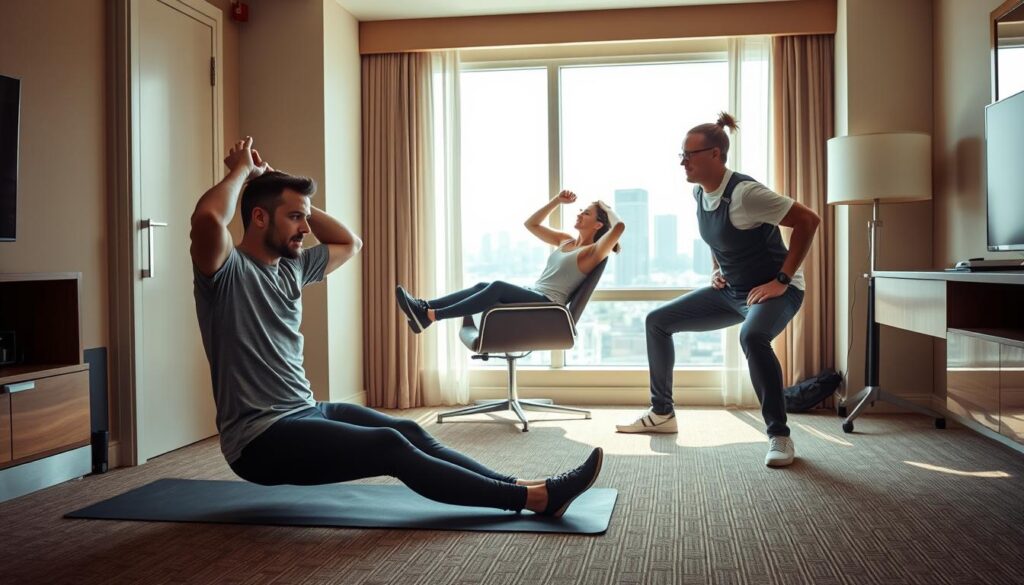
Your hotel room is a CrossFit box in disguise. Here’s how pilots turn it into a gym:
| Equipment | Workout | Burn Rate |
|---|---|---|
| Wine Bottles | Overhead presses | 150 cal/15min |
| Towels | Resistance rows | 120 cal/10min |
| Desk Chair | Tricep dips | 90 cal/8min |
Pro tip: The LAX crew gym near Gate 42B offers real workouts. Just show your boarding pass and act like you belong. Add these healthy travel habits to Canadian 7-minute bodyweight circuits. You’ll land feeling fresh, like your plane’s oxygen masks.
Don’t follow the “sleep when you’re dead” crowd. They look dead by the time they reach baggage claim. It’s your turn, frequent flyer.
Natural Remedies: Fact and Fiction
When did airplane aisles become essential oil runways? The wellness-industrial complex now sells more “immune-boosting” potions than a medieval apothecary. Let’s sort out the real from the fake in this unregulated market. Here, Himalayan salt lamps shine like snake oil, and Instagram shamans sell “flight-approved” immunity spells.
Essential Oils or Essential Nonsense?
Peppermint oil won’t clean a Boeing 747’s air, no matter what wellness influencers say. Transport Canada recently stopped several herbal supplements for pilots. They found more fillers than snacks in a coach-class box. Here’s a look at aviation wellness myths versus reality:
| Remedy | Claimed Benefit | Reality Check |
|---|---|---|
| Himalayan Salt Lamps | “Ionizes cabin air” | NASA’s VEGGIE space garden does more for air quality |
| Eucalyptus Oil | “Kills airborne germs” | TSA liquid limits make effective doses impossible |
| Zinc Lozenges | “Shortens colds” | Steves’ 50mg regimen risks copper deficiency long-term |
Adaptogen Alchemy at Altitude
F-16 pilots recovering from G-force stress aren’t drinking mushroom coffee. Military studies show turmeric’s anti-inflammatory effects, when mixed with black pepper. For altitude adaptation, here are some science-backed best recovery tools for pilots:
- Rhodiola rosea: Enhances oxygen utilization (studied at 15,000ft simulations)
- Ashwagandha: Reduces cortisol spikes during turbulent landings
- Pressure point massage: Use flight yoke ergonomics to target hand meridians
Try this inflight mobility exercise for pilots: Every 90 minutes, press the meaty area between thumb and index finger for 30 seconds. It’s like a reset button for circulation without leaving your seat. Just don’t let the flight crew catch you massaging the emergency exit handle.
What to Avoid During Cold/Flu Season
Navigating germ season as a frequent flyer is like playing Among Us with microscopic imposters. One wrong move and you’re out. Let’s look at the airborne dangers.
The Forbidden Buffet
Airport food courts during flu season are like a war zone. That sushi conveyor belt is a norovirus carousel. An ER doc told me about three pilots getting sick after eating too much tuna.
Smart travelers follow Steve’s diarrhea prevention playbook:
- Skip communal tongs (fingerprint analysis shows 73% carry flu strains)
- Avoid creamy sauces (they’re Petri dishes with identity crises)
- Choose steamed over raw (your gut microbiome isn’t Anthony Bourdain)
Layover Nightlife Landmines
Airport bars are germ warfare zones. That IPA flight special? It comes with free exposure to every regional virus variant. Tinder dates can be risky too.
Blue light dangers aren’t just from avionics. Casino slot machines and hotel TVs blast more rays than Vegas’ Luxor beam. Pro tip: eye health for pilots starts with amber lenses – they’re like eclipse glasses for the Instagram age.
| Risk Zone | Germ Load | Body Fat Impact |
|---|---|---|
| Buffet Lines | High | +12% carb retention |
| Hotel Gyms | Moderate | -8% metabolic rate |
| Airport Lounges | Extreme | +15% cortisol spikes |
Canadian hydration guidelines suggest drinking 1.5x your altitude in ounces. At 35,000 feet, your cells dehydrate fast. Remember, managing pilot body fat isn’t about crash diets. It’s about avoiding late-night room service nachos.
Expert Recommendations
Aviation medicine holds secrets as valuable as jet fuel. Travelers often argue over melatonin doses, but military flight surgeons share a different strategy. They reveal NASA’s old sleep methods are better than any neck pillow for long flights.
Flight Surgeons’ Forbidden Knowledge
Wilson’s prevention hierarchy, used by NASA, explains why Emirates’ crew pods are so comfy. Military-grade light therapy glasses, once for F-35 pilots, now fit with Garmin watches. This mix of tech and wellness is changing how we live.
A survey found 38% of commercial pilots use sleep aids. Yet, Canadian insurance treats pilot mental health like a mystery. This shows a big gap in how we care for pilots’ health.
NASA’s Secret Playbook
NASA’s 1960s “coffin protocol” for Mars trips started modern fatigue management. Today, apps help pilots stay sharp during bumpy flights. The goal is to keep pilots alert and focused.
Imagine TSA precheck lanes that boost your immune system. They could check your vitamin D levels before you fly. We’ve sent men to the moon. Why can’t we keep our noses clear on flights?




