An engine failure immediately following liftoff presents the most severe emergency a pilot will ever face. You have minimal altitude, a high angle of attack, and a quickly decaying airspeed. Survival depends entirely on mechanical muscle memory and immediate physical action. You do not have time to run a diagnostic checklist or consult a manual. You must instantly configure the aircraft to keep flying. Federal safety regulators constantly review post-crash data, and the Federal Aviation Administration confirms that pilots who pitch down without hesitation to maintain airspeed drastically increase their survival rates. Delaying this forward yoke pressure by even three seconds usually results in a fatal stall.
The Aerodynamics Of A Sudden Power Loss
During a normal climb out, the engine produces maximum thrust to counteract the heavy drag of a pitched-up attitude. When that thrust suddenly vanishes, the airplane decelerates aggressively. The relative wind over the wings drops, and the airframe quickly approaches its critical angle of attack. To prevent a stall, you must aggressively push the nose down to capture and maintain your aircraft’s best glide speed (Vg). This single physical action requires overriding your natural human instinct to pull back on the controls away from the ground. Establishing this aggressive pitch-down reflex forms a core component of your foundational flight training, forcing you to prioritize aircraft control over the fear of the approaching terrain.
The Impossible Turn Explained
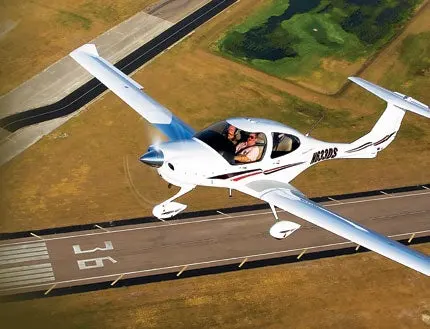
When the propeller stops spinning at three hundred feet above the ground, the immediate temptation is to bank hard and return to the paved runway behind you. Aviation instructors universally refer to this maneuver as the impossible turn. Executing a steep bank without engine power drastically increases your stall speed and increases your rate of descent simultaneously. The aircraft loses massive amounts of altitude during the 180-degree turn, often resulting in an unrecoverable stall-spin directly into the ground. Reviewing accident reports published by the National Transportation Safety Board reveals that attempting to turn back to the airport at a low altitude accounts for a high percentage of fatal general aviation accidents.
Selecting An Emergency Landing Site
Since turning back is aerodynamically unsafe, you must land the aircraft straight ahead. Most flight schools define the safe landing zone as a thirty-degree cone directly off the nose of the aircraft. You must scan this narrow window and pick the softest, flattest piece of terrain available. A plowed field, a golf course, or a shallow body of water provides a highly survivable surface. If your only option involves a dense forest, you must fly the aircraft into the trees under total aerodynamic control. Hitting trees wings-level at the slowest possible flying speed yields a much higher survival probability than stalling the aircraft and dropping vertically into the canopy. You can study forced off-airport landing techniques produced by the Aircraft Owners and Pilots Association to visualize how these scenarios play out in reality.
Establishing A Pre-Takeoff Briefing Habit
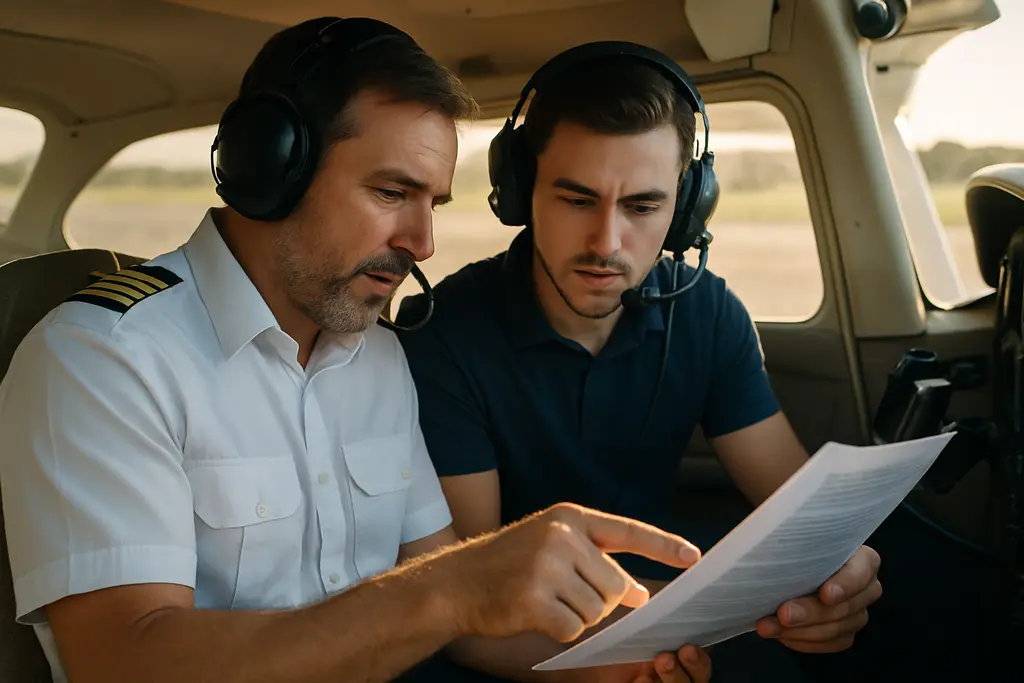
The best defense against a low-altitude emergency involves making all your decisions before you apply takeoff power. Speaking your emergency plan aloud conditions your brain to react instantly if the propeller stops. A standard crew briefing establishes exact altitude gates and dictates what actions the pilot-in-command will take at each phase of the departure.
| Altitude Gate | Immediate Pilot Action | Primary Objective |
| On The Runway | Pull throttle to idle and apply heavy braking. | Stop the aircraft on the remaining pavement. |
| Below 500 Feet AGL | Pitch for best glide speed (Vg) and land straight ahead. | Maintain aircraft control and avoid the impossible turn. |
| Above 1000 Feet AGL | Pitch for best glide (Vg) and evaluate a turn back to the runway. | Run emergency checklists and troubleshoot if time permits. |
Committing To The Forced Landing
Once you select a landing site, you must commit to it entirely. Changing your mind halfway down results in erratic control inputs and destroys your glide profile. Secure the aircraft by shutting off the fuel valve, cutting the mixture, and turning off the master switch to reduce the risk of a post-crash fire. Keep flying the airplane all the way through the crash sequence until all moving parts come to a complete stop. By relying on your preflight briefing and prioritizing airspeed over everything else, you maximize your chances of walking away from a catastrophic mechanical failure.