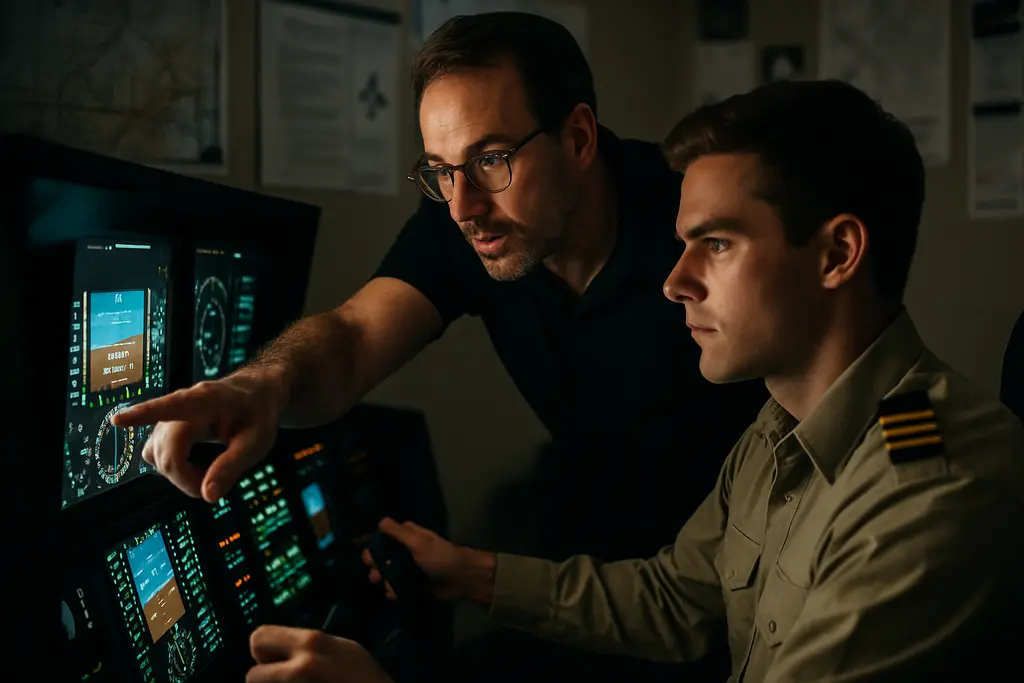
Ground school is crucial before you can fly. You might prefer flying to studying the rules. But the FAA requires solid knowledge, not just good vibes for safety.
If you’re aiming to be a pilot in the U.S., ground school is key. It’s more than just prep for a test. It’s where you learn critical thinking for flying.
This isn’t only in America. In Canada, pilots take the PSTAR exam with 50 questions. You need a 90% to pass. Any mistakes? They get fixed during your training.
Flying costs a lot in Canada. Renting a plane is about $200 per hour. And an instructor costs around $100 per hour. You must fly at least 45 hours for a Private Pilot License, but it usually takes more.
Ground school helps with more than just meeting requirements. It prevents wasting money on extra lessons if you forget stuff. Think of it as your foundation for safe and efficient flying.
What is Ground School?
Ground school is where you go from liking planes to making smart, safe decisions in busy skies. It teaches you the real language of flying. It’s about using checklists and rules the right way.
Ground school is kind of funny when you think about it. Adults actually pay to learn about rules and then proudly talk about it. But it’s not just about memorizing facts. It teaches you how to think safely.
Want to really understand ground school? Look at the PSTAR by Transport Canada. It covers important stuff like aviation laws and how to communicate with air traffic control. It even includes what to do if there’s a surprise runway closure.
The key lesson is learning how to find answers, not just remembering them. This skill is crucial. When things change suddenly, knowing where to look can save the day. For a flexible way to learn, try online ground school.
| What ground school trains | What it looks like in real flying | Why it matters for student pilot requirements |
|---|---|---|
| Regulations and procedures | Following clearances, staying within VFR rules, and knowing local airport flows | Keeps you operating legally and builds the habits examiners expect |
| Meteorology and risk thinking | Reading METARs/TAFs, spotting trends, and choosing “no-go” before it becomes drama | Supports safer decisions that protect your privileges as you progress |
| Navigation and airspace basics | Using charts, planning routes, and avoiding “oops” moments near controlled airspace | Connects knowledge to practical planning that backs up your logbook time |
| Communication fundamentals | Clear radio calls, correct readbacks, and fewer awkward pauses on frequency | Proves you can operate in the system, not just around it |
In the U.S., ground school is key for a student pilot. It’s about knowing if you’re ready to fly legally. It makes sure you have the right documents ready. It’s as important as a seatbelt: essential and non-negotiable.
Topics Covered: WX, Nav, Regs & Radio
Ground school covers four main areas: WX, Nav, Regs, and radio. Each one is connected to the others. If you miss a detail in one area, it can mess up the others. This connection shows why learning all these areas deeply is crucial for student pilots.
Weather learning teaches you to not just rely on feelings. You’ll learn about METARs and TAFs, understand weather fronts, and grasp the concepts of ceilings and visibility. This ties directly into your flight decisions and how you plan for fuel. It’s like a test where the weather can throw unexpected challenges.
Navigation is about math and maps. You’ll work on figuring out directions, adjusting for wind, and calculating time needed to get places. It also covers why the direction based on the earth’s magnetic field matters. For example, understanding the runway “27” means being roughly 270 degrees from magnetic north helps make sense of airport layouts.
Regs, or regulations, focus on who has the right of way and when. You’ll learn the rules for scenarios where planes are moving towards each other or one is overtaking another. They’re crucial for safe flying and are a big part of exams.
These rules also appear in exam questions, that’s why I often check Transport Canada’s PSTAR guide topics. The guide is helpful not just for flying in Canada but because it covers a lot of material that’s important to know cold for any pilot.
Airport operations are about paying attention to the small yet critical details. An airport has specific markings for runways and taxiways that are not in use. The areas where planes taxi, take off, and land are strictly regulated for safety, which is why wandering into them carelessly is a big no-no.
| Topic | What you’re expected to know | Quick “gotcha” that shows up on tests |
|---|---|---|
| Right-of-way (Regs) | Converging, head-on, and overtaking rules | “I had the right of way” doesn’t mean accidents can’t happen; it’s important to react well in advance |
| Light gun signals (Radio backup) | Meanings change whether you’re flying or on the ground | Seeing a flashing white light while on the ground means go back to start, not that you can go anywhere |
| Markings & definitions (Airport ops) | Differences between an airport and aerodrome, what the maneuvering area is, and how to understand runway numbers | A white “X” signals a closed runway; a yellow “X” means a taxiway is closed |
| NOTAM awareness (WX/Nav/Regs overlap) | Scanning for closures, outages, and changes in procedures is essential | Pay attention to the full details of NOTAMs, especially ending times |
In radio communications, you learn efficient speaking is a skill to master. Including ATIS information in your initial contact helps keep radio chatter down. Also, staying tuned into common frequencies and the emergency channel in uncontrolled airspace is vital.
Knowing what to say during emergencies is crucial. MAYDAY signals a distress call, PAN PAN is for urgency. If communication is rated “readability three,” it means there’s difficulty in understanding, not that it’s acceptable. Studying signals like the tower’s light gun is also key; different signals have distinct meanings.
Then there’s the matter of compliance, especially in the U.S. It involves keeping track of citizenship and ID documents as part of your flight training. This can run alongside your studies instead of interrupting them. It’s about being prepared before you even start your practical training.
Pulling all this information together, ground school is seen not as random facts but as essential knowledge. WX informs your flight plans, Nav ensures accuracy, Regs make your actions predictable, and radio ties it all together. And through all this, remembering the importance of thorough preparation is key. The best prepared pilot is the one who studied well before facing challenges.
Study Tips for Ground School
I approach ground school with a no-drama, steady strategy. Like a professional certification — consistent and focused. Short study sessions mixed with targeted practice on weak areas work best.
The PSTAR guide underlines a vital point: for safety, you must fully understand weak areas, not just memorize. This approach is useful, even under FAA regulations. You should look up rules, study relevant parts of the Aeronautical Information Manual, and summarize key points in your own words.
Long breaks can ruin your budget. Taking a few weeks off often means spending the next lesson reviewing rather than learning new things. It’s like rewatching a TV series you forgot about and paying for the recap.
Keeping a log of missed questions helps me a lot. Whenever I get a question wrong, I write down the topic, the correct answer, and why I missed it. Then, I plan a review session to improve.
- Keep a missed-questions log and review it twice a week, not once a month.
- Re-study regulations and radio phraseology until you can say it cleanly under pressure.
- Use scenario prompts—lost comms, a diversion, or an unexpected runway closure from a NOTAM—instead of flashcards alone.
- End each session by teaching the concept out loud. If it sounds fuzzy, it is.
Radio communication requires extra attention. Your performance depends on your practice level. I practice the same radio calls until they become second nature, no matter the stress.
As adults, we value accountability. I use a simple tracker to keep pace with my study plan. This prevents student pilot surprises later. It also helps confirm eligibility early, reducing stress and costs.
| Weekly move | Deliberate practice method | How it prevents rework | Compliance check tied to required documents |
|---|---|---|---|
| Set a steady study cadence (5–6 days) | Two 25-minute blocks plus one 10-minute recap | Keeps recall fresh so lessons don’t turn into paid review | Verify you have required documents ready for each new training step |
| Target weak areas first | Missed-questions log with a “why I missed it” note | Stops repeat mistakes that drag out the syllabus | Confirm student pilot eligibility items are complete before scheduling check-ins |
| Practice regs and radio daily | Read one rule, then speak one correct transmission from memory | Reduces hesitation that snowballs during flight training | Track student pilot requirements alongside modules so nothing stalls |
| Run scenarios instead of trivia | Write a short plan for diversion, lost comms, or NOTAM changes | Builds decision-making, not just test-taking | Keep required documents organized so admin tasks don’t interrupt momentum |
With these steps, studying feels more like preparing for real operations. That’s the goal. Planes care about readiness, not excuses.
Online vs. In-person Ground School
I think of ground school like streaming services. The focus is on “time, money, consistency.” Choose two, and you’ll miss out on the third. With online ground school, you save time and money. But you need to stay disciplined without someone watching over you.
The Canadian Flight Trainers approach is interesting, even for those in the U.S. You can learn the theory remotely. There is no age requirement, so you can start young. Starting at 14 helps you understand air law, navigation, weather, and flight basics. This way, you spread out costs and learning. So, you won’t spend all your money on flight hours too soon.

In-person ground school has a unique advantage: structure. You have to show up and learn at a set pace. This is helpful for immediate questions and live practice. It keeps your radio skills sharp and prevents “uhhs” in real flights.
| Tradeoff | Online ground school | In-person ground school |
|---|---|---|
| Time | Flexible scheduling; easy to fit around work travel and family calendars | Fixed class times; less flexible but easier to protect as a weekly routine |
| Money | Often lower tuition; fewer commute costs and fewer missed work hours | May cost more; travel and time overhead add up |
| Consistency | Depends on self-discipline; progress can stall if life gets loud | Built-in structure; social pressure keeps the pace steady |
| Feedback speed | Asynchronous questions can lag; you may re-watch lessons to self-correct | Real-time clarifying questions; quicker correction on weak spots |
| Best use case | Strong self-starters who want efficient repetition and spaced review | Students who learn best through discussion, pacing, and live drills |
But, the mode of learning doesn’t change the rules. U.S. student pilot requirements still matter. Paperwork is important regardless of your quiz scores. If you’re worried about citizenship for pilots, deal with it early. Don’t wait until the last minute.
Non-U.S. citizens looking for training face another hurdle with the TSA pilot program. It operates on its schedule, not yours. Online classes won’t help with missed documents. Zoom can’t sign your forms. Neither can your CFI’s confidence in you.
Passing the FAA Written
When you start ground school, things get serious once you face the FAA knowledge test. In Canada, they have PSTAR with 50 questions from a 200-question pool. You need a 90% pass rate, then you correct any mistakes. This approach really prepares you for aviation.
The FAA written exam is different from PSTAR, but the idea is the same. View it as a crucial step, not just something to get done. If you think you can just memorize answers, you’re in for a tough reality check once you’re up in the air.
My top tip for studying is to understand the reason behind each answer. If you get a question wrong, don’t just note the correct answer. Connect it to the bigger picture, like weather or airspace. This way, you’ll remember it even under pressure.
Let’s talk about something often overlooked: making sure you’re following rules. Even if you’re doing well in practice tests, student pilot requirements can catch you out. Having the right paperwork confirms your identity and eligibility, which is crucial before you can move forward.
| Checkpoint | What to confirm | Why it affects test day |
|---|---|---|
| Eligibility basics | pilot age requirements and current training status | Helps avoid any last-minute issues with scheduling. |
| Identity and record readiness | required documents that match your legal name and details | Makes check-in smooth and prevents possible delays. |
| Study-to-standard plan | Log of difficult topics, spaced review, and practice tests | Improves accuracy when under stress, not just at home. |
| Instructor alignment | Right timing for endorsements and setting a realistic test date | Avoids being ready in theory but not in paperwork. |
I follow a “don’t try to be too smart” checklist. Steady habits get you further in the written test than risky strategies. Better to have regular study times than to cram all night.
- Analyze missed questions by topic, not by pride.
- Think through scenarios: “What would I do here, in this condition?”
- Make sure you’re on top of the admin tasks ahead of time.
- Check you meet the pilot age requirements before setting any big goals.
- Keep all your necessary documents ready to ensure a smooth test day.
Passing the FAA written test shows you understand the basics. But the real victory is in applying your study skills to real-life decisions. After all, the sky won’t adjust its challenges for you.
How Ground School Prepares You for Flying
Ground school doesn’t just give you wings on day one. It upgrades your brain. I quickly discovered that flying is more about thinking ahead and less about moving your wrists.
This mindset is also key when dealing with paperwork. The requirements and eligibility for student pilots might seem daunting. Ground school turns these into a simple checklist you can easily follow.
Let’s talk about avoiding collisions. The rules for “converging traffic” are crucial for staying safe. If you’re head-on, you turn right. When overtaking, always pass on the right. This ensures safety at 1,000 feet above ground level.
Understanding these rules changes how you see. You don’t just look around. You scan, identify potential threats, and make decisions early. This is the key skill hidden in the regulations.
Then there’s aviation’s version of a silent movie: light guns and runway lights. A steady green light means you’re cleared to land. Flashing lights on the runway tell you to stop immediately.
These signals are your backup for radio failures and other dangers. Knowing these helps you stay out of places you shouldn’t be, much like avoiding getting lost in a huge parking lot.
| Ground school item | What it looks like in the airplane | Why it prevents trouble |
|---|---|---|
| Converging/right-of-way rules | Earlier pattern turns, cleaner spacing, fewer “who goes now?” moments | Reduces midair risk by making your moves predictable to others |
| Head-on and overtaking procedures | Turn right when it’s head-on; pass to the right when overtaking | Stops last-second swerves that create bigger conflicts |
| Light-gun meanings | Clear taxi, stop, or return when the radio goes quiet | Prevents ramp confusion from becoming a runway-incursion headline |
| Runway numbering and closed-surface markings | Confirm you’re lined up on the correct runway and avoid closed pavement | Protects against wrong-runway departures and surprise construction zones |
| ATIS discipline | Copy weather and runway info before you key the mic | Reduces frequency congestion and missed instructions |
Communication shines in ground school. Using ATIS before talking to ground control is smart. It eases the airwaves and helps you stay cool.
Understanding “MAYDAY” versus “PAN PAN” is about knowing how to escalate issues. This means help comes faster. In aviation, acronyms matter a lot.
Learning airport basics keeps you safe. You figure out the maneuvering area, how closed surfaces are marked, and the logic behind runway numbers. Suddenly, airports make more sense.
Long breaks from flying can set you back. Skills fade, and lessons repeat, costing more money. Ground school helps you keep what you learn, even if your landings aren’t perfect.
It also connects you with aviation culture. You learn the language, rules, and habits that make flying feel real. It prepares you for the responsibilities of being a pilot.
Student pilot eligibility is more than just a formality. It introduces you to a system of shared rules. Ground school teaches you these rules before you fly.
Once you grasp the language and signs, being a pilot becomes part of you. You approach everything with discipline. That’s the real benefit of ground school: no surprises, better decisions, and less guesswork.
The Best Ground School Resources
I’m picky about the tools I use for ground school. Aviation is already complicated enough without adding more mess. The best resources do both: they explain the concepts and help you stay organized. This is crucial when student pilot requirements start to stack up.
For those looking for a well-structured approach, Canadian Flight Trainers’ online ground school is worth checking out. It covers everything from navigation and weather to air law and flight planning. Even though it’s designed for Transport Canada, it’s also great for U.S. students. They want a clear lesson plan and consistent practice.
When it comes to reference books, “From the Ground Up” is a top pick. Think of it as the wise guide sitting on your desk. The 30th Edition is a favorite among both Private and Commercial Pilot ground schools. The 2025 edition will be released on Sept 9, 2025, for $94.95. They also offer a workbook and a Flight Training Manual. It’s like having snacks ready for a long meeting.
Sim tools are useful, but be careful not to get too stuck on them. Before you know it, you could be focusing more on instruments than on flying by sight. Microsoft Flight Simulator and X-Plane are excellent for learning the basics. VATSIM also offers realistic communication practice. You need to be 13 or older to join, which makes sense. It’s like practicing how to talk to air traffic control quickly.
Real-world preparation is key, too. Nothing beats actual flying experience. A one-hour intro flight provides invaluable insights that books can’t match. For Canadians, understanding the medical process is essential. You’ll need to see Civil Aviation Medical Examiners or get a Category 4 declaration. And, the costs aren’t covered by provincial plans. You have to submit these to a Transport Canada office.
For U.S. students, being organized with your paperwork is crucial. The TSA doesn’t care about your note-taking skills. Necessary documents won’t just appear when you need them. Start a checklist early on. Student pilot requirements tend to become urgent exactly when you’re busiest.
| Resource | What it’s best for | Smart way to use it (without overdoing it) |
|---|---|---|
| Canadian Flight Trainers online ground school | Structured lessons in navigation, weather, air law, and flight planning | Use it as your weekly “spine,” then cross-check U.S. student pilot requirements and local procedures with your instructor |
| “From the Ground Up” (30th Edition; 2025 edition release Sept 9, 2025; $94.95) | Deep reference for Private and Commercial pilot ground school topics | Read to clarify confusing concepts, then summarize in short notes you can review before flights; keep required documents in the same study binder |
| Microsoft Flight Simulator and X-Plane | Checklists, basic navigation habits, cockpit flow, and scan discipline | Practice procedures in short sessions; avoid letting the sim replace visual-flying fundamentals or real instruction |
| VATSIM (13+ to connect) | Radio confidence and timing under light pressure | Start with listening, then try simple VFR calls; keep TSA pilot program and identity verification steps in mind before formal training ramps up |
| Introductory flight (often a 1-hour trial lesson) | Real control feel, workload sense, and motivation you can’t download | Bring questions from ground school, then log what surprised you; it helps you map study time to student pilot requirements |
| Documentation checklist | Reducing delays tied to identity verification and enrollment rules | Collect required documents early and review TSA pilot program steps before scheduling intensive lessons |
My strategy is straightforward: combine one structured course, one detailed reference book, one sim practice, and one thorough checklist. This mix keeps the learning process smooth. Meanwhile, the TSA pilot program and paperwork requirements become less of a hassle. And that’s how we want it to be.
Next Steps: Life After Ground School
After ground school, your mind is full, like leaving a long movie. Next, you balance learning with real steps—FAA forms, training, and a smart budget. It’s smart to know student pilot needs and rules early. Flying means freedom, but it comes with its own set of rules.
In Canada, there’s a clear path for pilots: permit at 14, recreational at 16, and private at 17. The U.S. has its own rules, but the idea is the same. Knowing the age requirements is key. Starting too soon might mean waiting to fly officially.
Here’s the truth about costs and keeping going. Think about the expenses: renting a plane is about $200 per hour, and an instructor costs around $100 per hour. Often, training goes beyond 60 hours because of unexpected delays. Long breaks can increase the number of review flights and costs. So, plan your training schedule wisely—it’s a tool, not just an idea.
For the young or those planning wisely, start with a strong base: books, a good syllabus, an intro flight, and regular lessons. In Canada, the Air Cadet program offers chances for some cadets to get flight training for free in a summer camp. Chris Hadfield, the astronaut, started his journey there. No matter how you start, keep up with the pilot rules as you go. Always double-check the rules and age limits before booking to avoid unexpected costs.