Pilot Teamwork Training has become a central part of how serious flight programs prepare pilots for real cockpit pressure. Aircraft systems matter, stick-and-rudder skill matters, and checklist discipline matters, but modern crews also need the ability to share information, speak up at the right time, and shift leadership according to the phase of flight. Research-reviewed aviation and simulation findings point in the same direction: team behavior is trainable, and the quality of crew coordination can affect performance during demanding tasks.
Why Pilot Teamwork Training Matters
Leadership Is A Flight Deck Behavior
Pilot Teamwork Training is not a soft add-on to technical instruction. It is a practical method for shaping how pilots brief, challenge, monitor, and recover from errors. Leadership in this setting does not mean one person dominates the cockpit. It means the pilot flying, pilot monitoring, instructor, or trainee can direct attention to the most important risk at the right moment. Training analysis: the goal is not charisma; it is disciplined communication under workload.
Research notes for this topic identify leadership as a core aviation competency tied to discipline, skill, proficiency, knowledge, decision-making, and judgment. That framing fits what flight instructors see every day. A trainee may know a maneuver by memory yet still struggle to coordinate with another pilot during abnormal indications, high radio workload, or a fast-changing approach. The leadership task is to keep the crew aligned before a small mismatch becomes a larger threat.
Teamwork Is An Operational Requirement
Reviewed finding: teamwork in aviation is treated as an operational requirement rather than an optional personality trait. Effective operations depend on collaborative decision-making, mutual respect, and the ability for crew members to lead when needed. That is why crew resource management concepts should appear early in training, not only after a pilot reaches an airline new-hire class. Students who learn to verbalize intent, confirm shared understanding, and invite correction build habits that carry into multi-crew operations.
Those interested in how group dynamics play out in various settings might find that the same network’s TrueRealTV highlights how people respond under pressure. In aviation, this pressure becomes a structured training issue with safety implications rather than mere entertainment. The lesson for flight schools is clear: team behavior should be observed, coached, and graded with the same seriousness as airspeed control or checklist use.
Simulation Turns Leadership Into Practice
Pilot Teamwork Training In Simulation
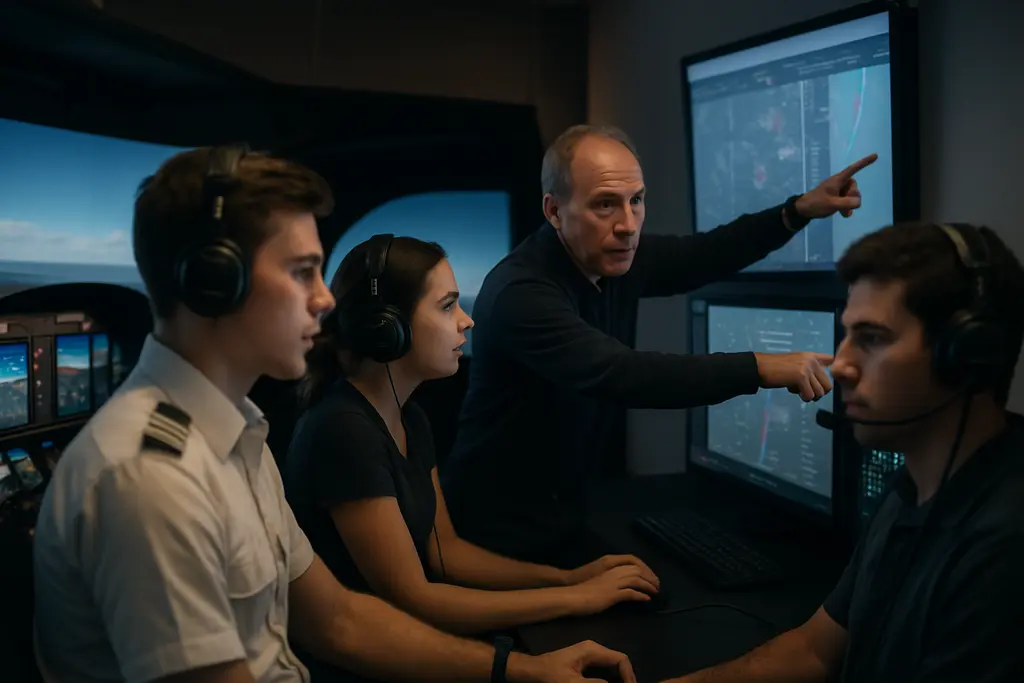
Simulation gives instructors a controlled place to observe leadership and teamwork without exposing a crew to real-world risk. A simulation-based team training study in a non-aviation medical education setting found that participants reported increased self-efficacy after three scenarios, a result that supports the idea that team confidence can improve quickly during structured practice simulation-based team training study. Training analysis: because that study involved medical students, it should not be treated as direct proof of pilot outcomes. It does, however, support a broader training principle that scenario-based team practice can help learners feel more capable in coordinated roles.
For Pilot Teamwork Training, that distinction matters. Flight programs should avoid overstating findings from other fields, but they can still use them carefully. A well-designed simulator session allows the instructor to create a weather change, a system abnormality, a runway reassignment, or a communication trap. The debrief can then separate technical performance from team process: Who stated the plan? Who monitored the deviation? Was dissent invited? Did the crew confirm the new clearance? These questions make teamwork visible.
Debriefing Turns A Scenario Into Learning
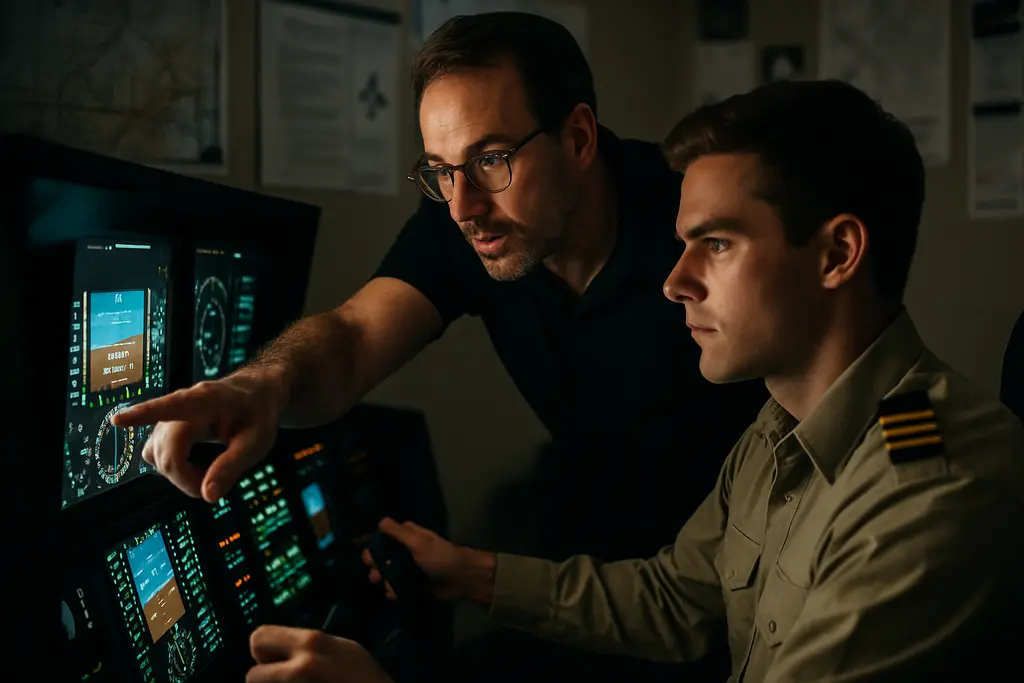
A simulator event without a thoughtful debrief can become little more than a stressful memory. The learning happens when the crew reviews actions, timing, and communication patterns. Research-reviewed team training emphasizes individual experience during early scenarios, which matters because new crew members often judge their own performance against how safe they felt speaking, acting, and asking for help. A strong debrief should let pilots identify both effective behaviors and missed opportunities without turning the session into blame.
In flight training, the most useful debriefs are specific. “Communicate better” is too broad. A sharper instructor comment might be: “During the approach change, the pilot monitoring noticed the altitude risk but waited until the aircraft was already unstable.” That feedback links teamwork to a flight outcome. It also teaches the crew that timing, clarity, and follow-through are trainable skills.
Cockpit Culture, Authority, And Shared Work
Interpersonal Coordination Beats Likeability
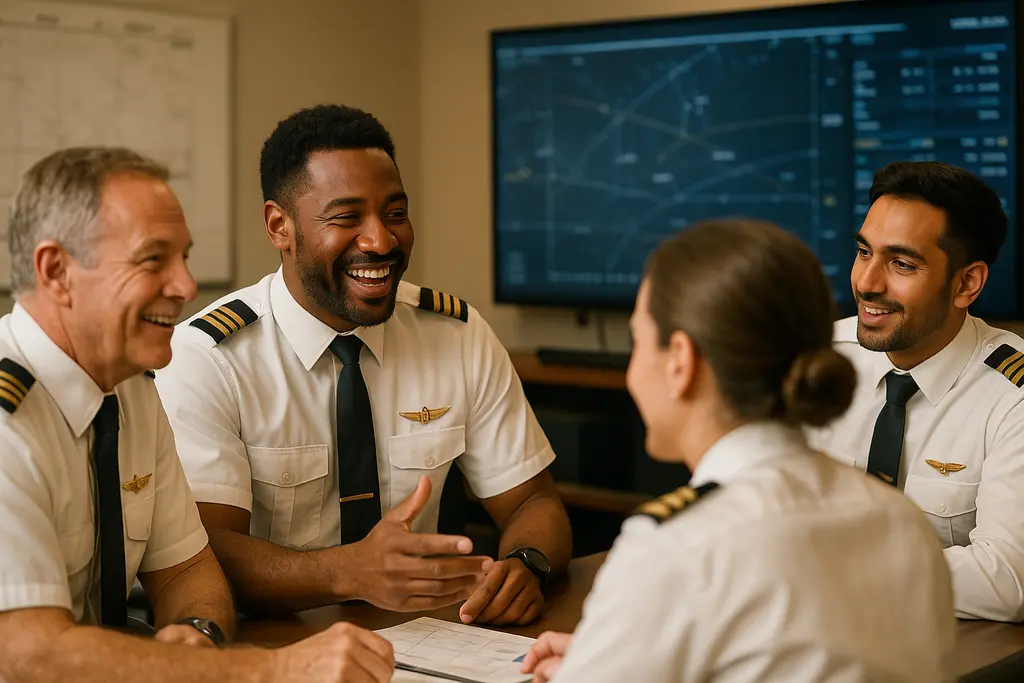
The value of Pilot Teamwork Training becomes clearer when looking at flight crew performance research. A study discussed by Kellogg Insight reported that, among interpersonal liking, emotional positivity, and interpersonal coordination, only interpersonal coordination significantly predicted two-person flight crew performance during simulated takeoffs and landings flight crew coordination research. Reviewed finding: crews do not need to be close friends to perform well. They need to coordinate.
That finding is useful for instructors because it keeps training grounded. A quiet crew may still perform well if information flows clearly. A friendly crew may still miss threats if coordination breaks down. The training target is observable behavior: callouts made on time, task assignments understood, deviations challenged, and decisions cross-checked. Instructors should avoid grading teamwork based only on tone or confidence. Coordination is the more practical standard.
Power Distance Can Limit Learning
Research notes for this topic also describe findings from pilots at British Airways, Pakistan International Airlines, and Saudi Arabian Airlines showing that high power distance in the cockpit can negatively affect learning, while interdependence and an inclination toward teamwork can reduce that effect. Training analysis: the cockpit must respect command authority, but authority should not silence useful input. Good captains and instructors set expectations early by telling the other pilot exactly how concerns should be raised.
This is especially important for student pilots moving into crewed environments. A trainee who has only flown solo or with one familiar instructor may hesitate to challenge an experienced pilot. That hesitation can become dangerous if the trainee sees a checklist omission, altitude deviation, or unstable approach cue. Flight schools can address this early by assigning rotating roles in scenarios: one student leads the brief, another monitors, and the instructor observes how each person handles responsibility.
- Reviewed finding: coordination, not simple likeability, is tied to stronger simulated crew performance in the cited flight crew research.
- Training analysis: leadership should rotate with the task, while command authority remains clear.
- Practical application: instructors can grade callouts, challenge-and-response behavior, and shared decision points during scenarios.
Building Better Training Programs
Structured Practice Supports Airline Readiness
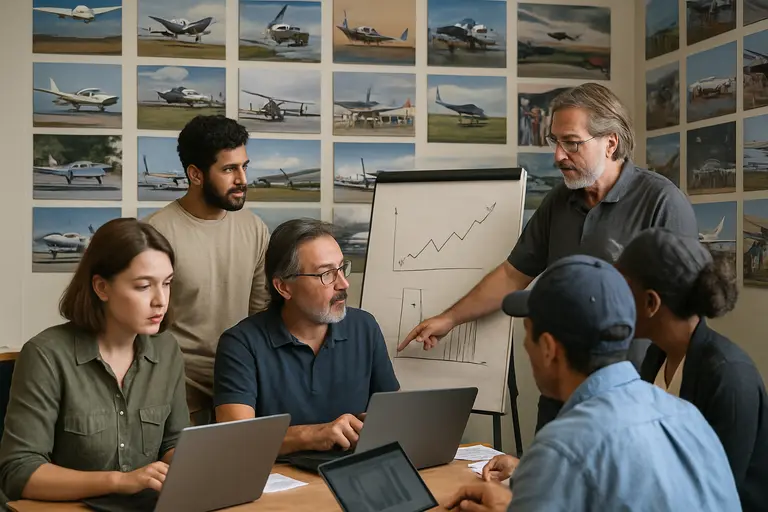
Research notes for this topic refer to the 2018 Pilot Source Study, which indicated that pilots who graduated from flight training programs within five years before hiring had higher completion rates and needed less extra training in airline programs than those with more years since graduation. Without adding unsupported numbers, the practical reading is straightforward: recent, structured training can support readiness for airline standards. That is a strong argument for keeping teamwork and leadership current across the training path.
This is where competency-based instruction fits naturally. Rather than treating teamwork as a final lesson, schools can assess it throughout private, instrument, commercial, and multi-engine training. A related discussion of competency-based pilot safety explains how targeted practice can support safety habits beyond simple task completion. Training analysis: leadership and teamwork should be tied to observable competencies, not vague impressions.
What Instructors Should Watch
Instructors can look for several behaviors during normal lessons and simulator sessions. Does the trainee brief the objective before taxi? Does the pilot monitoring state deviations early enough to matter? Does the crew assign tasks during abnormal situations, or do both pilots focus on the same item while another priority is missed? These markers help instructors coach crew behavior before a pilot reaches a high-workload commercial cockpit.
Military aviation research notes in the provided material also point to formal leadership development simulators used in officer training. The exact setting differs from civilian flight school, but the training message is consistent: leadership is practiced through scenarios, feedback, and repeated responsibility. For civilian pilots, that can mean line-oriented flight training, multi-crew simulator events, or even structured chair-flying sessions where callouts and decision points are rehearsed aloud.
Leadership And Teamwork In Modern Pilot Training
Pilot Teamwork Training should be treated as a safety discipline with clear standards. The strongest programs define what good crew behavior looks like, create scenarios that reveal those behaviors, and debrief with enough precision for pilots to improve. Research-reviewed findings support that coordination can predict crew performance in simulated flight tasks, and simulation-based team training can improve learner confidence in structured scenarios. Those are practical insights for any school preparing pilots for shared cockpits.
A strong Pilot Teamwork Training model does not reduce the captain’s authority or weaken technical standards. It supports both. Crews perform better when leadership is clear, communication is timely, and every qualified voice can contribute to the safety picture. For students, that means learning early that professional airmanship is not only what a pilot can do alone. It is also how well that pilot helps a crew think, decide, and act together.