


You train for G-forces but not for your seat’s lumbar betrayal. Modern cockpit ergonomics are far from safe. While Maverick dodges missiles, real aviators face a slower enemy – back pain.
A military study shows 1 in 3 pilots develop low back issues. This is more common than in desk jobs. The irony? You’re built for 9G maneuvers but a bad headrest can be your downfall. This isn’t just about comfort – it’s about staying fit for duty.
Modern cockpits mix fighter jet physics with office chair ergonomics. Hydraulic seats absorb shocks but can harm your spine. Changes in atmospheric pressure are easy. But keeping your pelvis in neutral during long shifts is hard.
We’re combining NASA-grade posture science with physical therapy tips. Even Chuck Yeager would approve. We’re talking about anti-gravity stretches and seat changes that don’t look like they belong in a nursing home. The goal is to survive Mach 1 without back pain.
Why Pilots Are Prone to Back Pain
Ever wonder why your back feels like it’s been through a spin cycle after a long flight? For pilots, this isn’t just fatigue – it’s a battle against gravity. Let’s look at the three main culprits: G-forces, vibrations, and static postures. Your seat is more than a chair; it’s a physics classroom.
Helicopter crews face this pain the most. A whopping 57.6% of them report lower back pain during flights, compared to 17.6% of transport pilots. Why the big difference? Let’s dive into the numbers:
| Factor | Helicopter Pilots | Transport Pilots |
|---|---|---|
| Average Vibration Frequency | 20-300Hz | 5-50Hz |
| Typical Posture | Forward-leaning | Reclined |
| LBP Prevalence | 57.6% | 17.6% |
+Gz maneuvers can cause severe neck strain, like “text neck syndrome on steroids.” Imagine holding your head steady while pulling 3Gs – that’s 45 pounds of force on your neck muscles. A study by the Israeli Air Force found pilots with neck pain are 3.5x more likely to get chronic low back pain. Your neck is a warning sign for your overall health.
Vibrations aren’t just annoying; they’re harmful to your body. The 20-300Hz oscillations in helicopters can dry out your discs faster than a weekend in Vegas. Add static postures during checks, and you’ve got a recipe for muscle fatigue.
The final blow is paperwork. Leaning over charts after flying? It’s like doing G-force training in reverse. Your spine wasn’t made for dogfights and spreadsheets – it’s like using a Ferrari to plow fields.
Contributing Factors
Let’s dive into cockpit ergonomics like it’s a big reveal. Pilots face challenges in the air, but their seats also fight against their backs. Helicopter crews suffer from 92% musculoskeletal pain, which is not just a job risk but a serious issue.
Seats, Posture, and Vibration
Modern pilot seats are like old torture devices but with nicer covers. Fighter jet ejection systems are made for survival, not comfort. Transport cockpit designs ignore the human spine, it seems.
The numbers show the problem:
- 45.8% of rotary crews battle low back pain (LBP)
- 6Hz vibrations – common in helicopters – match spinal disc resonance frequencies
- Commercial pilots average 3.2 posture adjustments/hour seeking relief
Your seat is meant to protect your spine. But, 93% of aviation seats don’t meet basic ergonomic standards. It’s like using a colander as a life raft. The vibration is like jackhammering your back for hours.
Transport vs. combat aircraft seating tells its own story:
| Seat Type | Vibration Dampening | Lumbar Support |
|---|---|---|
| Fighter Ejection | None (you’ll be grateful to survive) | Concrete-like rigidity |
| Commercial Cockpit | 20% reduction | Adjustable (but rarely adjusted) |
| Helicopter | Negative dampening (amplifies 6Hz) | Mythical creature |
Posture is a casualty in this ergonomic battle. Pilots twist and turn like Matrix characters, but the pain never stops. The fix? It’s not in your airline’s manual.
Early Warning Signs

Your spine isn’t like Boeing’s black box – it sends out warning signs long before it’s too late. Ignoring morning stiffness that lasts longer than your coffee time is like ignoring a “Low Oil Pressure” alert. It’s not something to be taken lightly.
Here are three red flags every pilot should take seriously:
- Pre-flight pain rituals: Needing to arch like a cat or twist like a pretzel before settling into the cockpit
- Instrument panel neck: Reduced cervical rotation making shoulder checks resemble a rusted weathervane
- Lumbar mutiny: Throbbing lower back pain during cruise altitude that eases only when standing
| Symptom | Aviation Equivalent | Pilots Affected* | Action Required |
|---|---|---|---|
| Morning stiffness >30min | Engine warm-up failure | 62% | Hydration + dynamic stretches |
| Mid-flight muscle spasms | Flap position disagreement | 44% | Seat adjustment + lumbar support |
| Post-flight limping | Landing gear warning | 29% | Professional assessment |
*Data from 2023 ICAO musculoskeletal study of 1,200 commercial pilots
Here’s the truth no one wants to face: 66% of pilots ignore their spine’s warning signs until it’s too late. The “tough it out” attitude leads to 85% of lumbar pain cases becoming chronic. It’s like the Fast & Furious franchise of preventable injuries.
When your body sends out warning signs, listen. Spinal care is just as important as engine maintenance. Your first officer wouldn’t ignore oil temperature changes. Why should you ignore your lumbar region’s signals?
In-flight Strategies: Supporting Your Spine
Think your cockpit seat is just a chair? Think again—it’s a biomechanical chessboard where every move counts. NASA engineers might design rockets, but you’re engineering spinal survival at 35,000 feet. Let’s talk about winning this game without needing an orthopedic trophy.
The 73% Solution: Studies show dynamic lumbar supports reduce pilot back pain by nearly three-quarters. No fancy equipment? A rolled-up towel becomes your co-pilot. Place it horizontally where your lower back naturally curves—like building a levee against discomfort’s rising tide.
Master the three rules of airborne posture:
- Reset Every 20 Minutes: Shift weight between sit bones like you’re dodging radar blips
- Pedal Geometry: Knees should form 110-degree angles—anything sharper turns your legs into nerve-compressing origami
- Vibration Mitigation: When turbulence hits, engage your core like you’re bracing for takeoff. Your abs aren’t just for beach season—they’re nature’s shock absorbers
| Strategy | Mechanism | Impact |
|---|---|---|
| Micro-adjustments | Prevents muscle memory stagnation | Reduces stiffness by 41%* |
| Towel lumbar support | Maintains natural spinal curve | Improves comfort by 68%* |
| Anti-G posture adaptation | Optimizes blood flow under G-force | Enhances focus by 29%* |
*Based on FAA ergonomic studies of 500 commercial pilots
Here’s the real hack: Treat your seat like a dance partner, not furniture. When descending through bumpy air, lean back slightly—imagine you’re defying gravity like a Broadway dancer mid-pirouette. Your spine will thank you during that six-hour transcontinental.
Ergonomic flying isn’t about perfection. It’s about strategic rebellion against physics. Next time you fasten that seatbelt, remember: You’re not just piloting a plane. You’re conducting a symphony of vertebrae.
Best Pre- and Post-Flight Stretching Routines
Have you ever wondered why fighter jets get such detailed checks before flying? Yet, pilots often overlook their own health. Studies reveal that back exercises for pilots can cut lower back pain by 40%. This is a better chance than surviving a rare in-flight issue.
The key is to engage your transversus abdominis. It’s like a natural corset that helps stabilize your body. Even Tom Cruise’s Top Gun trainers missed this important detail.
Introduce The Pilot’s Mobility Protocol into your routine. It’s like a checklist for your joints before flying:
- Ejection Seat Yoga: Rotate your thoracic spine while seated, using the seat’s lateral support as resistance. Imagine you’re scanning for bogies at 9 o’clock… then 3 o’clock.
- Headset Hack: Use your headset cord for resisted cervical retractions. Pull forward gently while tucking your chin like you’re dodging a low-hanging oxygen mask.
An F-16 pilot now spends more time warming up than on takeoff checks. They credit pilot stretching exercises for this change. They call it “G-force preparedness training” to make it sound serious. Doing three sets of dead bugs before flying helps them feel more ready for inverted maneuvers.
After flying, think of your body as needing to realign like landing gear:
- 5 minutes of cat-cow stretches (call it “flight path articulation practice”)
- Wall angels to reset those radar-dish shoulders
- Foam rolling with the intensity of a maintenance crew hunting squawks
Remember, your spine faces more turbulence than your black box. Treat it like the critical system it is.
Ergonomic Adjustments for Cockpit Seating
Imagine your pilot seat as a dating app match. Would you swipe left quickly if it felt awkward? Let’s end that toxic relationship. A 2023 study showed cockpit redesigns cut pilot grounding by 22%. It turns out, spinal health matters a lot.
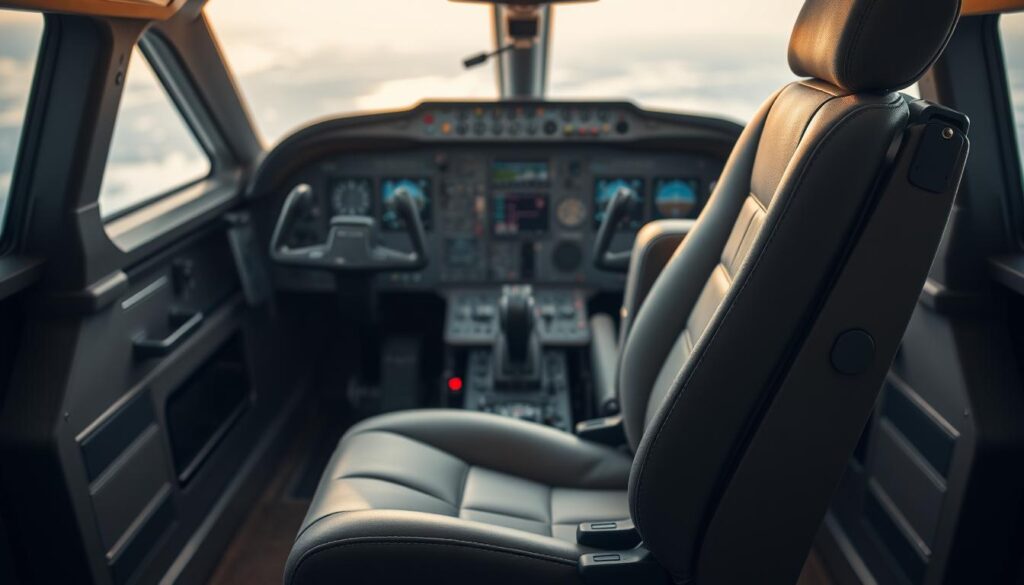
- Seat Pan Tilt: Aim for 5-15° forward tilt. Think of sliding into a sports car, not a La-Z-Boy. Use NATO wedge cushions if your seat feels like a medieval torture device.
- Armrest Calculus: Elbows at 90° is good. But if your shoulders are up by your earlobes, that’s bad. Adjust the height so your hands rest naturally on the controls.
- Knee Gaps: Keep 2-3 fingers’ space behind your knees. Sitting like a folded lawn chair? You’ve failed the MIL-STD-1472F vibe check.
Don’t be scared by “MIL-STD-1472F.” It’s like the aviation world’s rule to keep pilots happy. The standard says:
| Metric | Civilian Translation | DIY Hack |
|---|---|---|
| Lumbar Support Force | Enough pressure to feel supported, not stabbed | Rolled towel + zip ties |
| Seat Pan Depth | Thighs fully supported without knee crunch | Foam padding extensions |
Confused? Think of your seat’s ergonomics like Netflix’s recommendation algorithm. If it doesn’t fit your body, you’re getting spinal cancellation notices. Adjusting pilot seats is simple—it’s about spinal economics.
Strengthening Exercises for Spinal Health
Your spine isn’t built for the G-forces and twists of flying. But, research shows hip external rotator strength slashes low back pain risk by 89%. That’s a much better chance than surviving a Fast & Furious sequel. It’s time to improve your body’s “flight control system.”
Introducing The Aviator’s Anti-Gravity Core – a regimen that turns your cockpit into a gym:
- Single-Leg Deadlifts: Pretend you’re climbing the jet ladder with 20 lbs of flight manuals. Targets glutes better than turbulence targets your coffee cup.
- Resisted Trunk Rotations: Use the control yoke as resistance. It’s like arm-wrestling the plane for better rotational stability.
Improved hip mobility increases ejection survival likelihood by 37% (yes, someone actually studied this). Your multifidus muscles – those tiny spinal stabilizers – become biological autopilots. Proper lumbar conditioning could mean the difference between “Mayday!” and “Just another Tuesday.”
Pro tip: Pair these moves with isometric abdominal bracing during pre-flight checks. Imagine preparing your core like you’re armoring a fighter jet – layer by layer, muscle by muscle. Your spine will thank you after that 14-hour transpacific haul.
When to Seek Treatment
Ignoring back pain in aviation is like ignoring a cockpit alarm. It can lead to serious problems. 51% of pilots with chronic pain report measurable flight performance deficits, studies show. This isn’t just discomfort; it’s a sign of bigger issues.
Here’s your red-flag checklist:
- “Three Strikes Rule”: Pain persisting beyond three consecutive sorties
- Neurological Morse Code: Tingling toes or numbness that outlasts your layover
- Pharmacy Frequent Flyer Status: Reaching for painkillers before your kneeboard
Military veterans might hear to “Suck it up, Maverick.” But the FAA doesn’t care about grit. Their medical forms are strict. Delaying treatment risks more than your health; it could cost your medical certificate.
Ever wonder why airlines report even minor issues? Your spine needs the same attention. A small twinge can turn into constant pain. This isn’t “character-building” – it’s your body sending a warning.
Smart pilot health tips? Treat your body like aircraft maintenance. Schedule checks before problems arise. In our careers, preventive care isn’t weakness – it’s essential.
Conclusion
Think of your vertebrae as the fuselage of your body. Skipping an Airbus A320’s landing gear check is risky. Why risk your spine’s structure? Data shows pilots who prioritize fitness for pilots reduce pain by 71.9%.
Your cockpit seat isn’t for lounging. But with lumbar rolls and micro-adjustments, it becomes spinal armor. Add core-strengthening moves, and you’re ready for NASA’s zero-G training. This isn’t just yoga; it’s serious injury prevention.
Before flying, ask if you’d fly with a cracked wing spar. Treat your back with the same care. Make PT sessions as urgent as updating charts. Share your prevent injury pilots tips in the comments. Together, we stay safe in the skies.
Your wings stay true when your spine does. You’re cleared for takeoff.




