Flying a small plane offers a unique type of freedom in America. It’s carefully managed but feels magical when you master it. For those dreaming of piloting, the path is less about dramatic moments and more about following steps, including some unexpected paperwork.
A Private Pilot Certificate from the FAA lets you enjoy flying single-engine planes for fun. You can fly solo, take passengers, and go on cross-country trips. After night training, you can even fly in the dark. But, flying for money is off-limits, no matter what pals say.
The journey to becoming a private pilot involves several stages. First, secure a medical certificate to save money and time. Then, register for a Student Pilot Certificate through IACRA. Next comes ground school, flying with an instructor, solo flights, the FAA written test, and finally, the checkride—all overseen by the ACS. The process seems direct, but weather and schedules often have other plans.
The cost and time you need to invest are significant. Officially, you need a minimum of 40 flight hours, but most people need 60 to 75 hours. Including aircraft and instructor, prices range from $7,000 to $12,000. Add costs for ground school, the written exam, a medical check, and the checkride, and the bill rises.
Don’t forget about equipment like a headset and knee board, which adds $300 to $1,000 more. This means you’ll likely spend between $9,000 and $15,000 in total. Later, I’ll simplify the complex parts, like TSA checks, and explain how to manage costs. Let’s face it, unexpected fees and regulations can dampen the excitement, like flying into unexpected bad weather.
Introduction
Getting a private pilot certificate could be your ultimate goal for casual flying on weekends. Or, it might be the first step towards higher achievements like getting your instrument, commercial, CFI, or multi-engine ratings. This journey is more about following a detailed plan than uncovering hidden secrets, offering amazing views but mediocre snacks.
Deciding to train as a private pilot means understanding the end goal. The final challenge is a checkride with a Designated Pilot Examiner (DPE), consisting of an oral exam and a flight test. It’s serious business, not just a casual assessment of your vibe.
The oral part covers FAA rules, making weather calls, and understanding your plane’s mechanics. Then, in the flight test, you must demonstrate that you can really fly. This includes performing maneuvers with precision, navigating accurately, and handling emergencies with confidence. Ultimately, they assess your judgment as much as your flying skills.
The training process is thoughtfully structured, designed to build upon each previous step. You start with meeting eligibility requirements, then address your medical certification (or BasicMed), get your student pilot certificate, and hone your ground knowledge and flight skills. It all leads up to the testing phase. This approach skillfully transforms your enthusiasm from merely watching flight videos to mastering crosswind landings without panic.
Consistency is key in this entire process. Training 2–3 times a week means less time spent relearning, helping you complete your private pilot training more quickly. On the other hand, infrequent lessons can extend both the time and money needed, as if you’re paying interest on forgetting your skills.
| Milestone | What you’re proving | Typical focus areas | How consistency changes it |
|---|---|---|---|
| Eligibility & planning | You meet the baseline rules and can commit time | Schedule, budget, training goals, logbook setup | Steady planning reduces gaps that stall the pilot pathway |
| Medical or BasicMed | You’re fit to fly under FAA standards | Medical history, vision, medications, paperwork timing | Early action prevents weeks of downtime in your private pilot journey |
| Student pilot certificate | You’re authorized to solo when your instructor signs you off | Identity verification, IACRA process, endorsements | Regular lessons get you to solo readiness with fewer “reset” flights |
| Ground knowledge + flight skill | You can think like a pilot and fly to standards | Weather, airspace, performance, maneuvers, navigation, emergencies | Frequent flying locks in muscle memory and speeds training for private pilot |
| Knowledge test + checkride (DPE) | You can explain, decide, and execute safely | Oral questioning, practical flight test, scenario-based decisions | Consistent prep lowers stress and reduces last-minute cramming |
Minimum Age and Language Proficiency
Before talking about becoming a pilot, there are two main rules: your age and English skills. To become a private pilot in the U.S., you need to be old enough. Specifically, you must be at least 17 to get a private pilot certificate for airplanes.
The other big rule is about language. To get FAA pilot certification, English is a must. You need to be good at reading, speaking, writing, and understanding English. In the world of flying, English is what everyone uses. And this rule is non-negotiable.
Being good at English isn’t just about talking confidently. You need to study, follow directions, and pass tests by yourself. If you struggle with reading questions or writing answers, you won’t make it far.
| Gatekeeper Rule | What It Means in Real Training | Why It Matters on the Pilot Pathway |
|---|---|---|
| Minimum age: 17 (airplane private pilot) | You can start training sooner, but you won’t get your certificate until you’re 17 | This ensures you can’t book a checkride before you’re eligible |
| English proficiency required | Clear communication on the radio and during briefings is mandatory | Helps ensure safe flying and smooth steps towards FAA pilot certification |
| Independent test performance | You must understand exam questions and provide answers on your own | It’s critical for making your pilot dreams a reality within the FAA’s requirements |
Looking at how other countries handle these basics can be insightful. For example, Canada also requires a minimum age of 17 and stresses the importance of English. They focus on English skills in training too; this PPL requirements overview explains it well. Regardless of the country, the point is clear: without meeting the age and language requirements, you can’t move forward.
- Check your age based on the certificate you aim for, not just on what training you can start
- Be honest about English: it matters in radio communication, understanding regulations, and answering test questions
- Plan for practice: being able to communicate clearly is a learned skill
Medical Requirements (3rd Class Medical)
Early in my journey to become a private pilot, I discovered a fun fact about the FAA. They really like giving options and using acronyms. Before you dive into paying for training hours, figure out which medical route to take. This step helps avoid any surprises and keeps your dream of flying on track.
Option A is getting a Third-Class Medical. This involves making an appointment with an FAA Aviation Medical Examiner (AME). You need to complete MedXPress before your visit. The exam covers vision, hearing, and a thorough look at your physical and mental health. For those under 40, this certificate lasts 60 months. If you’re over 40, it’s good for 24 months.

Option B is choosing BasicMed. It’s a bit like picking your own path in an adventure book, but with checklists. You’ll need a current U.S. driver’s license and proof of a past FAA medical after July 14, 2006. Then, pass a doctor’s exam every 48 months and take an online course every 24 months. It’s designed so even those with a full schedule can stay compliant.
| Path | Who it fits best | What you do | How long it lasts | Operating limits that shape real flight planning | Travel caveat |
|---|---|---|---|---|---|
| Third-Class Medical | First-timers seeking the clearest path to FAA pilot certification | Complete MedXPress, see an AME, pass vision/hearing and health checks | Under 40: 60 months; 40+: 24 months | No limits like those in BasicMed concerning speed/altitude/weight | Best for those planning to fly internationally later on |
| BasicMed | Qualified pilots aiming for a practical way to continue their training | Doctor’s exam every 48 months; online course every 24 months; maintain records | Doctor’s exam: 48 months; course: 24 months | Aircraft ≤ 12,500 lb MTOW; up to 7 people; max 250 KIAS; fly below 18,000 ft | Check with the foreign aviation authority before flying abroad |
Choose your medical route before buying flight hours, joining a ground school, or collecting headsets. Doing things in this order makes your pilot certification journey realistic. Training for private pilot benchmarks feels like hitting milestones, not taking risks.
- Third-Class Medical: Offers broad flexibility, less second-guessing.
- BasicMed: A good option if you meet the criteria and stick within specific flying limits.
- Strategy: Sort out medical requirements first, then handle your expenses. Nothing stings more than paying for delays.
TSA and Citizenship Proofs
Before you fly solo for the first time, you’ll face a quiet moment. You need to prove who you are. This step is needed to become a pilot, but it feels more like a DMV visit than a movie scene. Except, pilots wear better headsets.
In pilot training, the identity check comes early. Then, it returns just when you’re feeling confident. That’s why it’s best to see it as something to check off a list, not something that changes the mood.
Getting a Student Pilot Certificate starts with IACRA. You’ll create an account, receive an FAA Tracking Number (FTN), and apply to be a student pilot. Next, you’ll meet with a CFI, DPE, or FAA representative. They’ll verify your ID and approve your application.
Wait too long for this process, and you’ll face delays. The TSA check and card production can be slow. Don’t wait too long or you’ll need to reschedule your solo flight.
Dealing with paperwork isn’t the most exciting part of becoming a pilot. But, it’s necessary to ensure your flying is legal and safe. Handle it early and you can focus more on flying than on paperwork.
| Step | What you do | Who verifies it | Why it matters for training for private pilot | Timing risk if you wait |
|---|---|---|---|---|
| Create IACRA account | Set up your profile and start the Student Pilot Certificate application | You (initial entry), then a verifier later | Starts the admin pipeline that supports FAA pilot certification | Delays everything downstream if you don’t begin |
| Receive your FTN | Get your FAA Tracking Number tied to your IACRA profile | FAA system generates; you store it | Needed to match your records across the training and testing ecosystem | Lost time if you scramble for it right before milestones |
| Submit student pilot application | Complete the application fields and certify the submission | Reviewed during identity verification | Creates the official request that supports solo eligibility | Solo planning can stall while the application sits unfinished |
| In-person ID verification + signature | Bring acceptable identification and confirm your identity | CFI, DPE, or FAA FSDO representative | Confirms you’re the applicant before privileges expand in the pilot pathway | Scheduling gaps can push your timeline back by weeks |
| Allow for processing and card production | Track status and plan lessons while it’s processed | FAA processing steps after verification | Keeps training for private pilot aligned with realistic solo timing | Government queue can delay solo even when you’re ready |
If you want the straightforward advice: apply early, verify properly, and keep copies of your paperwork. It might not be exciting, but it keeps your training moving. That way, you can focus on the flying part, which is why you’re here in the first place.
Flight Training Prerequisites
Before you can start training for your private pilot license, there are a few things you need to do. Some of these are just paperwork, while others are more about building good habits. All of these steps will help move you from dreaming about flying to actually being in control of a plane.
Choosing the right training program is key. You have to decide what kind of schedule you can handle. It’s not just about loving planes; it’s also figuring out how much paperwork and rules you can deal with every day.
| Training route | How it runs day-to-day | Best fit in real life | What to expect |
|---|---|---|---|
| Part 61 | Instructor-driven and flexible; lessons can adapt fast to weather, work, or life | Busy professionals, students with shifting schedules, and those preferring a tailored pace | FAA minimum 40 hours, but often extends to 60–70; progress hinges on regular practice |
| Part 141 | FAA-approved syllabus with a fixed structure; includes more formal evaluations | Individuals seeking a predictable routine with clear progress markers | May require fewer hours in some scenarios; success still demands dedication and practice |
The type of training you choose changes how you get there, but the outcome is the same. It’s about whether you prefer a structured plan or making it up as you go.
Let’s talk about flight time. Although the FAA says you need at least 40 hours, it usually takes 60–70 hours to be ready. So, it’s better to be realistic about how long this will take. Remember, flying is about practice, not just theory.
When you’re up in the air, you’ll start with the basics like takeoffs and landings. Then, you’ll move on to more complex skills. Eventually, you’ll learn how to fly by yourself and navigate long distances. The goal is to make sure you’re prepared for anything.
Night flying is often part of the training. It’s important for safety and gives you a different perspective on flying. The runway lights at night might look cool, but there’s a lot to learn from it.
The most affordable requirement is to fly regularly. Flying two to three times a week helps you keep your skills sharp. If you take too long of a break, you might forget what you’ve learned.
You’ll also need approval from your instructor every so often. It may feel like a hassle, but it ensures that you’re ready for the next step. It’s about proving that you know what you’re doing, not just feeling confident.
The Student Pilot Certificate
The Student Pilot Certificate is like a learner’s permit for flying. But instead of getting a lecture for messing up, you get a bill. It’s a key step in becoming a private pilot, turning dreams into reality.
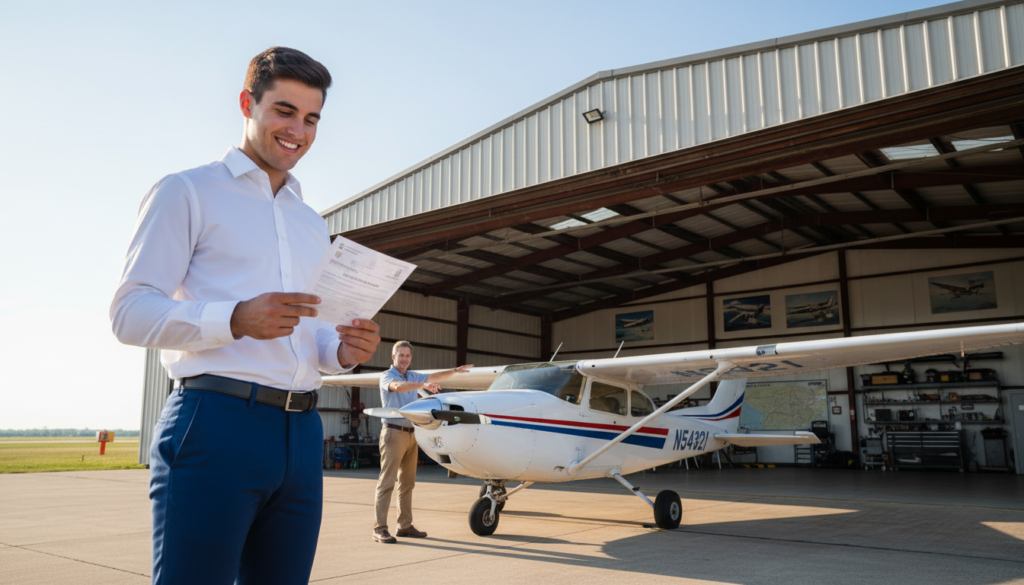
Getting this certificate is straightforward but requires attention. You start online with FAA IACRA, then confirm your identity and sign documents in person. It feels like a small step but it’s an important part of becoming a pilot.
Once you get it, you can fly by yourself while learning. But, you can’t take friends or family flying with you yet. This rule helps keep training focused and safe.
Timing is crucial in this process. Start your medical and Student Pilot Certificate steps early on. Delays in processing can hold back your solo flight. Applying early helps keep your training on track.
Before you can fly solo, there’s more than just the certificate needed. You have to pass a pre-solo knowledge test and keep your paperwork up to date. The FAA is strict, making sure you’re ready and safe to fly alone.
| Item | What It Does | Who You Work With | Timing Tip | Common Pitfall |
|---|---|---|---|---|
| FAA IACRA application | Starts your Student Pilot Certificate request in the system | Mostly you, with guidance from your flight school if needed | Do it soon after your intro flight to keep your private pilot journey moving | Typos or mismatched personal info that slow verification |
| Identity verification & signature | Confirms you’re you, and finalizes the submission step | CFI, DPE, or FSDO | Schedule it early so solo plans don’t get stuck waiting | Assuming the online form alone completes the process |
| Core privilege | Allows solo flight during training after required sign-offs | CFI for endorsements | Track prerequisites week to week so you’re ready when weather cooperates | Thinking “approved” means “automatic solo” without endorsements |
| Core limitation | No passengers while flying as a student pilot | Your CFI (for reminders and rule clarity) | Plan solo objectives that don’t depend on bringing anyone along | Confusing training solo privileges with full FAA pilot certification privileges |
| Pre-solo knowledge test & endorsements | Checks local procedures and confirms readiness for solo | CFI | Build time for studying so the first solo isn’t delayed by paperwork | Forgetting the initial solo endorsement expires after 90 days |
In summary, the Student Pilot Certificate is more than just a piece of paper. It’s a crucial step towards becoming a private pilot, ensuring you’re prepared for the skies. It aligns your journey with FAA standards, focusing on safety and skill.
Ground School and Testing
Ground school teaches the “why” before the “how,” because physics needs more than just vibes. It’s like learning to juggle and finally understanding the balls. It stops the pilot pathway from just being an expensive way to see the sights.
You’ll learn about flight theory, aerodynamics, weather, and more. It’s like making a mental map of what’s happening in the sky and what the FAA wants you to do. These are the core parts of FAA pilot certification, even if they seem simple at first.
How you take ground school can fit your schedule and how you learn best. In-person classes feel like a seminar but focus on flying topics. Online courses let you learn at your own pace. King Schools and Sporty’s are popular because they’re flexible.
| Option | Best for | Trade-offs | How it supports the pilot pathway |
|---|---|---|---|
| In-person ground school | Those who learn better with face-to-face interaction and deadlines | Fixed schedule; may not match your pace | Quick feedback links lessons directly to real-life flying |
| Online self-paced (King Schools, Sporty’s) | Those with tight schedules or who like revisiting lessons | Needs self-motivation; it’s easy to stop and not return | Allows steady progress, matching well with flight training |
| Hybrid (online + instructor review) | Those seeking flexibility with a bit of oversight | May cost more; requires planning | Focuses on areas of weakness before test day and the FAA checkride |
The FAA knowledge test has 60 questions and you need a 70% to pass. Yes, 70% seems doable. But at 3,500 feet, you won’t think so if unprepared.
I have a rule: don’t schedule the PSI test until hitting 90% on practice exams. This extra prep helps with the tricky questions. It also reduces the stress of the pilot pathway.
Show up ready and respect the rules. Only bring what’s allowed and follow the test discipline. Cheating is a big no, treated like a threat in aviation.
For study materials, keep it simple. An E6B, a plotter, and my logbook are my go-to’s. The Private Pilot ACS is my checklist for the checkride, focusing on cross-country planning. Ground knowledge that aligns with real-life decisions demystifies FAA certification.
FAQs on Requirements
Many wonder how to become a private pilot. It seems like there might be a secret method, but there isn’t. It’s more like a detailed treasure hunt designed by the government, full of steps and records to keep.
The question of time always pops up first. The FAA says you need at least 40 hours flying, but most people need 60–75 hours. Flying often, like 2–3 times a week, helps. This way, you don’t waste time and money relearning things.
Now, let’s talk about medical requirements. Pilots often go for a Third-Class Medical. Its validity varies with age. Before you turn 40, it lasts 60 months; after 40, it’s good for 24 months. There’s also BasicMed, with its own rules for real-life situations.
| Requirement Topic | What Most People Expect | What the Rule Actually Says | Why It Matters in Real Life |
|---|---|---|---|
| Flight hours | “I’ll do the minimum and be done fast.” | 40 hours minimum under Part 61; typical finish is 60–75. | More hours build confidence, reduce relearning, and improve test prep. |
| Training pace | “Weekends only should be fine.” | 2–3 flights weekly help maintain skills. | Irregular training stretches out the timeline and increases costs. |
| Medical path | “One exam and I’m set forever.” | Third-Class Medical: 60 months if under 40; 24 months if 40+. | Its timing is crucial for training and tests. |
| BasicMed limits | “It’s the same as a medical.” | ≤12,500 lb MTOW, ≤7 occupants (≤6 passengers), ≤250 KIAS, ≤18,000 ft. | Useful for many, but check before flying abroad. |
| Passenger cost sharing | “Friends can just pay me back.” | 14 CFR §61.113 allows fair cost splitting for certain expenses. | Without equal pilot contribution, legality can become an issue. |
Night flying often comes up, blending interest and concern. Yes, you can fly at night after meeting specific requirements. Treat night flying with caution. Use lights, plan carefully, and beware of night’s illusions and altitude-related risks.
Discussing money often means navigating rules and awkward conversations. When sharing costs with passengers, expenses like fuel and rental can be split fairly. Remember, there needs to be a shared purpose for the flight. Avoid making it seem like an informal airline.
Charity flights also raise questions, as pilots want to help without hassles. Some charity events require pilots to meet specific rules, like having 500 flight hours. It’s possible, but it follows a different set of rules.
All this info might seem overwhelming. That’s normal. Getting your FAA pilot certificate is about following a structured process. The details matter, making the difference between being legally certified and just wishing you were. Understanding the process demystifies becoming a pilot and lays out a clear path forward.
Common Roadblocks
The first big challenge in becoming a private pilot isn’t the weather or being scared. It’s actually a printer. Paperwork problems can delay your solo flights and make your training feel endless.
Don’t wait too long to start IACRA. If you do, you’re relying on slow government processes. Apply early, confirm your ID with a professional, and then wait. This step might be boring, but you can’t skip it.
Medical issues can come as a surprise. If you put off seeing the Aviation Medical Examiner, you might find out too late that you can’t get medically cleared.
BasicMed could be an option, but it has strict rules. It’s helpful but it’s not a solution for everyone.
Flying inconsistently can also drain your wallet. Only flying now and then means you’ll forget things and take longer to learn, which costs more.
For the best shot at success, aim for 2–3 lessons a week. This could really speed up your progress.
Finding a time for your checkride can be hard due to examiner schedules. If everything isn’t lined up, you might be ready but still have to wait. I make a list to keep track so I don’t miss anything.
Running into problems with tests is common too. Taking the PSI before you’re ready can be a tough, costly mistake. It’s a reminder not to let pride guide you.
Problems with your gear or being disorganized might seem small, but they’re not. Bad equipment and messy notes can slow you down a lot. It’s important to keep things organized and use good quality gear.
It helps to remember these common hurdles. They’re easy to predict, unlike the weather. For more tips on overcoming these challenges, check out private pilot roadblocks. It’s a great resource when you’re navigating through the admin side of pilot training.
| Roadblock | How It Shows Up | What It Costs You | Practical Antidote |
|---|---|---|---|
| IACRA/TSA timing | Solo pushed back while ID verification and vetting crawl along | Wasted calendar time, rescheduled lessons, extra commute fuel | Start IACRA early; complete ID check with a CFI/DPE/FSDO; track status weekly |
| Delayed AME visit | You discover medical issues after sinking money into flight time | Training spend without a clear path to certification | Book the AME up front; collect medical records early; ask about BasicMed eligibility and limits |
| Inconsistent flying | Skills fade between lessons; more “review” than progress | Hours creep toward 60–75+, raising total cost | Schedule 2–3 flights per week; use bad-weather days for focused study |
| DPE bottleneck | Checkride dates are scarce; aircraft and instructor schedules don’t line up | Long waits, extra refresher flights, momentum loss | Request a checkride date early; align endorsements, knowledge test, and aircraft availability |
| Knowledge test overconfidence | Low practice scores followed by a premature PSI booking | Retest fees, stress, and delayed checkride eligibility | Don’t book until practice tests stay ~90%+; drill weak areas with a plan |
| Audio/logbook disorganization | Missed calls, fatigue, messy endorsements and missing documents | Slower learning and avoidable delays at key milestones | Invest in a quality headset; keep a tidy logbook; organize endorsements and pre-solo materials in one place |
Roadmap to Your First Lesson
If you want to become a private pilot, skip the spreadsheets. Start with an intro flight instead. Most schools name it a discovery flight. It quickly shows if the cockpit feels like freedom or a tight space for group work. Both outcomes help you.
Then, tackle two things at once: your medical and student forms. Schedule with an FAA AME, and complete MedXPress for a Third-Class Medical. Or check if you can go for BasicMed. Meanwhile, set up IACRA, get your FAA Tracking Number, and apply as a Student Pilot early. This avoids surprises with TSA checks and card timing.
Choose your pilot path next: Part 61 for flexibility or Part 141 for structured lessons. While deciding, start ground school and dual flying lessons. King Schools and Sporty’s are good online choices. Your real skills are tested in the air with your CFI.
To succeed in becoming a private pilot, fly regularly, not in spurts. Aim for 2–3 flights a week and keep your logbook organized. Also, ensure your endorsements are up to date, especially the first solo flight one, which lasts 90 days. Before flying solo over long distances, plan carefully. Consider the weather, NOTAMs, plane performance, fuel, backups, and have a plan B. Then, get approval for each trip. When your practice scores are 90% or more, book the knowledge test. Use the ACS as a guide for the FAA pilot test. Remember, following the steps in order is key, before life gets in the way.