

Imagine Maverick’s oxygen mask malfunctioning at 30,000 feet – now replace that panic with a throbbing toothache mid-flight. Welcome to the unglamorous reality of cockpit dental emergencies. At Nova Dental Hospital, Dr. Happy Patel (dubbed the “Iceman of Incisors”) battles barodontalgia – the little-known pain caused by cabin pressure changes that grounds more aviators than turbulence.
The FAA reports 18% of distraction-related incidents involve oral discomfort – a statistic sharper than a wisdom tooth eruption. Hydration tips for shift work aren’t just comfort hacks; they’re survival tactics when dry mouth becomes your co-pilot at cruising altitude. Ever wonder why flight manuals don’t mention toothpaste? (Spoiler: They should.)
Dr. Patel’s team found pilots experience 3x more cavities than office workers – a side effect of irregular schedules and altitude-induced saliva reduction. Your mouth isn’t just making small talk with air traffic control; it’s fighting microscopic invaders while you navigate crosswinds. Next time you fasten your seatbelt, ask: “When did I last floss like my license depends on it?”
Dental Issues Specific to Flying
Ever thought of your molars as altitude gauges? At 35,000 feet, they react to pressure changes like tiny weather stations. That dull ache? It’s your enamel warning of a pressure problem.
Ignoring cavities at high altitudes is like ignoring a problem on the Titanic. Source 1 shows that bruxism incidents can triple during flights. Your jaw acts like a stress ball, grinding away at 500 mph.
When your sleep is as unpredictable as a cryptocurrency market, your teeth suffer. Irregular sleep patterns make your molars grind at night. It’s like your mouth protesting against unpredictable sleep schedules.
Three aviation-specific dental villains:
- Pressure differentials: Expanding air pockets in fillings like miniature Hindenburgs
- Dehydration: Saliva production dropping faster than Wi-Fi over the Atlantic
- Stress response: Jaw clenching tighter than TSA security lines
The solution isn’t just better toothpaste. It’s about understanding how cockpit ergonomics and sleep choices affect your teeth. To keep your smile ready for takeoff, stay tuned for our essential pre-flight checklist.
Pre-Flight Dental Checklist
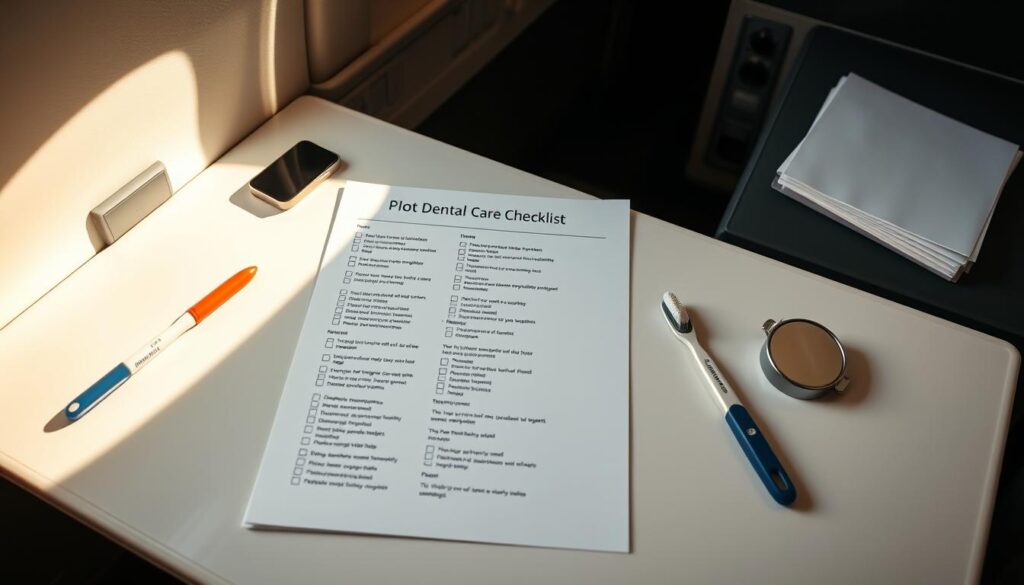
Your teeth are like cockpit instruments. They need checks before flying. Dr. Patel’s “72-Hour Protocol” is like a maintenance log. It looks for cavities and gum issues three days before flying.
Here’s your guide to great oral health in the air:
- 48 hours pre-flight: Dental checkup (TSA won’t flag that fluoride treatment)
- 24 hours pre-flight: Hydration boost with electrolyte water
- 2 hours pre-flight: Strategic snack loading (more on that below)
| TSA Rule | Dental Rule | Survival Benefit |
|---|---|---|
| 3-1-1 Liquids | 2-2-1 Regimen | Bacteria Control |
| 3.4 oz containers | 2 min brushing | Plaque Removal |
| 1 quart bag | 1 alcohol-free rinse | Enamel Protection |
Swap airline OJ for real vitamin C powerhouses. My favorite snacks are:
- Freeze-dried camu camu berries (500% DV vitamin C per serving)
- KIND Bars with acerola cherry
- That’s It. Tropical Fruit Cubes (no added sugar ambush)
These snacks are gum armor against dry air. They also help make saliva, which is like nature’s mouthwash.
For immune support, add zinc lozenges to your snacks. They help keep your mouth’s bacteria in balance.
In-Flight Oral Care Tips
Let’s cut through the cabin pressure: keeping your mouth clean at 30,000 feet is a challenge. The dry air in the plane can really dry out your mouth.
Aviation medicine has some tips for you:
- Electrolyte tablets can help keep your mouth moist.
- Drink water every 20 minutes to stay hydrated.
- Stay away from drinks with alcohol, as they dry you out.
Flight attendants might not tell you, but chewing sugar-free gum helps. It makes your mouth produce saliva, which fights off acids. Just don’t chew gum too much.
It’s time to stop some bad habits:
- Chewing ice is bad for your teeth.
- Energy drinks can harm your teeth.
- Don’t overeat snacks from the cart.
Pro tip: Do jaw stretches like pilots do workouts. It helps your jaw relax and can prevent teeth grinding.
Your mouth at high altitudes needs care. Keep it moist like a wine cellar. Avoid sudden changes.
Emergency Dental Solutions Abroad
When your toothache hits at 30,000 feet, panic isn’t an option—but neither is ignoring it. Let’s channel your inner Chesley Sullenberger: cool-headed problem-solving beats white-knuckling through dental distress every time.
Our “Mayday for Molars” flowchart starts with temporary fixes even MacGyver would applaud:
- Clove oil = dental duct tape (bonus: makes your breath smell like grandma’s spice rack)
- Lost filling? Sugar-free gum doubles as cavity putty
- Swelling? Frozen peas become your cheek’s new best friend
But real solutions require knowing where to land—literally. Nova Dental’s global network covers more airports than TSA pre-check, with 24/7 clinics vetted like presidential motorcade routes. Pro tip: Their app’s emergency locator works offline—because dental disasters love hitting over the Atlantic.
Take Captain Rodriguez’s cracked crown debacle. What started as turbulence-induced dental drama turned into a textbook save: “Found a Mumbai clinic through Nova’s referral system faster than ATC reroutes storms. Walked in looking like a Bond villain, walked out ready for my next red-eye.”
Stress management for pilots isn’t just about meditation apps. It’s about having these three things memorized:
- Your airline’s dental coverage fine print
- Local emergency numbers for frequent routes
- Which overseas clinics take American insurance
Remember: Dental emergencies travel faster than checked luggage. But with the right prep, you’ll be solving molar mayhem with the calm precision of an Airbus landing checklist.
Preventing Tooth and Gum Problems on Long Haul
Ever felt like your mouth after a long flight is as dry as the Sahara? It’s not just your imagination. At 35,000 feet, the air is so dry, it’s like a bacterial war zone. Dry mouth isn’t just uncomfortable—it’s cavity’s favorite landing strip.
Your mouth’s bacteria balance is like the 747’s climate control. Get it wrong, and you’re in for a bumpy ride. Source 1’s research shows saliva drops by 40% in flight. This lets harmful bacteria party on your teeth. It’s not just bad breath—it’s a health risk.
Nova Dental’s probiotic lozenges are like upgrading your oral health to first class. They’re not just breath mints. They’re like an Airbus’ computer, balancing your mouth’s pH. Pop one during descent and your mouth will stabilize faster than a seasoned pilot.
- Hydration hacks: Sip electrolyte-enhanced water—not coffee—every 30 minutes
- Microbiome maintenance: Use xylitol gum to stimulate saliva between meals
- Immune support: Vitamin C supplements act like air traffic control for inflammation
Think of your pilot dental care routine as pre-flight checks for your body. Skipping these checks is like ignoring gum inflammation. Your mouth’s health is key to your immune system’s success at cruising altitude.
Nutrition’s Role in Dental Health

Let’s take a closer look at airline food, like a TSA agent checking your toothpaste. That “nutritious” cranapple juice is actually very acidic. Flight meals might look like a good snack, but they can harm your teeth.
My friend once had a bad experience with dried mangoes on a long flight. It was like nature’s caramel, but not good for his teeth.
For pilots, staying hydrated is key. Source 1’s research shows that cabin air can dry out your mouth quickly. My advice is to drink water often, but in small amounts. This helps keep your mouth balanced without needing to run to the bathroom all the time.
Dr. Patel has a plan called the “Fuel Tank for Teeth” matrix. It’s like a superhero team for your mouth:
- Almonds (calcium cavalry) + dark chocolate (polyphenol patrol)
- Celery (natural toothbrush) + hummus (enamel armor)
- Green tea (cavity-fighting ninja) + Brazil nuts (selenium sentry)
These combinations are better than sugar snacks. Source 3’s snack study found that pilots who snack wisely have less plaque. Keep small portions of these snacks in your bag for a healthy treat.
Drinking water at the right time is important. Did you know drinking alkaline water during descent helps fight dry mouth? It’s like training your saliva glands. Add xylitol gum to your routine, and your teeth will be protected like never before.
Choosing Dental Care Abroad
Finding dental care abroad is like navigating through airport turbulence. The dental tourism market is growing fast, with places like Hungary and Thailand becoming popular. They offer affordable dental services, but it’s important to know that cheaper doesn’t always mean better.
Nova Dental uses AI to scan teeth quickly. This tool is like TSA PreCheck for your teeth, spotting cavities fast. It turns airport Wi-Fi into a tool for dental checks, ensuring you’re not stuck with a dental problem like Tom Hanks in The Terminal.
Travelers can plan dental work around their flights. Studies suggest waiting 72 hours after implants for short trips and two weeks after sinus lifts for longer ones. Smart rings track your gum health in real-time, avoiding dental emergencies at high altitudes.
Dr. Priya Patel’s clinic in Budapest is a prime example of modern dental care. They offer 3D printing for quick smile fixes, perfect for busy professionals. With same-day crowns and AI checks, keeping your smile in top shape is now easier than ever.




