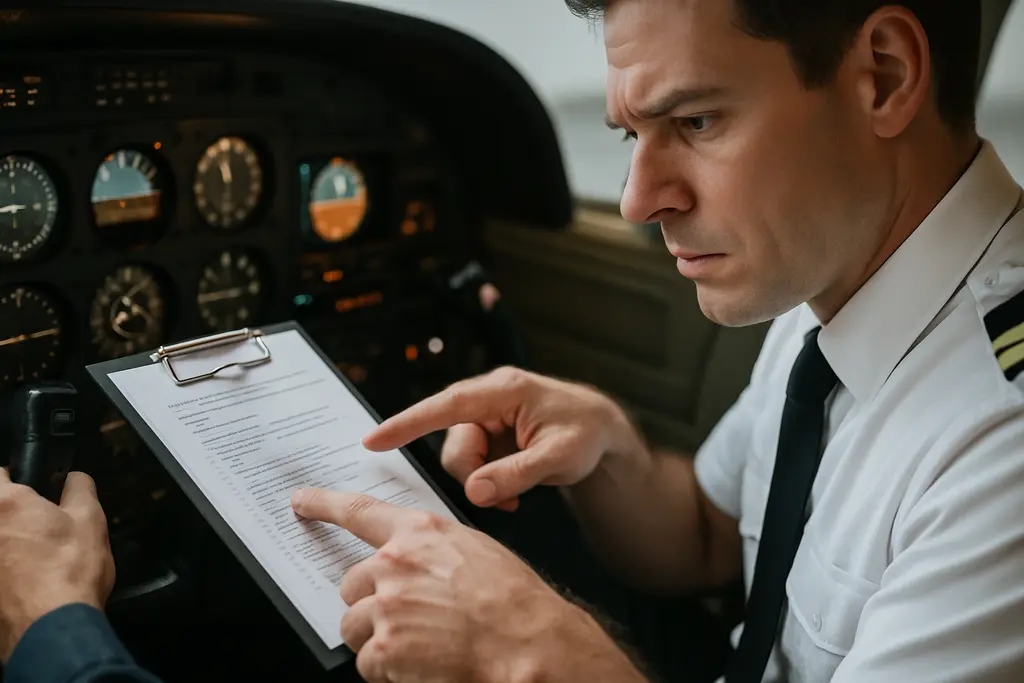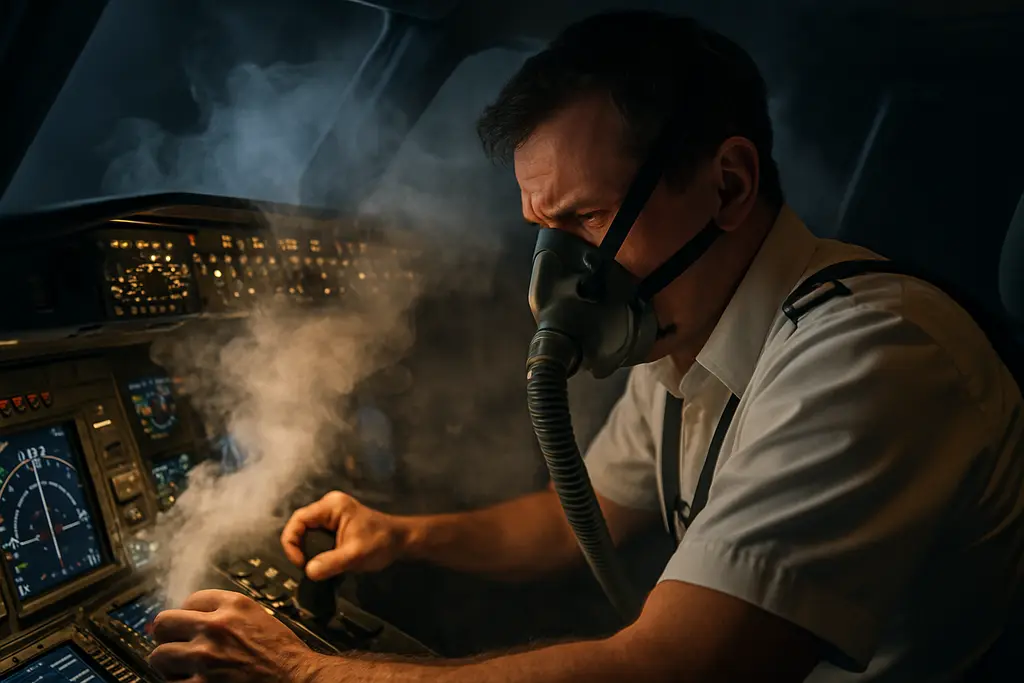
Smoke cockpit training gained new urgency after the National Transportation Safety Board reviewed a December 20, 2023, Southwest Airlines Flight 554 event in New Orleans, where a Boeing 737-8 struck birds during takeoff. Smoke rapidly filled the cockpit after being ingested into the No. 1 engine, making instrument panels difficult to see. Fortunately, all 139 people onboard were unharmed, according to the NTSB recommendation notice. The confirmed safety issue was not simply that smoke entered the flight deck. The deeper training question was whether pilots get enough realistic practice for reduced visibility, time pressure, elevated workload, oxygen-mask use, abnormal checklists, and communication under stress.
For working pilots and students building professional habits, this recommendation matters because it connects simulator design with cockpit decision quality. A smoke event can force a crew to fly, communicate, identify the source, protect breathing, and consider a return to the airport while visual access to panels is degraded. The NTSB stated that cockpit smoke emergencies are reported to the FAA almost daily. That frequency does not mean each report has the same severity, but it does show why crews need practice that feels closer to line operations than a verbal classroom review.
Why Smoke Cockpit Training Changed In 2026
What The NTSB Confirmed
The NTSB issued three recommendations on May 13, 2026. One recommendation asked the FAA to work with industry to develop standardized realistic scenario-based simulation training for smoke-in-cockpit events in initial and recurrent training for operators carrying passengers. A second recommendation asked the FAA to incorporate that training into FAA Order 8900.1A after development. A third recommendation asked Airlines for America and the Regional Airline Association to share the findings from the December 2023 event and encourage member airlines to adopt realistic simulation for this hazard.
That structure is meaningful. The NTSB did not only point at one flight crew or one abnormal checklist. It pointed at a system gap between the type of event pilots may face and the type of practice many pilots receive. As of mid-2026, the research record says the FAA did not require airlines to conduct realistic smoke-in-cockpit simulator training. In many programs, smoke is addressed by discussion rather than by a scenario that reduces visibility and compresses available time.
What Smoke Cockpit Training Missed Before
Traditional discussion-based training can explain checklist order, memory items, and equipment location. It cannot fully reproduce the cockpit feel of restricted panel visibility, task interruption, crew coordination strain, and time-sensitive troubleshooting. That difference matters because the Southwest crew involved in the 2023 event described the experience as far more challenging than what they had seen in training. The NTSB also warned that a similar event at night or in instrument meteorological conditions could have catastrophic consequences.
For pilots, the lesson is direct: knowing the smoke checklist is not the same as performing under smoke-like conditions. Smoke cockpit training should test the timing of oxygen-mask use, the clarity of callouts, the division of duties, and the crew’s ability to maintain aircraft control while diagnosing the event. Those are operational behaviors, not just knowledge points.
Simulator Gaps And Crew Workload
Why Visibility Matters In The Simulator
A flight deck is an information system. Pilots scan attitude, altitude, airspeed, engine indications, flight management data, annunciations, and radio selections in rapid cycles. When smoke makes instrument panels hard to see, the crew loses speed in gathering information. That loss can delay the next action. During a departure event, the aircraft is close to the ground, configuration changes may still be underway, and communication with air traffic control can compete with abnormal procedures.
Realistic simulator work can expose weak points before a crew meets the hazard in service. A reduced-visibility scenario may reveal whether a pilot can locate controls by touch, whether checklist reading remains clear through an oxygen mask, and whether the crew maintains a shared plan while managing sensory stress. It can also help instructors identify whether a crew rushes toward troubleshooting before flight path control and breathing protection are stable.
Where Technology Still Lags
The Department of Transportation Office of Inspector General found in an April 21, 2026, audit that the FAA followed its policy when responding to fume events on Boeing 737 MAX 8 aircraft, but the audit also flagged areas needing attention, including simulator technology updates, pilot notification of load-reduction-device activation hazards, and training in oxygen equipment use; the report also stated that full-flight simulators used for 737 MAX training did not have built-in smoke or fumes simulation for those activation events, though they may simulate vibration, as described in the FAA fume-event audit.
That distinction is significant for training departments. A simulator can be highly capable in aircraft handling and system malfunctions while still missing the environmental cues that make a smoke event hard. If vibration is present but visibility restriction and smoke-related time pressure are absent, pilots may practice only part of the problem. For scenario design, smoke cockpit training has to align the technical fault with the human workload created by the fault.
Training Program Implications For Airlines

Initial And Recurrent Training Effects
The NTSB’s recommendations reach both initial and recurrent training. Initial training is where new type-rated pilots learn aircraft-specific emergency flow, checklist discipline, and callout standards. Recurrent training is where those skills are refreshed and tested after line experience changes habit patterns. A smoke scenario belongs in both phases because a new pilot and an experienced pilot can fail in different ways: one may hesitate due to unfamiliarity, while the other may move too quickly based on assumptions.
Airlines already manage limited simulator time, and adding environmental stressors requires careful lesson planning. The training goal should not be to surprise crews for its own sake. The goal should be to practice a known hazard under credible conditions: degraded visibility, task saturation, communication load, and oxygen-equipment use. A well-built event can let crews repeat the same scenario, debrief errors, and return to the simulator with better role discipline.
Why Standardization Matters
The NTSB asked for standardized training development because a hazard that affects passenger-carrying operations should not depend solely on local program preference. Standardization can help align instructor grading, scenario triggers, crew expectations, and post-event debriefing. It can also support FAA oversight once incorporated into training-program guidance.
Pilots should watch how this affects proficiency checks and recurrent events, but they should also treat it as a practical skill issue now. For background on how emergency procedures fit into formal training oversight, our related discussion of emergency response regulations connects these recommendations with the broader training cycle. Readers comparing aviation safety coverage across related publishing properties can also find network context at SiteBob, a related site in the same network.
- Confirmed training need: practice with restricted visibility instead of discussion alone.
- Confirmed human-factors issue: crews may face high stress, workload, and reduced panel visibility at the same time.
- Confirmed oversight issue: FAA guidance would need to reflect the new training after development.
- Practical pilot takeaway: oxygen-mask use, checklist flow, communication, and aircraft control must be rehearsed together.
Smoke Cockpit Training For Line Pilots
What Pilots Can Apply Before Rules Change
Smoke cockpit training will take time to standardize across passenger-carrying operators, but individual pilots can still strengthen readiness within existing programs. In simulator sessions, crews can ask instructors to emphasize mask communication, panel identification under workload, and disciplined handoff of flying and monitoring duties. During briefing, crews can talk through who flies, who communicates, who runs the checklist, and how they will confirm switch or valve actions when visibility is poor.
The safest habit is to treat smoke as both an aircraft abnormality and a crew-performance event. Aircraft control remains central, but the crew also has to preserve breathing, maintain communication, and avoid task fixation. If the aircraft is close to the airport after takeoff, decision-making may need to move fast without becoming rushed. If the event occurs at night or in instrument conditions, the margin for scan disruption may be thinner.
For student pilots aiming at airline careers, the broader value is mindset. Training is not only about passing a checkride. It is about building repeatable behavior when the cockpit stops looking and sounding normal. The NTSB recommendations signal that realistic smoke scenarios are not an optional training upgrade; they are a direct response to a documented gap between classroom preparation and flight deck reality. Pilots who take that gap seriously will be better prepared to manage one of the most demanding emergencies a crew can face.