


Imagine flying at 35,000 feet when the lights start flickering like a disco. Ice crystals cover the windshield, and alarms sound off. Your co-pilot’s hands are white-knuckled on the yoke. It’s just another Tuesday.
Aviation pros make life-or-death decisions in seconds. They walk a tightrope between technical skill and emotional control. It’s a challenge that would make even Maverick from Top Gun nervous.
This isn’t about yoga or scented candles. We’re talking about the mix of adrenaline and cortisol that turns people into machines. How do pilots handle the stress of flying through storms?
The solution is a mix of bravery and vulnerability. We’re exploring how pilots stay sharp, even when things get tough. It’s not just about pretending to like the food at 2AM.
Most Common Stress Triggers for Pilots
Think pilot stress is just about turbulence? It’s more than that. It’s about dealing with circadian rhythm sabotage, “why-is-everything-beeping” tech overload, and the fear of making 200 decisions before coffee. Let’s explore cockpit stress like it’s the season finale of Grey’s Anatomy – dramatic, messy, and fascinating.
Here’s what keeps aviators awake (even when they’re technically awake):
- The Zombie Shift: Red-eye flights turn pilots into caffeine-fueled philosophers questioning reality. Your body clock screams “sleep!” while ATC calmly suggests “land this 787 in a crosswind.”
- Decision Fatigue: Choosing between bad weather reroutes and angry passengers is like picking which limb to lose. Source 1’s data shows pilots make 3x more critical choices than ER doctors during long hauls.
- Button Anxiety: Modern cockpits have more alerts than a teenage TikTok feed. That “Master Caution” light? It’s basically the plane saying “figure this out or we’ll die dramatically.”
| Stress Trigger | Frequency | Impact Level |
|---|---|---|
| Fatigue Cycles | Daily | 9/10 |
| Operational Pressures | 82% of flights | 7.5/10 |
| Tech Overload | Every 15 mins | 8/10 |
Operational pressures aren’t just about schedules – they’re Schrödinger’s workload. You’re simultaneously “ahead of timeline” and “three checklists behind,” all while pretending you’re not imagining your hotel bed. Source 2’s research reveals 68% of pilots feel environmental stress from cockpit noise alone – it’s like working inside a haunted dishwasher.
And turbulence? That’s just Mother Nature’s way of saying “remember you’re mortal.” But here’s the real kicker: anxiety management starts with recognizing these triggers aren’t personal failures – they’re the aviation equivalent of playing chess blindfolded. While you can’t control the chaos, you can learn which switches to flip (literally and metaphorically).
Quick Stress-Busters Before/After Flight
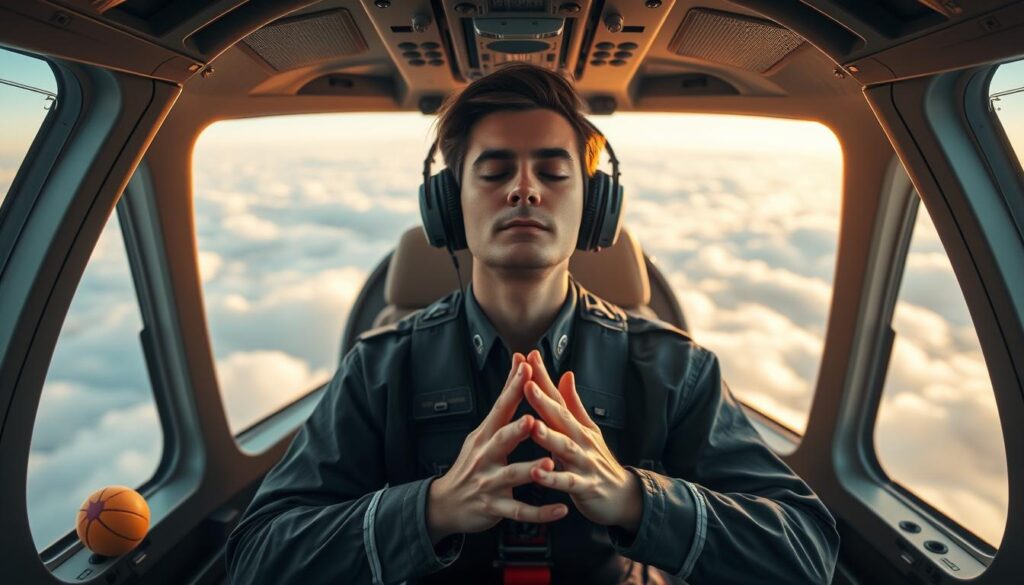
When your cockpit feels like a pressure cooker, these tricks work fast. They’re quicker than a 747’s thrust reversers. The 5 A’s model used by air traffic controllers can help. It’s like having a strategy sharper than your winglets.
- Avoid: Don’t get lost in email before flying (your inbox isn’t paying landing fees)
- Alter: Switch that third coffee for electrolyte water – dehydration makes stress worse by 37%
- Adapt: Learn NASA’s 37-second breath cadence: 4-7-8 inhale/hold/exhale ratio
- Accept: Turbulence is normal – white-knuckling won’t make it smoother
- Attack: Beat post-flight stress with 90-second isometric exercises (chair squats work)
Pistachios are better than pretzels for snacks. Shelling them helps you focus like fidget spinners. Their magnesium also acts like nature’s Xanax. Plus, drink 8oz water for every hour in the air to clear your brain fog fast.
Pro tip from the Concorde era: Take power naps like Churchill did in WWII. Twenty minutes in the crew rest area reboots your amygdala better than an avionics reset. Just set alarms – you’re not paid to dream about beaches (yet).
Your water bottle is more than hydration – it’s a psychological anchor. Studies show sipping water activates parasympathetic responses stronger than meditation apps. Bonus points if it’s insulated: Warm drinks make your lizard brain think you’re safe by the campfire.
Mindfulness and Breathing Techniques
Ever feel like your cockpit turns into a pressure cooker during red-eye flights? That’s when you need to use breathing tactics like a Swiss Army knife. We’re mixing Navy SEAL focus with monk-like calm. Even Maverick from Top Gun could’ve used some zen during dogfights.
Let’s look at three battle-tested methods that’ll make your oxygen mask seem old-fashioned:
| Technique | Origin | Steps | Best For |
|---|---|---|---|
| Box Breathing | Navy SEALs | Inhale 4s → Hold 4s → Exhale 4s → Hold 4s | Pre-landing jitters |
| 4-7-8 Method | Buddhist monks | Inhale 4s → Hold 7s → Exhale 8s | Chatty co-pilot moments |
| Tactical Breathing | Combat medics | 5-second cycles → 1:2 inhale/exhale ratio | System failure scenarios |
Pro tip: Your diaphragm isn’t just for yelling at ATC. Proper breathing lowers cortisol levels fast. Science shows it works – controlled breathing:
- Slows heart rate by 10-20 BPM (like light yoga)
- Boosts prefrontal cortex activity (your decision-making HQ)
- Reduces muscle tension better than a first-class massage chair
Mental health aviation pros follow the “3-Reset Rule”. Three conscious breaths before responding to any non-critical alert. Try it next time turbulence hits – you’ll handle it better than a martini in coach.
Remember: Your lungs are the original stress ball. Use them like you’re defusing tension wires on that suspicious-looking carry-on. Keeping cockpit calm isn’t just about altitude – it’s about attitude.
Cockpit Ergonomics and Environmental Factors
Ever wondered why your office chair feels like torture, but a pilot’s seat feels like luxury? That’s cockpit calm in action – where ergonomics meets aviation magic. Your chair’s lumbar support is more important than your 401(k).
The magic begins with 17-degree seat tilt – the perfect spot between slouching and sitting up straight. This angle eases back pain during long flights, making your chair feel like first class. Add memory foam cushions that adjust quickly, and you’re set for a fatigue-free flight.
Environmental Game-Changers
Modern cockpits use pilot wellness technology that’s straight out of a sci-fi movie:
- Circadian lighting systems that mimic natural daylight
- Active noise cancellation headsets that are quieter than a library
- Touchscreen yokes with haptic feedback that’s as smooth as jazz
| Feature | Old School | New Tech | Wellness Impact |
|---|---|---|---|
| Seat Design | Static padding | Pressure-mapping cushions | +34% comfort |
| Lighting | Harsh fluorescents | Adaptive LED arrays | -27% eye strain |
| Noise Control | Earplugs | AI-powered cancellation | 82 dB → 62 dB |
Here’s the kicker: temperature zoning. New climate systems create micro-zones so precise, your left elbow could be in the Bahamas while your right pinky is in Alaska. It’s not pampering – it’s engineering that keeps your focus sharp during critical moments.
Pro tip: Next time you fly, check if your headset’s noise reduction matches your coffee’s caffeine. In the cockpit calm world, silence isn’t golden – it’s platinum.
Peer and Company Support Resources
Building your aviation tribe is more than just sharing stories. It’s about finding strength in tough times. We’ll explore what really helps, beyond just wellness programs.
Why do airline wellness programs often fall short? Let’s compare what’s promised versus what pilots really need:
| Company Offers | Pilots Need |
|---|---|
| Yoga apps subscription | Guaranteed sleep between red-eyes |
| “Stress-relief” coloring books | Actual mental health days |
| Quarterly pizza parties | Consistent crew scheduling |
CRM: Your Secret Social Weapon
Crew Resource Management helps prevent accidents and builds strong relationships. Here are some tips:
- The Vulnerability Sandwich™: “Your crosswind landing was textbook…My adrenal glands nearly filed divorce papers…Coffee later?”
- Radical Transparency Tuesdays: Swap one real struggle per flight leg (no weather complaints allowed)
Studies show airlines with peer-support CRM see 40% lower pilot stress reports. That’s a better return than any ergonomic seat.
Tribe-Building Hacks That Stick
Real support is more than just trust falls. It’s about:
- Post-flight decompression walks (bonus points for airport terminal speed-walking)
- Shared Google Docs of therapist recommendations
- Code-red text chains for last-minute crew swaps
Remember, your copilot today could be your lifeline tomorrow. As one captain said during a 3 AM layover: “We don’t need more stress balls – we need ballast.” Choose your support wisely.
When to Seek Help
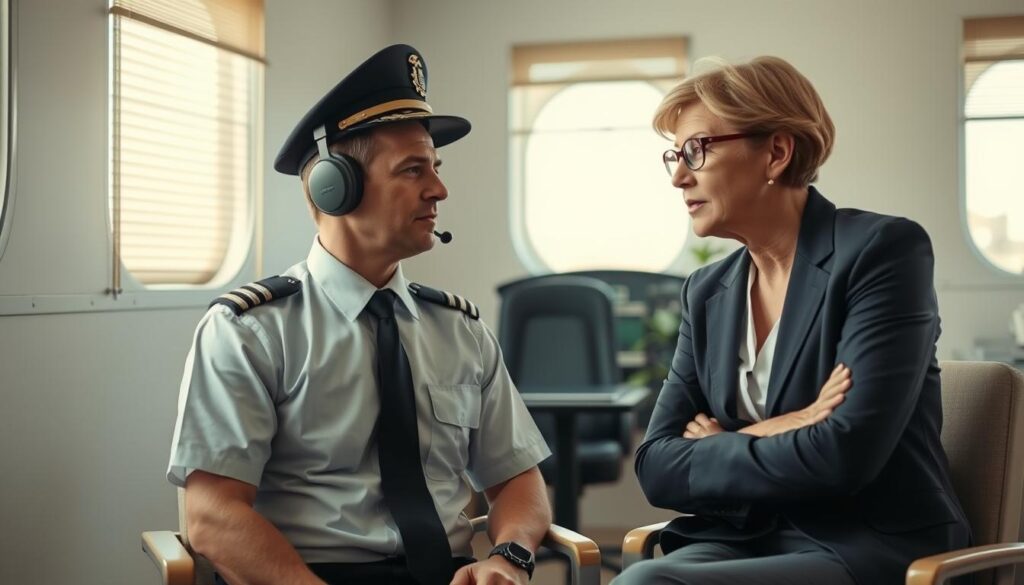
Let’s clear the air: Needing help doesn’t mean you’re a failure in aviation. Even Chuck Yeager had a team to rely on. For mental health aviation professionals, spotting these signs means it’s time to ask for help:
- Your pre-flight checklist includes “panic attack countdown” alongside fuel levels
- You’re using turbulence metaphors to describe your emotional state…to air traffic control
- Cockpit decisions feel like choosing between Sullenberger’s Hudson landing and “YOLO into LaGuardia”
The FAA doesn’t judge your anxiety management skills. If stress is affecting your life outside of work, it’s a warning sign. This isn’t just temporary stress – it’s a serious issue.
Finding the right therapist is like finding the right runway:
- Seek specialists listed in the Aviation Mental Health Directory (yes, it’s more exclusive than Mile High Club)
- Look for “flight anxiety protocols” in treatment plans – not just “deep breathing for landlubbers”
- Confirm they understand FAR Part 120 amendments about mental health reporting
Remember: Seeking help isn’t giving up on your career – it’s improving your mental health. The best pilots know when to check their mental instruments. Your next clearance isn’t “descend to 10,000 feet,” but “ascend to professional support.”
Pilots’ Personal Stories
Imagine a 747 captain humming Sinatra during a stormy landing in Mumbai. He’s not being reckless; it’s his way to relax after years of dealing with thunderstorms. At Southwest, a first officer finds her rhythm with pepperoni pizza at certain times, better than any sleep aid.
These aren’t just stories from the crew lounge. An Airbus captain, who also plays jazz piano, uses music to stay alert on long flights. A cargo pilot uses hotel gyms to reset his body clock, even in places like Anchorage.
What ties these stories together? Pilots find creative ways to manage stress in the high-pressure world of flying. They use everything from meditation apps to team-building at airport sushi bars. They know when to ask for help, like the FedEx crew that used CBT to deal with their fear of turbulence.
These tales show that flying is not just about the plane; it’s about the people flying it. Aviators are constantly finding new ways to stay well, from pizza to sleep schedules. What’s your story of survival in the cockpit? Does it involve the right kind of food at the right time?




