Your first solo flight is a big milestone. You won’t hear your instructor’s voice or feel their hand near the controls. It’s just you, the plane, and the thought, “Am I really in charge now?”
Choosing the right flight school is crucial. Make a good choice, and you get safer flying habits. A bad choice costs you in time, money, and stress. It’s like picking the “mystery entrée” at a diner and then being surprised.
Finding a flight school in the United States can seem overwhelming. There are thousands to choose from. When you’re new, it’s hard to know what you should be asking.
There’s an old saying in aviation: superior planning leads to superior results. Good planning helps avoid problems. This idea is important not just for flights, but for picking where to train, from ground school to your first solo flight.
This article is here to help with practical, direct questions. A good flight school will answer honestly, without trying to confuse you. We’ll compare important factors: types of training, cost clarity, location, training options, and the school’s safety record and reputation.
Why the First Solo Flight is So Important
The first solo isn’t just about getting chills; it tests your entire flight preparation. If your flight school can lead you there with smooth planning, clear briefings, and careful supervision, it shows they’re truly professional. This shows they have the skill you need before you start picking up habits that will stick with you.
Hidden curriculum includes the skills you pick up without even realizing it. Like how to look out for other planes, handle your tasks, and speak up if something seems wrong. The quality of your early training impacts how safe your future flights will be. And during your solo, the impact of that training becomes very clear.
Being ready for a solo also tests the school’s culture. Aviation values thorough planning much like a good tax system values keeping good records—tedious but reassuring. When a school emphasizes doing weather checks, studying the runway, and thinking ahead, you truly feel it. You feel it when you’re flying alone and your decisions matter more than ever.
That’s why choosing a flight school should go beyond just liking the way it looks. You should look for structured programs, meaningful briefings, and a culture of safety. This is what makes a solo flight safer. The best school is one that sees readiness as a systematic approach, not just encouraging words.
| What Solo “Proves” | What You Can Look For During Finding Flight Schools | What It Suggests About Training Quality |
|---|---|---|
| Planning holds up under pressure | Standard preflight flow, weather minimums, and clear go/no-go language | A flight school that builds repeatable judgment, not lucky timing |
| Briefings aren’t theater | Short, focused briefs with questions, contingencies, and clear expectations | Instructors who teach thinking, not just maneuvers |
| Supervision is real, not casual | Documented endorsements, stage checks, and a consistent syllabus pace | Accredited flight schools tend to show tighter process discipline |
| Safety reporting is normal | Open talk about risks, near-misses, and how fixes get shared | A culture that learns fast instead of blaming people |
How Instructors Decide You’re Ready
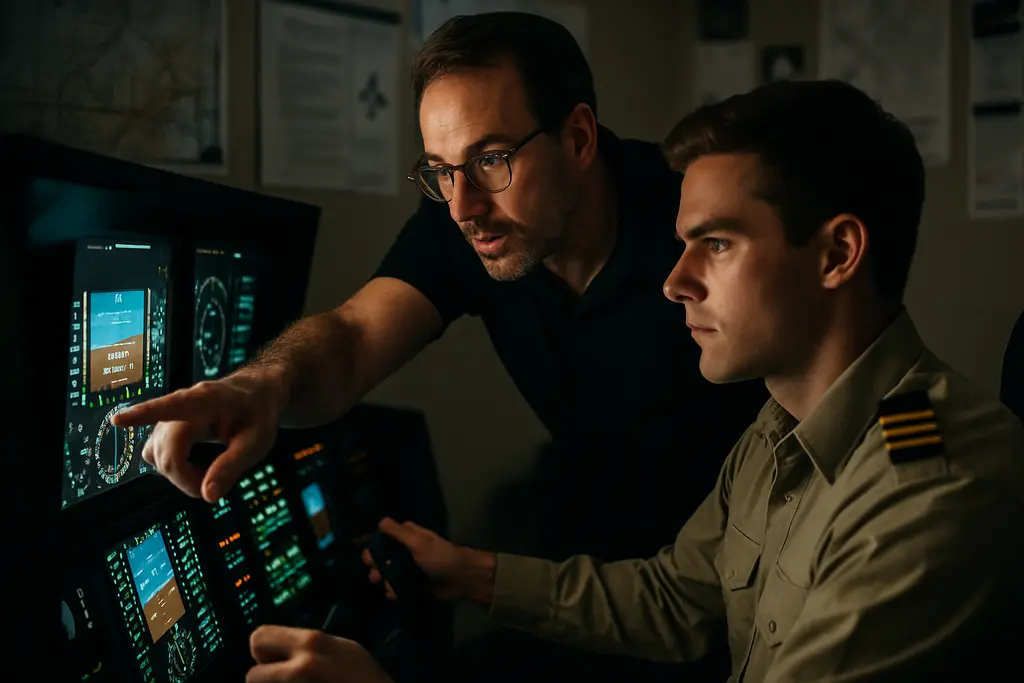
Being ready isn’t just a feeling. It’s a process. In flight schools, a good instructor and close oversight are key. They matter more than any motivational quotes.
When comparing flight schools, ask who’s checking the training and how often. If you can’t get a clear answer, expect delays in flying solo.
There are different levels of instructor experience. Class 4 instructors are just starting. Class 2 instructors can lead others and might be Chief Flight Instructors. Class 1 instructors are the top level and train future instructors.
More experience often means better teaching. But not always. Some new instructors are excellent, while others might not be as effective.
Before signing up, meet the people in charge. Ask to speak with the CFI or Assistant CFI. Discuss your goals and if the school’s schedule fits you. If they won’t meet you, it’s probably not just because they’re busy. It might reflect the school’s culture.
Good supervision should be easy to see. Poor oversight might mean only a few check-ins. But better systems have supervisor flights every 10 hours or so. This keeps your training on track.
| Readiness Signal | What You Should Hear | What to Watch For | Why It Impacts Your Solo |
|---|---|---|---|
| Instructor rating ladder | Clear explanation of Class 4 to Class 1 roles and limits | They match you with a primary instructor and name the supervisor | Defines who can sign you off and who can coach the weak spots |
| Supervision cadence | Supervisor flights about every ~10 hours or several times in PPL | Documented stage checks and mentoring, not “as needed” | Catches bad habits early, before they become expensive routines |
| Syllabus transparency | A real syllabus with completion standards and stage gates | You’re told where you are after each lesson, in plain English | Makes “ready” measurable, not a moving target |
| Briefing discipline | Pre- and post-flight briefings every flight, about 5–10 minutes | They pay instructors for briefings, so they don’t get skipped | Saves aircraft time and turns mistakes into repeatable fixes |
| Scenario Based Training and TEM | Examples of real scenarios and threat-and-error talk | They ask “what could bite us today?” not just “winds calm” | Builds judgment—the part of solo that isn’t on the checklist |
Always ask to see the syllabus. A detailed syllabus shows the school’s planning and standards. If they just show you a basic guide, your training might feel random.
Ground school is important, too. If lessons in the classroom and the cockpit don’t match, you’ll notice. It can lead to more mistakes and more costs. A well-organized program links ground school with flying lessons smoothly.
Finally, listen for discussions on Scenario Based Training and Threat and Error Management. Good schools give real examples. If they don’t, it might be time to look at another school.
Building Confidence Before the Big Day
Before the solo, I see confidence as something you build, not just a feeling. Good flight schools create it through reliable schedules, clear goals, and consistent routines. If this seems boring, that’s okay—it should be, just like a smooth landing approach.
When looking for flight schools, I want clear explanations about their teaching plans. Questions like, “What’s the syllabus like?” and “How do stage checks work?” are key. If their answers aren’t clear, then the “confidence” you’re hoping for might not be real.
Training with different types of aircraft helps improve skills, not just for show. It’s important to ask about the mix of instrument panels and controls you’ll train on. The aim is to have no surprises later on, which can be costly.
Being comfortable is essential because you’ll spend a lot of time in that airplane. A modern, well-maintained plane isn’t just a nice-to-have. It helps you focus on learning how to fly without unnecessary distractions. Flight schools that focus on standardization are offering real value, even if it doesn’t seem obvious at first.
Maintenance can make or break your confidence. Often, you find out a plane isn’t available when you’re all set to fly. Ask if the flight school handles maintenance themselves, uses an Aircraft Maintenance Organization (AMO), or outsources it. Plus, see if they provide support every day of the week. Delays because of bad weather are one thing; waiting for a plane to be fixed is something else.
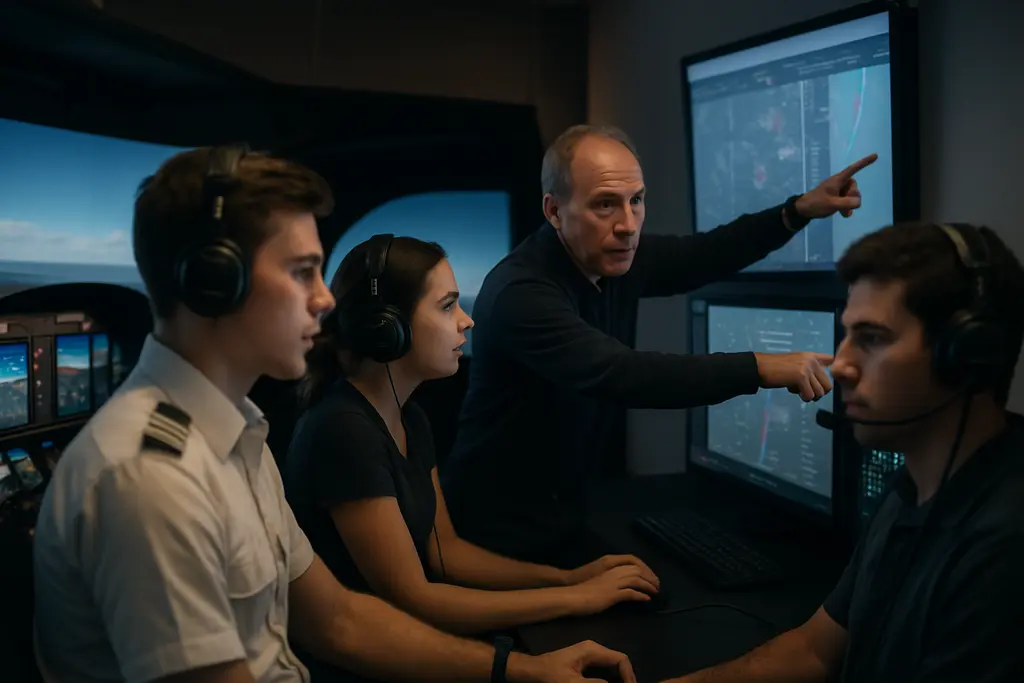
Using a simulator or Flight Training Device can boost your confidence. They let you practice tricky situations and learn how to handle stress without the risk. If you’re looking for ways to rebuild your confidence, keep this AOPA guide handy. It’s very helpful when you start doubting your abilities.
Where you train affects your confidence too. Learning at a busy airport helps you get used to working with Air Traffic Control, managing space with other planes, and keeping up a good rhythm. Training in different weather and over varied landscapes builds your skills in more ways than just flying in circles.
| What to Check | Question to Ask | Confidence Payoff |
|---|---|---|
| Schedule reliability | “How often do lessons cancel, and what’s the make-up process?” | More consistent practice, less relearning between flights |
| Training expectations | “What are the clear standards for solo readiness?” | No more guessing, just focused training |
| Fleet exposure | “Will I train in steam gauges and glass, and when?” | Less surprise when switching equipment or methods |
| Aircraft comfort | “How old are the planes, and how often are interiors updated?” | More comfort means better focus during lessons |
| Maintenance setup | “Is maintenance on-site, and is coverage available most days?” | Less waiting for repairs, more steady progress |
| Simulator/FTD | “Is the device certified, and which lessons require it?” | Better safe practice and calmer decision-making |
| Airport environment | “Do students train at a controlled field with regular traffic?” | Better communication and smoother flights |
If you’re picking between accredited flight schools, keep your test simple. Ask yourself, which school makes the next month seem more predictable? True confidence comes quietly. It lies in facing fewer surprises and mastering skills that last.
The Day of Your Solo: A Timeline
Your solo day at a good flight school should be well-planned, not made up as you go. A clear plan, clear radios, and no surprises are key. Superior planning leads to superior results might sound cliché. But in flight, it’s almost like a survival tactic.
The day kicks off with a brief meeting that lasts 5 to 10 minutes. We confirm runway use, wind limits, backup plans, and my flight procedures. Missing this meeting means you’ll later pay for any hesitation, costing about $5 a minute once the engine starts.
Next is the test of professionalism. Your instructor should communicate clearly and keep things calm. Your big day shouldn’t feel like a comedy night where you joke about flying too high or too low.
Then comes the preflight check and takeoff. It should be routine, unexciting, and done over and over. I check everything from fuel to control surfaces and even the small often-forgotten details. Following the checklist strictly shows you’re applying what you learned in ground school.
After a lap or two, we quickly review and decide if I’m ready. If my performance is good and decisions smart, the instructor leaves me to fly solo. If not, we immediately work on any issue. Building solo confidence should be based on skill, not hope.
In between flights, I check my progress in the training plan. A good flight school will be clear about what you’ve achieved and what’s next. This helps you keep track of your budget and learning progress.
Lastly, let’s not forget that planes can have issues. Whether maintenance is nearby or further away, in-house, and how often they’re available can really affect your training schedule. This makes it important to check not just the hourly cost of schools, but also how flexible they are with scheduling.
| Timeline moment | What a well-run flight school standardizes | What you should confirm | Why it matters |
|---|---|---|---|
| 5–10 minute pre-brief | Clear plan for runway, wind limits, procedures, and go-arounds | Abort points, pattern altitude, radio calls, and the specific maneuvers | Prevents expensive confusion once airborne and reduces task load |
| Instructor comms check | Direct coaching with crisp intercom and calm cadence | That you can hear every callout and ask questions without friction | Keeps solo day professional, not chaotic, when workload spikes |
| Preflight + taxi | Same flow every time, tied to checklists and standard callouts | Fuel, oil, controls free/correct, brakes, instruments, and windsock scan | Turns pilot ground school knowledge into safe, repeatable action |
| Final dual laps | Short verification in the pattern before the solo decision | Stabilized approach, centerline discipline, and go-around judgment | Builds a clean handoff from coached flying to independent flying |
| Solo release + first solo laps | Defined limits and a simple mission: safe patterns and full-stops | Weather stays within limits, radios are working, and you know the “stop” triggers | Protects you from “just one more” thinking when adrenaline hits |
| Post-flight debrief + syllabus update | Documented progress and a clear next lesson in the training plan | Where you are in the syllabus and how it affects the flight-hour budget | Makes progress measurable and supports smarter flight school comparison |
| Maintenance readiness check | Transparent scheduling and realistic backup plans for downtime | On-field support, turnaround time, and whether coverage matches your availability | Improves training rhythm and avoids repeated cancellations |
Solo Flight Checklist
Your first solo flight isn’t just you and the sky. It really means you and every system supporting you are ready. This checklist isn’t just a list. It’s a guide for choosing a flight school that answers tough questions.
When looking for flight schools, think of unclear answers as warning signs. The top flight schools can explain their training and safety clearly. They don’t rely on fancy words in their brochures.
First, ask about the program’s structure. Is it integrated with a set pace and often linked to a degree? Or is it modular, flexible and fitting around your life? The right choice depends on your time, budget, and patience.
- Integrated: you’ll move faster, but face more rules and possibly bigger bills upfront.
- Modular: you can pay as you go and take breaks, but it requires more self-discipline.
Let’s talk about money. Ask for costs based on realistic flying hours, not the bare minimum. Get details on average flight and ground instruction hours, and all those hidden fees (like for headsets, checkrides, and fuel surcharges).
Then discuss how you’ll pay. Integrated programs might want a big payment upfront. Modular training usually lets you pay per lesson, after initial costs. If a school can’t explain their payment methods clearly, think about how they handle scheduling.
Maintenance is key for your solo flight. Find out if the school has its own maintenance or contracts it out. Is the maintenance at the same airport? Is it available every day? Maintaining planes is not glamorous, but it’s essential for regular training.
Instruction quality sets the best flight schools apart. Try to meet the instructors and see their teaching plan. A detailed syllabus and a focus on monitoring instructors show a commitment to quality. Questions about training methods like scenario-based learning show they’re serious about safety.
Simulators are great for saving money and practicing skills. Make sure the school uses a simulator properly. It should be part of the curriculum, scheduled regularly, and officially recognized. If it’s not consistently available, it won’t help much.
Safety should be a priority. Don’t just accept “we’re safe” as an answer. Ask how they handle safety reports, where maintenance happens, and if there’s a way to report issues anonymously. If they have a Safety Management System, find out how they’ve improved and if they analyze flight data to prevent accidents.
| Checklist Question | What a strong answer sounds like | Why it matters before solo |
|---|---|---|
| Is your training integrated or modular, and what’s the expected timeline? | Clear track options, weekly flying targets, and how weather/scheduling affects pace | Your solo depends on repetition; gaps erase progress fast |
| What do students actually spend, based on average hours? | Average flight and ground hours, plus a written list of common fees | Avoids “minimum-hour” math that collapses mid-training |
| How do payments work in practice? | Upfront terms (if any), refund policies, and pay-per-lesson rates spelled out | Prevents cash-flow surprises that interrupt training |
| Who maintains the aircraft, and where? | On-site AMO or contracted shop, location, and normal turnaround times | Fewer cancellations means steadier skill building |
| Can I meet the CFI team and see the syllabus? | Introductions offered, a detailed syllabus, and stated standards for stage checks | Good structure reduces “random lesson” syndrome |
| How do you supervise instructors beyond FAA minimums? | Mentoring, standardized grading, and regular reviews of student progress | Consistency makes your solo endorsement more predictable |
| Do you use SBT/TEM and a certified simulator or FTD? | SBT/TEM built into lessons, simulator sessions scheduled, device status explained | Sharper decision-making before you’re alone in the cockpit |
| How does your safety reporting work, including anonymous options? | Simple reporting steps, non-punitive culture, and examples of fixes made | Students speak up sooner, and risks get handled faster |
| Do you run an SMS and use Flight Data Analysis? | SMS described in plain terms, top improvement items listed, FDA tools discussed | Shows the school hunts trends, not just accidents |
When you’re still deciding on flight schools, take this list with you. Listen for clear answers, not just a good feeling. A reliable school welcomes tough questions. They’ll be glad you’re taking flying seriously, just as they should.
Common Fears and How to Conquer Them
I remember my biggest fear seemed to be the solo flight. But the real worry started earlier, when I was looking at flight schools. Every brochure made big promises, but they didn’t answer my real questions.
If you’re worried about choosing the wrong program, think of comparing flight schools like planning your flight. Ask specific questions and look for straightforward answers. If a school can’t clearly explain its course content, plane availability, or how they track your progress, that’s a red flag.
Fear of falling for low pricing is common. Some schools offer starting prices that balloon with hidden fees. Ask for what the average student pays, considering all costs, to avoid surprises.
Then there’s the fear of training that takes too long. Your schooling should be as clear as a map. You should always know your progress, what’s next, and your place in the program.
Cancellations can mess with both your budget and your learning pace. When visiting a school, ask about their maintenance policy. Find out how quickly they deal with issues, because you can’t fly if the plane can’t fly.
Finding the right instructor also worries many. It’s important to meet and fly with a recommended instructor that fits your schedule. Don’t settle for whoever is available when you can’t make it.
Safety is more than just talk. It’s vital to ask how the school handles defects, their safety system, and if you can report issues anonymously. Make sure they use FAA-approved safety tools.
When you put everything together, your fears start to fade. A good school isn’t about being perfect; it’s about showing real results. Once you find a good match for your studies, aircraft, and instructor, your first solo flight feels just right.
What Happens After Your Solo?
Your first solo flight is just the beginning. You go from asking, “Can I fly?” to “What kind of pilot will I be?” At first, flying for fun and flying for a career seem the same. But soon, they diverge dramatically, like a band splitting up.
Finding flight schools becomes a bigger deal after you fly solo. If you’re aiming for a flying career, seek a school where you can learn everything without moving around. Hopping from school to school might seem okay, but it can complicate your training with unnecessary challenges.
Choosing one school is smart. It should offer everything: PPL, instrument rating, CPL, multi-engine, night rating, and seaplane rating if needed. This is where accredited flight schools shine. They provide a solid plan, not just a fancy name. You’re investing in a reliable roadmap for your future.
Smart pilots focus on building experience wisely. When working towards your CPL, blend in other qualifications and advanced training. It’s smart to use simulators for part of this. They reduce costs without compromising the quality of your training.
Avoid going for just the basic CPL. Employers often want more than the bare minimum, which could leave your résumé lacking. A reputable school will guide you on what employers really want. It saves you from learning this the hard way after spending your money.
Where you train teaches you valuable lessons. Diverse weather and landscapes make you a better pilot. Learning near busy airports helps you get used to air traffic control and fast-paced environments. This experience is invaluable later when the skies get crowded.
If your training isn’t covering these bases, don’t feel stuck. Transferring your credits is often easy, since the aviation industry follows common standards. That’s another reason why you should check how a school tracks your progress when finding flight schools.
After flying solo, it’s key to plan your next steps carefully. The right flight school helps you see your future clearly. It focuses on building your skills and judgment, not just logging hours.
Inspirational Stories from Real Student Pilots
I keep hearing the same fairy tale at flight school: “You’ll be done in the minimum hours.” Sure. And my phone battery lasts all weekend.
One student pilot was smart. They asked for the average hours to finish, not just the minimum. They also asked about fees. The law says you need 45 hours for a Private Pilot Certificate. But most people need about 71 hours. When schools said 45 was “typical,” they knew better and walked away.
This pilot also asked schools, “What does 71 hours cost here, all-in?” In southern Ontario, it’s about $20,000. So, a $12,000 “deal” looked suspicious. It felt more like a trick than a true bargain.
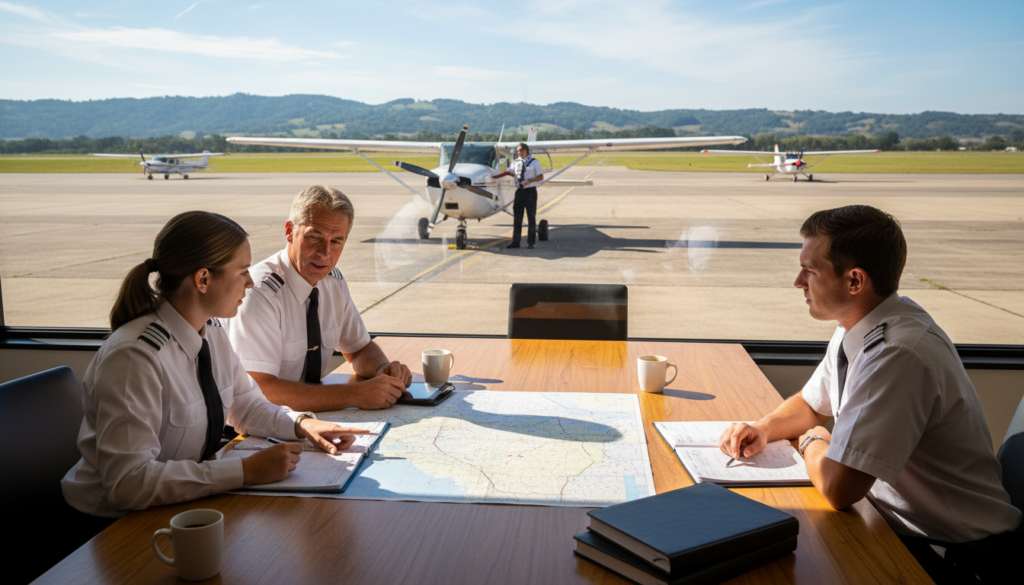
Another lesson comes from the “systems save careers” story. Pick a flight school with a solid plan, not just a good vibe.
They had real instructors checking their work. Every flight was planned and reviewed. They didn’t leave things to chance. The structured approach meant they finished faster. Because having a plan is always better than making it up as you go.
Then there’s the valuable lesson of networking, which you won’t find in brochures. Some flight schools offer jobs to students. These jobs can help pay for training. They can also get your name out there. You meet pilots in a real-world setting, discussing schedules and weather.
One student treated the intro flight like it was a tryout. They tested three different schools. They treated it like a flight school comparison test.
They asked about ground school, progress checks, and what happens if bad weather hits. They ignored the fancy sales pitches. They chose the school that answered questions clearly and directly.
| What the student asked | Why it mattered | What an honest answer sounded like |
|---|---|---|
| “Is 45 hours realistic here?” | Legal minimum vs. real-world pace | “Minimum is 45, but most people finish closer to 71 depending on schedule and proficiency.” |
| “What’s the all-in cost at 71 hours?” | Budgeting without fantasy math | “Let’s price aircraft, instructor, checkride prep, and common fees so you’re not surprised later.” |
| “How is pilot ground school delivered?” | Knowledge retention and test readiness | “Here’s the schedule, the study expectations, and how we track weak areas.” |
| “How do you keep training consistent?” | Efficiency through standardization | “We use a custom syllabus, standard briefs, and active chief instructor oversight.” |
| “Are there student dispatch or line roles?” | Networking and early aviation experience | “A few spots open each season; here’s what we look for and how students apply.” |
Key Takeaways & Success Mindset
I learned the solo isn’t just a thrilling moment; it’s a check of the whole system. Planning well leads to the best outcomes. Choosing your flight school is a major test of this idea. When looking for flight schools, I approach it like checking an aircraft before flight: look over everything, double-check, then make your decision. The process may seem exciting, but choosing should be methodical and thoughtful.
Then, decide on the training path with care. Integrated training combines everything into a set schedule, often with a degree at the end. On the other hand, modular training lets you pay as you go, working around your job or school schedule. Both options are good at accredited schools. The key is picking one you can complete without wasting resources.
Flashy websites don’t mean much. What matters is clear information about costs, which should be based on average, not best-case, scenarios. Solid programs offer detailed cost breakdowns, involved instructors, a thorough syllabus, and regular briefings with instructors. If a flight school’s plan isn’t easy to understand, it’s probably not well-organized.
Safety is a priority. Ask about the school’s safety history, where they fix their planes, how they report problems, and if you can report issues anonymously. Look into their safety management system (SMS) and check what they have actually improved, not just their claims. And remember, if you feel you’ve made a wrong choice, it’s okay to leave. Training credits, records can be transferred, and it’s smart to search for a school that truly earns your trust.