


Imagine flying at 30,000 feet, but your body thinks it’s 3 AM in Dubai. Your circadian rhythm is way off. For pilots, sleep is not just rest; it’s a critical battle against the effects of flying.
Have you ever noticed how sleep aids work differently at high altitudes? It’s because our body’s chemistry doesn’t follow flight schedules. The FAA’s rule on medications is strict, based on complex formulas.
Studies show even approved sleep aids can fail. They can make sleep feel like a dream, much like the height of a 747’s tail fin.
There are scary stories about pilots who took the wrong sleep aid. A captain’s mistake with Benedryl led to a runway overrun. A first officer’s use of melatonin caused a crash during landing. These are real examples of why safe sleep strategies are so important.
This isn’t about finding the “best” sleep aid. It’s about understanding what works at high altitudes. We’ll explore the science behind sleep aids, without needing a PhD.
Prescription vs. OTC Sleep Aids
Choosing between prescription and over-the-counter sleep aids is like choosing between old and new. Prescription sleep aids are like a jetpack, fast and effective. Over-the-counter sleep aids are like a horse-drawn carriage, slow and outdated. Let’s look at how these compare.
The FAA’s rule on Benadryl is clear. It lasts too long and can be dangerous. In contrast, Ambien is safer and lasts only 12 hours. This makes OTC sleep aids seem like a bad choice.
| Benadryl | Ambien | Military Modafinil | |
|---|---|---|---|
| Onset | 30-60 mins | 15-30 mins | 20-45 mins |
| Duration | 4-6 hours | 2-3 hours | 12-15 hours |
| FAA Grounding | 60 hours | 12 hours | Banned |
| Military Use | Emergency only | Restricted | Standard “Go Pill” |
There’s a big difference here. Civilian pilots can’t use Ambien, but military pilots can use modafinil. The Air Force uses modafinil to keep pilots alert during long missions.
Here are three key points for pilots:
- OTC antihistamines = cognitive fog that lasts longer than a cross-country flight
- Z-drugs (Ambien/Lunesta) = shorter half-lives but higher dependency risks
- Military-grade stimulants = professional-grade consequences for civilian use
Modern technology offers better options for pilots. Apps and light therapy glasses can help. But until the FAA allows it, pilots are stuck with old methods.
So, what keeps pilots safe? It’s their medical certificate and avoiding Benadryl.
Melatonin Use and Guidelines
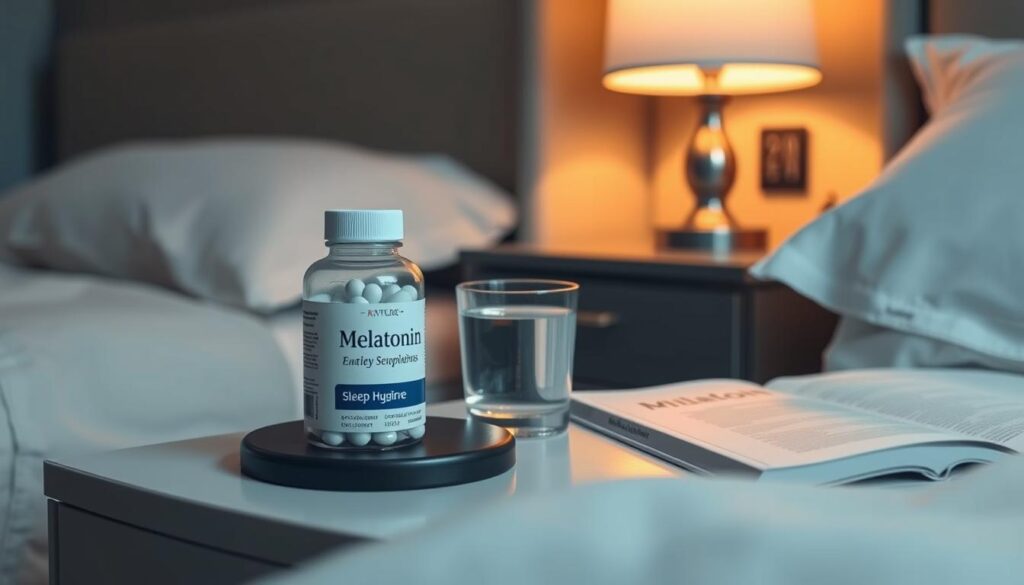
Melatonin is like a midnight snack for pilots or a ticket to trouble. It’s a hormone from our pineal gland that helps us sleep. But is it safe to use?
The FAA is cautious about melatonin. They say it’s okay to use, but with caution. They warn of possible side effects like drowsiness and weird dreams.
Let’s look at how much melatonin is safe:
| Dosage | Reported Benefits | FAA Concerns |
|---|---|---|
| 0.5mg | Subtle circadian reset | “Probably fine” (with side-eye) |
| 3mg | Faster sleep onset | Next-day grogginess reports |
| 5mg+ | Vivid dreams/nightmares | “Are you trying to direct a David Lynch film?” |
Pilots taking high doses of melatonin might feel like vampires. Studies show too much can mess up your sleep schedule.
Melatonin also helps with immune health. But taking too much can be like using too much water on plants. The FAA advises caution.
Smart pilots use melatonin wisely. They take small amounts and only when needed. It’s like enjoying airport sushi – in moderation.
Herbal Remedies and Their Risks
Imagine chamomile tea under courtroom lights, its calming effect questioned by FAA reports of pilots feeling drowsy the next day. This isn’t from Law & Order: Botanical Unit. It’s the real world of natural sleep aids in aviation. Many mental health aviation professionals turn to herbal solutions for stress relief. But the supplement market is like the Wild West, with better marketing.
- Valerian root: A fast-acting herbal sedative, but it can make pilots feel slow in the morning
- Passionflower: Like nature’s Xanax, but the safe dosage keeps changing
- Kava: A favorite from Pacific Islanders, but it’s linked to liver problems
The FDA doesn’t regulate supplements as strictly as it should. A 2021 study found 40% of herbal sleep products had hidden ingredients, including prescription drugs. It’s like finding out your “all-natural” sleep aid is actually a benzodiazepine.
Aviation’s use of herbal remedies is like a Hunter S. Thompson novel – unpredictable and sometimes dangerous. In 2018, a pilot took lemon balm for jitters and thought air traffic control was his yoga instructor.
| Herb | Claimed Benefit | Documented Risk | FAA Incident Mentions |
|---|---|---|---|
| Valerian | Deep sleep | Morning grogginess | 127 (2019-2023) |
| Chamomile | Relaxation | Delayed reaction time | 89 |
| Kava | Anxiety relief | Liver enzyme spikes | 42 |
The truth is, managing stress for mental health aviation professionals needs more than guesswork with herbal remedies. That lavender pillow spray might warn of unintended naps during pre-flight checks. Until regulations catch up with marketing, pilots face a high-risk balancing act.
Safe Use Cases for Flight and Rest Adjustments
Ever tried syncing your circadian rhythm to a 14-hour time zone jump? It’s like convincing ATC to approve a last-minute flight plan change during a thunderstorm. But here’s the secret sauce: anti-jet lag routines aren’t just about popping pills—they’re tactical maneuvers. Let’s dissect how top pilots and special forces hack biology without breaking FAA rules.
Singapore Airlines crews use a three-phase system that would make Marie Kondo jealous:
- 72-hour pre-flight: Gradual light exposure shifts (no, not disco strobes)
- In-flight: Strategic 20-minute naps timed like fuel stops
- Post-landing: Caffeine dosing with the precision of an ILS approach
Compare this to Navy SEAL sleep-deprivation studies, where operators maintain cognitive function on 4 hours of sleep using:
- 90-minute REM cycle optimization
- Micro-naps shorter than a crosswind landing
- Hydration protocols stricter than pre-flight checklists
| FAA-Approved Medication | Metabolism Rate | Clearance Time | Use Case |
|---|---|---|---|
| Zolpidem (Ambien) | 2.5 hours | 8+ hours | Long-haul pre-sleep |
| Melatonin | 45 minutes | 4 hours | Time zone shifts |
| Doxylamine | 6-8 hours | 12+ hours | Ground rest only |
Pro tip: Combine these safe sleep strategies with the 10 fatigue-fighting techniques used by cargo pilots on trans-Pacific routes. Remember—timing these interventions requires more precision than calculating weight-and-balance. Miss your circadian “window of opportunity” and you’ll be groggier than a Cessna pilot at Oshkosh after midnight.
The military’s “circadian reset” protocol looks suspiciously like a spy thriller plot:
- 48-hour gradual light adjustment
- Protein-heavy meals at destination breakfast times
- Controlled caffeine bursts (espresso shots, not venti lattes)
Bottom line? Treat sleep like VFR weather minimums—plan conservatively, execute precisely, and always have alternates. Your brain didn’t come with a MEL checklist, but these strategies are the next best thing.
Caffeine and Alcohol—The Trap
Imagine Walter White mixing chemicals, but in a Boeing cockpit. The FAA’s 8-hour “bottle-to-throttle” rule is old news. Caffeine, though, is a sneaky foe that messes with your sleep.
Adenosine receptors are key to sleep. Caffeine blocks them, like a bouncer at a club. But, it’s not all good. The 2008 Aviation Stimulant Study showed caffeine makes pilots react faster, but also crash harder.
The Stimulant Smackdown
| Caffeine | Alcohol | Reality Check | |
|---|---|---|---|
| Onset Time | 15 minutes | 30 minutes | Neither beats power naps |
| Half-Life | 5 hours | 2.5 hours | Math doesn’t lie |
| Sleep Impact | Delays REM | Fragments stages | Double trouble |
Flight attendants’ espresso rituals are more like emotional support drinks. For better sleep, try these hydration tips for shift work:
- Electrolyte tablets: The real “blue sky” thinking
- Herbal tea swaps: Chamomile doesn’t judge
- Water alarms: Set reminders like you’re landing a 787
For stress management for pilots, skip the nightcap. Alcohol doesn’t calm you down; it just steals tomorrow’s focus. Try this trick: Replace “one drink” with “one mile” on hotel treadmills. Your liver (and logbook) will appreciate it.
Remember, if Don Draper flew jets, he’d be grounded by noon. Modern aviation needs smarter habits than Mad Men’s. Stay sharp, stay hydrated, and enjoy the real party at sunrise.
Preventing Grogginess and Impairment
Think of your metabolism as air traffic control for sleep drugs. If it misses the mark, it’s chaos in the cockpit. The FAA’s 5x half-life rule is key to avoiding this. It ensures pilots are sharp, not sleepy.
If a sleep aid takes 6 hours to clear half its dose, you need 30 hours before flying. This isn’t just a rule—it’s a safety must.

But why do some pilots recover faster than others? It’s all about managing pilot body fat. Studies show that every 5% increase in BMI slows down how fast you metabolize sleep aids by 12%. So, that late-night cheeseburger isn’t just bad for your diet. It’s also messing with your sleep.
| BMI Range | Melatonin Clearance Time | Zolpidem Impact |
|---|---|---|
| 18-25 | 4.2 hours | Low grogginess risk |
| 26-30 | 5.8 hours | Moderate risk |
| 31+ | 7.1 hours | High impairment likelihood |
Want to stay sharp? Try these safe sleep strategies:
- Drink lots of water—it helps clear out sleep aids faster than coffee
- Eat meals on a schedule: protein 3 hours before, carbs 1 hour before
- Use light wisely in the cockpit—blue light is bad
Feeling foggy? Your body is trying to tell you something. Listen up, or you might end up in tomorrow’s safety briefing.
When to See a Doctor
Your body sends warning signs before the FAA steps in. Snoring is like a plane’s black box, showing signs of sleep apnea. The Do Not Fly list is real, with 15% of pilots denied due to sleep issues.
Using sleep medicines without a doctor’s okay can be dangerous. The FAA only allows four sleep aids for pilots, with strict rules. Taking unapproved melatonin is like flying through a forbidden airspace.
Good eye health for pilots means more than just 20/20 vision. Morning blur could mean your body’s out of sync. If your eyes feel heavy, it’s a sign of a bigger problem, not just tiredness.
Flight surgeons check more than just blood pressure. They look at your body’s overall health. If you’re trying to cheat with drugs, you’re writing your own crash report. The cockpit voice recorder always records.




